
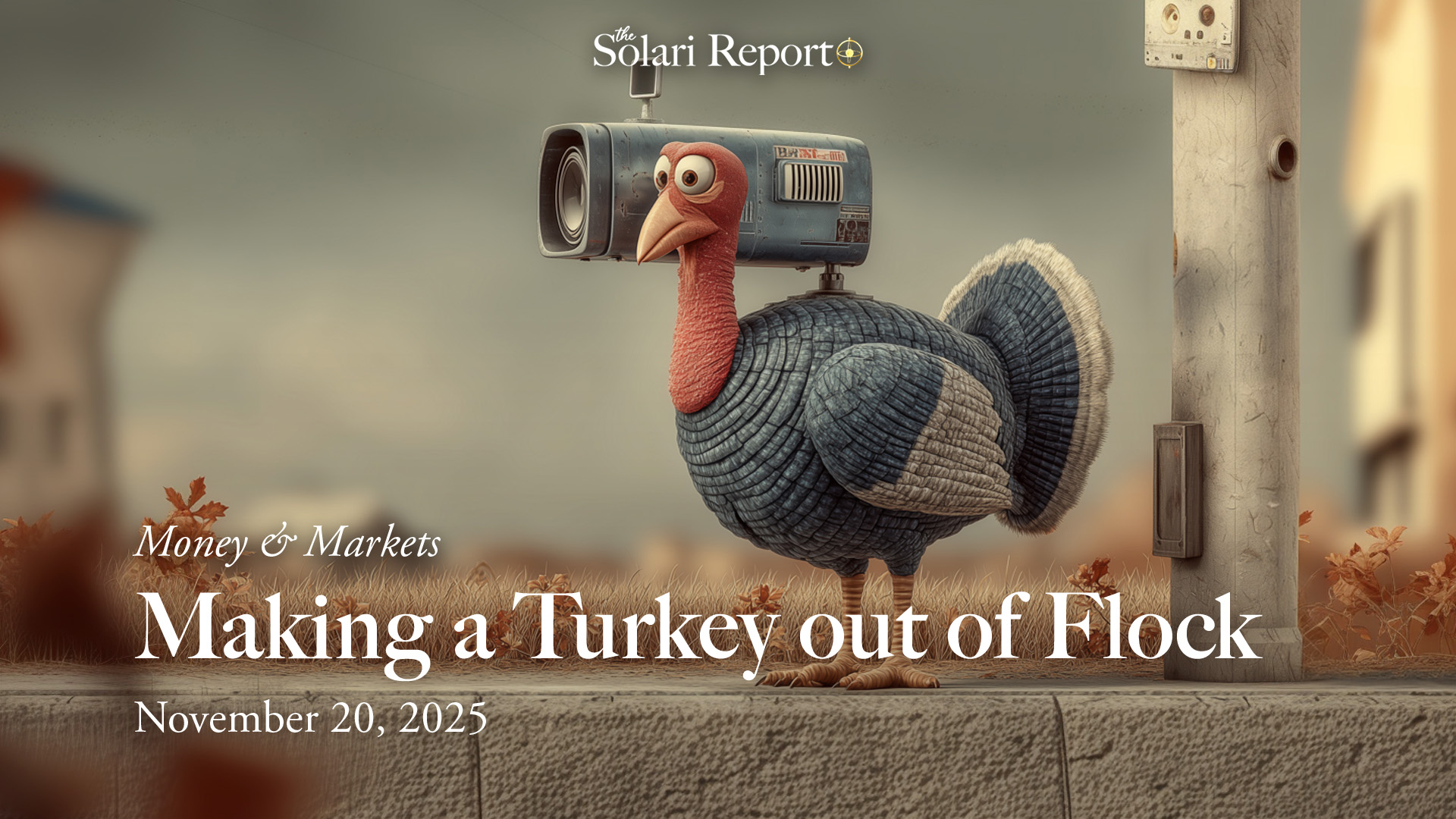
Money & Markets Report: November 20, 2025
Become a member: Subscribe























NTS Headlines
Headlines by Category
Headlines by Year
- Money & Markets
- Weekly Solari Reports
- Cognitive Liberty
- Solari Builders
- Ask Catherine
- News Trends & Stories
- Equity Overview
- War For Bankocracy
- Digital Money, Digital Control
- State Leader Briefings
- Food
- Food for the Soul
- Future Science
- Health
- Metanoia
- Solutions
- Spiritual Science
- Wellness
- Building Wealth
- Via Europa
































Solari’s Building Wealth materials are organized to inspire and support your personal strategic and financial planning.




Building Wealth
This 6-pillar curriculum teaches the basic literacy we need to be personally and financially successful and to do so in a manner in which together we evolve a culture that supports the emergence of an advanced human civilization.












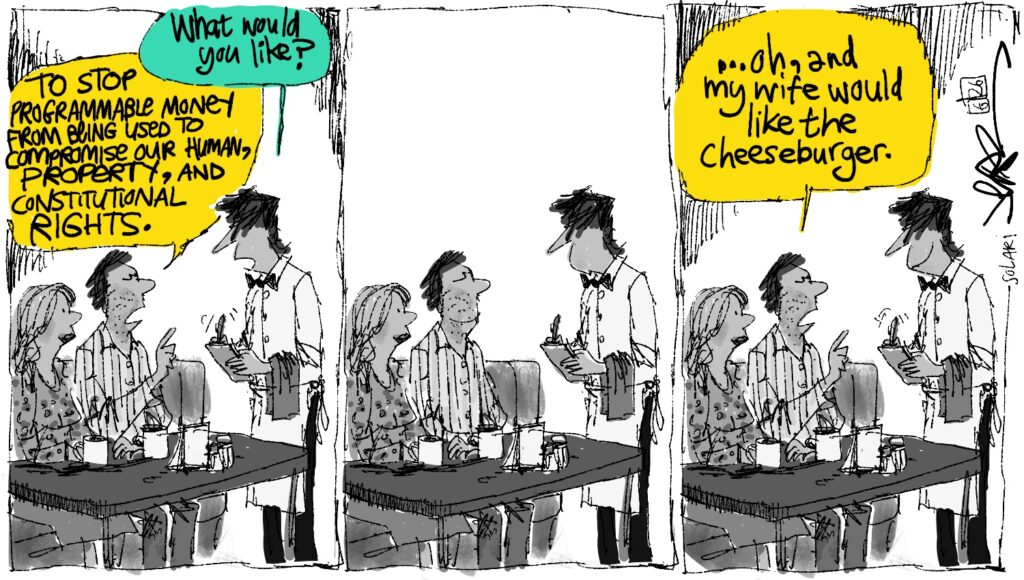


Missing Money
Articles and video discussions of the $21 Trillion dollars missing from the U.S. government

Connect with the wider network of like-minded Solari subscribers using our in-house social media platform, Solari Connect.








No posts

In this episode of Money and Markets, John Titus and Catherine Austin Fitts tackle an array of pressing topics, recorded on November 18th for release on November 20th. The episode begins with an in-depth discussion of the ongoing controversies surrounding Jeffrey Epstein, including Trump’s involvement and the Justice Department’s potential obstructions in releasing Epstein files. Shifting gears, the hosts delve into the issues facing the company Flock Safety, which is under scrutiny for its surveillance practices and data sharing with federal agencies. The economic turmoil is addressed with reports on rising foreclosures, bankruptcies, and excess deaths since the COVID-19 pandemic. Other highlights include community pushback against surveillance contracts, the role of private equity in utilities, and the challenges young builders face today. Join John and Catherine for an eye-opening conversation packed with essential insights leading into Thanksgiving.
Latest solari report & ask catherine
Log in or subscribe to the Solari Report to enjoy full access to exclusive articles and features.
Already a subscriber?

To John Titus, my son worked at a natural food coop for 4 yrs. He said there were several people who shopped there on a regular basis who had 2, sometimes 3 snap cards from different states. The manager of the coop had a daughter living in las Vegas. He said that if you go to a las Vegas supermarket, you will be solicited by multiple peops on your way in trying to sell you discounted snap cards. John, John, JOHN! There’s massive corruption in these programs. You must know that. Please don’t give us the ridiculous line that a couple of weeks with out the max $$ on their welfare cards, with several weeks warning, no less, means people will be starving in the streets. At most, they’ll shed a few pounds. Haven’t you noticed the girth of the average Merikan? Please…
Cathy:
What about the people on these programs who are not engaged in corruption – like millions of children.
Catherine
Just yesterday my hairdresser told me someone that used to work at the salon was selling her SNAP benefits because she couldn’t spend her entire $1700 per month. If we could go back to providing healthy food instead of money to buy food, there might be less graft. Unfortunately I’m afraid that won’t happen to the food industry lobbyists.
If only we could ban all lobbyists!
Hi Catherine
Have been pondering the question of corruption in SNAP benefits that you’ve been engaging the last couple of weeks in M&M.
My tradesman immigrant grandfather was out of work for more than a year during the Great Depression yet was very proud of not having had to rely on “charity” at all during that time. Federal government benefits weren’t even in scope back then. Charity was private and the culture of the working class was very much inclined toward self sufficiency.
Some big countervailing forces are at work in this issue. Professors Cloward and Piven were active in the 1960s around the same time that Federal Welfare programs were expanding and entrenched via Great Society. A notable problem with where this has led is a significant erosion of the culture exemplified by my grandfather.
Another major factor in this is the potential impact of greater automation. The number of people to be made redundant is likely going to grow dramatically. How many will be able to adjust productively? At the same time, how long can confidence in the Federal Government debt based funding and its medium of exchange continue? Something has got to give.
If there is a Cloward/Piven-style Strategy to overwhelm and weaken the country via profligate government spending, it is arguably much more prevalent in relative economic terms in Corporate rather than individual welfare. The economic comparison is an order of magnitude (trillions vs hundreds of billions) in the Federal budget.
At the same time, what has been the cost in terms of cultural erosion of the programs aimed at individuals? Isn’t the dependence of 10s of millions of children on federal government food benefits actually a significant cultural failure? And what could be done to change course and move that reality in a better direction?
You’ve always had a keen eye for the potential darker side of this dilemma. I’d also rather see liberty than death at the end of the pending travails.
IMO the impact of the culture erosion has been catastrophic.
The whole system is awful, getting a large number of people hooked on handouts, then yanking it away by destroying jobs, jacking up prices, and now not paying. Please don’t think I’m saying that everybody is doing well or that I’m not sympathetic. I know this is hard, it’s hard for some in my family at times, too. However, I just don’t buy the line that all those supposed 42 million are starving. Or that there isn’t massive corruption in these “programs.” We should call them ops, not programs. The govt taking over charity is one of the worst ideas ever brought to fruition.
New MAHA Commission Report Addresses EMFs: A positive breakthrough
“…electromagnetic radiation exposure has finally been raised as a cabinet-level priority in the new MAHA Commission report …”
https://ehtrust.org/new-maha-commission-report-addresses-emfs-a-positive-breakthrough/
half hour documentary on the data centers recommended by Trish Wood.
https://www.youtube.com/watch?v=t-8TDOFqkQA