


















































































Language Style Cheat Sheet
Solari Report Style “Cheat Sheet”
(As of November 2024)
The Solari Report has an excellent and very detailed Style Guide (a set of writing, formatting, and design standards) available at cloud.solari.com in the “Style Guide” folder. What follows is a shorter list of the most common style issues to consider when writing for the Solari website.
I. PUNCTUATION AND FORMATTING
Please note: Solari uses American punctuation and formatting conventions, which have some differences from European conventions.
- Spacing after punctuation: Please use only ONE space after all punctuation. The habit of two spaces after a period (etc.) is a holdover from the typewriter era. (Here is another humorous comment on the topic.)
- Commas: Always use the serial (Oxford) comma. (Example: The rule is null, void, and unenforceable.)
- Exception: If a direct quote does not use the serial comma, leave the quote as is (e.g., The judge struck down the rule as “null, void and unenforceable.”).
- Quotation marks:
- Use double quotation marks for direct quotes. (Example: “We now know we are in a spiritual war.”)
- For a quote within a quote, use double quotation marks for the outside quote, and single quotation marks for the inside quote. (Example: “He highlighted the case for abundance and the economics of what I call a ‘decentralized, bottom-up Building Wealth Reset.’” In this example, note that this results in three single quotation marks in a row at the end of the sentence.)
- Periods and commas with quotation marks:
- Periods always go inside quotation marks. This is true whether the quote is a full sentence or a partial quote at the end of a sentence. (Example: He characterized the transparency as “vital for survival.”)
- Commas always go inside quotation marks. (Example: We discuss what we are nicknaming “the trance,” and we review ways that you can work toward snapping out of it.)
- Colons and semicolons with quotation marks:
- Colons always go outside quotation marks. (Example: We wrote, “You are responsible for creating your future”: for you, your loved ones, and your community.)
- Semicolons always go outside quotation marks. (Example: The report discusses implications for “food, farming, and property rights”; it also includes a photo spread of unsung heroes.)
- Question marks with quotation marks:
- Question marks that are part of the quote stay inside the quotation marks. (Example: She asked, “Will you still be my friend?”)
- Question marks that apply to the whole sentence go outside the quotation marks. (Example: Do you agree with the saying, “All’s fair in love and war”?)
- Exclamation points with quotation marks:
- Exclamation points that are part of the quote stay inside the quotation marks. (Example: Joe said, “No, thank you!”)
- Exclamation points that apply to the whole sentence go outside the quotation marks. (Example: I simply cannot believe that Joe actually said “No, thank you”!)
- Dashes and hyphens:
- When using an em dash, there should be no spaces on either side of the dash. (Example: Cleaning up a wind turbine costs at least $500,000—and much more with the mega-models now being built.)
- To create an em dash in LibreOffice, type two hyphens in a row between two words and when you hit the space bar, they will turn into an em dash. (Note: When editing in WordPress, type three hyphens in a row.)
- When using an en dash, separate with a space on either side. (Example: Ask Catherine & the Solari Team – Tech Corner)
- To create an en dash in LibreOffice, type a space-hyphen-space; when you move on to the next word, it will automatically become an en dash.
- Use the em dash to replace commas, semicolons, colons, or parentheses and indicate emphasis or interruption. (Example: David and I agree that an inspiring counter-vision—positive, desirable, and achievable—is necessary.
- Use the en dash to connect continuing numbers (1969–1981) or sometimes in titles. (Example: Leaders’ Pact for the Future: A Global Coup d’Etat – A Presentation by Jacob Nordangård)
- Use hyphens to join words. (Examples: well-being, blue-green, mid-Atlantic, twenty-five)
- Italics vs. quotation marks:
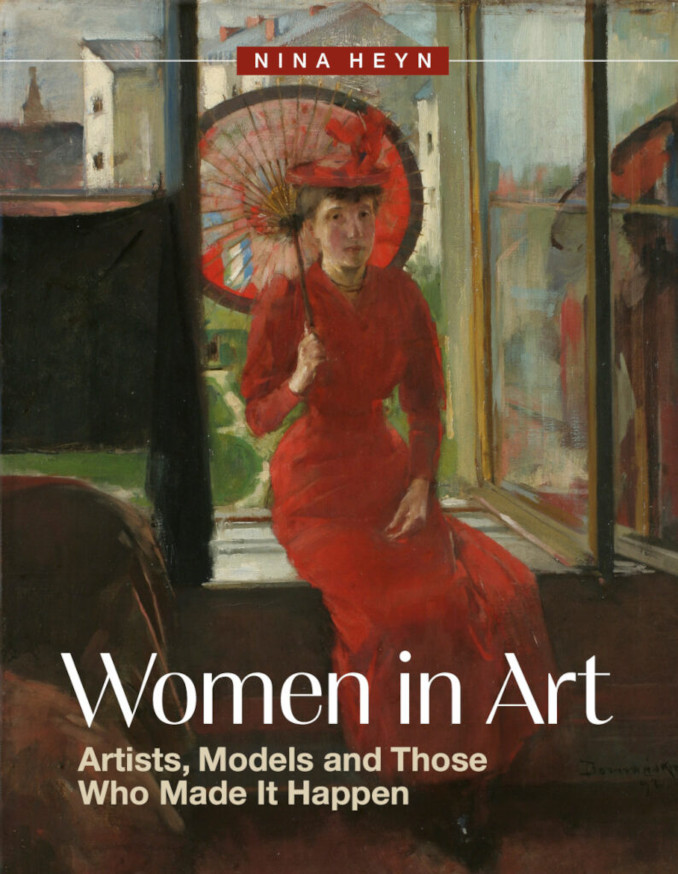
- Do use italics for titles of books (Women in Art), movies (The A-Team), television shows (The Capture), newspapers (Chattanooga Times), magazines (Newsweek), paintings (The Starry Night), albums (Abbey Road), podcasts (Life Stylist Podcast).
- For titles of smaller works or subcomponents—like a book chapter, poem, TV episode, article, song, podcast episode—use quotation marks.
II. SPELLING
Please note: Solari uses American English spelling conventions, which have some differences from British English spelling.
- Some common differences:
- American English uses -ize (not -ise), -zation (not -sation), -yze (not -yse). (Examples: organize, organization, analyze)
- American English uses -or (not -our). (Examples: color, favor, honor)
- American English uses -er (not -re). (Examples: caliber, theater, liter)
- View many more examples here.
- Acronyms:
- Do use periods when you abbreviate United States to U.S. (this helps readers not see it as “US” meaning “we”).
- Otherwise, don’t use periods for acronyms. (Examples: NATO, WHO, CBDC)
- Plural acronyms do not have an apostrophe. (Example: CBDCs, not CBDC’s)
- Title case:
- Use title case (aka “headline style”) in titles or headings.
- Here is a handy “Title Case Converter” (select the MLA style).
- Specific conventions for specific words:
- Spell Internet with uppercase “I.”
- Generally, write out the word “and” instead of using an ampersand (&).
- The abbreviation for “versus” is vs. and takes a period.
- The abbreviations for “for example” (e.g.,) and “that is” (i.e.,) take two periods and a comma.
- When writing a date, just use the numbers without “th” or “st.” (Examples: June 30, not June 30th; May 1, not May 1st.)
- Write out numbers under ten. (Examples: I wrote nine articles last month vs. I wrote 20 articles last month.) Always write out numbers if at the beginning of a sentence.
- Quotes:
- Never modify or correct a quote—everything must be quoted verbatim, even if it has faulty punctuation, typos, etc.