

































































































Scenario #3: Plunder Planet
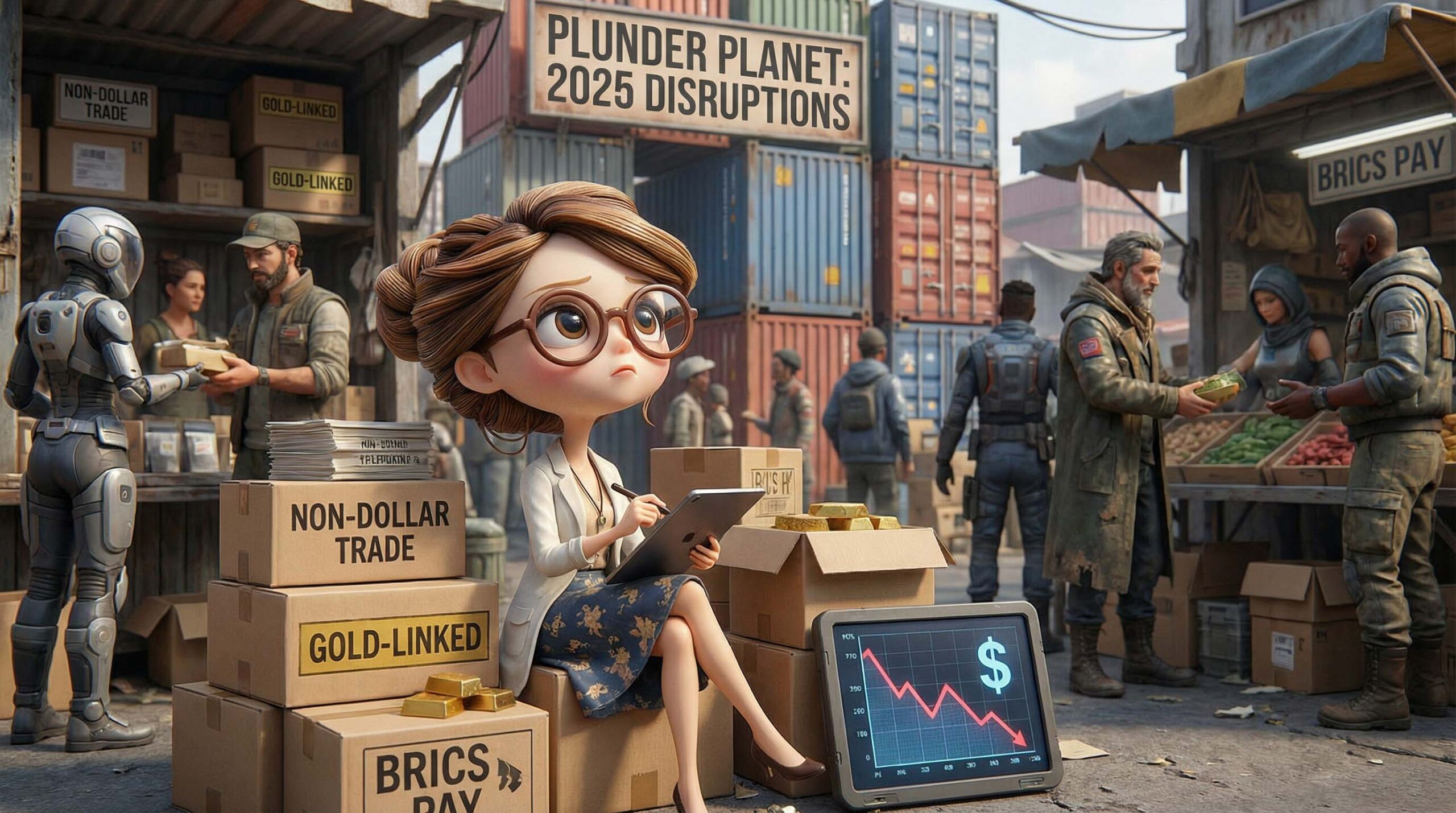
Fast De-dollarization + 2025-Level Disruptions
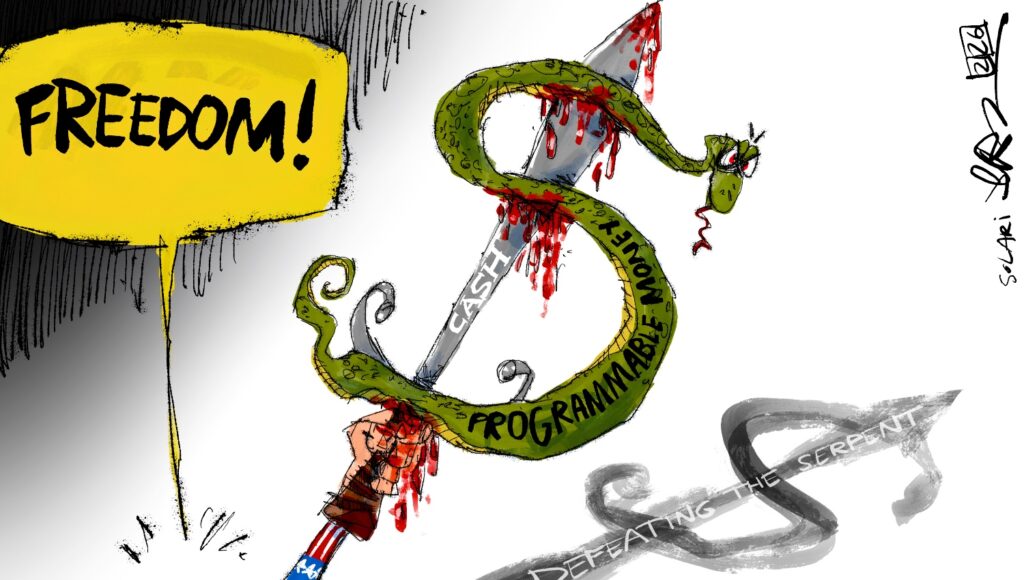
De-dollarization accelerates through coordinated action by the BRICS-plus bloc, bilateral trade agreements bypassing dollar settlement, central bank gold accumulation reaching new highs, and the maturation of alternative payment systems—but this occurs in a geopolitical environment that avoids escalating existing conflicts into major wars.
The U.S. retains significant influence but accepts a multipolar global order, resulting in increased assertion of control and plundering of assets in North and South America, accelerating unrest, and depopulation. Commodity markets increase trading in non-dollar currencies, and eventually, in a BRICS reference currency or gold-linked unit of account. The U.S. stablecoin launch is successful, but growth is slow-moving.
Tariffs and the hard bifurcation (gaps between the physical economy and financial systems) result in increased inflation and supply chain disruptions. Regional currency blocs emerge more clearly: a yuan zone in Asia, a dollar zone in the Americas, a euro zone in Western Europe, and contested zones where multiple currencies compete. The transition is bumpy but managed—more analogous to Britain’s post-WWII sterling decline than a Suez Crisis moment of sudden collapse.
This scenario requires a high degree of international cooperation, U.S. political acceptance, and institutional competence. That is optimistic—it assumes rational actors, functional institutions, and a shared interest in avoiding catastrophic outcomes.
Characteristics
- Dollar share of reserves drops 3%-5% annually (accelerated decline).
- BRICS payment system achieves meaningful transaction volume.
- Commodity pricing in non-dollar terms becomes accessible and reliable.
- Gold remonetization advances (central bank settlement, trade invoicing).
- U.S. accepts reduced global role in exchange for increased control in North and South America.
- International institutions reform (IMF SDR composition, World Bank governance).
- Disruptions remain manageable.
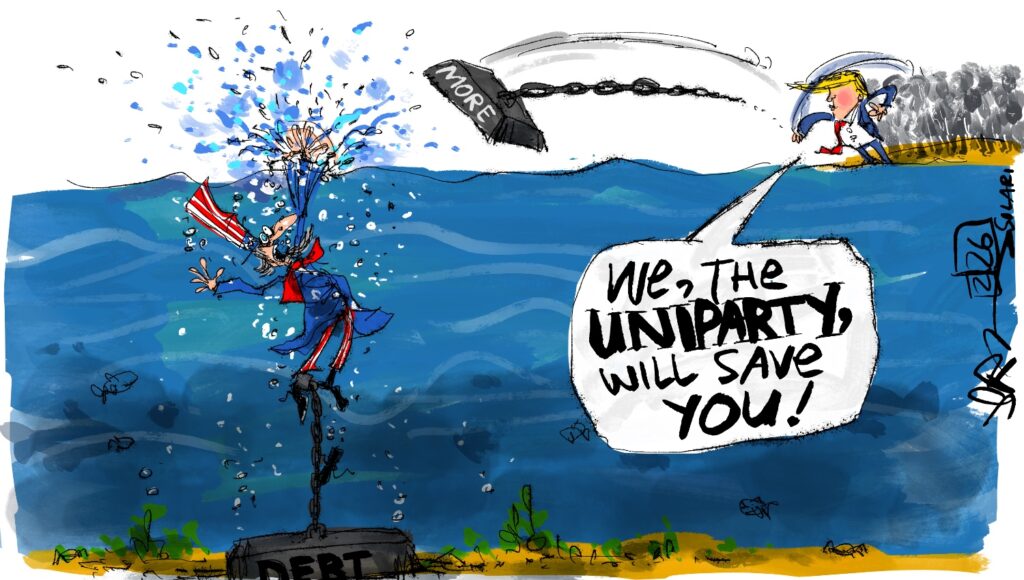
- Inflation and cost of capital rise, causing pain in lower and middle-income groups and related social disruption.
- The push for the control grid in the G7 nations is aggressive, causing sporadic physical violence and growing pushback.
Risks and Opportunities
Winners in this scenario are positioned in real assets, commodity exposure, and multiple non-dollar trade relationships. The premium for resilience is high—assets repriced for a multipolar world are significantly more expensive than those priced for continued dollar hegemony.
Geography, demographics, and jurisdiction matter: variables include proximity to growing trade blocs, relationships with commodity producers, and presence in jurisdictions with needed resources. Businesses with supply chains and customer bases spanning multiple currency zones benefit from natural hedging.
Financial assets face repricing. Dollar-denominated bonds lose value in real terms even if nominally repaid. Equity valuations adjust to reflect new competitive dynamics—U.S. multinationals face disadvantages, while emerging market producers benefit.
Inflation grows, with sporadic hyperinflation in the dollar and related allies—including euro zones. Physical disruptions grow in an effort to generate offsetting deflation. The push for the control grid is aggressive but hampered by imploding supply chains and operations across the complete control system (surveillance, telecommunications, digital and financial systems).