





























































































The Top Cash Acceptance Laws of 2025
Safeguarding Financial Choice and Transactional Freedom
December 10, 2025











“The war on cash is a war on humanity – don’t let it happen.”
~ Catherine Austin Fitts
By Breeauna Sagdal
As 2025 draws to a close, the world has witnessed a remarkable resurgence in the defense of cash as a fundamental payment option. Amid rising concerns over digital exclusion, privacy risks, and system vulnerabilities, lawmakers across continents have enacted groundbreaking legislation to enshrine cash acceptance into the law.
These laws don’t just protect vulnerable populations like the unbanked, the elderly, and low-income individuals—they also reinforce cash’s role as legal tender in an increasingly cashless economy.
From constitutional enshrinements in Europe to state-level mandates in the U.S., here’s a look at the top cash acceptance laws making headlines this year.
Hungary took a bold step toward financial sovereignty on July 1, 2025, when a constitutional amendment making cash payment a fundamental right entered into force. With limited exceptions (such as online subscriptions or automated vending without staff), businesses must now accept cash in Hungarian Forint (HUF) for in-person transactions.
This move addresses the country’s robust cash economy—Hungarians still make half of their offline purchases in cash and over 8,500 billion HUF still circulates. The law also supports the 10% of the population with no bank account.
Businesses may choose from several legally permissible options to comply with the requirement to accept cash, such as maintaining a cash register, offering cash-on-delivery for shipments, or providing postal payment slips.
Although critics protested that implementation costs would be high, the Hungarian people prevailed in their efforts to secure transactional freedom and bolster consumer security in a digital age.
Just days ago, on December 1, 2025, Slovenia’s National Assembly unanimously passed a constitutional amendment with 61 votes, adding Article 74a to guarantee citizens’ right to use banknotes and coins in all legal transactions. The amendment explicitly protects physical cash as legal tender, distinguishing it from digital alternatives and preventing misinterpretation under EU monetary policies.
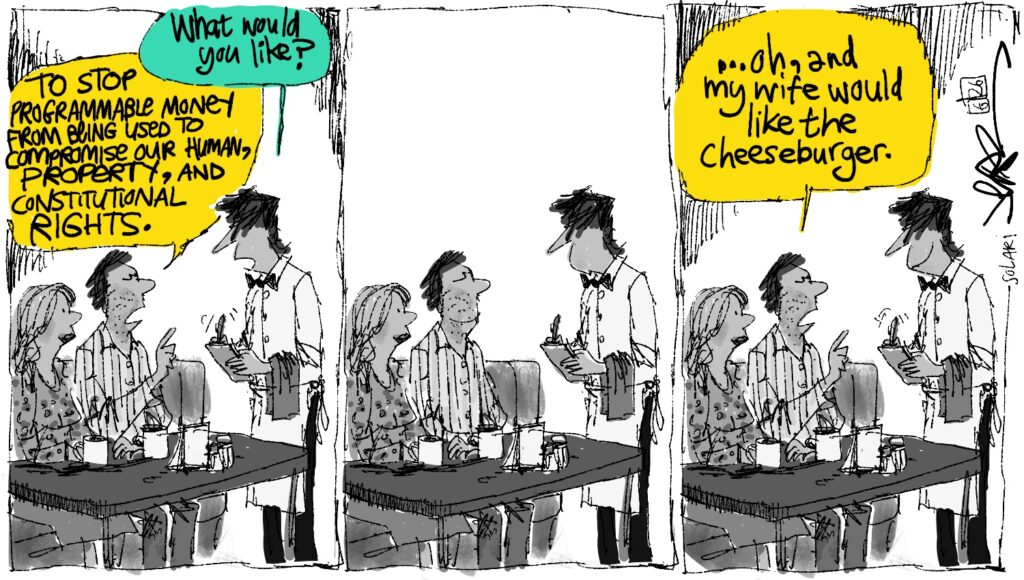
Sparked by a grassroots petition that attracted over 50,000 signatures, the law underscores cash’s important role in crisis situations (during which digital systems often fail), as well as emphasizing social equality for the digitally illiterate, protection against programmable money, and transaction privacy from state surveillance. Despite initial opposition from both the government and European Central Bank (ECB), legal experts confirmed the law’s compatibility with the EU’s monetary framework, marking a victory for financial independence.
Ireland moved decisively in 2025 to halt the cashless creep, signing the Finance (Provision of Access to Cash Infrastructure) Act into law earlier this year, with full implementation slated for the end of December. The law matches public opinion—according to an ECB survey conducted in 2024, at least 65% of the Irish people consider it important to maintain cash as a payment option.
The legislation closes a contract law loophole, requiring essential retailers like supermarkets, pharmacies, and gas stations to accept cash—no more “card-only” signs for notified customers. It draws from France’s 1984 model but aims for stricter enforcement to avoid ATM deserts.
Complementing this effort, new ATM regulations took effect on November 30, 2025, which obligate major banks (holding significant deposits) to maintain ATMs within 10 kilometers (six miles) of most homes and businesses, targeting 96% to 99% coverage in the various regions of the country. The law also requires a minimum number of 24-hour machines and cash service points at post offices.
These steps combat rural access gaps, fraud risks (Ireland lost €160 million to card scams in 2024), and exclusion of the elderly and unbanked. The government is also urging households to keep at least €70–€100 on hand for emergencies. Amid discussions about a digital euro, these laws affirm cash as a public good.
The State of New York has issued a number of unpopular mandates in recent years. However, A.7929A and its companion in the Senate (S.4153A) actually mandate a refreshing hedge against growing digital control.
New Yorkers gained stronger payment protections when Governor Kathy Hochul signed the “Protection of Cash Payments” bill into law in late November 2025. Introduced in April 2025 and set to take effect in March 2026, the law prohibits food stores and retailers from rejecting or imposing surcharges on cash. This builds on similar laws passed in states like New Jersey (2019) and Colorado (2021), targeting inequalities that sideline seniors, low-income families, and the unbanked—groups that often do not have smartphones or credit.
By restoring choice and fairness, the law’s aim is to prevent a “two-tiered” economy and ensure that millions of New Yorkers can access essentials without digital barriers.
At the federal level, 2025 also saw multiple bills introduced to extend cash rights coast-to-coast, reflecting bipartisan momentum against cashless exclusion. Approximately 14% of Americans rely on cash for most purchases.
The “Payment Choice Act of 2025” is a bill “to ensure that United States currency is treated as legal tender to be accepted as payment for purchases of goods and services at brick-and-mortar businesses throughout the United States, and for other purposes.”
Sponsored by Rep. John Rose (R-TN), H.R. 1138 would require brick-and-mortar stores to accept cash for transactions up to $500 and would ban price hikes for cash users. The bill currently boasts 17 cosponsors across both parties, including Reps. Joyce Beatty (D-OH) and Warren Davidson (R-OH). Sen. Kevin Cramer (R-ND) and cosponsor Sen. John Fetterman (D-PA) introduced a companion bill in the Senate (S. 2326) in July, mirroring the language and provisions of the House bill.

Since the government shutdown, the bill has stalled somewhat in the Finance Committee, where it was referred following its introduction. However, with additional cosponsors, this bill and its companion in the Senate could have a much higher chance of moving forward. As members of Congress return to their districts for the holiday break, town hall and Crackerbarrel meetings present great opportunities to find new cosponsors—especially if your representative sits on the House Finance Committee.
As 2025 closes, these cash laws represent powerful global pushback, reminding us that cash isn’t just currency—it’s choice, security, and equality.
To ring in the New Year, Solari will be featuring the top subscriber stories from the 60-day Cash Challenge. Submit your personal story of championing cash in your community or state to intel@solari.com; your experiences could inspire the next wave of transaction freedom!
Already a subscriber?

Our mission is to help you live a free and inspired life. This includes building wealth in ways that build real wealth in the wider economy. We believe that personal and family wealth is a critical ingredient of both individual freedom and community, health and well-being.
Nothing on The Solari Report should be taken as individual investment, legal, or medical advice. Anyone seeking investment, legal, medical, or other professional advice for his or her personal situation is advised to seek out a qualified advisor or advisors and provide as much information as possible to the advisor in order that such advisor can take into account all relevant circumstances, objectives, and risks before rendering an opinion as to the appropriate strategy.
Be the first to know about new articles, series and events.
Your cart is currently empty!
Notifications