

































































Scenario #1: Managed Decline
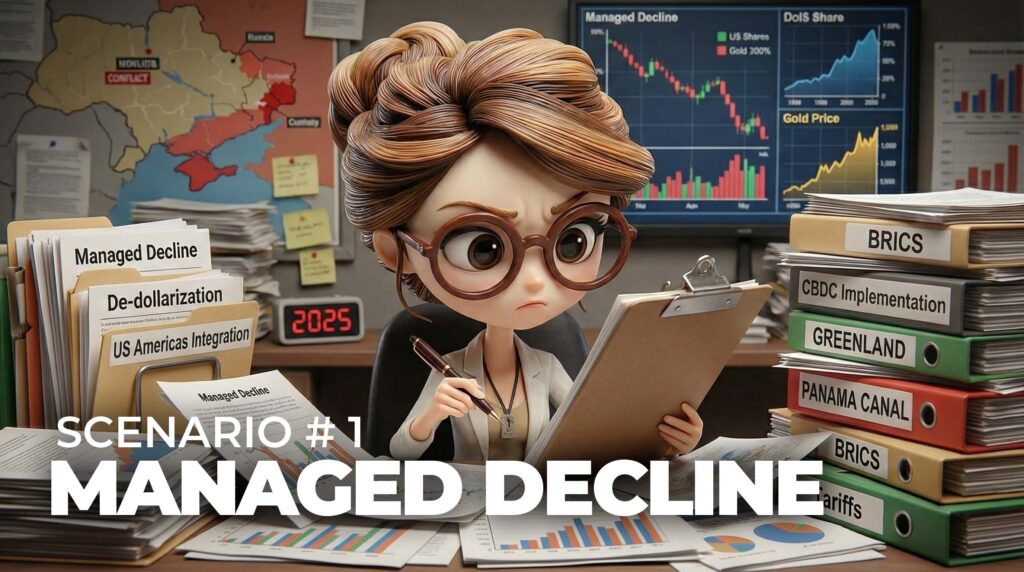
Slow De-dollarization + 2025-Level Disruptions
The dollar continues dominant and dangerous. Dollar percentage share of central bank reserves continues to decline by a small, steady percentage as central banks continue to acquire gold, yuan, and alternative assets. Trade in the dollar also continues to lose market share.
The BRICS-plus bloc continues to develop non-dollar payment and trade mechanisms. The petrodollar system erodes as Saudi Arabia and other Gulf states accept yuan for some oil transactions, but the dollar remains dominant in global commodity pricing.
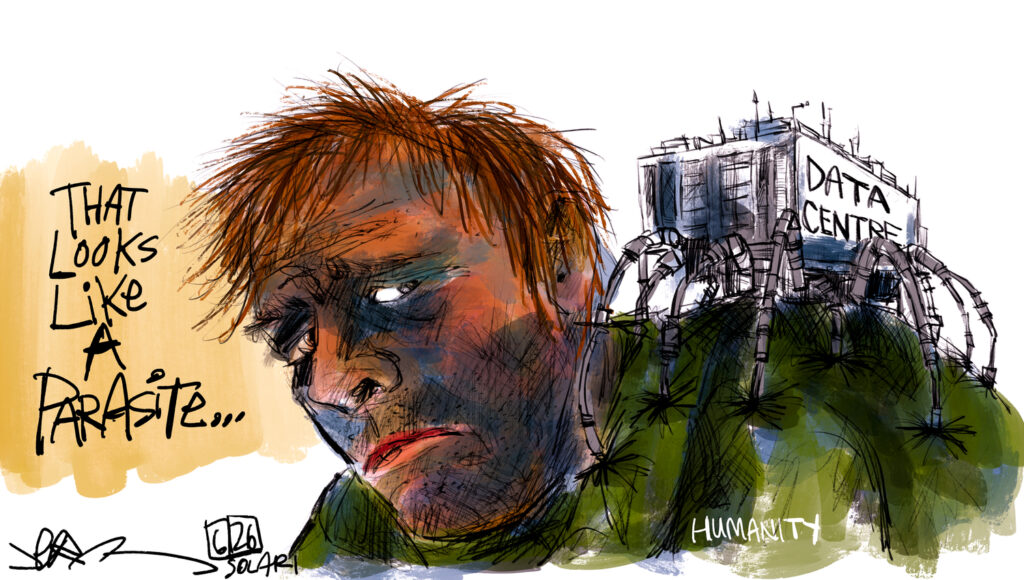
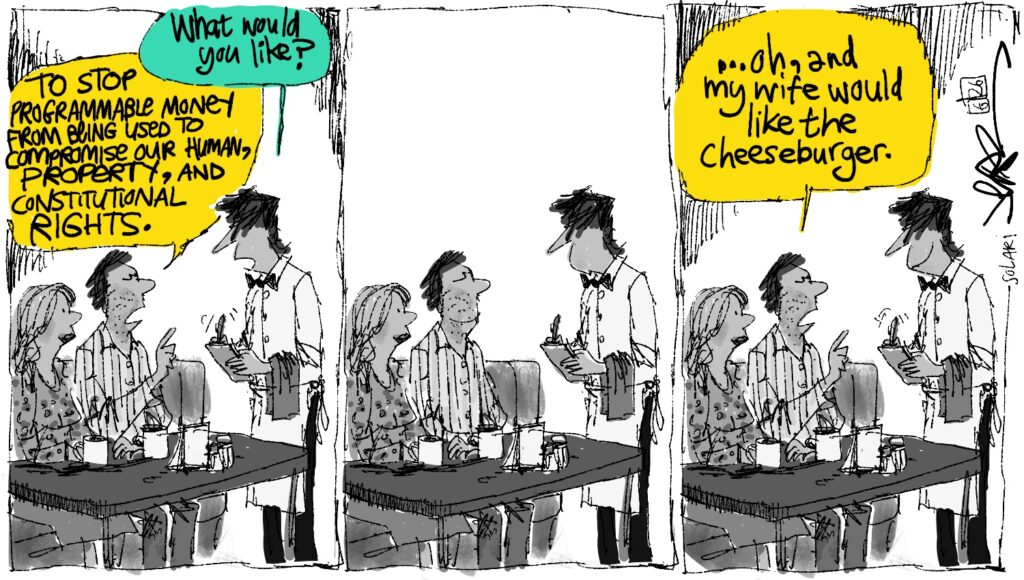
In this scenario, the current currency degrades slowly rather than ruptures, making it easier for the people who run the dollar system to build their digital control grid and maintain countries in a dollar debt trap—in need of dollars to service their dollar debt.
Tariffs and the hard bifurcation of the physical economy from the financial system accelerate the deglobalization process, but sufficient cooperation within the G20 ensures that major disruptions do not occur before the U.S. elections.
Characteristics
- Dollar share of global reserves declines 1%-2% annually (continuing post-2014 trend).
- Gold accumulation by central banks continues.
- U.S. fiscal deficits persist but are absorbed by markets without a major financial crisis.
- Regional conflicts continue. (Russia continues to acquire Ukraine territory, Middle East tensions are managed, and the Gaza genocide continues to depopulate the Palestinians for a major new real estate development.)
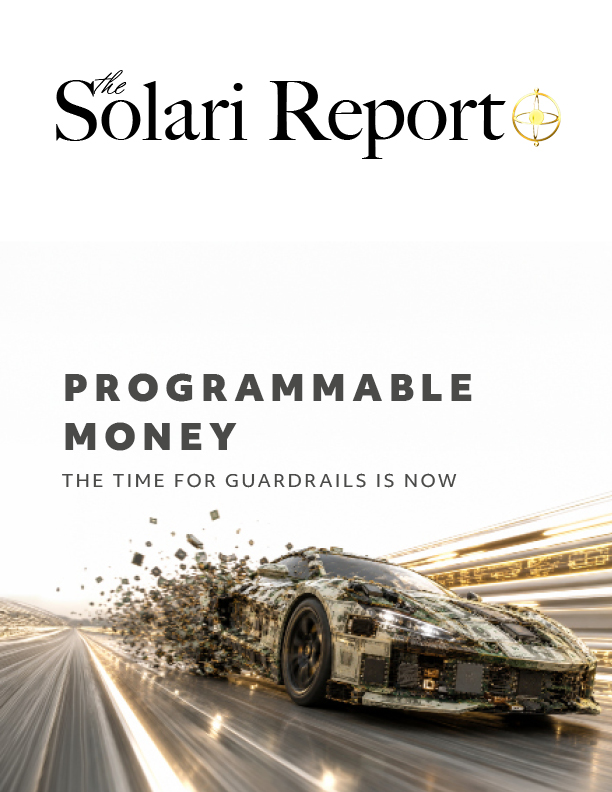
- Implementation of digital control infrastructure (CBDCs, programmable money, digital ID) continues worldwide—in Russia, China, India, Europe, and the U.S.
- Inflation and higher cost of capital continue.
Risks and Opportunities
The risk is complacency and continued dependence on systems that are eroding and do not stop the control grid.
The opportunity is to use the remaining stability—particularly before the elections in the United States—to reduce dollar exposure, acquire real assets, grow local food, develop energy and health supply chains, cultivate skills and relationships that translate into future success, and do everything possible to preserve cash and stop the control grid.