


















































































Scenario #2: Fortress Dollar
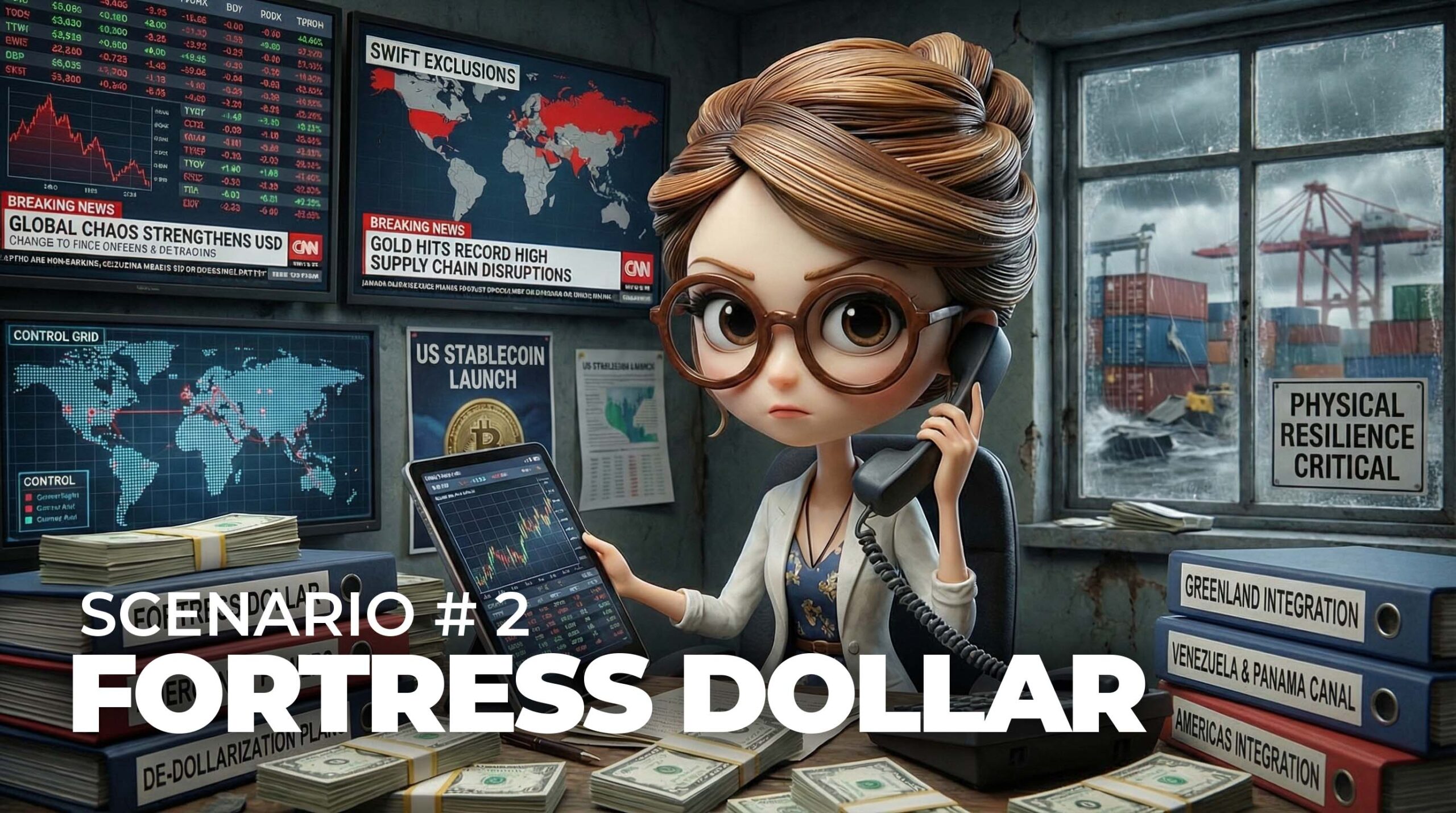
Slow De-dollarization + Intense Disruptions
Accelerating chaos reinforces dollar dominance as capital flees to perceived safety. Major disruptions drive global flight into dollar-denominated fixed income and bank deposits, despite U.S. fiscal deterioration.
The growing U.S. sovereign debt is a destabilizing factor. Maintaining financial hegemony increasingly requires emergency powers, expanded sanctions enforcement, aggressive use of SWIFT exclusions, and control of payment infrastructure. Other nations want to de-dollarize but cannot execute during instability—the transaction costs and risks of monetary transition are prohibitive when survival is the priority.
Gold and hard assets rise alongside the dollar, as investors seek safety in both traditional and alternative stores of value. The dollar’s role as crisis currency extends its lifespan, even as its fundamental weaknesses accumulate. The U.S. stablecoin launch can be expected to go well.
Tariffs and the hard bifurcation of the physical economy from the financial system accelerate the deglobalization process, but sufficient cooperation within the G20 ensures that major disruptions do not occur before the U.S. elections, other than physical disruptions that wreak selective havoc with supply chains.
Characteristics
- Dollar strengthens during crisis episodes, despite fiscal deterioration.
- Treasury yields are volatile, but flight-to-safety keeps them contained.
- Gold rises in all currencies.
- The weaponization of sanctions accelerates (including secondary sanctions and asset seizures).
- Emergency powers expand domestically and are used to manage capital.
- Supply chain disruptions create shortages and inflation spikes.
- Digital control grid deployment accelerates under emergency justification.
- Inflation and higher cost of capital continue, with physical disruptions creating offsetting deflation in some markets and areas.
Risks and Opportunities
Those with cash reserves (including dollar holdings) and low fixed obligations can navigate disruptions and acquire assets at distressed prices. However, timing the transition from dollar strength to dollar weakness is difficult—when and where do you go?
Physical resilience becomes paramount: food security, energy independence, community networks, and essential skills matter more than financial assets and acumen. The gap between those with real-world resilience and those dependent on fragile financial systems widens.
Geographically, jurisdictional diversification becomes critical. Capital controls, emergency powers, and arbitrary rule changes become normalized. Having assets, relationships, and options across multiple jurisdictions provides insurance against local disruptions.