
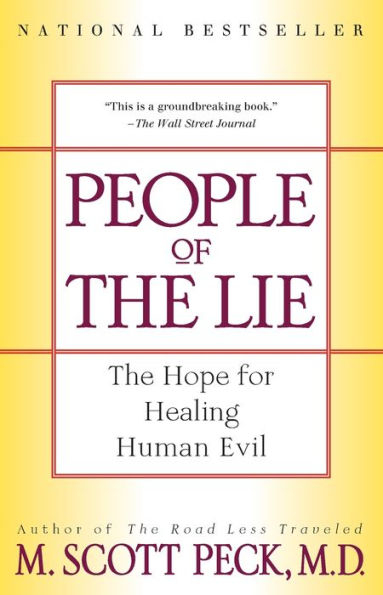
Book Review: People of the Lie by M. Scott Peck, MD
Become a member: Subscribe































NTS Headlines
Headlines by Category
Headlines by Year
- Money & Markets
- Weekly Solari Reports
- Cognitive Liberty
- Solari Builders
- Ask Catherine
- News Trends & Stories
- Equity Overview
- War For Bankocracy
- Digital Money, Digital Control
- State Leader Briefings
- Food
- Food for the Soul
- Future Science
- Health
- Metanoia
- Solutions
- Spiritual Science
- Wellness
- Building Wealth
- Via Europa



























Solari’s Building Wealth materials are organized to inspire and support your personal strategic and financial planning.



Building Wealth
This 6-pillar curriculum teaches the basic literacy we need to be personally and financially successful and to do so in a manner in which together we evolve a culture that supports the emergence of an advanced human civilization.











Missing Money
Articles and video discussions of the $21 Trillion dollars missing from the U.S. government

Connect with the wider network of like-minded Solari subscribers using our in-house social media platform, Solari Connect.










No posts
Book Review
People of the Lie
The Hope for Healing Human Evil
By M. Scott Peck, MD
“We cannot begin to hope to heal human evil until we are able to look at it directly.”
~ M. Scott Peck, People of the Lie
People of the Lie
The Hope for Healing Human Evil
By By M. Scott Peck, MD
Book Review
People of the Lie
The Hope for Healing Human Evil
By the Solari Team
In 1978, psychiatrist M. Scott Peck (1936–2005) published The Road Less Traveled: A New Psychology of Love, Traditional Values, and Spiritual Growth. The book became a bestseller and eventually sold over 10 million copies.
In his introduction to the 25th anniversary edition of The Road Less Traveled, Peck noted that from boyhood, he had been the kind of person “who was always talking about the kinds of things that people shouldn’t talk about.” His second book, published in 1983 and titled People of the Lie, addressed just such a topic, one that generally is only too happy to dwell in unspoken territory: evil.
Peck subtitled the 1983 edition of People of the Lie “Toward a Psychology of Evil”; later editions subtly shifted the emphasis to something more positive, changing the subtitle to “The Hope for Healing Human Evil.” Nevertheless, Peck was the first to admit that while The Road Less Traveled was a “nice” book, its follow-on was “not a nice book.” About People of the Lie, he wrote, “It is about our dark side, and in large part about the very darkest members of our human community—those I frankly judge to be evil. They are not nice people.”
For those brave enough to tackle the topic of evil, there are many different ways to approach it. Examples that come to mind include Rudolf Steiner’s lectures positing an incarnated Ahriman as the “embodiment of evil on Earth”; Andrew M. Lobaczewski’s analysis, titled Political Ponerology, of the founders and supporters of oppressive political regimes; Thomas H. Meyer’s examination of 9/11 in Reality, Truth and Evil; John W. DeCamp’s assessment of child abuse, Satanism, and murder in The Franklin Cover-Up; and Dan Gretton’s look at “desk killers” in I You We Them.
In People of the Lie, Peck drew from his psychiatry practice, weaving case histories throughout the book (altered to protect confidentiality) that elucidate encounters with evil in “everyday life.” These encounters—whether with uncaring parents or domineering spouses—are all the more chilling precisely because they are so ordinary. In Peck’s view, “We brush against evil not once or twice in a lifetime but almost routinely.”
Along with the sometimes squirm-inducing case studies (in his introduction, Peck urged readers to handle the book with care), Peck sought to provide a working definition of evil. Beginning by acknowledging his eight-year-old son’s candid observation that “evil is ‘live’ spelled backward,” he offered a one-sentence definition as “that force, residing either inside or outside of human beings, that seeks to kill life or liveliness.” Peck elaborated,
“Evil is in opposition to life. It is that which opposes the life force. It has, in short, to do with killing…. I do not mean to restrict myself to corporeal murder. Evil is also that which kills spirit. There are various essential attributes of life … such as sentience, mobility, awareness, growth, autonomy, will. It is possible to kill or attempt to kill one of these attributes without actually destroying the body. Thus we may ‘break’ a horse or even a child without harming a hair on its head.”
Some of the other observations that punctuate Peck’s analysis include his assessment that one of evil’s characteristics is “extreme willfulness”; his awareness that, tragically, “the most typical victim of evil is a child”; his sense that the evildoer-victim dynamic often involves an element of “thralldom” (a theme, he points out, that is “not infrequent in fairy tales and myths in which princes and princesses and other beings have become captive to the evil power of some wicked witch or demon”); and the verdict (reflected in the book’s title) that “Evil always has something to do with lies.”
At the age of 43, after having dabbled in other spiritual traditions such as Buddhism, Peck made a “firm Christian commitment” by getting baptized, and he straightforwardly acknowledged that faith informed his analysis of evil. Thus, People of the Lie also includes a chapter on possession and exorcism, in which Peck shares his conviction that “there is some relationship between Satanic activity and human evil.” (Peck went on to describe his experiences with two cases of possession and their exorcism in his 2005 book, Glimpses of the Devil: A Psychiatrist’s Personal Accounts of Possession, Exorcism, and Redemption, a book he dedicated to Catholic priest Malachi Martin.) For Peck, Satan is the “Father of Lies,” and “the only power that Satan has is through human belief in its lies.” One of the saddest and most dangerous lies, in Peck’s view, is the lie that love “has no objective reality.” Stated another way, Peck describes love as a “blind spot” for Satan: “by virtue of its extreme self-centeredness, it has no real understanding of the phenomenon of love.”
Although People of the Lie largely addresses the evil Peck occasionally encountered in some of his patients, his second-to-last chapter examines group evil—breaking down the infamous MyLai massacre in Vietnam into the two “interwoven” crimes of atrocities and cover-up. For Peck, the cover-up was “part of the same ball of wax.” The question that he airs in that chapter—“How is it that so many individuals could have participated in such a monstrous evil without any of them being so conscience-stricken as to be compelled to confess?”—is one that takes on added resonance when one considers more recent events such as the hospital murders during Covid.
Ultimately, Peck argues, evil is not just dangerous and destructive but barren and “tawdry.” While arguing that “we are all in combat against evil,” Peck’s concluding message is that hope and love are our answer, and “goodness can succeed.” Though published over 40 years ago, People of the Lie is still one of the best and most thoughtful resources we know of for those willing to engage on the spiritual battleground.
Log in or subscribe to the Solari Report to enjoy full access to exclusive articles and features.
Already a subscriber?

Thank you Catherine. For everything: for all your years of living fully a meaningful, courageous, brilliant and inspiring life, for benefit of others. Thank you for all the resources you, the Solari team and your skilful friends share. Thank you to all who support and contribute to the greatly good service provided by Solari. You spread a tremendously positive force in this world and I believe this will remain so into the future, timelessly.
Thank you Kareen. Great time to double down on building the future. 🙂
Mark Stavish’s book “Egregores: The Occult Entities That Watch Over Human Destiny” offers us some clues.