
Food for the Soul: Gainsborough at the Frick
Become a member: Subscribe






















NTS Headlines
Headlines by Category
Headlines by Year
- Money & Markets
- Weekly Solari Reports
- Cognitive Liberty
- Solari Builders
- Ask Catherine
- News Trends & Stories
- Equity Overview
- War For Bankocracy
- Digital Money, Digital Control
- State Leader Briefings
- Food
- Food for the Soul
- Future Science
- Health
- Metanoia
- Solutions
- Spiritual Science
- Wellness
- Building Wealth
- Via Europa






















Solari’s Building Wealth materials are organized to inspire and support your personal strategic and financial planning.

Building Wealth
This 6-pillar curriculum teaches the basic literacy we need to be personally and financially successful and to do so in a manner in which together we evolve a culture that supports the emergence of an advanced human civilization.










Missing Money
Articles and video discussions of the $21 Trillion dollars missing from the U.S. government

Connect with the wider network of like-minded Solari subscribers using our in-house social media platform, Solari Connect.





No posts
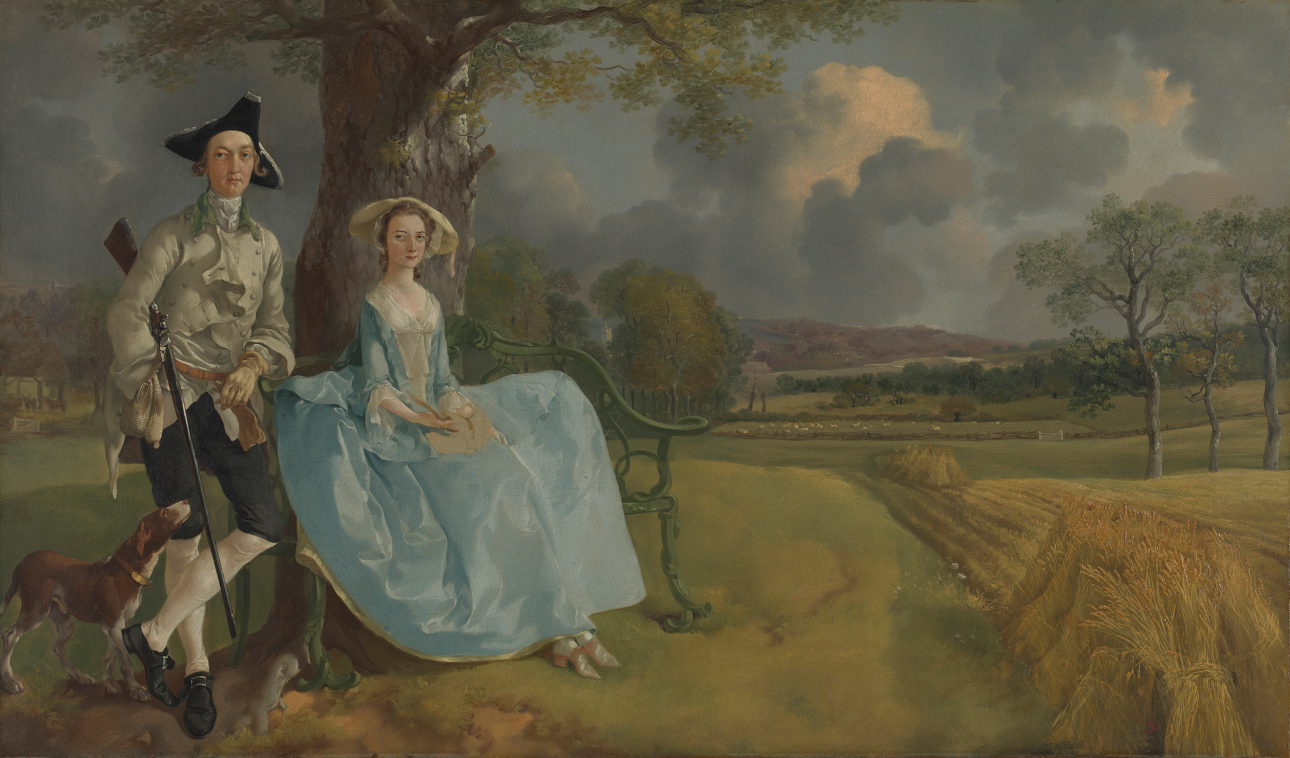
Thomas Gainsborough. Mr. and Mrs. Andrews,, c. 1750. Oil on canvas. The National Gallery, London. Photo: C The National Gallery, London
Food for the Soul: Gainsborough at the Frick
By Nina Heyn
Rapid changes in social and material status can create a social group called the nouveau riche—people who suddenly gain wealth and influence but lack the refinement that comes with generations of elevated social position. Even though the term itself is from the 20th century, the phenomenon has existed for much longer. In France, such a class appeared with the enrichment of the bourgeoisie throughout the 1800s; in contemporary society, such classes have arisen with digital revolutions (in the U.S. and India) or with political and social changes (in China, Russia, and Eastern Europe).
In the England of the late 1700s, the Industrial Revolution and colonial expansion created such a class as well. And this is what Thomas Gainsborough (1727-1788) portrayed in his famous, early canvas titled Mr. and Mrs. Andrews. […] Gainsborough is the subject of a new exhibition in the recently refurbished Frick museum. Titled Gainsborough: The Fashion of Portraiture, the exhibition brings together various well-known examples of the artist’s bread-and-butter activity of portraying the rich and famous, looking their best in sophisticated clothing. Because his father was a trader in luxury fabrics, the artist was very attuned to the subtleties of the silks, laces, and muslins gracing his illustrious models.
Related at Solari
Log in or subscribe to the Solari Report to enjoy full access to exclusive articles and features.
Already a subscriber?

Nina, once again, “out’a the park! Here in Austin since pre 2000, we’ve seen so many tech companies expand into Austin. Also many tech entrepreneurs live around here. Other Celeb’s too. A ponder on the newer Monied crowd…
I would not know them by “face” and I don’t know Haute Couture.
The transportation and parties and restaurants are probably the newer “tells”. Ponder over.
Another fascinating and refreshing dive on culture and life. And yes, my preference in art is certainly inclusive of the subtlety. I was at Crystal Bridges last November and their master’s works still draw me in!
Your fan,
Brad