This 6-pillar curriculum teaches the basic literacy we need to be personally and financially successful and to do so in a manner in which together we evolve a culture that supports the emergence of an advanced human civilization.
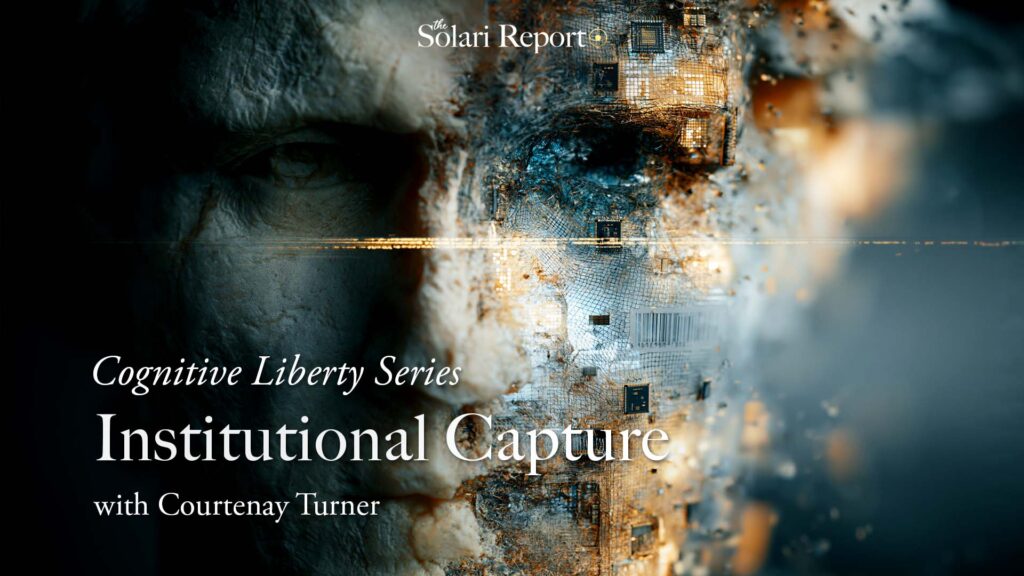
If technocracy is the operating system, the dialectical engine is what keeps the participants too busy fighting each other to look at the architecture. Courtenay Turner refuses to stay inside the daily dialectic, instead tracking the institutions, founders, methodologies, and funding lineages that explain how we arrived where we are.
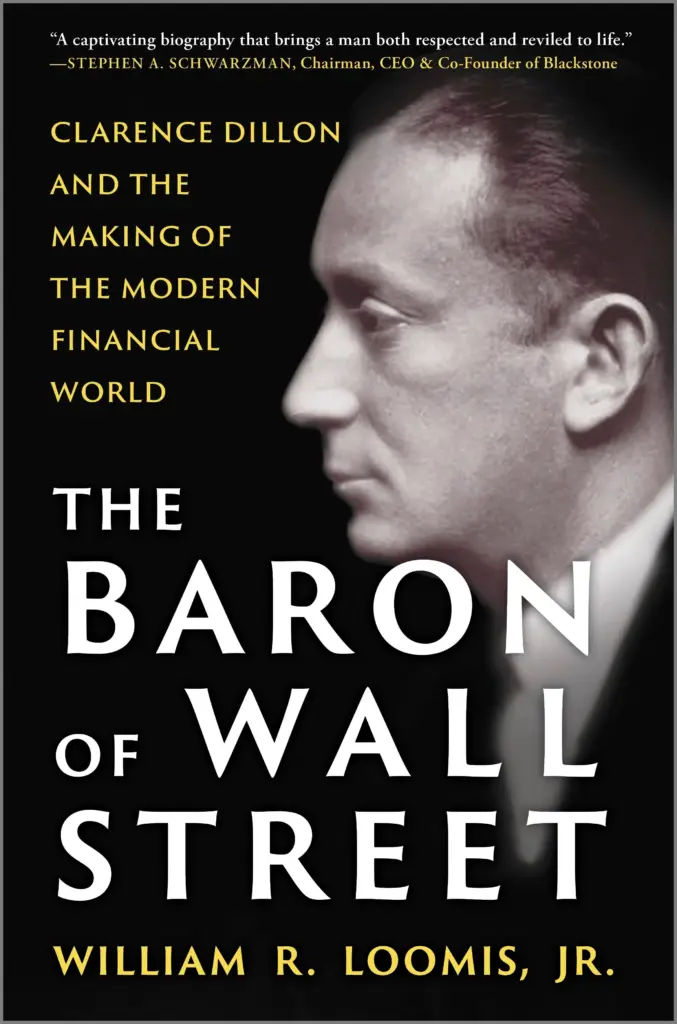
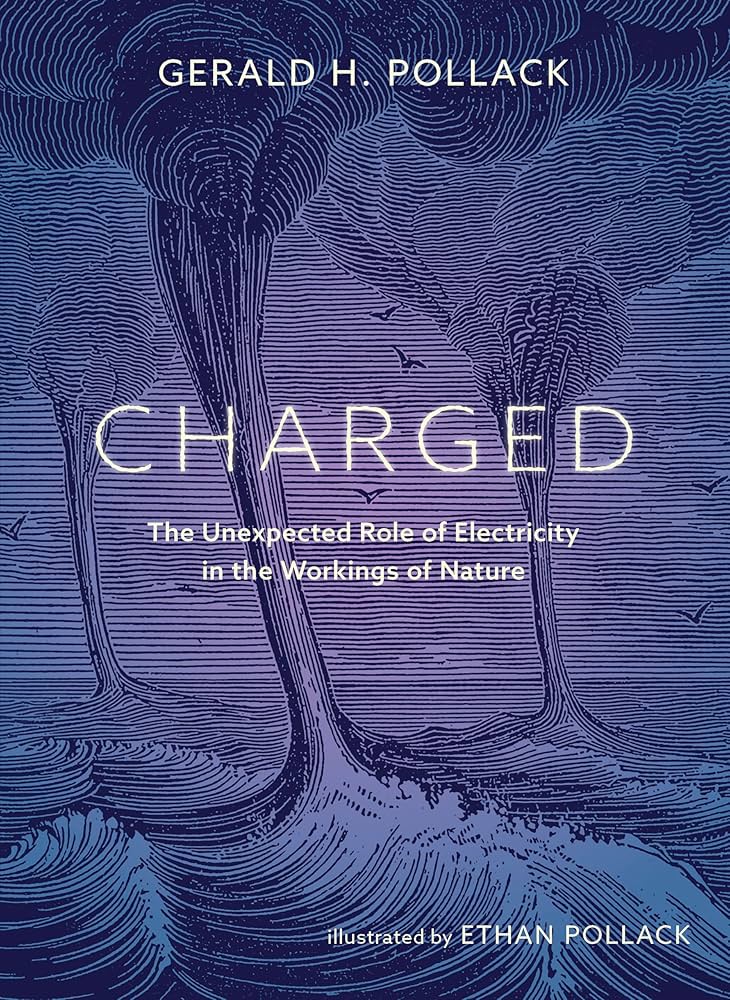
Joshua, check out thrift books .com or halprice books .com for those high priced books. You might get lucky. Just fyi. Great interview! The tax amendment passage seems to have been one of their major wins.
Much like Catherine, Daniel, and Joe; When Josh speaks, writes, guests, or hosts, I listen. While the “alternative” is largely the mainstream, the REAL alternative has an increasing amount of good guys. It is getting harder to subscribe to those I’d like to due to lack of time, money, and the number of courageous and excellent “shows”. Case and point in Courtenay. All in all, that’s a good thing. Thank you.
Excellent video :”Cognitive Liberty Series: Institutional Capture ” … if you ever make it freely available on your solari youtube channel, I will send the link to 20 people … maybe half will actually watch.
A tour-de-force presentation, all centered around the concept of ‘being’ versus ‘becoming’.
Wow!
Thank you for your excellent conversation: “Cognitive Liberty Series: Institutional Capture.”
While listening, I kept returning to a question that has occupied me for more than fifteen years.
What if cognitive liberty is not only about protection from external influence, surveillance, or technological intrusion, but also about humanity’s ability to access and unfold consciousness in its own unique ways?
Over the years, I have increasingly come to suspect that consciousness is not merely something that exists within the individual, but something that is perceived, interpreted, and ultimately accessed through our senses. That may sound like a subtle distinction, but its implications are profound.
If different people gain access to different aspects of reality through different perceptual pathways, then cognitive diversity becomes much more than a psychological or educational issue. It becomes a fundamental condition for the unfolding of consciousness itself.
A simple example is the difference between someone whose life experiences or trauma have trained them to continuously scan their environment through all of their senses for signals, patterns, and inconsistencies, and someone who has been trained to focus primarily on functioning successfully within established structures. Both are perceiving. Both are using their senses. Yet they are not perceiving in the same way, and as a result they often do not experience the same reality.
The problem begins when people are unaware of that difference. At that point, the reality perceived by the other person simply ceases to exist.
Perhaps this is one reason why so many societal discussions seem to break down today. Not because people lack access to information, but because they are insufficiently aware of the filters through which they perceive that information. When someone who naturally perceives patterns and context speaks with someone who primarily focuses on procedures, measurable outcomes, and established facts, both may sincerely believe they are looking at the same reality. In practice, they are often perceiving different aspects of that reality.
As long as people are aware of this, curiosity emerges. When that awareness is absent, polarization emerges. Difference is no longer seen as a contribution, but as an error.
This brings me to education.
The Prussian education model undoubtedly contributed to literacy, structure, organization, and scalability. Yet as this model spread throughout much of the world, something may also have been lost. People learn what to know, but far less about how they perceive. They learn to reproduce knowledge, but much less about how their own senses, attention, and perception actually function.
Perhaps this was not a significant problem as long as society was primarily focused on stability and predictability. Today, however, we seem to be moving ever deeper into a world where efficiency, optimization, and measurability have become the dominant standards. Within such a framework, diversity of perception is increasingly treated as complexity, friction, or a cost that must be managed.
This is where my concern begins. Not because diversity itself is disappearing, but because our ability to recognize diversity is disappearing.
When people no longer understand that their way of perceiving reality is only one of many possible pathways into reality, society gradually loses its capacity to recognize new perspectives. This may be one of the unintended consequences of an educational model originally designed for standardization and scalability, but which has now expanded far beyond education itself. The same logic increasingly appears in organizations, policymaking, technology, and AI systems.
As a result, something valuable risks being lost—not because people are becoming less intelligent, but because differences in perception, cognition, and meaning-making are increasingly viewed as problems to be solved rather than sources of insight.
For many years, I have been exploring how different people perceive information, create meaning, and access reality through their senses and perceptual pathways. What began as an investigation into learning eventually evolved into a much deeper question:
How do different human beings access consciousness?
I gradually came to suspect that information preferences are not merely educational tools. They may instead provide clues about the different routes through which human beings perceive reality and construct meaning.
If that is true, then we face an important challenge.
Our educational systems, organizations, and increasingly our AI systems are largely built upon standardization, reproducibility, and optimization. These approaches have undoubtedly delivered enormous benefits. Yet they also risk reducing cognitive diversity to noise.
And that creates a paradox.
We are building increasingly intelligent technologies while simultaneously understanding less and less about how human perception actually works.
Garbage in, garbage out.
If the data upon which our systems are built originates from an increasingly narrow spectrum of human perception, then the outputs of those systems will inevitably become narrower as well.
The challenge facing AI is not merely how to build more intelligent systems. It is how to prevent those systems from being trained on an increasingly limited representation of human perception, cognition, and consciousness. Because when the diversity of human perception is reduced, the diversity of human intelligence is reduced with it.
Biological systems seem to offer an important lesson here. A cell does not function because all of its components are identical. It functions because specialized functions cooperate within a larger whole. Diversity of function is not a problem to be eliminated, but a prerequisite for the system’s health and adaptability.
Perhaps the same is true for human societies.
And perhaps cognitive liberty should not only be understood as protection from control.
Should it also be understood as the protection of the diverse perceptual pathways through which human beings access and unfold consciousness itself?
Because when diversity is reduced in the name of efficiency, we risk limiting not only human development, but also the quality of the knowledge, systems, and AI technologies that are built upon human perception.
A system that allows fewer forms of perception will ultimately generate fewer forms of insight.
Could this be one of the most important challenges of our time?
Fantastic guest!
For those who understand German, I covered the broad strokes of Leipzig, Wundt, Pavlov to Tavistock and onwards into MKUltra in my presentation 2 years ago here: https://youtu.be/gaCD-0VNmvY (automatic subtitles in English possible)
























































































Joshua, check out thrift books .com or halprice books .com for those high priced books. You might get lucky. Just fyi. Great interview! The tax amendment passage seems to have been one of their major wins.
Much like Catherine, Daniel, and Joe; When Josh speaks, writes, guests, or hosts, I listen. While the “alternative” is largely the mainstream, the REAL alternative has an increasing amount of good guys. It is getting harder to subscribe to those I’d like to due to lack of time, money, and the number of courageous and excellent “shows”. Case and point in Courtenay. All in all, that’s a good thing. Thank you.
This was so interesting; many thanks!
Excellent video :”Cognitive Liberty Series: Institutional Capture ” … if you ever make it freely available on your solari youtube channel, I will send the link to 20 people … maybe half will actually watch.
A tour-de-force presentation, all centered around the concept of ‘being’ versus ‘becoming’.
Wow!
Dear Courtenay and Joshua,
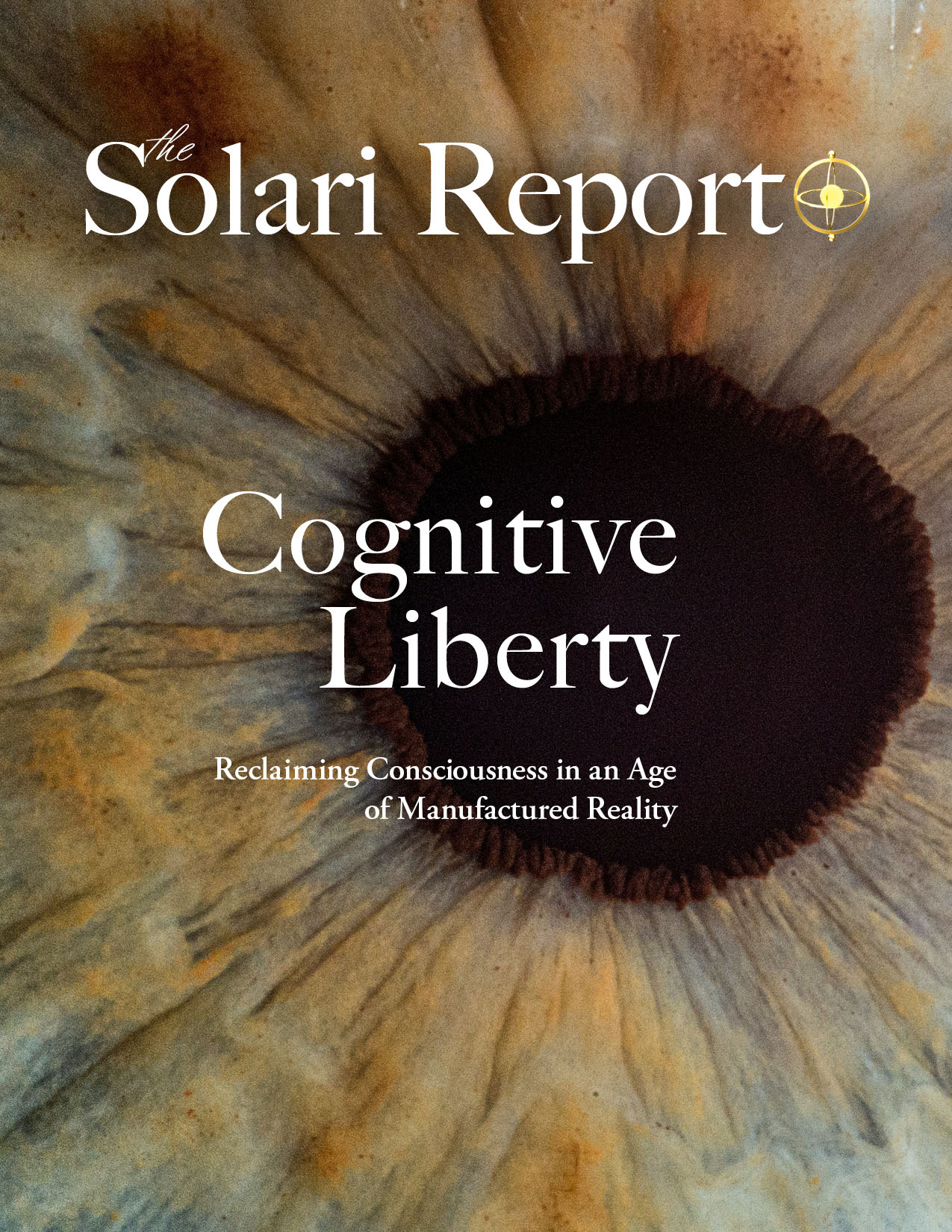
Thank you for your excellent conversation: “Cognitive Liberty Series: Institutional Capture.”
While listening, I kept returning to a question that has occupied me for more than fifteen years.
What if cognitive liberty is not only about protection from external influence, surveillance, or technological intrusion, but also about humanity’s ability to access and unfold consciousness in its own unique ways?
Over the years, I have increasingly come to suspect that consciousness is not merely something that exists within the individual, but something that is perceived, interpreted, and ultimately accessed through our senses. That may sound like a subtle distinction, but its implications are profound.
If different people gain access to different aspects of reality through different perceptual pathways, then cognitive diversity becomes much more than a psychological or educational issue. It becomes a fundamental condition for the unfolding of consciousness itself.
A simple example is the difference between someone whose life experiences or trauma have trained them to continuously scan their environment through all of their senses for signals, patterns, and inconsistencies, and someone who has been trained to focus primarily on functioning successfully within established structures. Both are perceiving. Both are using their senses. Yet they are not perceiving in the same way, and as a result they often do not experience the same reality.
The problem begins when people are unaware of that difference. At that point, the reality perceived by the other person simply ceases to exist.
Perhaps this is one reason why so many societal discussions seem to break down today. Not because people lack access to information, but because they are insufficiently aware of the filters through which they perceive that information. When someone who naturally perceives patterns and context speaks with someone who primarily focuses on procedures, measurable outcomes, and established facts, both may sincerely believe they are looking at the same reality. In practice, they are often perceiving different aspects of that reality.
As long as people are aware of this, curiosity emerges. When that awareness is absent, polarization emerges. Difference is no longer seen as a contribution, but as an error.
This brings me to education.
The Prussian education model undoubtedly contributed to literacy, structure, organization, and scalability. Yet as this model spread throughout much of the world, something may also have been lost. People learn what to know, but far less about how they perceive. They learn to reproduce knowledge, but much less about how their own senses, attention, and perception actually function.
Perhaps this was not a significant problem as long as society was primarily focused on stability and predictability. Today, however, we seem to be moving ever deeper into a world where efficiency, optimization, and measurability have become the dominant standards. Within such a framework, diversity of perception is increasingly treated as complexity, friction, or a cost that must be managed.
This is where my concern begins. Not because diversity itself is disappearing, but because our ability to recognize diversity is disappearing.
When people no longer understand that their way of perceiving reality is only one of many possible pathways into reality, society gradually loses its capacity to recognize new perspectives. This may be one of the unintended consequences of an educational model originally designed for standardization and scalability, but which has now expanded far beyond education itself. The same logic increasingly appears in organizations, policymaking, technology, and AI systems.
As a result, something valuable risks being lost—not because people are becoming less intelligent, but because differences in perception, cognition, and meaning-making are increasingly viewed as problems to be solved rather than sources of insight.
For many years, I have been exploring how different people perceive information, create meaning, and access reality through their senses and perceptual pathways. What began as an investigation into learning eventually evolved into a much deeper question:
How do different human beings access consciousness?
I gradually came to suspect that information preferences are not merely educational tools. They may instead provide clues about the different routes through which human beings perceive reality and construct meaning.
If that is true, then we face an important challenge.
Our educational systems, organizations, and increasingly our AI systems are largely built upon standardization, reproducibility, and optimization. These approaches have undoubtedly delivered enormous benefits. Yet they also risk reducing cognitive diversity to noise.
And that creates a paradox.
We are building increasingly intelligent technologies while simultaneously understanding less and less about how human perception actually works.
Garbage in, garbage out.
If the data upon which our systems are built originates from an increasingly narrow spectrum of human perception, then the outputs of those systems will inevitably become narrower as well.
The challenge facing AI is not merely how to build more intelligent systems. It is how to prevent those systems from being trained on an increasingly limited representation of human perception, cognition, and consciousness. Because when the diversity of human perception is reduced, the diversity of human intelligence is reduced with it.
Biological systems seem to offer an important lesson here. A cell does not function because all of its components are identical. It functions because specialized functions cooperate within a larger whole. Diversity of function is not a problem to be eliminated, but a prerequisite for the system’s health and adaptability.
Perhaps the same is true for human societies.
And perhaps cognitive liberty should not only be understood as protection from control.
Should it also be understood as the protection of the diverse perceptual pathways through which human beings access and unfold consciousness itself?
Because when diversity is reduced in the name of efficiency, we risk limiting not only human development, but also the quality of the knowledge, systems, and AI technologies that are built upon human perception.
A system that allows fewer forms of perception will ultimately generate fewer forms of insight.
Could this be one of the most important challenges of our time?
Not only for education.
Not only for AI.
But for civilization as a whole.
Fantastic guest!
For those who understand German, I covered the broad strokes of Leipzig, Wundt, Pavlov to Tavistock and onwards into MKUltra in my presentation 2 years ago here: https://youtu.be/gaCD-0VNmvY (automatic subtitles in English possible)
Anyone else getting a “html5: Video file not found” error on the video? Wasn’t like this last week. The audio track works.
Just asked team to check.