
Food for the Soul: King Francis I – Renaissance Mon Amour
Become a member: Subscribe




























NTS Headlines
Headlines by Category
Headlines by Year
- Money & Markets
- Weekly Solari Reports
- Cognitive Liberty
- Solari Builders
- Ask Catherine
- News Trends & Stories
- Equity Overview
- War For Bankocracy
- Digital Money, Digital Control
- State Leader Briefings
- Food
- Food for the Soul
- Future Science
- Health
- Metanoia
- Solutions
- Spiritual Science
- Wellness
- Building Wealth
- Via Europa



































Solari’s Building Wealth materials are organized to inspire and support your personal strategic and financial planning.



Building Wealth
This 6-pillar curriculum teaches the basic literacy we need to be personally and financially successful and to do so in a manner in which together we evolve a culture that supports the emergence of an advanced human civilization.










Missing Money
Articles and video discussions of the $21 Trillion dollars missing from the U.S. government

Connect with the wider network of like-minded Solari subscribers using our in-house social media platform, Solari Connect.








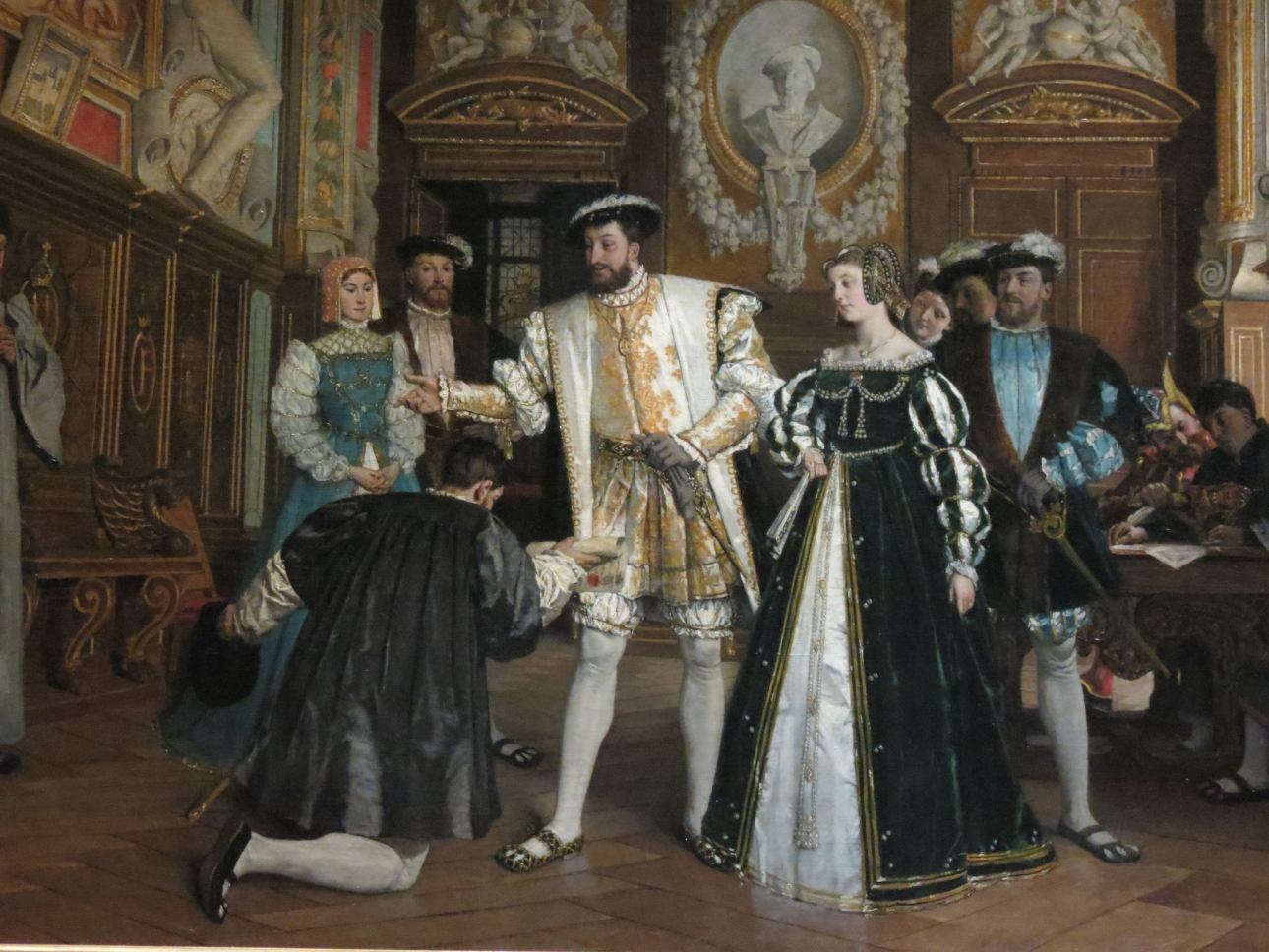
Isidore Patrois. Francis I grants Rosso Fiorentino the benefits of the St. Martin Abbey in compensation for the work on decoration of the Fontainebleau Palace, 1836. Oil on canvas. Blois castle, France. Photo: Giogo via Wikimedia Commons
Food for the Soul: King Francis I – Renaissance Mon Amour
By Nina Heyn
During a trial in 1913, when Vincenzo Peruggia was asked why he stole the Mona Lisa from the Louvre, he said that he wanted to return the masterpiece to its rightful owners, that is, the Italian nation. He may have been fashioning an explanation to cover his theft, but his argument matched the belief of a lot of Italians, who assumed that because it was painted by Leonardo da Vinci, it must belong to Italy.
Too little knowledge is a dangerous thing. The rightful owner of the painting was, in fact, the French nation because this panel was purchased around 1519 from da Vinci’s pupil Salai by the king of France for the tidy sum of 4000 gold écus. The king in question was Francis I (known in France as François 1er; 1494-1547), one of the most powerful Renaissance rulers. He invaded northern Italy in 1515, deposing the duke of Milan but offering the elderly Leonardo da Vinci a safe haven in the comfort of a French château. Da Vinci spent the last three years of his life there, designing court events and decorations, doing architectural projects (the famous double spiral staircase at Chambord is probably a Leonardo design), and painting or perfecting his earlier pictures, including the Mona Lisa.
Related at Solari
Log in or subscribe to the Solari Report to enjoy full access to exclusive articles and features.
Already a subscriber?