








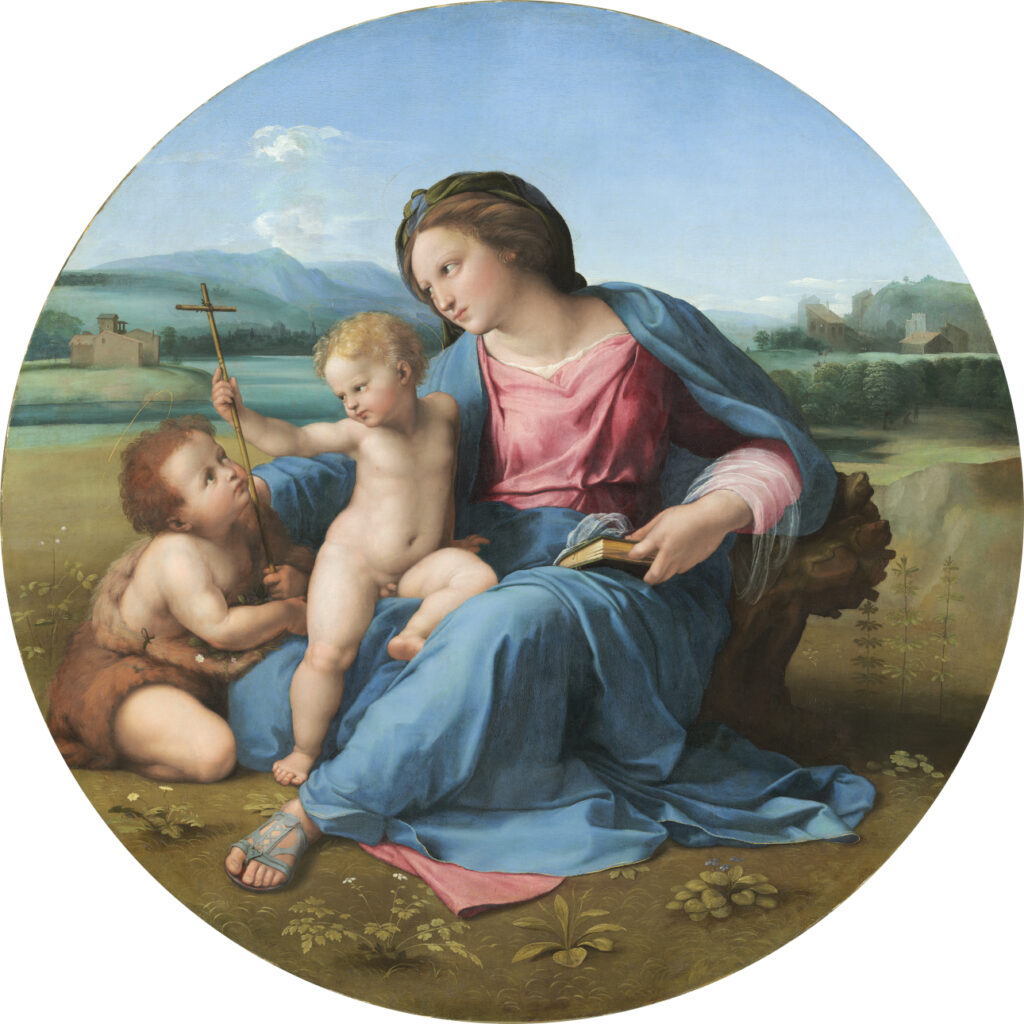























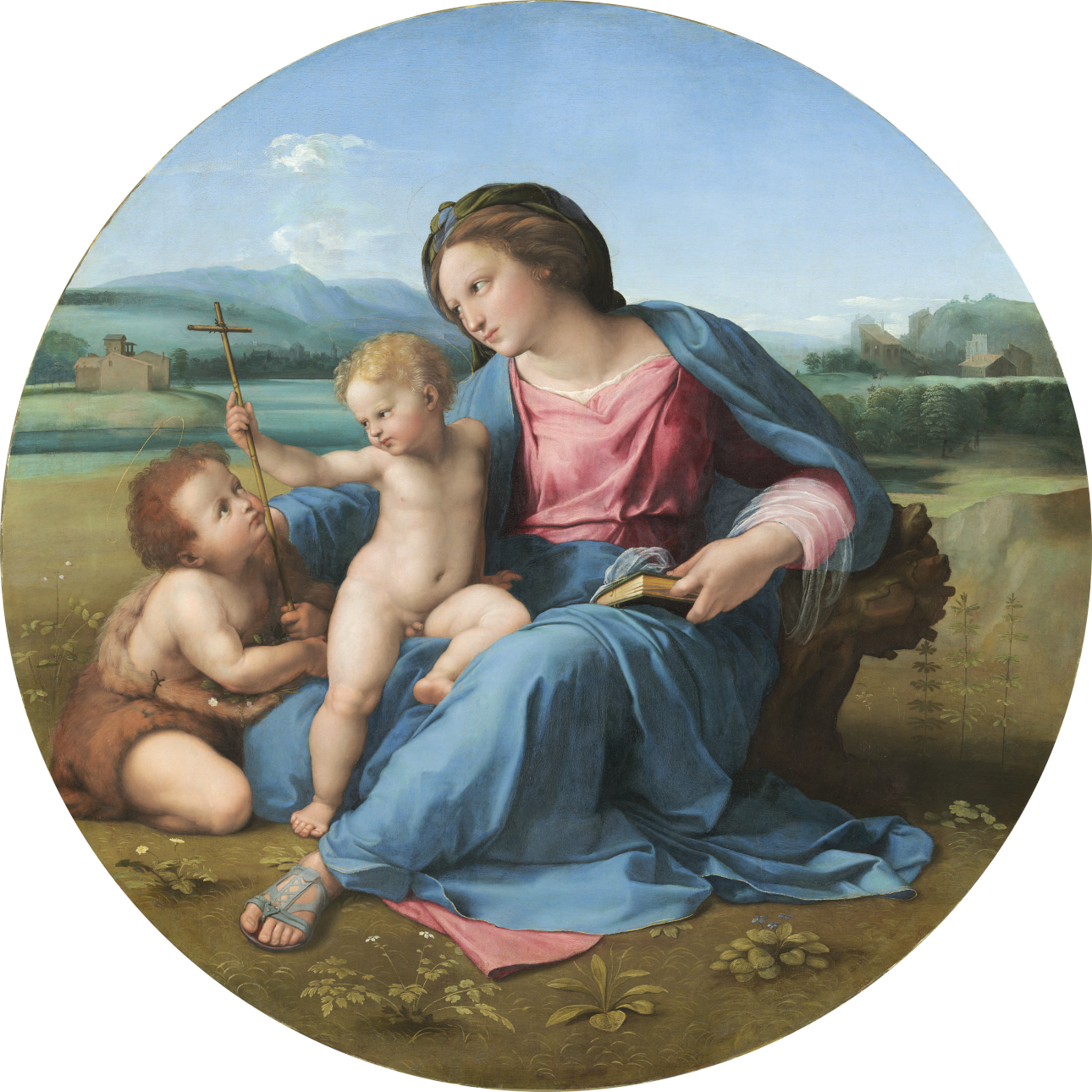
If you want to learn about fine art, sometimes it is best to start with the basics. Getting familiar with Raphael (Raffaello di Giovanni Santi, 1483-1520) constitutes just such a “basic” because, alongside a dozen other artists throughout history, his works are not only some of the most alluring but also seeded many ideas about beauty, artistic composition, and color. For centuries, Raphael’s work has offered that intangible sensation that we are looking at the utmost that the human eye and hand can achieve. Since Raphael’s time, artists have always known that it would be hard to top his mastery. Even 20th-century grands such as Hockney or Picasso began their early careers by studying Raphael’s drawings.
The exhibition that has just opened at the Metropolitan Museum of Art in New York can remind everybody—the public and artists in equal measure—that going back to the basics of Western art is important. Raphael: Sublime Poetry is an ambitious, landmark exhibition; it is the first-ever major international loan show of the artist’s work in the United States. It comprises over 200 paintings, drawings, tapestries, decorative arts, and architectural sketches, together with numerous reference artworks by Raphael’s teacher Perugino and other Renaissance contemporaries who were his collaborators, or, like da Vinci and Michelangelo, served as points of reference. The loans include works from such major sources as the Louvre, the National Galleries in Washington and London, the Ashmolean in Oxford, as well as various European museums.