


























































































Become a member: Subscribe

NTS Headlines
Headlines by Category
Headlines by Year
- Money & Markets
- Weekly Solari Reports
- Cognitive Liberty
- Young Builders
- Ask Catherine
- News Trends & Stories
- Equity Overview
- War For Bankocracy
- Digital Money, Digital Control
- State Leader Briefings
- Food
- Food for the Soul
- Future Science
- Health
- Metanoia
- Solutions
- Spiritual Science
- Wellness
- Building Weatlh
- Via Europa






Solari’s Building Wealth materials are organized to inspire and support your personal strategic and financial planning.

Building Wealth
This 6-pillar curriculum teaches the basic literacy we need to be personally and financially successful and to do so in a manner in which together we evolve a culture that supports the emergence of an advanced human civilization.

Missing Money
Articles and video discussions of the $21 Trillion dollars missing from the U.S. government

Connect with the wider network of like-minded Solari subscribers using our in-house social media platform, Solari Connect.
No posts
Movie of the Week
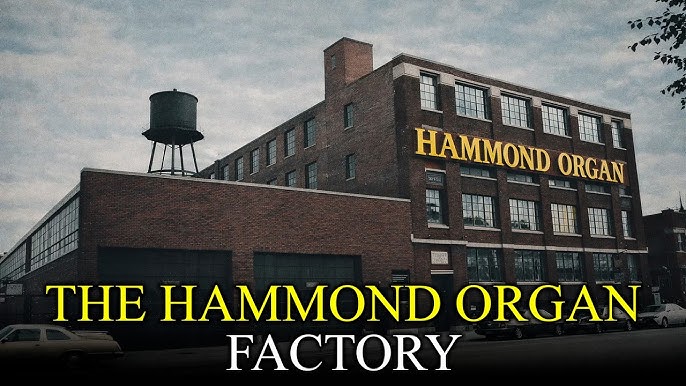
The Hammond Organ Factory
April 4, 2026
“Two thousand Hammond organs rolled off this floor every month at the peak.”
~ The Hammond Organ Factory
Movie of the Week
The Hammond Organ Factory
The Hammond Organ Factory traces a fascinating chapter in American history that touches on topics such as music history, the sonic experience of churchgoers, mechanical engineer Laurens Hammond’s drive to eliminate “inefficiencies,” and the lessons we can learn from the rise and fall of an important U.S. manufacturer.
Hammond (1895–1973), by his early 30s, had a Chicago lab staffed by six engineers and “a reputation as the man who could make anything work better.” Though he reportedly was bored by church music, a 1933 pipe organ concert got him “fixated” on a practical problem: a lot of churches in America wanted pipe organs but could not afford to buy or maintain them. According to this film, Hammond went back to his lab after the concert and announced to his team of engineers that they were going to build an electric organ—“they thought he’d lost his mind.”
With the help of his company’s assistant treasurer, who happened to be a trained organist, Hammond developed his novel “tonewheel” (or “phonic wheel”) technology, and the first Hammond electric organ rolled off the production line in 1935, with the company eventually selling about two million:
“The genius wasn’t just that it worked … it was mechanically simple enough to be manufactured at scale, reliable enough to run for years without breaking down, and sophisticated enough to produce sounds that professional musicians would actually want to use.”
The Hammond organ became “probably the most successful electronic organ ever made,” not only offering churches a lower-cost alternative to the pipe organ—roughly 50,000 U.S. churches had acquired a Hammond organ by the mid-1960s—but also becoming a favorite of jazz musicians and artists ranging from George Gershwin to (in the early 1970s) Stevie Wonder.
Because the company’s “brand identity was inseparable from tonewheels,” when later developments like the Moog synthesizer changed the musical landscape, the company’s “original strength became its fatal weakness.” By 1986, the Hammond Organ Company had gone out of business, with Suzuki buying up the Hammond name in 1987. An afficionado of the older models comments, “The Hammond Suzuki [models] have all the features which have become classic in the older Hammonds … but they don’t have that all-important grungy mechanical sound…. [T]hey ain’t tonewheel.”
Sadly, as this film also recounts, the Hammond Organ Factory in its heyday was “not just an assembly line [but] a community” and an important source of local employment—employing, in some instances, three generations of family members. This film documents the kind of workplace that has become all too rare: “Hammond was considered a good place to work. The workers took pride in what they made.”
Watch The Hammond Organ Factory HERE.
Links
Inside Hammond Organ Factory: How Chicago Made Churches Sing, Then Went Silent
Hammond organ (Wikipedia)
Laurens Hammond (Wikipedia)



Log in or subscribe to the Solari Report to enjoy full access to exclusive articles and features.
Already a subscriber?