

Plasma Fire, Ether, and the Fifth Element
Become a member: Subscribe















NTS Headlines
Headlines by Category
Headlines by Year
- Money & Markets
- Weekly Solari Reports
- Cognitive Liberty
- Solari Builders
- Ask Catherine
- News Trends & Stories
- Equity Overview
- War For Bankocracy
- Digital Money, Digital Control
- State Leader Briefings
- Food
- Food for the Soul
- Future Science
- Health
- Metanoia
- Solutions
- Spiritual Science
- Wellness
- Building Wealth
- Via Europa





















Solari’s Building Wealth materials are organized to inspire and support your personal strategic and financial planning.



Building Wealth
This 6-pillar curriculum teaches the basic literacy we need to be personally and financially successful and to do so in a manner in which together we evolve a culture that supports the emergence of an advanced human civilization.













Missing Money
Articles and video discussions of the $21 Trillion dollars missing from the U.S. government
Connect with the wider network of like-minded Solari subscribers using our in-house social media platform, Solari Connect.









No posts
Fire, Ether, and the Fifth Element
“The cosmos, the same for all, neither any god nor human has made, but it always was, is, and ever will be: an ever-living fire, kindling and extinguishing in measured rhythms.”
~ Heraclitus of Ephesus
by Ulrike Granögger
As with any great invention or discovery, plasma was not found by a single individual but discovered in stages of scientific insights and technological advances that led to the formulation of a new physics. The concept of an additional state of matter was first hinted at by 19th-century chemist and physicist Michael Faraday, whose observations of electrical discharges led him to propose, in 1816, the existence of what he called “radiant matter,”1 a term later adopted by fellow chemist-physicist William Crookes when presenting his work on vacuum tubes in 1879. But it was not until the 1920s that Irving Langmuir began the systematic study of physical systems of ions and free electrons that he baptized plasmas, helping launch the growing realization of plasma’s intimate relationship to electricity and electromagnetic fields.
The Unique Case of Fire
Plasma may be a relatively recent concept in physics, but a glance at the philosophical history of human civilization shows that it has been in the hands of humankind for most of our existence, namely in its occurrence as fire.
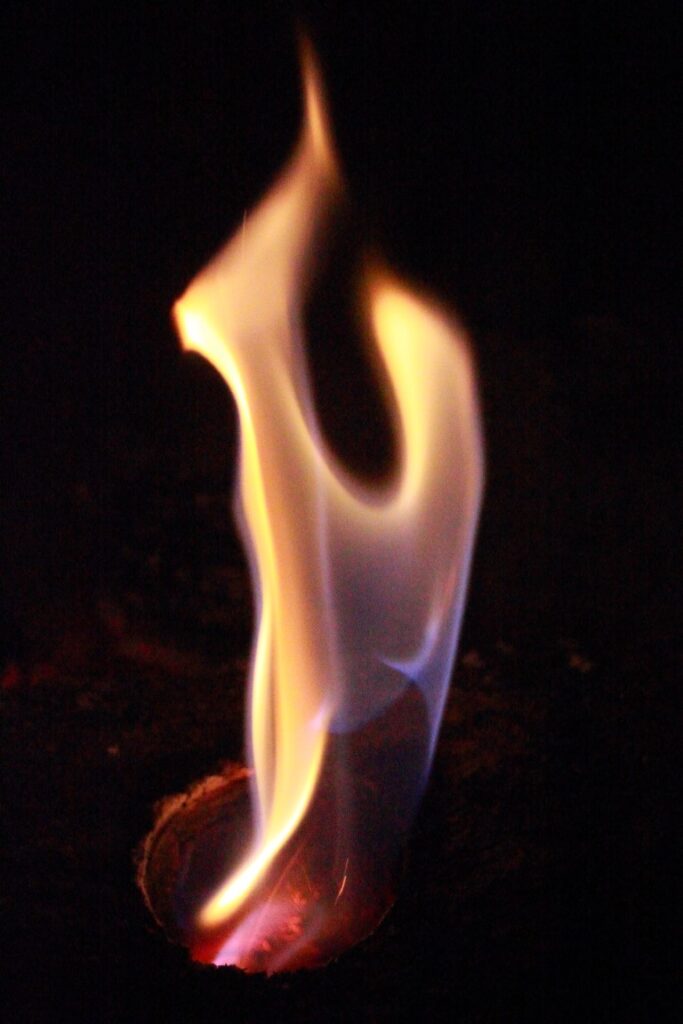
Fire warrants its own chapter in this discussion of plasma because it opens a window of thought into very ancient mythological and philosophical domains that can teach us about aspects of plasma that modern physics will never be able to convey. Fire is also a special case because, as we saw in Natural Plasmas, not all textbooks are in agreement in defining it as a form of plasma. For the most part, flames of combustion are weakly ionized and exhibit only some characteristics of a plasma. Still, the gas within an everyday flame contains enough ions to make it a decent electrical conductor, and we have learned that it is the collective electromagnetic behavior inside a plasma that constitutes one of its prime characteristics.
Interestingly, it was again Michael Faraday who first scientifically described the features of a flame in his 1848 lecture series on The Chemical History of a Candle.2 Presumably, Faraday realized that there was a unique relationship between the observed existence of a new form of “radiant,” or electrified, matter and the nature of fire.
Thus, flames of fire may be considered the first form of plasma used by humans. It is said that the domestication of fire was a pivotal turning point in human evolution, helping primitive hominids survive harsh environments and further develop tools and technologies. Archaeologists believe this happened at least one and a half million years ago. The Wonderwerk Cave3 in South Africa, for example, contains a hearth of charred bones and ash that indicate controlled use of fire one million years ago. While I do not hold the contemporary scientific view of linear Darwinian evolution, it is clear that fire is and has been essential to all aspects of human life and society. In this sense, human beings have used plasma in their daily lives for a very long time.
The Theft of Fire
The possession, control, and intentional creation of fire is unique to humans and has set us apart from all other levels of creation. This was understood in primordial times and is reflected in the narratives of how fire came into the hands of Man.4 All around the world, the most common element in stories and myths about the origins of fire in human civilization is the meme of the “theft of fire.” In most of the ancient narrations, for different reasons, humanity was not supposed to handle fire. Gods or invisible rulers withheld fire from Man either out of jealousy or the desire to hold mankind back; sometimes, it was a benevolent ruling based on the understanding that humanity was not ready for contact with fire.
Whatever the reason, this meant that humans had to obtain fire by theft or other cunning means.5 A well-known version of this trope is the story of Prometheus, the Greek Titan who sided with humans against the Olympian gods and brought them fire. Sosruko, a hero of the Circassian legends of the North Caucasus region, stole fire from a giant. For the Cherokee, it was Grandmother Spider who stole fire from the Sun, hiding it in a clay pot to bring back to humans so they could see in the dark. In the Rig Vedic tradition, the hero Matarishvan gifts humanity with fire (Agni) to perform the sacred rituals. Among Australian Aboriginal groups, the lore is that the crow stole fire from the Seven Sisters, the stars of the Pleiades constellation. Variations of the theft of fire story are numerous6 and indicative of a deeper meaning behind fire altogether.

The Elements
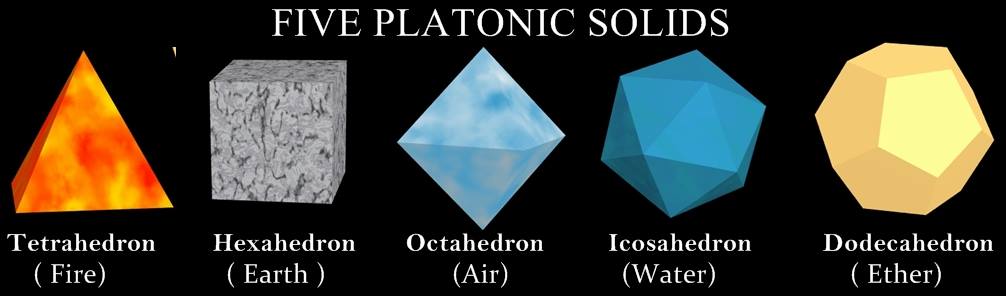
Most cultures around the world have developed systems to explain the properties of matter by a crucial set of terrestrial substances. Fire is so fundamental that all philosophies of old regarded it as part of the innate makeup of the world and one of the four traditional “elements” of creation, usually identified as earth, water, air, and fire. While some equate these four elements with the modern concept of the four states of matter (solid, liquid, gaseous, and plasma), I regard the mythical fifth element—the quintessence or the ether—as the proper candidate for plasma with its unique properties of charge, invisibility, and collective electromagnetic behavior. According to Plato and Aristotle, the ether (αἰθήρ) is an additional element above the four universal terrestrial substances, and it constitutes the cosmos (above the Moon), the stars, and the heavenly regions. It was clear to Aristotle, in particular, that the element that characterizes the region of the stars was not fire, but something else entirely. As for Plato, his Timaeus associated the five elements with the five regular polyhedra of three-dimensional space, relegating the dodecahedron to the fifth element, which also stands for the arrangement of the (twelve) constellations in heaven.
Other traditions also work with five elements. For example, the Chinese traditional wuxing system works with what is known as five phases or energies:

• Gold (metal): 金 (Jīn)
• Wood: 木 (Mù)
• Water: 水 (Shuǐ)
• Fire: 火 (Huǒ)
• Soil: 土 (Tǔ)
In Buddhist cosmology, we can see the five elements represented, for example, by the colors of the Tibetan prayer flags (blue for the ether or space, white for air, red for fire, green for water, and yellow for earth).7 The five colors in Buddhism, in particular in the Bön traditions of Dzogchen, also stand for the five Dhyani Buddhas or Tathagatas. Each is associated with a specific Sanskrit seed syllable or Tibetan fire letter, the element of space or ether being related to the “white AH” (which is highly meaningful to Dzogchen practitioners).
More importantly, the Vedic scriptures, especially those of Ayurveda, speak of the pancha mahabhuta as earth (bhūmi), water (āpas), air (vāyu), fire (agní), and ether (ākāsha, also translated as “space”). Each of these elements is also associated with one of the five senses,8 with akasha (ether/plasma) being accessible only to the sense of (inner) hearing, which is regarded as the finest of the senses in the yoga system. The Vedas taught that akasha flowed in the channels, tubes, vessels, and all cavities of the body and was required for the higher aspirations of the human soul, connecting us to the heavenly realms.
In the Vedas, there are also five vayus (pathways) for the flow of prana associated with the pranamaya kosha, the ether body or auric energy body.9 The flow of prana (life energy) moves through the 72,000 nadis (energy channels), much like the 12 acupuncture meridians in Traditional Chinese Medicine guide the flow of the life energy called qi. In a very interesting study from 2019 conducted at the Medical University of Vienna, Austria, scientists dissecting four human specimens discovered that acupuncture meridians share an anatomical symmetry with the body’s fascial system,10 which I discussed concerning its direct relationship with potential human bioplasma (see Living Plasma in this volume).

Acupuncture points have been demonstrated to actually conduct electricity, and meridians often exhibit distinct electrical properties: specifically, higher electrical conductance, reduced resistance, and higher electrical potential compared to surrounding skin.11 What did the historical traditions understand about a form of matter that reportedly was only “discovered” in the 19th century?
Ether and Electricity
It seems that the ancients saw a link between the ether—that quintessence of the elements of creation—and the components of the energy body with its bioelectric and bioplasmic features (again, see Living Plasma in this volume). This “fifth element” has much in common with properties of potentially living plasma existing in a highly energized state and may ultimately be seen as constituting our own energy body. As Robert Temple claims, we are essentially plasma beings making use of a physical body vehicle.

It follows that “electricity” inside the body is not the same as “electricity” outside of the body! Electricity is the flow of electric charges (either electrons or ions/protons). Plasma is matter that allows for the free movement of these charges. If there is ether (plasma) in the body, the flow of electricity will be very different from the electricity that runs in the wires of the electric grid. This is what Rudolf Steiner explains in his 1911 lecture on The Etherization of the Blood,12 where he describes the important difference between the technological force of electricity—which has increasingly colonized every aspect of our environment, not just running in wires and power lines but today being beamed wirelessly through air and other media—and the etheric life forces associated with growth, vitality, and the spiritualization of life.
In a 1923 lecture, Steiner stated, “The greatest contrast to electricity is LIGHT. If we look upon light as electricity, we confuse good and evil.”13 According to him, when humanity moved electricity outside of the living organism and increasingly into non-living machines and cyborgs, the flow of electric charges became detrimental to human spiritual development. For Steiner, external technical electricity acting through the atmosphere is an Ahrimanic, “demonological” force which poses the danger of turning the human being into a mere “induction apparatus.” He stated that electricity outside the body, when it affects our nerves, tends to expel the spiritual from human experience, promoting a purely materialistic viewpoint and weakening the higher forces of human will and moral impulses. We can see this reflected in the widespread propensity of today’s society to be influenced by entrainment techniques and electronic media signals that seem to completely override a person’s willpower and critical decision-making.
Conversely, when electricity flows in the energy-conducting prana or qi channels of the body, a higher resilience and mind-body connection are achieved. Again, this flow of charges (electrons and ions) inside the organism is not the same as technically produced electricity. According to Steiner, the internal electrical and magnetic charges within the body, especially those in the blood, are necessary to develop the power of free will, higher morals, and consciousness evolution. The blood carries the elements of the “I” and the will,14 and when a portion of the blood is “etherized,” it moves upward as a formative, life-organizing energy.
Life, therefore, needs to undergo a process of “etherization” that reverses the present tendency of materialization. Etherized or electrified matter is more than electricity applied on a system. It is a transformational leap into an ensemble that shares the coherent, collective, and conductive properties we know from plasma.
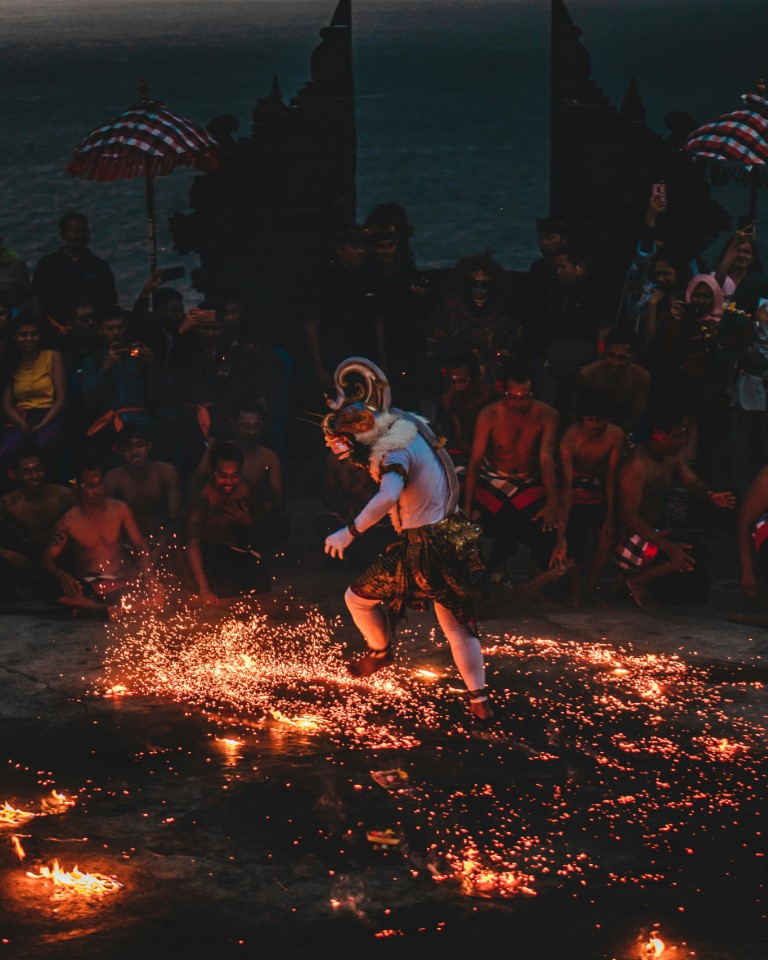
One drastic example may be seen in the many cultural traditions of fire-walking that are known from Polynesia, Japan, India, Greece, Bulgaria, and even Spain. A certain vibratory state of coherence seems to be achieved by the practitioner—often through techniques of breath and song—that allows for the exposure to flames and embers that would otherwise be harmful. What is more, studies carried out during fire-walk ceremonies have shown that coherence and synchronized biorhythms emerge both between performers in the ritual and onlookers.15
Even the Bible, in the Book of Daniel, contains the captivating motif of withstanding destruction by fire when Shadrach, Meshach, and Abednego, under the protection of an angel, survive being thrown into the fiery furnace.16
What is common to all these forms of fire—from Aristotle’s ideas of an ether to Steiner’s etherization and the pranic disciplines of yoga—is a certain capacity of the spiritualized, divinely aligned body-mind to enter a different phase of manifestation and overcome matter’s normal rules of behavior. The Keys of Enoch (Key 104) expresses this as follows: “We have this key in the Consciousness of Light: Centropy is the electrification of matter (specifically in a material function), Light being the highest amplification of Centropy.”17
Plasma Fires
Electricity and Fire can become a unique tandem. Electricity can cause fire, sometimes observed when lightning strikes a tree. The tree will actually burn from the inside, a process that, arborists claim, can remain completely invisible on the outside where the bark stays intact and the foliage green. Lightning, as we know, is plasma conducting insane amounts of electricity in a very small path.
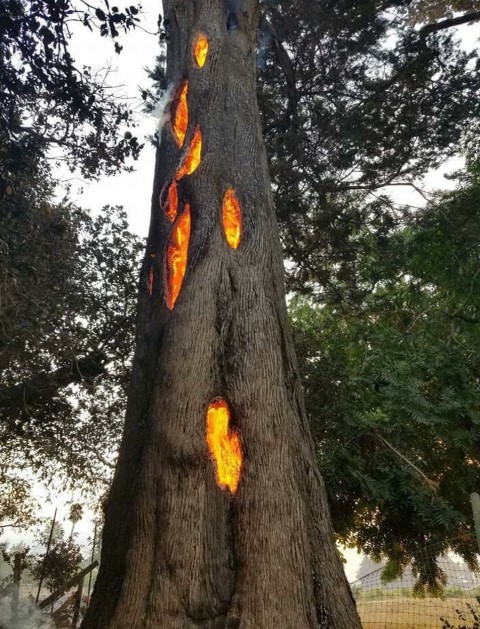
Trees that burn from the inside have also been observed in some of the devastating wildfires of recent years that have caused highly unusual damage to houses and cars while leaving brush and other trees largely unharmed. What could be causing these uncommon patterns of selective destruction? Furthermore, many of the most ravaging wildfires of the last decade have occurred in zones of higher latitudes such as Northern Canada and especially Siberia—regions where plasma interactions of Birkeland currents from the Sun are frequent, and magnetic and geoelectric field fluctuations are pronounced. And finally, some very bizarre and hard-to-extinguish fires seem to be springing up from the ground, with firefighters reporting fires under the soil of the forest floor and trees burning roots-first. These fires may last for months and have earned the nickname “zombie fires.”
How does this happen? Explanations range from peat keeping fires alive underground to directed energy weapons (DEWs) aimed from satellites. One intriguing and more natural explanation may be that these are actually plasma fires.18 Fires can be caused by magnetic anomalies and geomagnetic storms during solar activity, and the extra charge in the atmosphere from solar plasma discharge can lead to an electric induction in power lines and telecommunication wires.19 Local terrestrial magnetic fields are generally weakening and hence fluctuating, and can create a surge of ground current where telluric electricity20 21 is attracted to conductive materials such as power lines, pipelines, and submarine cables. At the very high amperage of a billion watts, as would occur during intense geomagnetic induction, even wood can become an electrical conductor. This means that wildfires are not just caused by dryness and heat, or by lightning, but can also be caused by “plasma fires” that originate in solar activity and geomagnetic field fluctuations.
The question is whether geoelectric anomalies can be created artificially—thus igniting plasma fires that would automatically be attracted to electricity grids in houses or the metal frames of cars.
Holy Fire
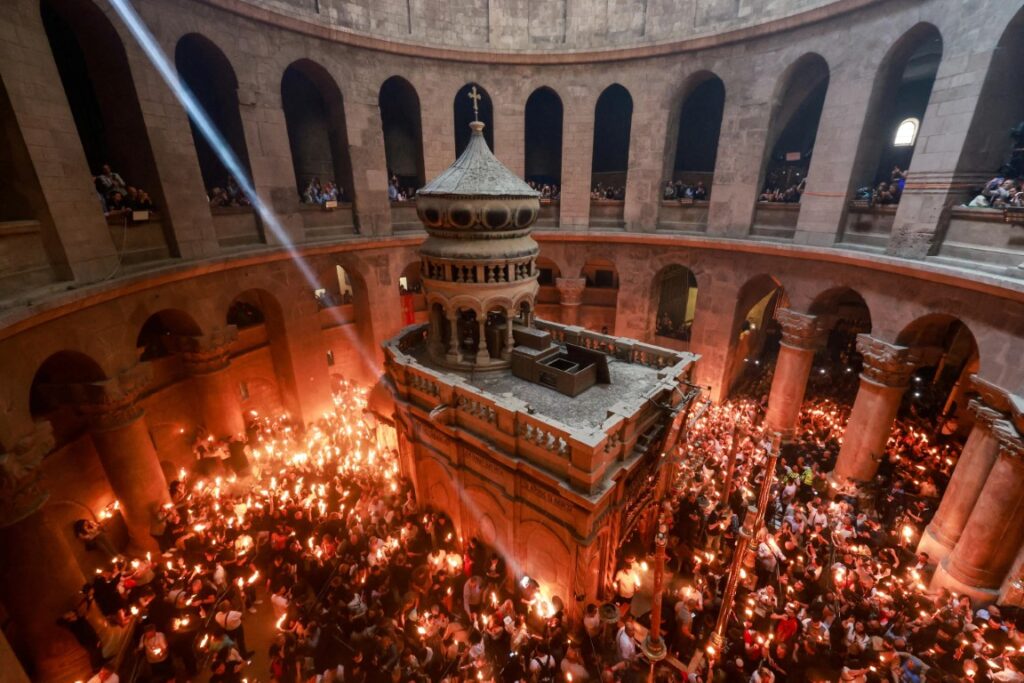
There is one type of fire that has all the characteristics of real plasma but, in addition, is a most mysterious supernatural manifestation of a flame. Witnessed for almost two thousand years, it is called the “Holy Fire” and seems to appear spontaneously each year on Easter Saturday over the tomb of Christ in the Church of the Holy Sepulcher in Jerusalem. Many have witnessed the miracle, and it has been documented for centuries by travelers, chroniclers, Crusaders, Christian pilgrims, and Muslim historians, as well as by the Greek Orthodox monks tasked with carrying out the ceremony of the Holy Fire each Easter night of resurrection.
According to Christian and Persian sources of the 10th century, the manifestation of the “Holy Fire” has occurred every year since the time of the ascension of Jesus, whereas the first definitive historical account of the fire descending upon the tomb dates back to the year 614. Each year, thousands of believers experience a strange occurrence when the Greek Patriarch of Jerusalem reemerges from the tomb chamber of the Holy Sepulcher with his 33 candles lit by supernatural light. As he steps out of the tomb, he first lights the candles of the Armenian and Coptic Patriarchs and of other clergy standing by the tomb entrance. Then, all of a sudden, the candles of the thousands of pilgrims inside and outside of the Church light up so spontaneously that within a matter of seconds—much faster than would be possible by lighting the candles from person to person—the whole church has lit up with the light of burning candles. The fire that appears over the tomb (and sometimes simultaneously outside of the sepulcher chamber) is described as being of a blueish light, which at times forms into a ball or a glowing pillar of white light. By themselves, the oil lamps and candles in the vicinity catch fire. The light or flame is also described as a fire that does not scorch; people can hold their hands or face in it without getting burned.
Here is one account of the Holy Fire reported by Patriarch Diodoros in 1998 in an interview with the Danish researcher Niels Christian Hvidt (associate professor at the University of Southern Denmark),22 which was published in the Danish daily Berlingske Tidende. It is quoted in a book by Haris Skarlakidis about the history of the appearances of the Holy Fire in Jerusalem, titled Holy Fire: The Miraculous Appearance of the Light of the Resurrection at the Tomb of Jesus:
“After all the lights are extinguished, I [Patriarch Diodoros] bow down and enter the first chamber of the tomb. From here I find my way through the darkness to the inner room of the tomb where Christ was buried. Here, I kneel in holy fear and … I say certain prayers that have been handed down to us through the centuries and, having said them, I wait. Sometimes I may wait a few minutes, but normally the miracle happens immediately after I have said the prayers. From the core of the very same stone on which Jesus had lain an indefinable light pours forth. It usually has a blue tint, but the color may change and assume many different hues. It cannot be described in human terms. The light rises out of the stone as a mist rises out of a lake; it almost looks as if the stone is covered by a moist cloud, but it is light. This light each year behaves differently. Sometimes it covers just the stone, while other times it gives light to the whole sepulchre, so that people who stand outside the tomb and look into it will see it filled with light. The light does not burn; I have never had my beard burnt in all the sixteen years I have been patriarch in Jerusalem and have received the Holy Fire. The light is of a different consistency from normal fire that burns in an oil lamp. At a certain point the light rises and forms a column in which the fire is of a different nature, so that I am able to light my candles from it.”23
Another much older report from around the year 1000, again quoted by Skarlakidis, was written by Persian scholar, astronomer, and polymath Al-Biruni,24 one of the great scientists of Islam and particularly known as a pioneer in the field of comparative religion. In his book Al-Athar al-Baqiyah (The Chronology of Ancient Nations),25 he refers to Christian Easter celebrations and mentions the Holy Fire. At the time, it was customary to keep the sepulcher sealed; the priest did not enter but waited with the congregation outside in the dark church to receive the immaterial fire.
Al-Biruni writes:
“With regard to the Saturday of the Resurrection there is a story told that surprises the researcher of natural sciences and the cause of which is impossible to be discovered. If there was no consensus of the opponents and they did not attest that they had personally seen it, and even leading teachers and other individuals had not related it in their works, one could not have any trust at all. I have learned it from books and have heard it from Al-Faraj ibn Salih of Baghdad that in the middle of the Church of Resurrection in Jerusalem there is carved in a rock the tomb of Jesus, in such a manner that it is enveloped by a dome. […] The Christians, and anyone else who comes that day to the place of the tomb, pray and call upon the Almighty God from noon until nightfall. Even the muezzin of the mosque, the head imam of the prayer and the emir of the city come, and sit next to the tomb. With them they bring oil lamps, which they place on top, while it [the tomb] is still sealed. The Christians in the meantime have already extinguished their lamps and torches and wait, until they see a clear white fire which lights a lamp. From this fire the lamps in the mosques and the churches are lit. Next there is a written report to the caliphs concerning the time when the flame descended. […] He who informed me relates that a certain sultan put a copper wire in place of the wick so it would not light and [the miracle] would not take place. However, when the fire descended the copper ignited. The coming that day of the fire from the sky, which recurs at the specific place and time, is cause for us to be in awe.”26
A final quote by Skarlakidis provides a further clue as to the nature of this fire. Skarlakidis was present at the Easter Saturday ceremony a total of 15 times, and one of those times he saw with his own eyes how a candle held by a pilgrim ignited spontaneously. In 2008, the author followed the event from a small adjacent church of the Greek Patriarchate, which has a window looking into the area of the Holy Sepulcher.
“About ten minutes later, and after the candles of those present had received the Holy Fire and most people had already left the church, a bluish white ray of light resembling an electrical discharge or lightning entered from a window of the church. The bright ray was straight and moved with lightning speed to an icon of the Virgin Mary and Christ exactly opposite the window, and then bounced off toward another area of the church. At the same time a loud whistling was heard, a noise that suggested that something was tearing through the air. The entire incident was over in fractions of a second. Exactly under the icon of the Virgin Mary stood two women who at the time were turned toward [the] window whence the light had entered. When the bluish white ray and the loud whistling were perceived, the two women ducked their heads in reflex, cried out, and ran a few meters away. The bright ray had passed just a few centimeters over them. After a moment they turned to the icon and both clasped their hearts in awe. I was standing at a distance of about five meters away together with my friend and colleague John Koutsikidis, who also saw the entire incident along with about ten other individuals. For a few moments we tried to understand exactly what had just happened. When we went over to the icon of the Virgin Mary, we were astonished to find that the oil lamp hanging in front of it had been ignited by the bluish white ray. That particular lamp had previously been extinguished, as were all other lamps inside the church.”27
Next chapter: Plasma: Etymology & Meaning
Footnotes:
- Crookes W. On radiant matter: a lecture delivered to the British Association for the Advancement of Science. Journal of the Franklin Institute. 1879;108(5):3-30. https://dn790007.ca.archive.org/0/items/onradiantmatterl00croorich/onradiantmatterl00croorich.pdf ↩︎
- Hammack B, DeCoste D. Michael Faraday’s The Chemical History of a Candle, with Guides to Lectures, Teaching Guides & Student Activities. Urbana, IL: Articulate Noise Books, 2016. https://engineerguy.com/faraday/pdf/faraday-chemical-history-complete.pdf ↩︎
- https://wonderwerkcaves.com ↩︎
- Pyne SJ. Fire in the mind: changing understandings of fire in Western civilization. Philos Trans R Soc Lond B Biol Sci. 2016 Jun 5;371(1696):20150166. https://doi.org/10.1098/rstb.2015.0166 ↩︎
- Frazer JG. Myths of the Origin of Fire: An Essay. London: MacMillan and Co., 1930. https://web.english.upenn.edu/~cavitch/pdf-library/Frazer_Myths_Origin_Fire.pdf ↩︎
- “Theft of fire.” Wikipedia, last edited Apr. 13, 2026. https://en.wikipedia.org/wiki/Theft_of_fire ↩︎
- Kopecki S, Avery M. The meaning of colors in Tibetan Buddhism. Auspicious Symbols of Tibetan Buddhism, July 2015. https://ashtamangala8auspicioussymbols.wordpress.com/meanings-of-colors-in-tibetan-buddhism/ ↩︎
- Brandt T, Dieterich M, Huppert D. Human senses and sensors from Aristotle to the present. Front Neurol. 2024 Jul 3; 15:1404720. https://doi.org/10.3389/fneur.2024.1404720 ↩︎
- Fitts CA. Future Science Series: The Economy of the Energy Body with Ulrike Granögger. The Solari Report, Feb. 13, 2023. [https://solari.com/the-economy-of-the-energy-body-with-ulrike-granogger/ ↩︎
- Maurer N, Nissel H, Egerbacher M, et al. Anatomical evidence of acupuncture meridians in the human extracellular matrix: results from a macroscopic and microscopic interdisciplinary multicentre study on human corpses. Evid Based Complement Alternat Med. 2019 Mar 21;2019:6976892. https://doi.org/10.1155/2019/6976892 ↩︎
- Zhang J., et.al.: Power Spectrum Features of Acupoint Bioelectricity Signal. Evid Based Complement Alternat Med. 2021 Apr 12. https://pmc.ncbi.nlm.nih.gov/articles/PMC8057873/ ↩︎
- Steiner R. The Etherisation of the Blood. GA 130. Basel: Oct. 1, 1911. https://rsarchive.org/Lectures/GA130/English/Singles/19111001p01.html ↩︎
- Steiner R. Concerning Electricity. GA 220. Dornach: Jan. 28, 1923. https://rsarchive.org/Lectures/GA220/English/Singles/19230128p01.html ↩︎
- Granögger U. A Conversation about Iron with Ulrike Granögger and David O’Hagan. The Solari Report, Sep. 30, 2021. https://solari.com/special-report-a-conversation-about-iron/ ↩︎
- Konvalinka I, Zygalatas D, Bulbulia J, et al. Synchronized arousal between performers and related spectators in a fire-walking ritual. Proc Natl Acad Sci U S A. 2011 May 17;108(20):8514-8519. https://doi.org/10.1073/pnas.1016955108 ↩︎
- Daniel 3 [English Standard Version]. https://www.biblegateway.com/passage/?search=Daniel%203&version=ESV ↩︎
- Hurtak JJ. The Keys of Enoch. Academy For Future Science, 1978. ↩︎
- Jeff Snyder2 YouTube channel. https://www.youtube.com/@jeffsnyder210 ↩︎
- Carrington Event. Wikipedia, last edited Apr. 11, 2026. https://en.wikipedia.org/wiki/Carrington_Event ↩︎
- “Magnetotellurics.” University of Münster, n.d. https://www.uni-muenster.de/Physik.GP/en/applied_geophysics/MT.html ↩︎
- “Magnetotelluric arrays.” EarthScope Consortium, n.d. https://www.iris.edu/hq/programs/magnetotelluric_arrays ↩︎
- Lysunderet i Jerusalem. http://www.holyfire.org ↩︎
- Quoted by Haris Skarlakidis. Holy Fire. Athens: Elea Publishing, 2015, p. 240. https://www.eleapublishing.com/en/ ↩︎
- “Al-Biruni.” Wikipedia, last edited Mar. 18, 2026. https://en.wikipedia.org/wiki/Al-Biruni ↩︎
- “The Remaining Signs of Past Centuries.” Wikipedia, last edited Apr. 5, 2026. https://en.wikipedia.org/wiki/The_Remaining_Signs_of_Past_Centuries ↩︎
- Quoted by Skarlakidis in Holy Fire, pp. 74-75. ↩︎
- Quoted by Skarlakidis in Holy Fire, pp. 223-224. ↩︎