





















































































Rep. Bud Hulsey on the Programmable Money Bill and Testimony from Catherine Austin Fitts and Rep. Tobi Maier Esq.
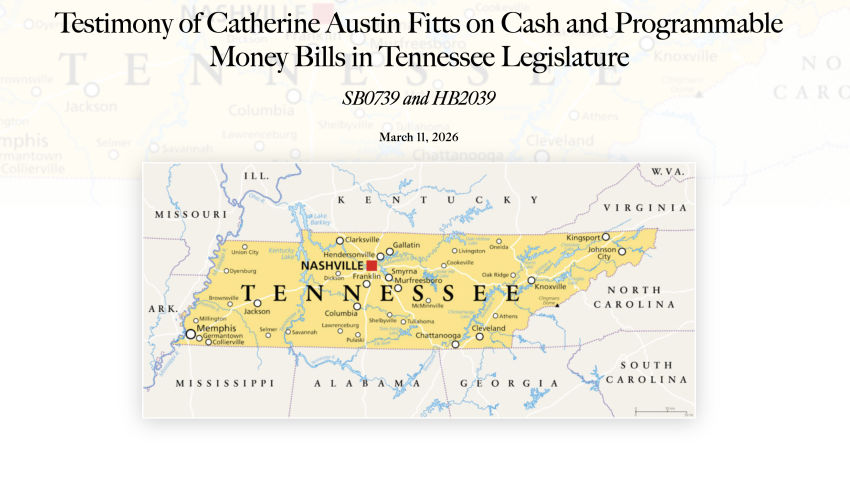
This week, Catherine testified in the Tennessee Senate and House on two bills pertaining to cash and programmable money (see testimony below).
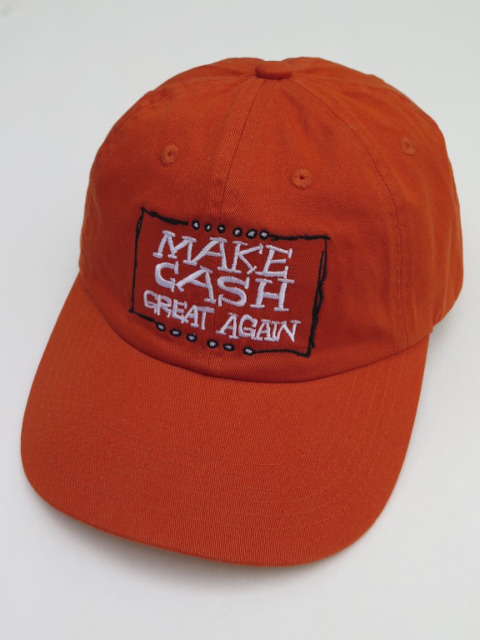
- SB0739 would require businesses, with certain reasonable exemptions, to accept cash.
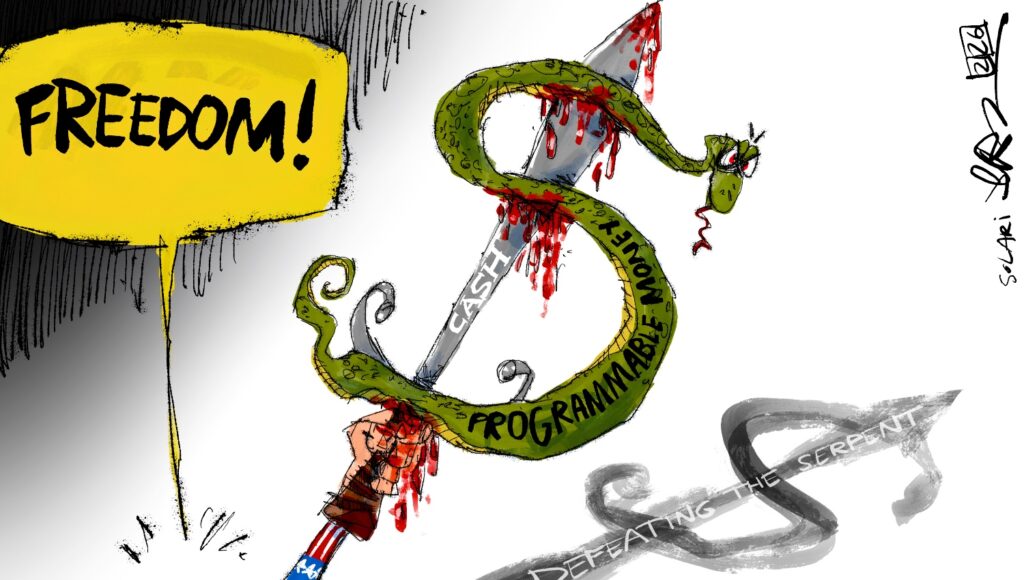
- HB2039, based on Solari’s model legislation addressing programmable money, would protect the right of Tennesseans to transact freely without being forced into using programmable digital payment systems.
I. Testimony of Catherine Austin Fitts, Senate Commerce and Labor Committee, March 10, 2026: SB0739
My name is Catherine Austin Fitts. I am president of Solari Inc and a resident of Hickory Valley, TN in Hardeman County. I am a former managing director of Wall Street investment bank Dillon Read and Assistant Secretary of Housing in the first Bush Administration. I have managed and closed app. $25 billion in transactions and managed portfolios of $300 billion in financial assets and liabilities. My full resume including government, corporate and bank boards and directorships is available at Solari.com.
SB0739: Senate Commerce and Labor Committee
The purpose of SB 736 is to ensure that Tennessee businesses with six or more employees continue to accept cash or provide kiosks that convert cash to cards.
Who Depends on Cash?
The Federal Reserve’s 2024 survey found that 19% of American adults have no credit card. That number rises sharply for vulnerable populations:
- 37% of adults under 30 have no credit card.
- 54% of those earning under $25,000 have no credit card.
- Tennessee residents are 8.11% less likely to own a credit card than the national average—meaning more than 20% of Tennesseans depend on cash.
I live in Hardeman County in West Tennessee, where per capita income is $22,580—well below the $25,000 threshold where credit card exclusion reaches 54%. This bill directly protects people like my neighbors.
Four Reasons This Matters
1. Savings
Watch $100 circulate in a community. In digital transactions, fees leak out with every purchase. In cash, the full $100 keeps circulating. Over many transactions, that difference matters to our families, farms, and tax base.
2. Inflation
Families and businesses are already stretched. Eliminating transaction fees through cash use—across thousands of purchases—adds up to real savings.
3. Disasters
Electronic systems fail in emergencies. Following Cyclone Gabrielle in 2023, New Zealand’s Reserve Bank documented that Electronic funds transfer at point of sale systems were unavailable for days and ATMs were inaccessible. Cash was the only viable means of payment.
Sweden’s Riksbank reversed its cashless policy in 2023, stating:
“Cash is the only payment instrument that can be used independently of electricity and telecommunications and is therefore important for emergency preparedness.”
4. Control
In October 2020, the head of the Bank for International Settlements (BIS)—the central bank of central banks—said at an IMF seminar:
“In cash, we don’t know who is using a hundred dollar bill today. A key difference with a CBDC is that the central bank will have absolute control on the rules and regulations that determine the use of that expression of central bank liability. And also, we will have the technology to enforce that.”
— Agustín Carstens, BIS General Manager, IMF Seminar, October 19, 2020
The single most effective way to prevent total control of every financial transaction—whether by CBDC or programmable digital money—is to keep cash alive. This is why Tennessee led on debanking legislation, and why we cannot afford to wake up in the position of the Canadian truckers.
This bill protects Tennessee businesses, farms, and families. It protects cash as legal tender and our right to transact freely.
II. Testimony of Catherine Austin Fitts, House Banking & Consumer Affairs Subcommittee March 11, 2026: HB2039
My name is Catherine Austin Fitts. I am president of Solari Inc and a resident of Hickory Valley, TN in Hardeman County. I am a former managing director of Wall Street investment bank Dillon Read and Assistant Secretary of Housing in the first Bush Administration. I have managed and closed app. $25 billion in transactions and managed portfolios of $300 billion in financial assets and liabilities. My full resume including government, corporate and bank boards and directorships is available at Solari.com.
HB2039: House Banking & Consumer Affairs Subcommittee
HB2039 ensures that no Tennessean can be forced to use programmable money—or have a transaction denied because of who they are or what they believe.
What Is Programmable Money?
It is digital currency whose use can be controlled, conditioned, or revoked by its issuer, subject to national and international terms and conditions. In October 2020, Agustín Carstens, head of the Bank for International Settlements (BIS) said it plainly:
“A key difference with a CBDC is that the central bank will have absolute control on the rules and regulations that determine the use of that expression of central bank liability. And also, we will have the technology to enforce that.”
We Cannot Wait for Federal Regulations
Some argue Tennessee should wait for the federal government to issue GENIUS Act regulations and pass the CLARITY Act. That argument has it backwards.
The GENIUS Act regulations don’t take effect until November 2026 at the earliest. The CLARITY Act has not passed the Senate. Meanwhile, the market is not waiting. Eight weeks ago the New York Stock Exchange announced 24/7 tokenized stock trading funded by stablecoins. Nasdaq has filed with the SEC for near-round-the-clock tokenized trading. Stablecoin issuance grew 72% in 2025 alone. With more than $300 billion of stablecoins now outstanding and over $2 trillion of digital assets outstanding, issuance is growing explosively now before any federal regulations are finalized.
Guardrails must go up before the infrastructure is complete—not after. You do not wait until the last mile of a highway is finished to install the guardrails. You do not try to put the bridle on the horse well after it leaves the barn.
Why This Bill Is Necessary—A Tennessee Example
Last fall, Circle—issuer of USDC, the world’s second-largest stablecoin with $75 billion in circulation—had buried in its terms of service a ban on using USDC to purchase firearms, ammunition, and related accessories.
No law authorized this. A private company had simply decided that lawful firearm purchases were off-limits. When gun rights advocates exposed the policy, it set off a national firestorm. Circle reversed course only after weeks of intense pressure. Tennessee’s own Senator Hagerty, author of the GENIUS Act, called it a “Choke Point-inspired mechanism to achieve partisan goals through financial restrictions.”
Circle backed down this time. But what about the next lawful industry a stablecoin issuer targets? What about the next Tennessean whose transaction is quietly blocked with no explanation and no recourse?
That is precisely what HB2039 prevents. No issuer may deny a transaction based on protected factors. If denied, the consumer has the right to know why.
Tennessee is one of the states in the nation leading on debanking. This bill extends that protection into the digital money era. Please vote yes.