This 6-pillar curriculum teaches the basic literacy we need to be personally and financially successful and to do so in a manner in which together we evolve a culture that supports the emergence of an advanced human civilization.
“This is a period governed by the laws of physics and the hostile policies of rival nations. Central banks operate on the assumption that liquidity cures scarcity.… In late 2025, a fire at the Novelis aluminum plant paralyzed the North American automotive supply chain. The heat from that blaze melted the production schedules of Ford and Stellantis. It erased billions in revenue. No amount of Federal Reserve liquidity could restore it.”
~ Craig Tindale, The Hard Bifurcation: The Convergence of Financial Liquidity and Physical Insolvency
Insurance Companies Don’t Want to Insure AI, Another Telltale Sign That AI Will Not Work
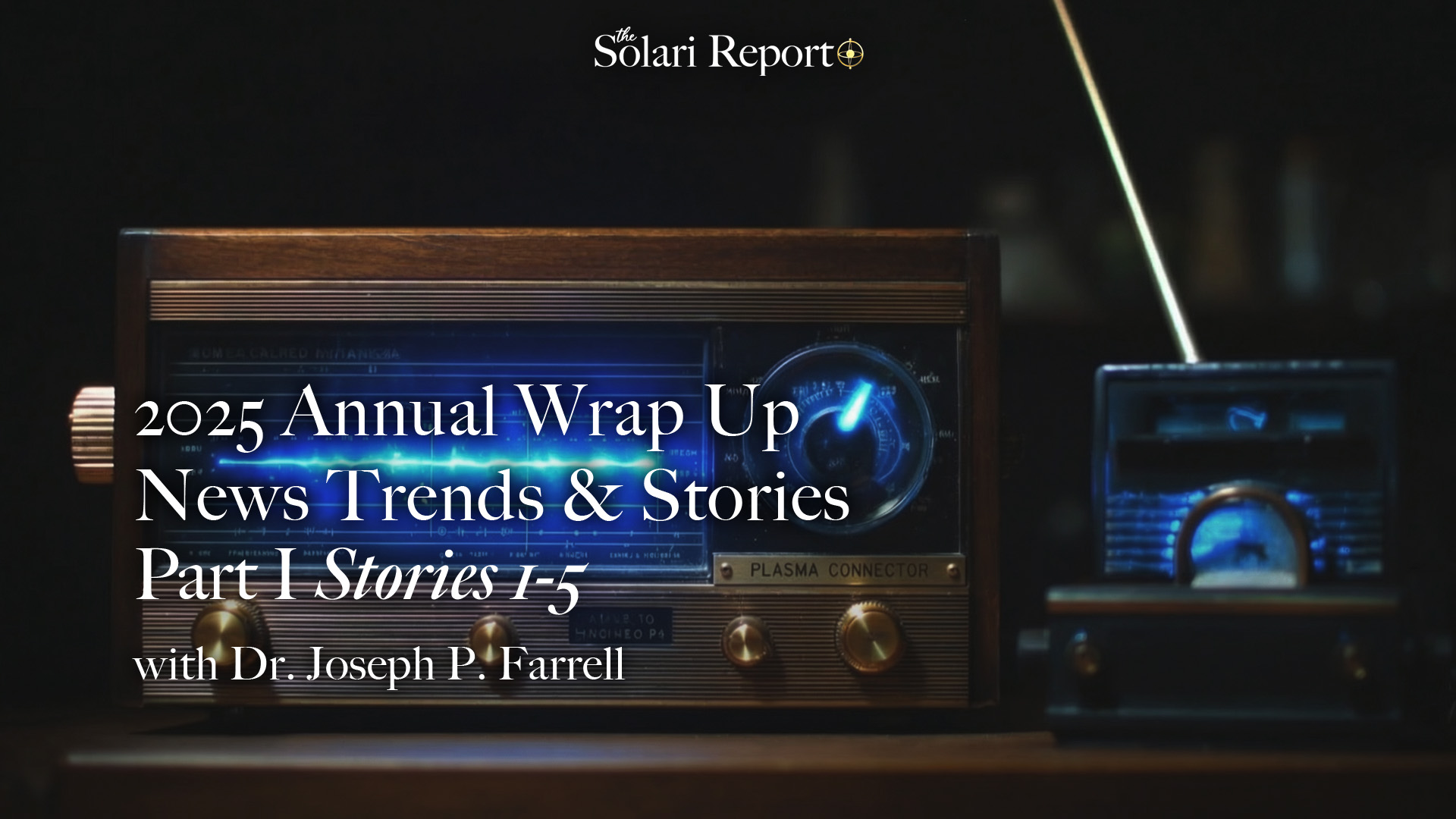
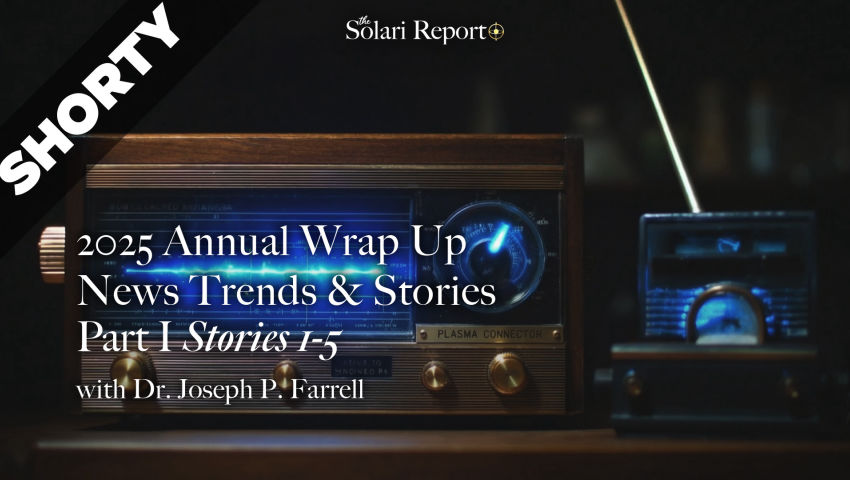
The multipolar world has arrived—along with a reconfiguration of U.S. plans for acquiring and protecting strategic resources and trade routes. At the outset of this “rock n’ roll” year, Dr. Joseph Farrell and Catherine discuss the first five of eight picks for top stories of the year.
I agree that the Kirk “Superneck” story is meant to mock us & test us. I’m with you on the Butler event, and as we know, there is a sizable group who believe that Trump was saved by God and they will support him 100% no matter what because of that.
Re Food: I’m an x-city dweller who moved rural in 2022 to start homestead. Got 4 chickens from a neighbor in March and have been learning as I go. It has been much easier than I thought. Now I’m egg-spanding- have 35 chicks being delivered in Spring from a breeder who has been 100% non-GMO since 2014. Setting up coops now. No bugs for me and my neighbors. Intuition tells me eggs are the new gold.
Trump media merging with an anueutronic fusion company has got to be a key theme in recent times IMO. Was this payment for the deal giving the technocrats what they want?
It’s no coincidence that Trump has merged with a company that is seemingly one of perhaps 2-3 companies capable of this breakthrough energy. Why media and breakthrough energy? Because it can be hidden behind national security of nuclear, brings in time weapons (see Salvator Pais warning) and achieve mass mind control with scale invariance coming into play.
Could not agree more. I would love to find someone who can really deep dive this deal and the company. I think the purchase was basically a payoff. Like a bigger version of ridiculous book contracts. I am suspicious that the MIT professor assassination was part of the deal.
For the first time since I turned18 I am taking the biblical stance and rendering unto Caesar that which is Caesar’s. I will vote in the local but not for my Senator and Congressman as both are converged.
As for the Churches not taking a stand. My husband led a church out of the United Methodist Church and that was extremely difficult because human nature doesn’t like conflict. Most people do not want to hear “conspiracy theories,” stretch their critical thinking skills, or lose friends. You have to have people who want to see and hear uncomfortable things before they can even contemplate doing uncomfortable things. 2 Timothy 4:3.
Lastly reading Sal Alinsky’s Rules for Radicals is enlightening as to the methods of the left/communist/progressives.
We both were slandered in the local paper and social media. 3 yrs out and we still occasionally get hate mail. But I would tell anyone who does make a stand, when the dust settles it is amazing how quickly people forget anything ever happened and even more quickly adjust to the new normal.
Thank you Catherine for subtlety holding us accountable and keeping us inspired.
You talked about the planned bridge connecting Alaska and Russia and the general trend of building up trade routes. If they want to reduce the population by 90% I presume this would result in a dramatic reduction of trade and consumption. Fewer people means less trade so why would they want to build up trade routes?
In this interview “Real Conversations – Beyond the Singularity” Pippa Malmgren gives an interesting perspective on space and other matters.
1. The Arctic, Space, and Geopolitics
Malmgren argues that the Arctic is becoming one of the most strategically important regions in the world, not because of rare earth metals, but because it is central to the space race.
• The Arctic is the most stable point on Earth for satellite constellations.
• It is where space-based data and energy connect to undersea cable networks.
• Control of Arctic infrastructure is crucial for defense, communications, and space-based energy.
• Greenland, Iceland, and the GIUK Gap are again geopolitically critical due to submarine and missile pathways.
• Icebreakers, not just naval ships, are key strategic assets, and the U.S. is far behind China and Russia.
Her core claim: space represents abundance—unlimited energy, resources, and connectivity—and whoever controls access to space will dominate future economics and security.
2. Space as an Abundance Engine
She emphasizes that space is no longer science fiction:
• Energy can already be beamed from space to Earth.
• Asteroid mining is close to reality and could dwarf Earth’s entire annual GDP in value.
• Helium-3 on the Moon could unlock nuclear fusion, quantum computing, and virtually unlimited clean energy.
• Future supply chains for metals will shift from Earth-based scarcity to space-based abundance.
This abundance will collapse traditional scarcity-based pricing models, forcing a rethink of supply, demand, and valuation across commodities and manufacturing.
3. Investing Themes: Beyond Big Tech
Malmgren and the host agree that traditional “growth stocks” are being eclipsed by theme-driven investing:
Key long-term themes:
• Defense and shipbuilding
• Icebreakers
• Robotics
• Space infrastructure
• Advanced materials and metals
She warns that ETFs and passive investing often mislabel or dilute real exposure, making genuine innovation harder to identify.
4. Tokenization and the Future of Finance
A major portion of the discussion centers on how capital formation itself is being reinvented:
• Tokenization allows startups to bypass banks, IPOs, and traditional venture capital.
• Stablecoins, backed by U.S. Treasuries, democratize access to capital.
• New financial institutions (e.g., Thiel- and Luckey-backed investment banks) are emerging to support this system.
• Retail investors can now directly fund assets like housing, infrastructure, and startups.
This shift breaks the monopoly that Wall Street and Silicon Valley have had on who gets funded.
5. Housing, Energy, and Practical Innovation
She gives concrete examples of how innovation is already changing daily life:
• 3D-printed homes built at half the cost of traditional housing.
• Homes paired with energy storage and solar systems that can pay their own mortgages.
• NASA-backed 3D printing using lunar soil for off-world construction.
• Tokenized mortgages allowing small investors to own slices of rental income.
Her point: innovation is no longer abstract—it’s already reshaping households, cities, and wealth creation.
6. Politics: Forward vs Backward
Malmgren rejects the traditional left-right political framing.
• The real divide is forward-looking vs backward-looking.
• Investors must detach emotionally from politics and focus on policy implications.
• Many transformative initiatives are being ignored because people are stuck in partisan narratives.
She highlights the opening of U.S. national laboratories to the public and startups as a potentially historic accelerant of innovation, especially in fusion, AI, and materials science.
7. The Four New Frontiers of the Economy
She outlines four “directions” for future investment and innovation:
• Up: Space, drones, satellites, high-speed travel, orbital manufacturing
• Down: Nanotech, atomic-scale materials, oceans, regenerative agriculture
• In: Medicine, longevity, biotech, 3D-printed organs
• Out: AI, digital networks, borderless digital economies
These are not future ideas, she stresses—they are happening now.
8. Human Mindset, Media, and Algorithms
Malmgren warns that algorithms narrow people’s worldview by feeding them only what they already like.
• Most people miss major technological breakthroughs because they never click on related stories.
• To stay ahead, investors and thinkers must consciously widen their informational aperture.
9. Love, Leadership, and Human “Hardware”
In a philosophical turn, she argues that technology is advancing faster than human emotional capacity.
• Humanity must “upgrade its hardware”—empathy, humility, curiosity.
• Excessive certainty, tribalism, and arrogance are the real threats.
• She suggests that the future lies in combining code (structure) with love (unpredictable human creativity).
This, she argues, is how societies avoid destruction and unlock distributed genius.
10. Overall Message
Malmgren’s central thesis:
• We are entering an era of abundance, not scarcity.
• Innovation is decentralizing—geographically, financially, and intellectually.
• Thousands of “Elons” are coming, not just one.
• The biggest risk is not disruption, but standing still.
Her advice to investors and citizens alike:
Stop fighting yesterday’s battles. Look forward, widen your perspective, and engage with the technological frontier.
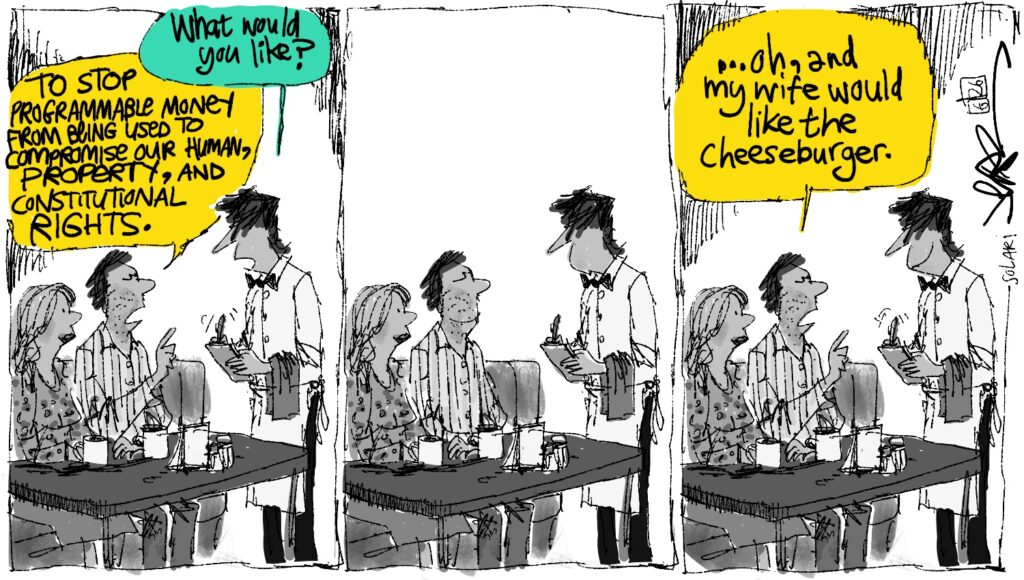
Pippa likes to put a positive spin on things. She knows the programmable money and what it will do and ducks that issue. Too bad because many of her points about the possibilities of technology are good. I agree about widen your perspective. However, if we don’t stop the control grid, most of us are on the depopulation menu while the leadership enjoys the new toys and plans to live to 145+


























































I agree that the Kirk “Superneck” story is meant to mock us & test us. I’m with you on the Butler event, and as we know, there is a sizable group who believe that Trump was saved by God and they will support him 100% no matter what because of that.
Re Food: I’m an x-city dweller who moved rural in 2022 to start homestead. Got 4 chickens from a neighbor in March and have been learning as I go. It has been much easier than I thought. Now I’m egg-spanding- have 35 chicks being delivered in Spring from a breeder who has been 100% non-GMO since 2014. Setting up coops now. No bugs for me and my neighbors. Intuition tells me eggs are the new gold.
Catherine,
Oh. how I look forward to and enjoy the depth that you and Dr Farrell present in these wrap ups. Listening once is never enough!
I eagerly await Part 2.
Make sure you check out the website. Lots of great resources!
Trump media merging with an anueutronic fusion company has got to be a key theme in recent times IMO. Was this payment for the deal giving the technocrats what they want?
It’s no coincidence that Trump has merged with a company that is seemingly one of perhaps 2-3 companies capable of this breakthrough energy. Why media and breakthrough energy? Because it can be hidden behind national security of nuclear, brings in time weapons (see Salvator Pais warning) and achieve mass mind control with scale invariance coming into play.
Trump’s uncle was officially tasked with analyzing Nikola Tesla’s papers after Tesla’s death in 1943. What came of his reports?
Could not agree more. I would love to find someone who can really deep dive this deal and the company. I think the purchase was basically a payoff. Like a bigger version of ridiculous book contracts. I am suspicious that the MIT professor assassination was part of the deal.
For the first time since I turned18 I am taking the biblical stance and rendering unto Caesar that which is Caesar’s. I will vote in the local but not for my Senator and Congressman as both are converged.
As for the Churches not taking a stand. My husband led a church out of the United Methodist Church and that was extremely difficult because human nature doesn’t like conflict. Most people do not want to hear “conspiracy theories,” stretch their critical thinking skills, or lose friends. You have to have people who want to see and hear uncomfortable things before they can even contemplate doing uncomfortable things. 2 Timothy 4:3.
Lastly reading Sal Alinsky’s Rules for Radicals is enlightening as to the methods of the left/communist/progressives.
He got in real trouble for that one as he proposed shifting shareholders money. Right idea.
We both were slandered in the local paper and social media. 3 yrs out and we still occasionally get hate mail. But I would tell anyone who does make a stand, when the dust settles it is amazing how quickly people forget anything ever happened and even more quickly adjust to the new normal.
Thank you Catherine for subtlety holding us accountable and keeping us inspired.
Thanks for the great conversation that puts the threads together…with a clear picture emerging of systematic plunder and we are on the menu.
Dear Catherine,
You talked about the planned bridge connecting Alaska and Russia and the general trend of building up trade routes. If they want to reduce the population by 90% I presume this would result in a dramatic reduction of trade and consumption. Fewer people means less trade so why would they want to build up trade routes?
In this interview “Real Conversations – Beyond the Singularity” Pippa Malmgren gives an interesting perspective on space and other matters.
https://www.youtube.com/watch?v=7nitQUJBZUQ
Here is a summary of her talk:
1. The Arctic, Space, and Geopolitics
Malmgren argues that the Arctic is becoming one of the most strategically important regions in the world, not because of rare earth metals, but because it is central to the space race.
• The Arctic is the most stable point on Earth for satellite constellations.
• It is where space-based data and energy connect to undersea cable networks.
• Control of Arctic infrastructure is crucial for defense, communications, and space-based energy.
• Greenland, Iceland, and the GIUK Gap are again geopolitically critical due to submarine and missile pathways.
• Icebreakers, not just naval ships, are key strategic assets, and the U.S. is far behind China and Russia.
Her core claim: space represents abundance—unlimited energy, resources, and connectivity—and whoever controls access to space will dominate future economics and security.
2. Space as an Abundance Engine
She emphasizes that space is no longer science fiction:
• Energy can already be beamed from space to Earth.
• Asteroid mining is close to reality and could dwarf Earth’s entire annual GDP in value.
• Helium-3 on the Moon could unlock nuclear fusion, quantum computing, and virtually unlimited clean energy.
• Future supply chains for metals will shift from Earth-based scarcity to space-based abundance.
This abundance will collapse traditional scarcity-based pricing models, forcing a rethink of supply, demand, and valuation across commodities and manufacturing.
3. Investing Themes: Beyond Big Tech
Malmgren and the host agree that traditional “growth stocks” are being eclipsed by theme-driven investing:
Key long-term themes:
• Defense and shipbuilding
• Icebreakers
• Robotics
• Space infrastructure
• Advanced materials and metals
She warns that ETFs and passive investing often mislabel or dilute real exposure, making genuine innovation harder to identify.
4. Tokenization and the Future of Finance
A major portion of the discussion centers on how capital formation itself is being reinvented:
• Tokenization allows startups to bypass banks, IPOs, and traditional venture capital.
• Stablecoins, backed by U.S. Treasuries, democratize access to capital.
• New financial institutions (e.g., Thiel- and Luckey-backed investment banks) are emerging to support this system.
• Retail investors can now directly fund assets like housing, infrastructure, and startups.
This shift breaks the monopoly that Wall Street and Silicon Valley have had on who gets funded.
5. Housing, Energy, and Practical Innovation
She gives concrete examples of how innovation is already changing daily life:
• 3D-printed homes built at half the cost of traditional housing.
• Homes paired with energy storage and solar systems that can pay their own mortgages.
• NASA-backed 3D printing using lunar soil for off-world construction.
• Tokenized mortgages allowing small investors to own slices of rental income.
Her point: innovation is no longer abstract—it’s already reshaping households, cities, and wealth creation.
6. Politics: Forward vs Backward
Malmgren rejects the traditional left-right political framing.
• The real divide is forward-looking vs backward-looking.
• Investors must detach emotionally from politics and focus on policy implications.
• Many transformative initiatives are being ignored because people are stuck in partisan narratives.
She highlights the opening of U.S. national laboratories to the public and startups as a potentially historic accelerant of innovation, especially in fusion, AI, and materials science.
7. The Four New Frontiers of the Economy
She outlines four “directions” for future investment and innovation:
• Up: Space, drones, satellites, high-speed travel, orbital manufacturing
• Down: Nanotech, atomic-scale materials, oceans, regenerative agriculture
• In: Medicine, longevity, biotech, 3D-printed organs
• Out: AI, digital networks, borderless digital economies
These are not future ideas, she stresses—they are happening now.
8. Human Mindset, Media, and Algorithms
Malmgren warns that algorithms narrow people’s worldview by feeding them only what they already like.
• Most people miss major technological breakthroughs because they never click on related stories.
• To stay ahead, investors and thinkers must consciously widen their informational aperture.
9. Love, Leadership, and Human “Hardware”
In a philosophical turn, she argues that technology is advancing faster than human emotional capacity.
• Humanity must “upgrade its hardware”—empathy, humility, curiosity.
• Excessive certainty, tribalism, and arrogance are the real threats.
• She suggests that the future lies in combining code (structure) with love (unpredictable human creativity).
This, she argues, is how societies avoid destruction and unlock distributed genius.
10. Overall Message
Malmgren’s central thesis:
• We are entering an era of abundance, not scarcity.
• Innovation is decentralizing—geographically, financially, and intellectually.
• Thousands of “Elons” are coming, not just one.
• The biggest risk is not disruption, but standing still.
Her advice to investors and citizens alike:
Stop fighting yesterday’s battles. Look forward, widen your perspective, and engage with the technological frontier.
Pippa likes to put a positive spin on things. She knows the programmable money and what it will do and ducks that issue. Too bad because many of her points about the possibilities of technology are good. I agree about widen your perspective. However, if we don’t stop the control grid, most of us are on the depopulation menu while the leadership enjoys the new toys and plans to live to 145+