
Become a member: Subscribe


































NTS Headlines
Headlines by Category
Headlines by Year
- Money & Markets
- Weekly Solari Reports
- Cognitive Liberty
- Solari Builders
- Ask Catherine
- News Trends & Stories
- Equity Overview
- War For Bankocracy
- Digital Money, Digital Control
- State Leader Briefings
- Food
- Food for the Soul
- Future Science
- Health
- Metanoia
- Solutions
- Spiritual Science
- Wellness
- Building Wealth
- Via Europa














































Solari’s Building Wealth materials are organized to inspire and support your personal strategic and financial planning.




Building Wealth
This 6-pillar curriculum teaches the basic literacy we need to be personally and financially successful and to do so in a manner in which together we evolve a culture that supports the emergence of an advanced human civilization.

















Missing Money
Articles and video discussions of the $21 Trillion dollars missing from the U.S. government

Connect with the wider network of like-minded Solari subscribers using our in-house social media platform, Solari Connect.













No posts
Freddie and Fannie Become Penny Stocks – Part IV
~ Click here to view the full Freddie and Fannie Become Penny Stocks article.
Whether you want to attribute the Federal Reserve and US Treasury’s success to the deflationary effects of globalization and new technology or the miracles of advanced weaponry, you must admit it is pretty amazing. The worse we behave, the lower our cost of capital.
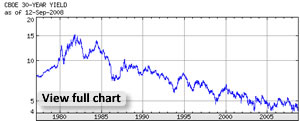
This situation presents extraordinary governance and management challenges. As supply and demand stop serving as a healthy feedback mechanism to encourage people and enterprises to behave in productive ways, entire industries and communities embrace politics and bad behavior.
I experienced this problem in a small way when I served as Assistant Secretary of Housing—FHA Commissioner. At the time, the Federal Housing Administration (FHA) was originating $5—10 billion a year of multifamily mortgage insurance offered at insurance premiums that were well below market. Consequently, FHA had $25 billion of demand for the multifamily mortgage insurance product. How to allocate $5 billion?
One method would have been to create clear criteria and allocate the mortgage insurance on an open, competitive basis. That, of course, was not politically feasible in America.
The solution was gridlock. Let $25 billion of applications pile into various processes that take foreover and mysteriously go in circles. Terrorize the bureaucrats so they do not dare process anything. Then send in the right lawyers and other fixers to engineer the applications through that are politically desirable.
This is a type of productivity challenge that has continually plagued centralized systems throughout history.
It is, however, the basis of rich fees for Washington law firms and lobbyists.