
Food for the Soul: Artemisia Gentileschi - Women Artists Series 4
Become a member: Subscribe
































NTS Headlines
Headlines by Category
Headlines by Year
- Money & Markets
- Weekly Solari Reports
- Cognitive Liberty
- Solari Builders
- Ask Catherine
- News Trends & Stories
- Equity Overview
- War For Bankocracy
- Digital Money, Digital Control
- State Leader Briefings
- Food
- Food for the Soul
- Future Science
- Health
- Metanoia
- Solutions
- Spiritual Science
- Wellness
- Building Wealth
- Via Europa




































Solari’s Building Wealth materials are organized to inspire and support your personal strategic and financial planning.



Building Wealth
This 6-pillar curriculum teaches the basic literacy we need to be personally and financially successful and to do so in a manner in which together we evolve a culture that supports the emergence of an advanced human civilization.

















Missing Money
Articles and video discussions of the $21 Trillion dollars missing from the U.S. government

Connect with the wider network of like-minded Solari subscribers using our in-house social media platform, Solari Connect.










No posts
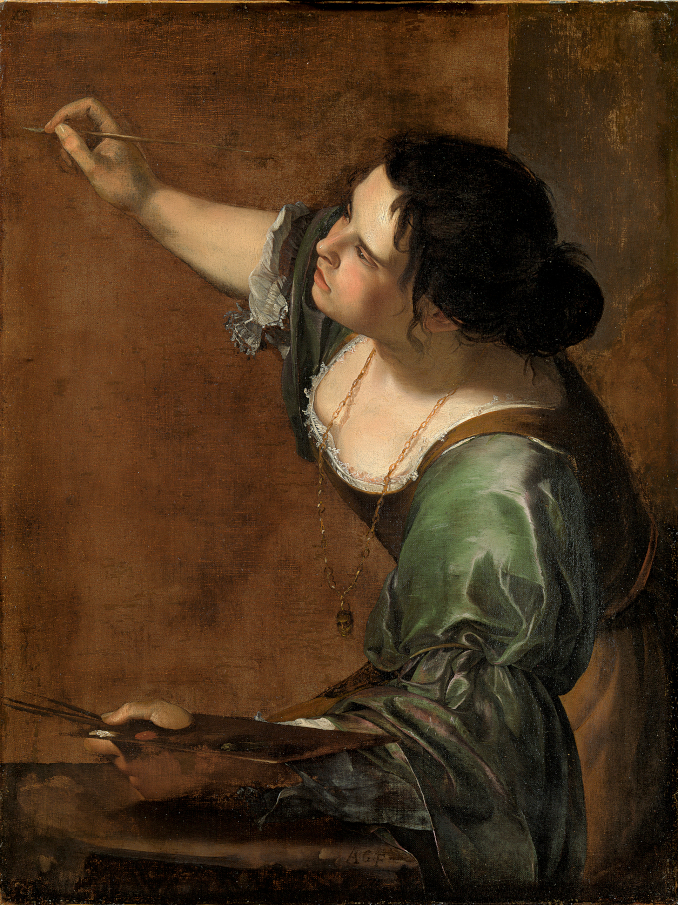
Artemisia Gentileschi. Self-Portrait as the Allegory of Painting (La Pittura) (about 1638-1639). Oil on canvas. Royal Collection Trust / © Her Majesty Queen Elizabeth II 2019. Photo: Courtesy of The National Gallery, London
“[W]ith me Your Illustrious Lordship will not lose and you will find the spirit of Caesar in the soul of a woman.”
~ Artemisia Gentileschi in a letter to her patron Antonio Ruffo in 1649, defending a price she quoted for painting “eight figures, two dogs, a landscape and water”
Food for the Soul: Artemisia Gentileschi – Women Artists Series 4
By Nina Heyn
London National Gallery was about to open this month the UK’s first-ever exhibition of paintings by Artemisia Gentileschi. The global quarantine has put an end to it for now, but we would still like to give you a virtual tour of this ambitious overview of the life and art of the Baroque’s most famous female artist.
For the last few decades, Artemisia Gentileschi (1593–1653) has been a poster child for feminist-leaning art writers. In modern times, this 17th-century painter has been more celebrated for what happened to her rather than for her art. Artemisia started to learn painting as the only daughter of Orazio Gentileschi, an established painter in Rome. Her three brothers did not have artistic talent, but Artemisia exhibited gifts from an early age as evidenced by her first version of Susanna and the Elders, painted when she was barely 17. A year later, her life was thrown off its orderly course. She was raped by Agostino Tassi, a painter working with her father on some frescoes, and who was hired to teach her perspective drawing. Instead of trying to “bury her shame” in silence as would have been expected in those times, Artemisia and her father sued the painter in court. At the trial, the wheels of justice rolled unevenly. Artemisia was tortured by having her fingers crushed, and she underwent a humiliating medical examination. Tassi was found guilty but, protected by the Pope, he was punished with just a short exile into the Roman suburbs. Eventually, Artemisia moved on—she became an established artist, married, bore four children. The trauma of her assault got channeled through her pictures. However, in art history, Artemisia’s drama has become more prominent than her artistic achievements, at least as far as the general public goes. This is slowly starting to change, and Artemisia is getting her professional due as one of the most interesting artists of her time. In fact, last November, one of her paintings of Lucretia sold in Paris for about $5 million. In terms of artistic recognition, Artemisia’s paintings are also getting star treatment. In December last year, when the Seattle Art Museum displayed one of her most famous paintings, the 1612 version of Judith Beheading Holofernes, during an exhibition of Italian masterpieces loaned from the Neapolitan Museo di Capodimonte, this canvas was the highlight of the show.
Log in or subscribe to the Solari Report to enjoy full access to exclusive articles and features.
Already a subscriber?

Artemisia Gentileschi is one of the most incredible painters of all time. Her fabric drapery painting is masterful. One of my favorite painters. The paintings you posted are remarkable.
Thank you so much.
Thank you for your kind words. We owe the quality of these images to the courtesy of the UK’s National Gallery. It’s not easy to find Artemisia’s paintings- they are only about 65 works attributed to her, and they are dispersed all over the world. It’s one of my favorite artists too.