This 6-pillar curriculum teaches the basic literacy we need to be personally and financially successful and to do so in a manner in which together we evolve a culture that supports the emergence of an advanced human civilization.
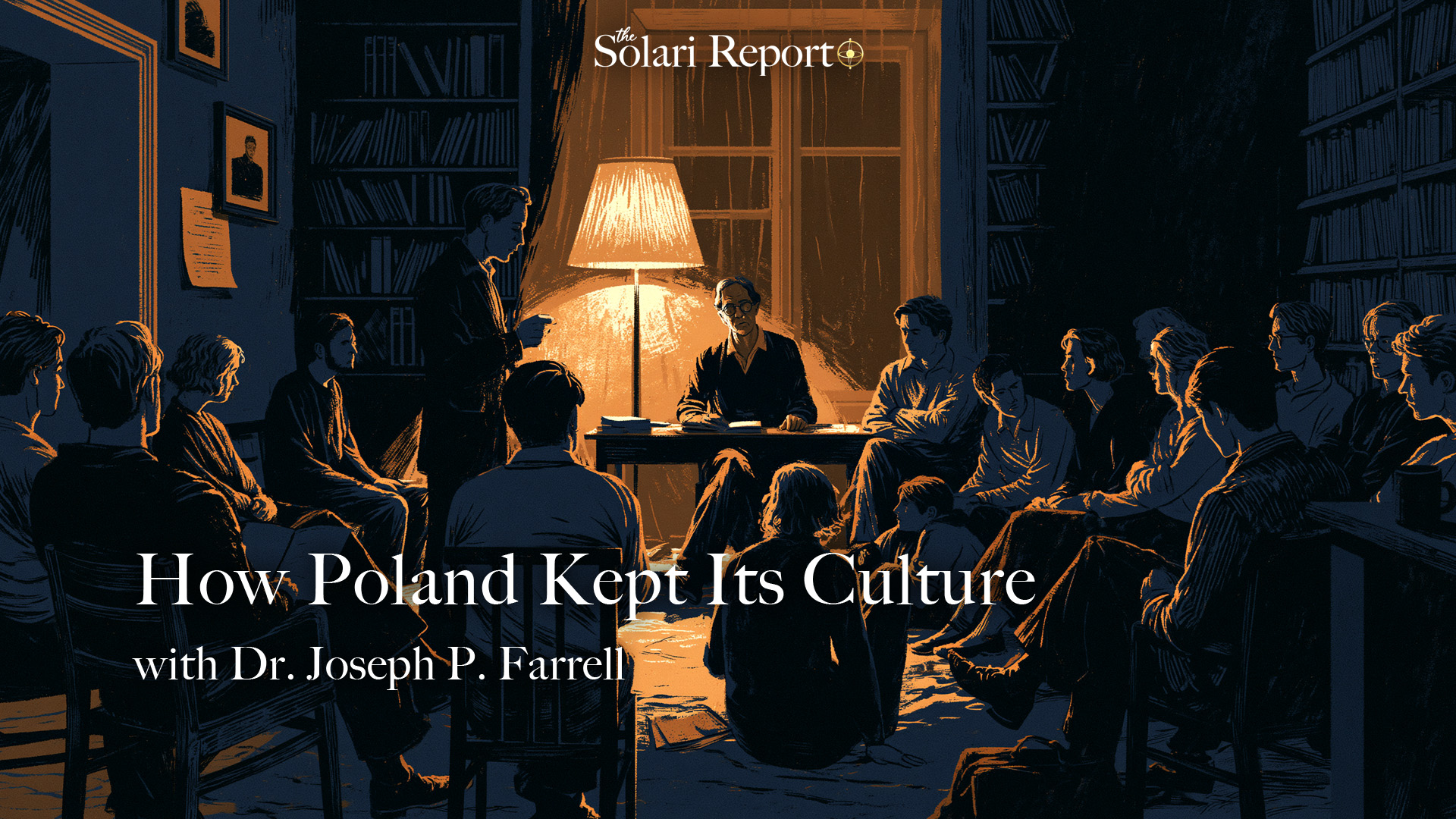
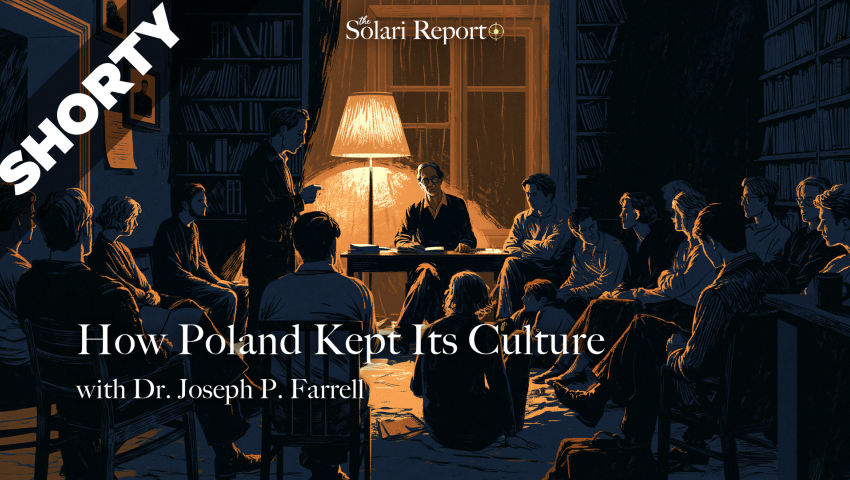
What does “building the culture” mean in practice? Dr. Joseph P. Farrell and Elze van Hamelen focus on what can be learned from Poland’s development (while a satellite state of the Soviet Union) of a successful, nonviolent resistance movement that built on Poland’s rich cultural and historical traditions.
I’ve never heard such a cogent summary of the “roots of Western culture” as that given by Dr. Farrell in this interview (time stamp 1:34). It certainly deserves to be repeated at a pulpit. I would like to suggest that Dr. Farrell commit his thoughts to a (small) book about this subject. It would be most welcome and, at the very least, could serve as the capstone of his legacy. Thank you so much.
Thank you, thank you, Dr Farrell and Elze. I anticipated this and it exceeded my expectations. This gem is not a “watch once” production– much depth here!
The KOR movement reminds me of the Committees of Correspondence” used in our colonies before the American Revolution.
richard lough brings up some excellent unanswered questions I didn’t think of, but these issues can be explored in a future broadcast?
Excellent, poignant interview. Thank you!
This week I returned to the USA after taking an intensive 6-day Irish-Gaelic language course in Ireland. Of the 5.3 million people in Ireland/Northern Ireland, only about 75,000 Irish people speak the original language daily. It’s exciting to see the resurgence of the Irish language – which is indeed “owning the culture.” The ancient Irish language is poetic, as well as being very connected to the land and folklore of Ireland. In Irish you say, “Tir gan Teanga, Tir gan anam,” translated – A country without a language is a country without a soul.
I think I have an important suggestion/request for this important video.
As a resident of The Netherlands you are in the know of the one true opposition party FvD, Thierry Baudet, Gideon van Meijeren, Pepijn van Houwelingen and quite possibly also Thierry’s excellent successor, Lidewij de Vos. Given that the strategy of all the corrupted parties in the Dutch parliament is to accuse Lidewij and FvD of playing the race card when opposing the disastrous mass migration, but the real issue being destruction of societal cohesion via the destruction of culture, but FvD and Lidewij so far not making that point clearly enough in the debates, which keeps them stuck in the ‘racist’-label corner, it seems very valuable to me to share this discussion with Lidewij, Thierry, Gideon, Pepijn and FvD.
So, I want to ask you to please consider this, so that FvD can be and become even more effective in its message, and grow even faster, in order to save the culture and society of this beautiful, significantly brilliant country I was born and raised in, and, to my sometimes serious dismay, have seen being attacked, and severely poisoned and damaged, by Mr Global.
I had seen neither of them. Thank you for sharing them. Gideon and Marlies are both great.
Concerning sharing the video with the FvD people, I asked that, because I recently watched a lengthy debate in the ‘Tweede Kamer’, the main Dutch assembly, in which the Mr Global corrupted parties had clearly been instructed to constantly and persistently play the ‘racist’ card, with Lidewij, even though she is a brilliant debater, struggling to escape that framing decisively, because she was missing the general perceptional escape key of ‘culture’.
That was and is crucial, because as a Dutchman of 56 who has a long track record in advertising and strategic marketing, I know that the general public in NL is totally allergic to any association with ‘racism’, but definitely, and that increasingly, is very much on board with protecting and restoring the Dutch way of life and culture. I am sure that if you check this with Ricardo and Elze, they will confirm this. This is also why the support for FvD is currently finally growing spectacularly.
Because of this, I propose to press all top FvD-ers to explicitly start using ‘protection and restoration of culture’ as their central argument against the migration attack that is destroying the Dutch way of living and society. I feel that Thierry is the main philosopher of FvD, and Gideon the most apt debater, followed by Lidewij and Pepijn, who are both also great. But they need to explicitly start using this point of ‘culture’, because it liberates them and FvD from the false, perceptually paralyzing ‘racist’ accusation, and besides that will resonate with a part of the general public that has until now been on the fence, wanting to agree, but being afraid to be shamed as ‘racists’, making FvD grow even more and faster.
I reckon that you have, or can easily get, direct access to them all, and brief them, and other key players like Marlies, on this, in my view crucial, point. I have tried to notify Lidewij on X, but doubt if it got through to her, and your voice carries so much weight, that I am pleading with you to invest one call into it. As you know by now, Dutch culture and society are something great, and the Netherlands I grew up in was so awesome, and the decline is so severe and disturbing, that I wish this ship to be turned around ASAP, making NL once again the internationally guiding country it has been for so long, during this attack of Mr Global and beyond.
That’s great to hear. Thank you for listening. All the best.
Addition:
As a Dutchman I know that the argument of ‘protecting and restoring the culture’ will resonate with a much larger part of the Dutch population than until now have allowed themselves to support FvD, out of fear of being labeled ‘racist’ by the dominant cancel culture with which also the political and societal discourse has in The Netherlands been poisoned and paralyzed, thus opening up a whole new part of Dutch society to be brought on board of saving sanity.
Apart from my suggestion/request concerning the political situation in The Netherlands that I just made, following up on the rest of the conversation, I need to share that I just recently spent 3 weeks in Russia for the first time, and was deeply and very pleasantly touched by the beauty of Russian culture and the Russian people, and how overwhelmingly similar both are to Western culture, of which I now know that happened because they are part of it.
My experience of Russian culture and people couldn’t have been more far off of the propaganda that I was fed since I was a kid, of ‘Russia bad’. My assessment of Russian culture and people is that they carry a deep seeded beauty, warmth and even nobility, built upon a healthy conservative basis, that preserves what is fundamental to a healthy society, while leaving space for modern developments as well.
Just as Doctor Farrell indicated here, of course I am not blind to its imperfections, noticing clearly that Putin’s government is pushing technocracy and playing the Agenda 2030 game, next to using Russian conservatism as a manipulative tool to balance out their globalist moves. However, the basis of Russian culture and of the resulting behavior of the Russians is truly a sight to behold, and should be a guiding light to conventional Western states and populations for returning to base.
It very clearly makes one understand why Brzezinski wrote his treacherous doctrine to keep Russia and Germany perpetually separated, resulting o.a. in the blowing up of Nord Stream and the Ukraine situation. Demonic stuff aimed at robbing the European commoners of their true power and wellbeing.
One of the best conversations yet at Solari. Great job teaming Elze van Hamelen and Dr. Farrell. Ideas are swirling in my head that only a discussion at this level could evoke. Prof. Farrell, you accomplished the ultimate goal of an academic….you have made me think! I await Part II!
The Missing Layer
Many analyses of our time focus on power, money, technology, artificial intelligence or geopolitics. These are undoubtedly important subjects. Yet they may all be symptoms of a deeper historical development. The more fundamental question may not be how power has evolved, but how our civilization’s relationship with consciousness and conscience has changed over the past five centuries.
Human beings are biological organisms. Through our senses we continuously receive information about ourselves, others and the world around us. From this interaction emerges consciousness: the capacity to perceive reality, interpret it and assign meaning.
Yet consciousness alone is not enough. We can be fully aware of something without acting upon it. Alongside consciousness exists another faculty that may be equally fundamental: conscience. Consciousness asks, “What is happening?” Conscience asks a different question: “What should I do?” It connects perception with responsibility and reminds us that understanding the world is not the same as caring for it.
No one develops conscience in isolation. From childhood onward we learn care, reciprocity, trust and responsibility through stories, rituals, religion, art, education and history. Together these form what we call culture. Culture is therefore far more than heritage or tradition. It is the collective memory through which a civilization transmits not only knowledge, but also moral orientation.
This is why I find the work of historians such as Marjolein van Pagee so valuable. Her research shows that colonial history is not only about trade, territorial expansion or political domination. It also reveals a profound transformation in how people came to understand the world itself.
With the rise of the Dutch East India Company (VOC), something larger than a commercial enterprise emerged. New forms of administration, bookkeeping, shareholder capitalism, risk management and global logistics transformed the organization of society. At the same time, the natural world increasingly came to be understood as a resource, trade route, possession, map, commodity and economic system. Human beings, too, increasingly became incorporated into this economic logic.
The VOC was therefore not simply a trading company. It represented a historical turning point in which economic rationality, bureaucratic administration and political power became intertwined in new ways. These innovations profoundly shaped the development of modern institutions. They were remarkable organizational achievements, yet they also raise important questions about how societies gradually came to evaluate both nature and human life through increasingly economic and administrative frameworks.
The Industrial Revolution accelerated this trajectory. Efficiency, productivity, standardization and scientific specialization became defining principles of modern society. The World Wars integrated industry, science, bureaucracy, logistics and economics into systems of unprecedented scale. During the Cold War, conflict itself expanded beyond the battlefield into information, finance, media, education, psychology and propaganda. Today, artificial intelligence appears to extend this historical trajectory even further, as optimization increasingly becomes the organizing principle of contemporary institutions.
This raises a different question from the one usually asked about AI.
The question is not simply whether artificial intelligence is dangerous.
The deeper question is this:
What cultural transformation has been unfolding beneath these developments for the past four or five centuries?
Perhaps we have spent centuries becoming extraordinarily skilled at commerce, administration, science, technology, logistics and efficiency. These achievements are remarkable. But have we invested equally in cultivating conscience as both a biological capacity and a cultural compass?
Perhaps this is where the balance has gradually shifted.
Technology tells us what is possible.
Economics calculates what is profitable.
Strategy determines what provides an advantage.
But none of these can answer the simplest and perhaps most important question:
Should we actually do it?
That question belongs to conscience.
If conscience is indeed rooted in our biology while simultaneously being nurtured by culture, then culture is not a luxury, nor merely an expression of identity. It is the infrastructure through which moral perception is cultivated. It preserves the stories, symbols, experiences and relationships that help a society distinguish between what is possible and what is wise.
When culture becomes subordinate to economic value, administrative efficiency or strategic utility, we risk losing more than traditions. We risk weakening the very environment in which conscience itself develops. A civilization may continue to grow in intelligence while gradually losing its capacity to recognize what it is destroying.
History leaves us another problem. When civilizations disappear, they rarely leave behind their conscience. They leave ruins, monuments, administrative records, trade routes, weapons and architecture. Archaeology can reconstruct economies, technologies and political structures with remarkable precision, yet it can tell us surprisingly little about how people experienced responsibility, compassion, restraint or moral reflection in everyday life.
Perhaps this has shaped the way we judge civilizations. We tend to admire what they built rather than ask how they chose to build it. We measure engineering, military reach, economic influence and technological sophistication because these leave visible traces. Far less visible are the cultural practices through which conscience was cultivated, transmitted and protected across generations.
If conscience is indeed a biological capacity that depends upon culture for its development, then one of the most important dimensions of a civilization may be precisely the one least likely to survive in the archaeological record. Future generations may inherit our cities, satellites, data centres and digital infrastructure, yet understand very little about the moral choices that shaped them—or failed to shape them.
This raises an uncomfortable possibility. Perhaps civilizations do not disappear because they become less intelligent. Perhaps they disappear because intelligence and conscience gradually cease to develop together. Long before a society collapses materially, it may already have begun to lose the cultural conditions that enable conscience to guide power, technology and knowledge.
This also raises a question history has never needed to ask before. Previous civilizations could transform landscapes, economies and political systems. Ours may be the first capable of systematically reshaping the informational environment through which consciousness develops and conscience is cultivated. If that is true, then we are no longer simply changing the world around us—we are beginning to change the conditions under which future generations come to perceive, interpret and morally respond to that world.
Perhaps this is why the next step cannot be technological alone.
It must also be human.
In an age increasingly shaped by information warfare, algorithmic influence and the competition for perception, understanding our own senses may become one of the most important forms of resilience. The better we understand how we perceive reality, how our attention is directed, how our sensitivities differ and how easily perception itself can be influenced, the better we may understand both ourselves and one another.
Many conflicts arise not simply because people are unwilling to listen, but because they literally perceive, process and interpret the world differently. Greater self-knowledge creates the possibility of greater mutual understanding.
I sometimes wonder what might happen if not everyone—but perhaps even ten percent of humanity—truly understood how their own perception works, how consciousness emerges through the senses, and how easily perception can be manipulated. Would a world increasingly characterized by information warfare, psychological influence and strategic competition begin to evolve differently?
I believe it might.
Perhaps the defining challenge of the twenty-first century is not simply to build more intelligent systems, but to cultivate wiser human beings.
Not merely to advance consciousness, but to preserve and strengthen conscience.
Because without a living culture capable of nourishing conscience, even the most intelligent civilization risks becoming morally blind.
This is why I find the work of historian Marjolein van Pagee so valuable. Her research on Dutch colonial history helped me better understand how the VOC represented not only a commercial enterprise, but also a profound shift in the organization of society and the way the world came to be perceived.
(For readers interested in this historical perspective: https://www.marjoleinvanpagee.nl)
also https://youtu.be/MKO1Vgk1B6Y?si=t7N7NBge6eud2hUn
https://youtu.be/5SWhNFzaE10?si=fmB2-6NfFqmWpwzs
There’s a 400-year-old Dutch company worth more than Apple, Microsoft, Amazon, and Saudi Aramco combined. You’ve probably never heard of it.
It would have been valued at $7.9 trillion in today’s money – making it history’s most valuable corporation. But behind this mega-company stood a secret royal dynasty.
What increasingly fascinates me is a broader question: what happens to a civilization when it becomes increasingly capable of understanding and influencing consciousness, while paying far less attention to the cultivation of conscience—and what role does our own awareness of how we use our senses and learn as individuals play in that balance?
That question has gradually become central to my own thinking, and I’m looking forward to listening to Ulrike’s interview. Curious to hear your thoughts when you have time.





















































I’ve never heard such a cogent summary of the “roots of Western culture” as that given by Dr. Farrell in this interview (time stamp 1:34). It certainly deserves to be repeated at a pulpit. I would like to suggest that Dr. Farrell commit his thoughts to a (small) book about this subject. It would be most welcome and, at the very least, could serve as the capstone of his legacy. Thank you so much.
Thank you, thank you, Dr Farrell and Elze. I anticipated this and it exceeded my expectations. This gem is not a “watch once” production– much depth here!
The KOR movement reminds me of the Committees of Correspondence” used in our colonies before the American Revolution.
richard lough brings up some excellent unanswered questions I didn’t think of, but these issues can be explored in a future broadcast?
Dr Farrell and Elze, you leave us wanting more!
Excellent, poignant interview. Thank you!
This week I returned to the USA after taking an intensive 6-day Irish-Gaelic language course in Ireland. Of the 5.3 million people in Ireland/Northern Ireland, only about 75,000 Irish people speak the original language daily. It’s exciting to see the resurgence of the Irish language – which is indeed “owning the culture.” The ancient Irish language is poetic, as well as being very connected to the land and folklore of Ireland. In Irish you say, “Tir gan Teanga, Tir gan anam,” translated – A country without a language is a country without a soul.
Catherine,
I think I have an important suggestion/request for this important video.
As a resident of The Netherlands you are in the know of the one true opposition party FvD, Thierry Baudet, Gideon van Meijeren, Pepijn van Houwelingen and quite possibly also Thierry’s excellent successor, Lidewij de Vos. Given that the strategy of all the corrupted parties in the Dutch parliament is to accuse Lidewij and FvD of playing the race card when opposing the disastrous mass migration, but the real issue being destruction of societal cohesion via the destruction of culture, but FvD and Lidewij so far not making that point clearly enough in the debates, which keeps them stuck in the ‘racist’-label corner, it seems very valuable to me to share this discussion with Lidewij, Thierry, Gideon, Pepijn and FvD.
So, I want to ask you to please consider this, so that FvD can be and become even more effective in its message, and grow even faster, in order to save the culture and society of this beautiful, significantly brilliant country I was born and raised in, and, to my sometimes serious dismay, have seen being attacked, and severely poisoned and damaged, by Mr Global.
Greetings,
Martyn
Did you see this? We organized and funded to support Gideon van Meijeren’s legal efforts https://solari.com/the-prosecution-of-dutch-mp-gideon-van-meijeren-where-media-political-and-legal-corruption-converge/
We also just organized this one with the superb help of Mariies Dekkers https://www.youtube.com/watch?v=n_d1tOVSehY&list=PLOosJrK6HH-WtMNBiLert9VbBGubYC0Yh
I had seen neither of them. Thank you for sharing them. Gideon and Marlies are both great.
Concerning sharing the video with the FvD people, I asked that, because I recently watched a lengthy debate in the ‘Tweede Kamer’, the main Dutch assembly, in which the Mr Global corrupted parties had clearly been instructed to constantly and persistently play the ‘racist’ card, with Lidewij, even though she is a brilliant debater, struggling to escape that framing decisively, because she was missing the general perceptional escape key of ‘culture’.
That was and is crucial, because as a Dutchman of 56 who has a long track record in advertising and strategic marketing, I know that the general public in NL is totally allergic to any association with ‘racism’, but definitely, and that increasingly, is very much on board with protecting and restoring the Dutch way of life and culture. I am sure that if you check this with Ricardo and Elze, they will confirm this. This is also why the support for FvD is currently finally growing spectacularly.
Because of this, I propose to press all top FvD-ers to explicitly start using ‘protection and restoration of culture’ as their central argument against the migration attack that is destroying the Dutch way of living and society. I feel that Thierry is the main philosopher of FvD, and Gideon the most apt debater, followed by Lidewij and Pepijn, who are both also great. But they need to explicitly start using this point of ‘culture’, because it liberates them and FvD from the false, perceptually paralyzing ‘racist’ accusation, and besides that will resonate with a part of the general public that has until now been on the fence, wanting to agree, but being afraid to be shamed as ‘racists’, making FvD grow even more and faster.
I reckon that you have, or can easily get, direct access to them all, and brief them, and other key players like Marlies, on this, in my view crucial, point. I have tried to notify Lidewij on X, but doubt if it got through to her, and your voice carries so much weight, that I am pleading with you to invest one call into it. As you know by now, Dutch culture and society are something great, and the Netherlands I grew up in was so awesome, and the decline is so severe and disturbing, that I wish this ship to be turned around ASAP, making NL once again the internationally guiding country it has been for so long, during this attack of Mr Global and beyond.
Thanks, Martyn. Checking with Dutch team members on how to communicate this effectively.
That’s great to hear. Thank you for listening. All the best.
Addition:
As a Dutchman I know that the argument of ‘protecting and restoring the culture’ will resonate with a much larger part of the Dutch population than until now have allowed themselves to support FvD, out of fear of being labeled ‘racist’ by the dominant cancel culture with which also the political and societal discourse has in The Netherlands been poisoned and paralyzed, thus opening up a whole new part of Dutch society to be brought on board of saving sanity.
*societal discourse in The Netherlands has been poisoned
Apart from my suggestion/request concerning the political situation in The Netherlands that I just made, following up on the rest of the conversation, I need to share that I just recently spent 3 weeks in Russia for the first time, and was deeply and very pleasantly touched by the beauty of Russian culture and the Russian people, and how overwhelmingly similar both are to Western culture, of which I now know that happened because they are part of it.
My experience of Russian culture and people couldn’t have been more far off of the propaganda that I was fed since I was a kid, of ‘Russia bad’. My assessment of Russian culture and people is that they carry a deep seeded beauty, warmth and even nobility, built upon a healthy conservative basis, that preserves what is fundamental to a healthy society, while leaving space for modern developments as well.
Just as Doctor Farrell indicated here, of course I am not blind to its imperfections, noticing clearly that Putin’s government is pushing technocracy and playing the Agenda 2030 game, next to using Russian conservatism as a manipulative tool to balance out their globalist moves. However, the basis of Russian culture and of the resulting behavior of the Russians is truly a sight to behold, and should be a guiding light to conventional Western states and populations for returning to base.
It very clearly makes one understand why Brzezinski wrote his treacherous doctrine to keep Russia and Germany perpetually separated, resulting o.a. in the blowing up of Nord Stream and the Ukraine situation. Demonic stuff aimed at robbing the European commoners of their true power and wellbeing.
One of the best conversations yet at Solari. Great job teaming Elze van Hamelen and Dr. Farrell. Ideas are swirling in my head that only a discussion at this level could evoke. Prof. Farrell, you accomplished the ultimate goal of an academic….you have made me think! I await Part II!
The Missing Layer
Many analyses of our time focus on power, money, technology, artificial intelligence or geopolitics. These are undoubtedly important subjects. Yet they may all be symptoms of a deeper historical development. The more fundamental question may not be how power has evolved, but how our civilization’s relationship with consciousness and conscience has changed over the past five centuries.
Human beings are biological organisms. Through our senses we continuously receive information about ourselves, others and the world around us. From this interaction emerges consciousness: the capacity to perceive reality, interpret it and assign meaning.
Yet consciousness alone is not enough. We can be fully aware of something without acting upon it. Alongside consciousness exists another faculty that may be equally fundamental: conscience. Consciousness asks, “What is happening?” Conscience asks a different question: “What should I do?” It connects perception with responsibility and reminds us that understanding the world is not the same as caring for it.
No one develops conscience in isolation. From childhood onward we learn care, reciprocity, trust and responsibility through stories, rituals, religion, art, education and history. Together these form what we call culture. Culture is therefore far more than heritage or tradition. It is the collective memory through which a civilization transmits not only knowledge, but also moral orientation.
This is why I find the work of historians such as Marjolein van Pagee so valuable. Her research shows that colonial history is not only about trade, territorial expansion or political domination. It also reveals a profound transformation in how people came to understand the world itself.
With the rise of the Dutch East India Company (VOC), something larger than a commercial enterprise emerged. New forms of administration, bookkeeping, shareholder capitalism, risk management and global logistics transformed the organization of society. At the same time, the natural world increasingly came to be understood as a resource, trade route, possession, map, commodity and economic system. Human beings, too, increasingly became incorporated into this economic logic.
The VOC was therefore not simply a trading company. It represented a historical turning point in which economic rationality, bureaucratic administration and political power became intertwined in new ways. These innovations profoundly shaped the development of modern institutions. They were remarkable organizational achievements, yet they also raise important questions about how societies gradually came to evaluate both nature and human life through increasingly economic and administrative frameworks.
The Industrial Revolution accelerated this trajectory. Efficiency, productivity, standardization and scientific specialization became defining principles of modern society. The World Wars integrated industry, science, bureaucracy, logistics and economics into systems of unprecedented scale. During the Cold War, conflict itself expanded beyond the battlefield into information, finance, media, education, psychology and propaganda. Today, artificial intelligence appears to extend this historical trajectory even further, as optimization increasingly becomes the organizing principle of contemporary institutions.
This raises a different question from the one usually asked about AI.
The question is not simply whether artificial intelligence is dangerous.
The deeper question is this:
What cultural transformation has been unfolding beneath these developments for the past four or five centuries?
Perhaps we have spent centuries becoming extraordinarily skilled at commerce, administration, science, technology, logistics and efficiency. These achievements are remarkable. But have we invested equally in cultivating conscience as both a biological capacity and a cultural compass?
Perhaps this is where the balance has gradually shifted.
Technology tells us what is possible.
Economics calculates what is profitable.
Strategy determines what provides an advantage.
But none of these can answer the simplest and perhaps most important question:
Should we actually do it?
That question belongs to conscience.
If conscience is indeed rooted in our biology while simultaneously being nurtured by culture, then culture is not a luxury, nor merely an expression of identity. It is the infrastructure through which moral perception is cultivated. It preserves the stories, symbols, experiences and relationships that help a society distinguish between what is possible and what is wise.
When culture becomes subordinate to economic value, administrative efficiency or strategic utility, we risk losing more than traditions. We risk weakening the very environment in which conscience itself develops. A civilization may continue to grow in intelligence while gradually losing its capacity to recognize what it is destroying.
History leaves us another problem. When civilizations disappear, they rarely leave behind their conscience. They leave ruins, monuments, administrative records, trade routes, weapons and architecture. Archaeology can reconstruct economies, technologies and political structures with remarkable precision, yet it can tell us surprisingly little about how people experienced responsibility, compassion, restraint or moral reflection in everyday life.
Perhaps this has shaped the way we judge civilizations. We tend to admire what they built rather than ask how they chose to build it. We measure engineering, military reach, economic influence and technological sophistication because these leave visible traces. Far less visible are the cultural practices through which conscience was cultivated, transmitted and protected across generations.
If conscience is indeed a biological capacity that depends upon culture for its development, then one of the most important dimensions of a civilization may be precisely the one least likely to survive in the archaeological record. Future generations may inherit our cities, satellites, data centres and digital infrastructure, yet understand very little about the moral choices that shaped them—or failed to shape them.
This raises an uncomfortable possibility. Perhaps civilizations do not disappear because they become less intelligent. Perhaps they disappear because intelligence and conscience gradually cease to develop together. Long before a society collapses materially, it may already have begun to lose the cultural conditions that enable conscience to guide power, technology and knowledge.
This also raises a question history has never needed to ask before. Previous civilizations could transform landscapes, economies and political systems. Ours may be the first capable of systematically reshaping the informational environment through which consciousness develops and conscience is cultivated. If that is true, then we are no longer simply changing the world around us—we are beginning to change the conditions under which future generations come to perceive, interpret and morally respond to that world.
Perhaps this is why the next step cannot be technological alone.
It must also be human.
In an age increasingly shaped by information warfare, algorithmic influence and the competition for perception, understanding our own senses may become one of the most important forms of resilience. The better we understand how we perceive reality, how our attention is directed, how our sensitivities differ and how easily perception itself can be influenced, the better we may understand both ourselves and one another.
Many conflicts arise not simply because people are unwilling to listen, but because they literally perceive, process and interpret the world differently. Greater self-knowledge creates the possibility of greater mutual understanding.
I sometimes wonder what might happen if not everyone—but perhaps even ten percent of humanity—truly understood how their own perception works, how consciousness emerges through the senses, and how easily perception can be manipulated. Would a world increasingly characterized by information warfare, psychological influence and strategic competition begin to evolve differently?
I believe it might.
Perhaps the defining challenge of the twenty-first century is not simply to build more intelligent systems, but to cultivate wiser human beings.
Not merely to advance consciousness, but to preserve and strengthen conscience.
Because without a living culture capable of nourishing conscience, even the most intelligent civilization risks becoming morally blind.
This is why I find the work of historian Marjolein van Pagee so valuable. Her research on Dutch colonial history helped me better understand how the VOC represented not only a commercial enterprise, but also a profound shift in the organization of society and the way the world came to be perceived.
(For readers interested in this historical perspective: https://www.marjoleinvanpagee.nl)
also https://youtu.be/MKO1Vgk1B6Y?si=t7N7NBge6eud2hUn
https://youtu.be/5SWhNFzaE10?si=fmB2-6NfFqmWpwzs
There’s a 400-year-old Dutch company worth more than Apple, Microsoft, Amazon, and Saudi Aramco combined. You’ve probably never heard of it.
It would have been valued at $7.9 trillion in today’s money – making it history’s most valuable corporation. But behind this mega-company stood a secret royal dynasty.
Hope you listen to Ulrike’s interview on the Economy of the Human Energy Body. More later.
Thank you, Cathrin. I definitely will.
What increasingly fascinates me is a broader question: what happens to a civilization when it becomes increasingly capable of understanding and influencing consciousness, while paying far less attention to the cultivation of conscience—and what role does our own awareness of how we use our senses and learn as individuals play in that balance?
That question has gradually become central to my own thinking, and I’m looking forward to listening to Ulrike’s interview. Curious to hear your thoughts when you have time.
Here is the link to the interview:
Future Science Series: The Economy of the Energy Body with Ulrike Granögger
https://solari.com/the-economy-of-the-energy-body-with-ulrike-granogger/