This 6-pillar curriculum teaches the basic literacy we need to be personally and financially successful and to do so in a manner in which together we evolve a culture that supports the emergence of an advanced human civilization.
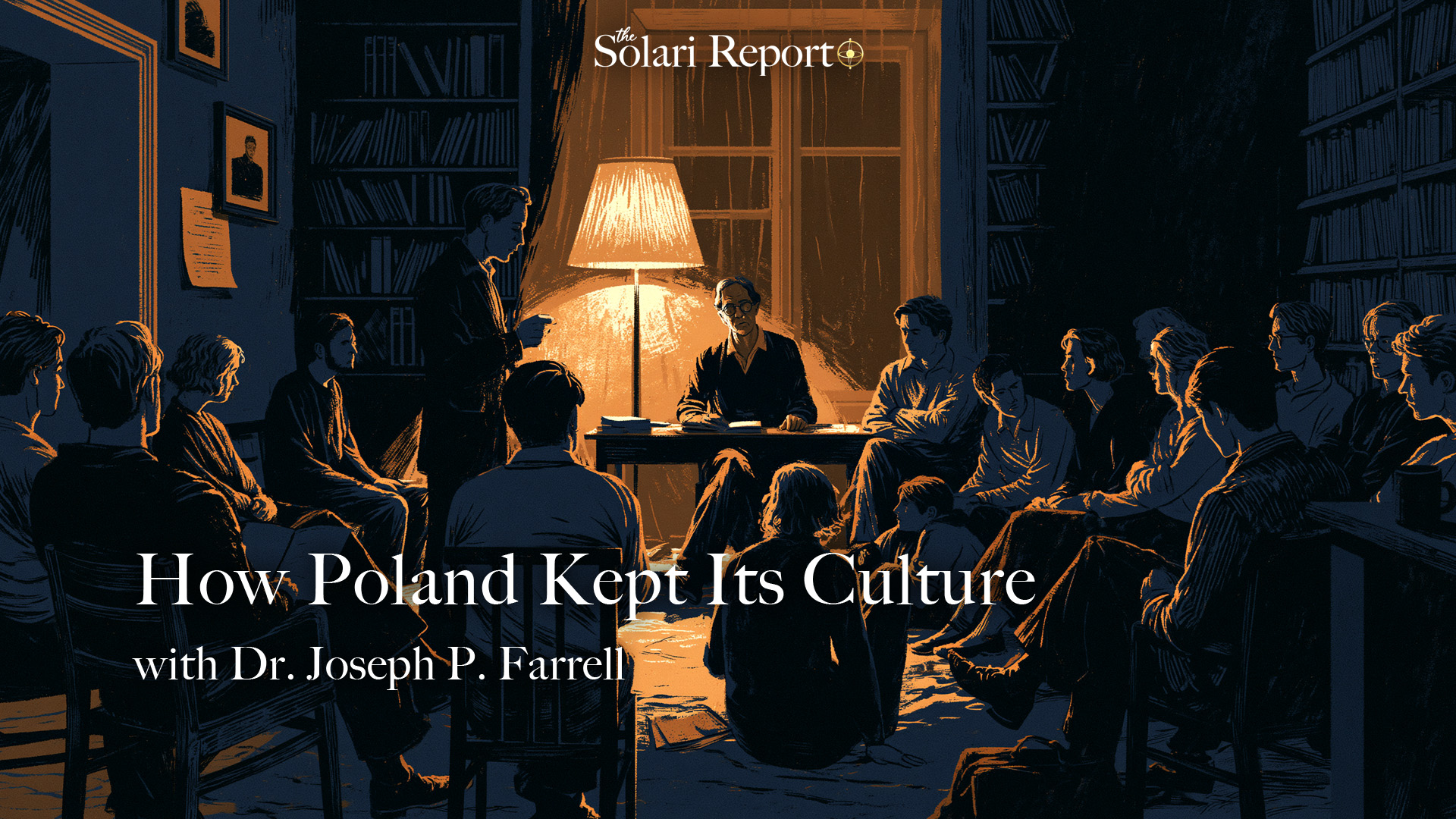
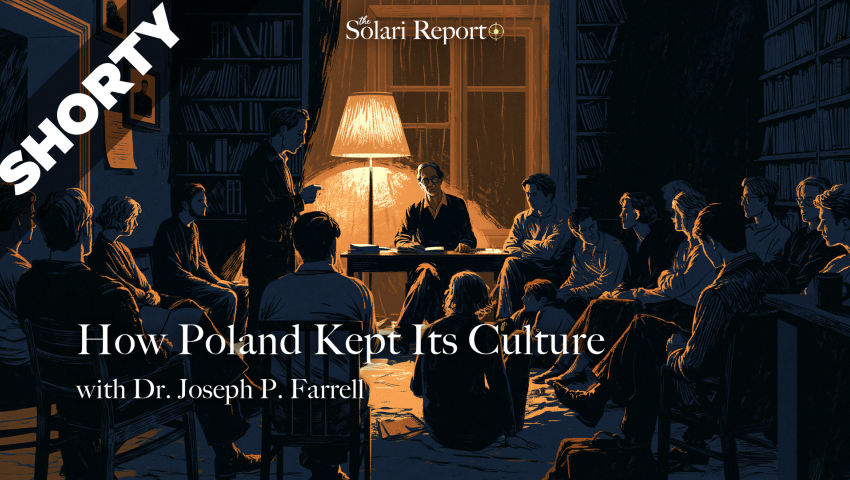
What does “building the culture” mean in practice? Dr. Joseph P. Farrell and Elze van Hamelen focus on what can be learned from Poland’s development (while a satellite state of the Soviet Union) of a successful, nonviolent resistance movement that built on Poland’s rich cultural and historical traditions.
Just saw the announcement and am counting the hours until release time on July 14! I am 100%Polish and an admirer of Dr Farrell’s wisdom and insights, so I expect to fully enjoy this, and thank you in advance for exploring this topic.
This was another very interesting conversation. Thank you. I have been studying methods of coercive control (a result of which is mind control) and one of them is microregulation, which develops a habit of compliance. I never recognized certain changes of language that are forced on us as an instance of microregulation.
Right after college, I lived with a talented Polish woman from Krakow, who later went on to Harvard to study finance. We have fallen out of touch since, but your conversation renewed my interest in Poland.
Thank you. You may find the book by Michelle Stiles, ‘One Idea to Rule Them All’, interesting. I highly recommend it. She goes deeply into the manipulation of words, and how seemingly small changes signal a concerning shift in values, virtue and culture.
Stiles writes, “Those of us seeking to truly understand what we are up against and to be equipped for battle must deep dive into the action of words upon society, their correspondence with reality, the search for truth, and how they have been systematically corrupted and weaponized against Western culture and humanity in general.”
Excellent book review. One that is concerning to me, is the term ‘maxxing’. Adding it to anything destroys the nuance completely. It bypasses balance, and encourages going to one extreme or another.
Listening, watching all the way through is so relevant. And then 15m into 17minute can be word normalized to our own “speaking”. I can use this brief statement to discuss our lawless political class versus our local, state and national needs with others and anyone ready for Solari would “get it instantly”.
I’m glad someone else has realized the implications of having lost the informal parts of English (nevermind its older forms before Shakespeare). You’ll find it of equal interest that Mexican Spanish, already without the informal plural forms (“vosotros”) as a general rule, seems to be in the process of losing its formal singular forms (“usted”), which has been the case for several decades now – speak to anyone using the formal singular and most (especially folks of about 40 or younger) will cringe or react in a kind of horror and say that it makes them feel old, even if it is pointed out that the formal is correctly used to signify respect (which, as was so beautifully explained here, must also be given its proper place). It was shocking to have realized this even though it was commonly (and I argue mistakenly) taught as being exclusively for talking to older people; of course, it’s also been a shock to realize what English has lost. I do hope we can one day restore some of our seemingly lost roots.
Anyway, both languages are incredibly beauitful and expressive and are worth defending in their own right. I’d add that with enough patience and effort, it’s perfectly possible to find beauty in ANY language, whether or not in common use. I would recommend the experience to anyone.
Thanks for this analysis and for the time taken to put this presentation together.
I’m writing this because I see some unanswered questions both from the past and from the present.
There was little mention of violence against KOR. Presently, both the pro-immigrant groups and also the Pride groups are likely to get physical when confrontations occur. An open meeting in an enclosed space could be difficult.
And, I doubt that, in particular, the present Catholic hierarchy would be supportive of present causes for protest.
Lastly, there are covert organisations, including freemasonry, that were not mentioned in the video.
Thanks again, there’s much food for thought in what was said. Many of Elzes’s reservations, resonated.
You are welcome. There is so much more to cover, but always limited time.
In my preparation of the questions, the focus for this interview was on what we can do – how we, each as an individual, have agency and responsibility.
Indeed, KOR, dissidents and people who were protesting government policies were subject to violence – imprisonment, torture. The workers committees provided medical, legal and financial support to victims.
What I notice now, is that this type of support/ Solidarity is currently not offered sufficiently to current victims of government policy. It should be possible to change that. I give some suggestions in the wrap up ‘Mr. Global in your street’.
Nonviolence is extremely important for success of a movement. Dr. Farrell emphasizes this, dr. Zuzowski, as well as dr. Nepstad.
Successful movements are trained in practicing nonviolence. Once there is violence, you can ostracize a group. ‘See, these are the terrorists!’.
If the protestors remain nonviolent, everyone can join, women, elders. Also, it becomes clear that unjust violence is initiated by the state.



























































































Dziękuję
Just saw the announcement and am counting the hours until release time on July 14! I am 100%Polish and an admirer of Dr Farrell’s wisdom and insights, so I expect to fully enjoy this, and thank you in advance for exploring this topic.
An excellent and timely conversation!
This was another very interesting conversation. Thank you. I have been studying methods of coercive control (a result of which is mind control) and one of them is microregulation, which develops a habit of compliance. I never recognized certain changes of language that are forced on us as an instance of microregulation.
Right after college, I lived with a talented Polish woman from Krakow, who later went on to Harvard to study finance. We have fallen out of touch since, but your conversation renewed my interest in Poland.
Thank you. You may find the book by Michelle Stiles, ‘One Idea to Rule Them All’, interesting. I highly recommend it. She goes deeply into the manipulation of words, and how seemingly small changes signal a concerning shift in values, virtue and culture.
Stiles writes, “Those of us seeking to truly understand what we are up against and to be equipped for battle must deep dive into the action of words upon society, their correspondence with reality, the search for truth, and how they have been systematically corrupted and weaponized against Western culture and humanity in general.”
https://solari.com/book-review-one-idea-to-rule-them-all-by-michelle-stiles/
Excellent book review. One that is concerning to me, is the term ‘maxxing’. Adding it to anything destroys the nuance completely. It bypasses balance, and encourages going to one extreme or another.
Listening, watching all the way through is so relevant. And then 15m into 17minute can be word normalized to our own “speaking”. I can use this brief statement to discuss our lawless political class versus our local, state and national needs with others and anyone ready for Solari would “get it instantly”.
Another great interview, thank you!
I’m glad someone else has realized the implications of having lost the informal parts of English (nevermind its older forms before Shakespeare). You’ll find it of equal interest that Mexican Spanish, already without the informal plural forms (“vosotros”) as a general rule, seems to be in the process of losing its formal singular forms (“usted”), which has been the case for several decades now – speak to anyone using the formal singular and most (especially folks of about 40 or younger) will cringe or react in a kind of horror and say that it makes them feel old, even if it is pointed out that the formal is correctly used to signify respect (which, as was so beautifully explained here, must also be given its proper place). It was shocking to have realized this even though it was commonly (and I argue mistakenly) taught as being exclusively for talking to older people; of course, it’s also been a shock to realize what English has lost. I do hope we can one day restore some of our seemingly lost roots.
Anyway, both languages are incredibly beauitful and expressive and are worth defending in their own right. I’d add that with enough patience and effort, it’s perfectly possible to find beauty in ANY language, whether or not in common use. I would recommend the experience to anyone.
Thanks for this analysis and for the time taken to put this presentation together.
I’m writing this because I see some unanswered questions both from the past and from the present.
There was little mention of violence against KOR. Presently, both the pro-immigrant groups and also the Pride groups are likely to get physical when confrontations occur. An open meeting in an enclosed space could be difficult.
And, I doubt that, in particular, the present Catholic hierarchy would be supportive of present causes for protest.
Lastly, there are covert organisations, including freemasonry, that were not mentioned in the video.
Thanks again, there’s much food for thought in what was said. Many of Elzes’s reservations, resonated.
You are welcome. There is so much more to cover, but always limited time.
In my preparation of the questions, the focus for this interview was on what we can do – how we, each as an individual, have agency and responsibility.
Indeed, KOR, dissidents and people who were protesting government policies were subject to violence – imprisonment, torture. The workers committees provided medical, legal and financial support to victims.
What I notice now, is that this type of support/ Solidarity is currently not offered sufficiently to current victims of government policy. It should be possible to change that. I give some suggestions in the wrap up ‘Mr. Global in your street’.
Nonviolence is extremely important for success of a movement. Dr. Farrell emphasizes this, dr. Zuzowski, as well as dr. Nepstad.
Successful movements are trained in practicing nonviolence. Once there is violence, you can ostracize a group. ‘See, these are the terrorists!’.
If the protestors remain nonviolent, everyone can join, women, elders. Also, it becomes clear that unjust violence is initiated by the state.