
Money & Markets Report: June 18, 2026
Become a member: Subscribe


















NTS Headlines
Headlines by Category
Headlines by Year
- Money & Markets
- Weekly Solari Reports
- Cognitive Liberty
- Solari Builders
- Ask Catherine
- News Trends & Stories
- Equity Overview
- War For Bankocracy
- Digital Money, Digital Control
- State Leader Briefings
- Food
- Food for the Soul
- Future Science
- Health
- Metanoia
- Solutions
- Spiritual Science
- Wellness
- Building Wealth
- Via Europa
































Solari’s Building Wealth materials are organized to inspire and support your personal strategic and financial planning.



Building Wealth
This 6-pillar curriculum teaches the basic literacy we need to be personally and financially successful and to do so in a manner in which together we evolve a culture that supports the emergence of an advanced human civilization.










Missing Money
Articles and video discussions of the $21 Trillion dollars missing from the U.S. government

Connect with the wider network of like-minded Solari subscribers using our in-house social media platform, Solari Connect.




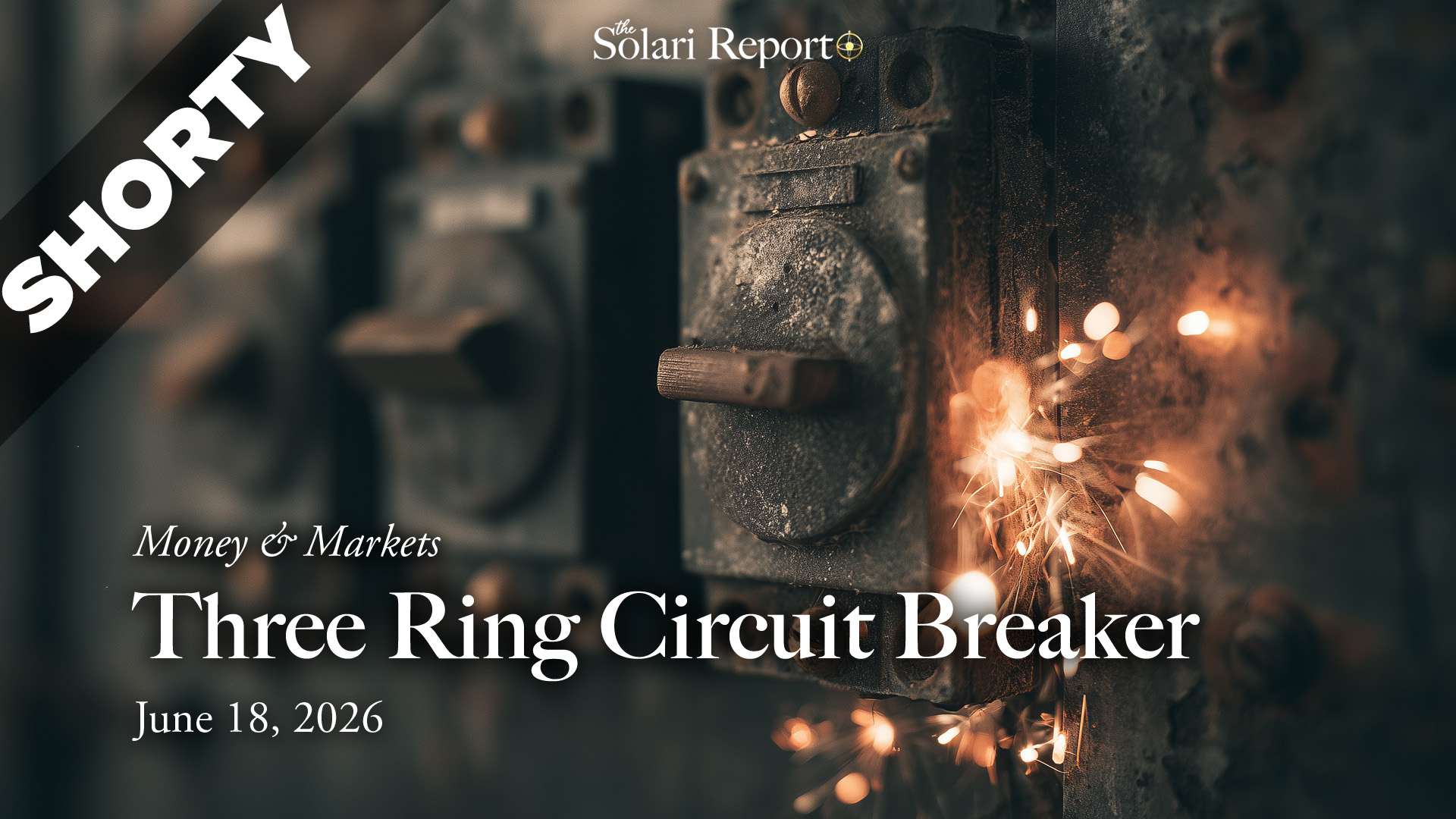

John Titus and Catherine Austin Fitts argue the Iran conflict can be “lost” on three circuit breakers—military, energy, or financial—and contend the U.S. effectively lost due to inflation, energy constraints, and financial pressure rather than battlefield outcomes. They discuss an unreleased U.S.–Iran memorandum of understanding that reportedly requires halting Israel’s bombing of Lebanon, reopening the Strait of Hormuz, ending blockades, and major money flows to Iran, alongside unfreezing funds. They cite precision Iranian strikes on U.S. Gulf bases and expensive air-defense systems, and report the UAE paid Iran billions to stop attacks, raising questions about U.S. basing. They connect war-driven energy shortages to dangerously low commercial oil stocks at Cushing, rising producer prices, and looming rate pressures, then pivot to domestic control-grid issues including internet censorship bills, AI/crypto lobbying, data-center impacts, and stablecoin rulemaking.
00:00 Welcome and Setup
00:36 Three Circuit Breakers
01:22 Who Lost and Why
02:55 Congress and Central Banks
03:58 Cabinet Competence Critique
05:50 US Iran Memorandum
09:40 Deal Terms Breakdown
12:15 Lead Up and Trump Claims
17:22 Iran Precision Strikes
20:40 UAE Pays to Exit
24:21 Gulf Finance and Security
28:06 Dubai Financial Hub
32:49 US Energy Achilles Heel
38:26 Rates Inflation Fallout
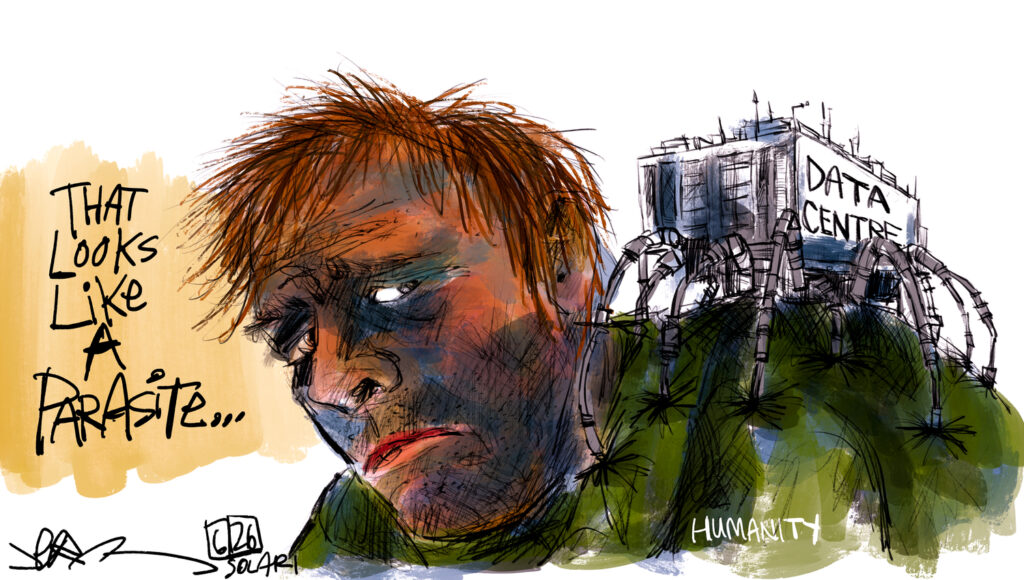
40:50 Control Grid and AI
43:35 Deeper Model Failure
45:04 US Brand Rejection
46:25 Inflation Shock Headlines
47:57 Shrinkflation and Quality Drop
48:27 Dynamic Pricing and Shadow Work
54:50 Iran War Defeat Questions
57:16 B-52 Crash and Media Shift
59:44 Internet Censorship Push
01:05:08 China Auto Export Surge
01:11:50 Biometric Banking Weirdness
01:13:31 SpaceX IPO Index Game
01:17:33 Israeli Election Meddling
01:19:24 Ukraine Biolabs Confirmed
01:22:59 Biowarfare and Silk Road
01:23:57 Tulsi Gabbard Motives
01:25:29 Wyoming Data Center Boom
01:29:11 Crypto Mine Water Secrecy
01:34:54 Data Centers Tax Breaks
01:36:55 Tech Lobbying Influence
01:38:39 Pushback Albania and Ukraine
01:42:06 Markets and Control Grid
01:44:34 Turtling for Cash Update
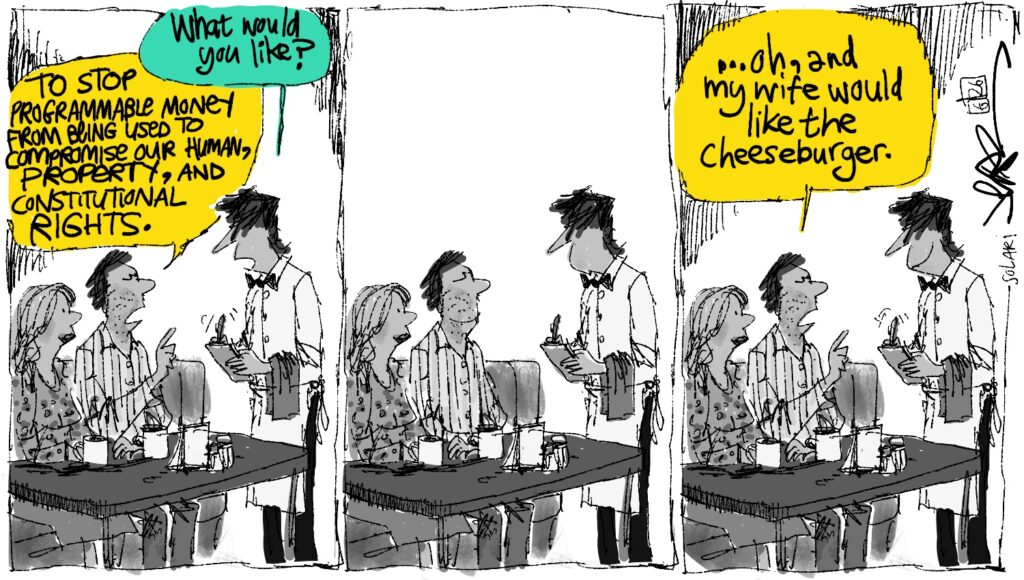
01:47:13 Programmable Money Guardrails
01:50:43 Grand Tour and Organizing
01:55:53 Defeating the Nothing
01:58:48 Wrap Up and July Plans
Latest solari report & ask catherine
Log in or subscribe to the Solari Report to enjoy full access to exclusive articles and features.
Already a subscriber?

Regarding data centers, is there any link between data center location placement and opportunity zones? Just curious.
Oh my goodness Holly, I think you might have opened up another Pandora Box or Rabbit Hole.
I just took a quick look at my County and some of the Opportunity Zones are connected to 15 minute cities. Then there is a 2.0 Opportunity Center program which target rural communities. Areas are to be proposed by July 1, 2026. This same date July1, 2026, is when new legislation takes effect here in Florida. Some of the legislation is horrible, I am trying to take a look at it now.
You asked why Black Cube (BC Strategy Ltd) is so named. It is Saturn’s symbol. Here’s what AI says about it today:
“the black cube is the primary symbol of Saturnian worship, linking the Roman god Saturn (associated with time, law, and limitation) to modern systems of control, occultism, and hidden elite power.
Occult and Elite Links: The concept is frequently woven into narratives about Satanism, Luciferianism, and the Left-Hand Path. It suggests that secret societies, corporate structures, and even modern technology (like smartphones or “black boxes”) are tools used by an elite to enforce Saturnian control over human consciousness and energy.”
I remember a while ago hearing that the names of Blackstone and BlackRock (and by extension presumably also Black Cube) refer to the Kaaba. It didn’t seem logical to me since the BlackStone and BlackRock founders are Jewish, but what you say about it being about a symbol of Saturn makes much more sense so thanks, Ingrid, for the new and more reasonable explanation.
Thanks, Andrew. I was surprised, too. The black cube theme is pervasive. Black Cube Nomadic Art; Cube Hamburg (2007); Alamo (2010) at Astor Place in Manhattan; arguably Trump Tower.
You mentioned the Jewish connection. Jewish morning prayers include wrapping one’s forehead and arm with tefillah. Tefillah includes Torah scriptures placed in a black leather box then fastened to the body. While praying scripture is Biblical, the black cubes were added by Kabbalah.
I wonder Ingrid, do you read Steiner and all he said 100 years ago about Arhiman and how that ties into Tech in general?
I’d welcome knowing the basis for your question, Jimmy. To me Rudolph Steiner is incidental. For example:
1. Revelation 6:5-6. Now you know why the horse is black.
2. If you’ve ever made an origami creation, you implicitly know that a Black Cube is a folded cross.
3. If the Cube is hollow, you’d want to know what’s inside. They tell you, a Black Core.
4. Symbols are used for disclosure. That way if the people don’t push back, they call it implied consent.
5. Example of disclosure: The Department of Defense was so named to Defend the American people. Trump renamed it Department of War, and he is now at war with the American people. The Department of War has not called attacks on Iran war. Black Cube and Black Core and Blackstone to Catherine’s point are all about cyber-surveillance.
I’m just calling what I see based on what the Bible presaged – not Steiner.
The spiritual realm gives knowledge to humanity before they are ready for it.
Hard to say who lost the most in this war, but we know for sure that insider energy traders and their clients won…bigtime…and they will continue to win with every twist and turn that the Administration conjures up!
To provide a bit of insight on why China auto export skyrocketing since end of 2020.
To provide a bit of insight on why China auto export skyrocketing since end of 2020.
It was during a time when most automakers were scrambling for chips/sensors. Chinese cars were the only ones that were readily available to purchase on dealer’s lot while Toyota had over 2+years wait time on some of the most popular models in Australia. One of the reasons why Chinese cars were availble was because of the US sanctions China had stockpiled huge amount of chips before the shortage started, not to mention the vertical intergration in their supply chain. I believe this was the first time many Aussies started to take Chinese car brands seriously.
Another reason was China as a whole has made the decision to export as much as possible since the domestic market was and still is so saturated, razor thin margins at home.
To give you an example, one of the biggest home appliance maker Samsung has ceased the sale of all home appliance products in China due to intense competition among the Chinese home brands.
So when another opportunity was presented to them- when the fuel prices surged this year, in Australia, we saw Chinese auto makers hitting the sales chart because all of sudden, a large amount of buyers are interested in EVs and plug-in hybrids and 8 of 10 choices are from China. Every few weeks, there is a new Chinese auto brand popping up in Australia, it’s almost impossible to keep up and there is no sign of slowing down as exporting seems like the only survival strategy for many Chinese auto makers.
There is a really insightful article on Asia Times if you are interested in this topic. I will have the link in the end. Basically, there were 487 Chinese EV makers in 2018, now only 40 and it is still 30 too many for the domestic market. In the meantime, China has the capacity to produce half of the global vehicle demand.
I hope this paints a picture of the auto industry in addition to what Catherine and John have already discussed in this episode. In short, the Chinese car makers are prepared and ready for opportunities to show up.
https://asiatimes.com/2026/05/price-wars-tech-wars-chinas-auto-bloodbath-rages-on/
Doug Casey on Swap Lines, Secret Bailouts, and the Weaponization of the Dollar
“International Man: While the term “swap line” sounds technical and harmless, it seems like it’s just a euphemism for a bailout.
What does it say when Washington starts extending swap lines to countries like Argentina and the UAE?
Doug Casey: First, we should define what a swap line is. It basically amounts to the US giving a foreign country X amount of currency in dollars, and the other country paying for it by giving the US the same amount in their currency. For decades, US dollar swap lines were mostly reserved for major allies and core financial centers around the world.
It’s a problem, however, with countries whose currencies have no value outside of their boundaries. A country that gets a swap line from the US is trading its paper for liquid and fungible dollars. The US may then get stuck with UAE dirhams or Argentine pesos. It’s trading real money for play money, Monopoly money.
In the case of Argentina, that swap line may never be repaid. The US might wind up being stuck with a bunch of worthless Argentine pesos.
When the US gives a foreign country a swap line, it basically creates those dollars out of nothing. They enter the banking system and debase the dollar. Doing so gives the US some leverage over a country that takes the swap.
But it’s a pretty expensive way of getting leverage.
International Man: In Argentina’s case, the US framed the swap line as a stabilizing measure. But was this really about financial stability, or was it about propping up a politically important ally at a critical moment?
Doug Casey: Since Milei is Trump’s new BFF, the swap was intended to help Argentina’s perennially weak economy, thereby helping Milei. That’s great for the moment, but now Argentina has to deal with another $30 billion of debt. I would’ve recommended Milei default on all of Argentina’s debts to the IMF, the World Bank, and the US—that might have worked during Milei’s first few months. “I’m sorry, everyone. We just don’t have the ability to pay right now. Wait until I set things straight.” I’m not sure that Argentina would’ve been punished badly for that. Third World countries default all the time.
Instead, Argentina taking the swap just indebts them by another $30 billion. The way to look at this is that future generations of young Argentines are being turned into serfs in order to repay that swap line, along with the rest of the debt.
Milei should have called a spade a spade and admitted bankruptcy instead of going further into debt to keep the Ponzi scheme going.
Argentina’s financial situation under Milei is very strange. The country theoretically owns two million ounces of gold. A million of those ounces were already sitting in London. But then, as soon as Milei got into office, he physically transferred another 440,000 ounces to London, saying that they were safer there. Which is an obvious lie; there’s no reason to think they’ll ever return.
That’s on top of buying 24 F-16s from Denmark—totally useless planes for Argentina—for another $350 million, plus $150 million per year in maintenance. And failing to abolish the central bank, which was a centerpiece of his election campaign. And worse, using the central bank to maintain the peso at ridiculously high levels, which is serving to bankrupt thousands of small businesses.
These stupidities might make the $30 billion swap seem necessary.
International Man: The UAE is a wealthy country with enormous sovereign wealth. If even the UAE needs access to a US dollar lifeline during the Iran war, what does that tell us about the fragility of the dollar-based system?
Doug Casey: It’s hard to be sure why some things happen. Public announcements are usually smoke and mirrors. But let me take a guess. The UAE has lots of T-Bonds as part of their sovereign wealth fund. Perhaps they told the US that they needed to liquidate them to cover the expenses and damage from the war.
They’re likely sitting on a big loss, since interest rates have gone up substantially over the last four years. Maybe they don’t want to realize the loss by selling them. I’m sure the US doesn’t want to see them sold either, since that would drive up interest rates. So the US gives the UAE a swap to keep the UAE from selling. The “why” of this swap is quite different from that with Argentina.
International Man: Are swap lines becoming another tool of financial geopolitics, similar to sanctions, IMF programs, and military aid, where access to dollars depends on being in Washington’s good graces?
Doug Casey: Swap lines impress me as a type of undeclared foreign aid. Extra dollars are created and are transferred to a foreign country. But a swap line, unlike foreign aid, doesn’t have to be approved by Congress.
I don’t know how these things are reported, or disguised, in US government accounting, because both a debit and a credit are involved. And the Fed isn’t a direct part of the Government. It looks like a fair trade that works out equally, but it’s really not. The US dollar is hardly “as good as gold” anymore, but the dirham and the peso are hot potatoes.
It’s one of the problems created by the US acting as the world hegemon. Like ex-Treasury Secretary John Connally said years ago, “It may be our currency, but it’s your problem.”
It’s our problem as well, because Americans are the main owners of the US dollar. And when the dollar loses value, it really hurts the average American, whose assets are largely in dollars. Foreigners, who now own trillions of the rapidly depreciating units, are hurt badly by a weakening dollar. But Americans are hurt much, much worse. Connally was a fool…
International Man: What are the risks for ordinary Americans when the US increasingly uses its balance sheet, the Fed, and the Treasury to backstop foreign governments and their financial systems?
Doug Casey: The US Government is manifestly bankrupt with $40 trillion of unrepayable debt. Through the Fed, it creates currency out of nothing to do these things. The dollar is now backed only by the “full faith and credit” of the US Government—which sounds good. But it’s actually a threat to extract wealth, directly and indirectly, from its subjects.
The US currently reports the consumer price index as 4.2%. I think that’s a phony number. I’d say the cost of living is rising at closer to 10%, because I trust a tally of my personal expenses more than I do numbers from the Treasury. Is there a reason to trust the inflation numbers of the US much more than those of Argentina?
If you’re not increasing your wealth by 10% per year, which is a pretty high bar, you’re going backward. The “elite” are doing extremely well. But the average American is getting poorer, although the drop in his standard of living is disguised by taking on more debt.
“Swaps” are just another way that Washington uses its citizens as milk cows, as pawns, in order to play international political games.
Editor’s Note: Swap lines reveal the fact that the US dollar system is being stretched to serve political and financial goals around the world.
For Americans, the risk is that these pressures come home through inflation and currency debasement—making traditional fixed-income returns and a 2.5% dividend yield increasingly inadequate as the dollar loses value.
That’s why the question is not just what Washington is doing overseas—but how investors can generate real income as the consequences arrive in earnest.”
have you heard of simon dixon? he has a youtube channel and catherine has interviewed him. he lays out a strategy i have not heard from anyone but makes the most sense to me.
Thank you Deborah, I never heard of Simon Dixon. When I did a search on Youtube, I found the linked program, where he is being interviewed. He is explained the Iran War and what was the purpose. It does make sense. And then I heard yesterday the tech want-to-be controllers, 222 of them, had a secret meeting. Possibily trying to be a tech version of the committee of 300?
https://www.youtube.com/watch?v=Aza4GAjQffw
Simon does a good job of describing how the different cartels compete and cooperate. We are out of the nation state and into the control and concentration of cash flows. The cartels can always agree by consolidating more upwards.
Thank you for posting this helpful analysis.
You two just keep getting BETTER & BETTER!
🙂