This 6-pillar curriculum teaches the basic literacy we need to be personally and financially successful and to do so in a manner in which together we evolve a culture that supports the emergence of an advanced human civilization.
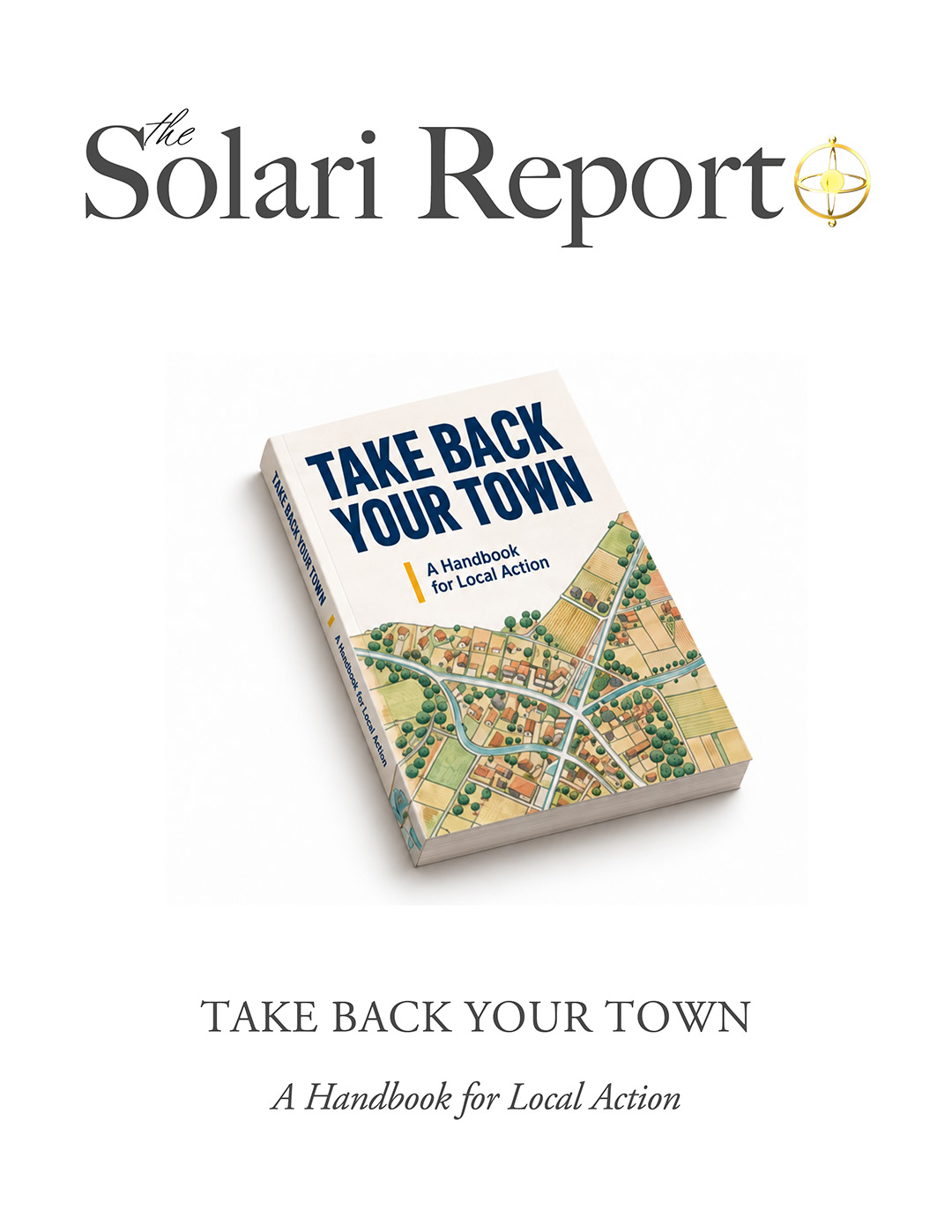
Elze van Hamelen’s new blockbuster report, Take Back Your Town: A Handbook for Local Action, will help you recognize how UN-inspired policies are playing out in your locality and to provide you with a practical and strategic manual for pushback.
This might be a question for a different interview/commentary – but Catherine’s opening before bringing on Elze about “The Most Difficult Topic” inspired a maybe even more difficult topic which is hyperlocal in a different way.
How to speak with colleagues in our different industries, especially for me the software industry?
I find it easier in Montana to connect with people to do local efforts (which is very hard), than I do with people in my industry. And related to that, maybe talking about connecting with what works and doesn’t in different areas of commerce and production, as I’ve found it really easy to connect with people who deal with reality like mechanics and tow services (especially with generational businesses). Wow, so easy and rich!
That is a very good question. There is no easy answer.
I try to find openings where you can connect. And usually that is on something tangable or close to home.
But it can be a real challenge to find an opening.
Excellent interview. I read Stewart Chase “Rich Land Poor Land” 1936. Wanting to use a scientific technological approach is not at all new. A great read and well worth finding a copy, much of what is in this book is still accurate for agriculture now.
I was thinking about how the discussion fits with my personal anecdote. I own a farm, the level of usda data collection has been growing a lot! The FSA NRCS etc programs, depending on what you enroll in, has more caveats. You might be able to leave the program but with a lot more permanent requirements.
I don’t see the “mechanics” of the land grab from owners today at this exact moment. But I can see the long term, as each generation sells, ownership shifts to bigger and bigger owners. I would not be surprised if who we leave the farm to sells out. It’s tempting indeed.
I do want to mention as this is a big change, I am in a financial budget class offered by employer (DON). I took this class a five years ago. BC Holdings suggested a house might not pay a dividend but is worth owning and a good investor would pay all debt (including a house) off before retirement. Today 5 years later BC Holdings dropped ownership and favors renting. The biggest change is they suggest if you own real property to sell it and put that money into some sort of market where someone else manages the real estate. When I piped up and said it’s a one way trip, sell up and pay capital gains and lose actual ownership. I pointed out that cash returns may be 3-4% a year and 8-9% equity gains for dry land farming. You are now giving away control and would split the return with a manager who probably doesn’t care or even understand the local market gets paid no matter what. Basically I conveyed if I sold up, then I would never be able to rebuy what I sold. The instructors gave me the hairy eyeball.
It makes me think, “you will own nothing and like it.” Like Carol Roth says OWN everything rent nothing.
It is very good that you gave the audience a reality check!
There are many ways they try to bamboozle us out of ownership or undermine property rights.
I greatly appreciate your work. I read your reports, have followed your research for years, and I agree with you that many of the most important developments in society ultimately become visible at the local level.
However, I believe there is a fundamental problem with the advice that citizens should organize themselves locally.
Not because local organizing is unimportant, but because, in my opinion, the analysis does not pay sufficient attention to the political and administrative reality that citizens encounter once they actually do so.
When a citizen organizes, they do not enter an empty playing field. They step into an environment that has already been organized for decades through political parties, civil service structures, regional partnerships, umbrella organizations, subsidy flows, administrative networks, and existing power relationships.
One example that immediately comes to mind is the VPPG in the Netherlands (Association of Local Political Groups). The VPPG was founded in 1987 and is an independent organization representing local political parties and elected representatives who are not affiliated with national political parties. Its purpose is to strengthen local democracy, municipal autonomy, and the position of independent local representatives.
I mention the VPPG because it raises a question that, in my opinion, is largely absent from discussions about local organizing.
If local organizing is truly the answer, then organizations such as the VPPG deserve careful analysis. These are not citizens standing on the sidelines complaining. These are people who actually organized themselves, entered the political arena, and attempted to create an independent counterweight within the existing system.
At the same time, it is interesting to examine how such organizations relate to established institutions such as the VNG (Association of Netherlands Municipalities), which plays an important role in representing municipal interests and shaping policy discussions at the national level. The interaction between independent local organizations and influential umbrella organizations raises important questions about influence, representation, and the space available for genuinely independent voices within local governance.
What interests me is not whether someone agrees with every position taken by the VPPG. The more important question is:
What happens when citizens, local representatives, or independent organizations actually succeed in organizing themselves?
How are they received by the existing political and administrative structures?
How much room is there for genuine independence?
And what forms of resistance emerge when an organization attempts to create a counterweight to already established institutions?
The same question applies to local politicians who have attempted to bring greater transparency into local government. Consider, for example, the experiences described by Marlys Roos in her book “Everything Is Secret Here”. Whether one agrees with all of her conclusions or not, her experience raises an important question that deserves serious consideration:
What happens to people who attempt to expose, challenge, or change existing structures?
I hear relatively little about that side of the story.
My own experience is, as you yourself also pointed out, that citizens are often invited to participate only after policy proposals have already been prepared for months or even years by civil servants, advisory bodies, and administrative networks. At that point they are given a few minutes to speak. When frustration or emotion emerges, it is often seen as a problem of the citizen. Yet perhaps those emotions are a signal of something much deeper: the feeling that the essential decisions have already been made before the public conversation even begins.
There is another aspect that I believe deserves more attention.
Many citizens assume that politicians make political decisions and civil servants then implement them. In practice, I have often seen that this distinction is far less clear. Civil servants influence agendas, formulate policy options, prepare proposals, advise administrators, and help determine which information ultimately reaches elected representatives.
As a result, the question may not simply be: “How do citizens organize themselves locally?”
But rather: “What political, administrative, and institutional environment are citizens actually entering once they decide to organize themselves?” This should be made many times more transparent worldwide, especially because Mr. Global already has a significant advantage in understanding these structures, while ordinary citizens do not.
Because even when citizens create something very small — an association, a local platform, or a modest organization — they immediately enter a field in which existing interests, institutions, and power structures are already present.
In my opinion, this is where the real challenge begins. Not when citizens fail to organize.But when they actually succeed. Because once independent citizens become organized, visible, and influential, they inevitably become part of a political landscape in which every new organization, every new initiative, and every new voice acquires political significance. With all the consequences that may entail.
Because from that moment onward they may also be seen as a political actor and therefore as a potential threat to existing interests or established structures. Just look at how, both locally and globally, processes of alignment and standardization around citizens are taking shape at the local level. How often are people told that they should join an existing political party or establish one themselves if they truly want to exert influence?
In theory, that sounds reasonable. In practice, however, it can prove to be a dead end for people who lack financial resources, organizational support, or who are simply too critical of the existing system to fit comfortably within established political frameworks.
This brings me to another point that deserves attention. The Dutch Constitution contains important rights and freedoms, but the Netherlands is also a constitutional monarchy with a prohibition on constitutional review. Article 120 of the Dutch Constitution prohibits judges from reviewing Acts of Parliament and treaties against the Constitution. As a result, citizens may formally possess constitutional rights while having very limited possibilities to invoke those same rights against legislation through the courts. This creates a situation that many citizens find difficult to understand and even more difficult to navigate. For that reason, I believe the central question is not simply how citizens can organize themselves locally.
The deeper question is:
Are citizens still truly able to build independent organizations, or have the legal, administrative, and political barriers become so extensive that most initiatives are absorbed into existing structures, regulated, made dependent, or exhausted before they can become genuinely effective?
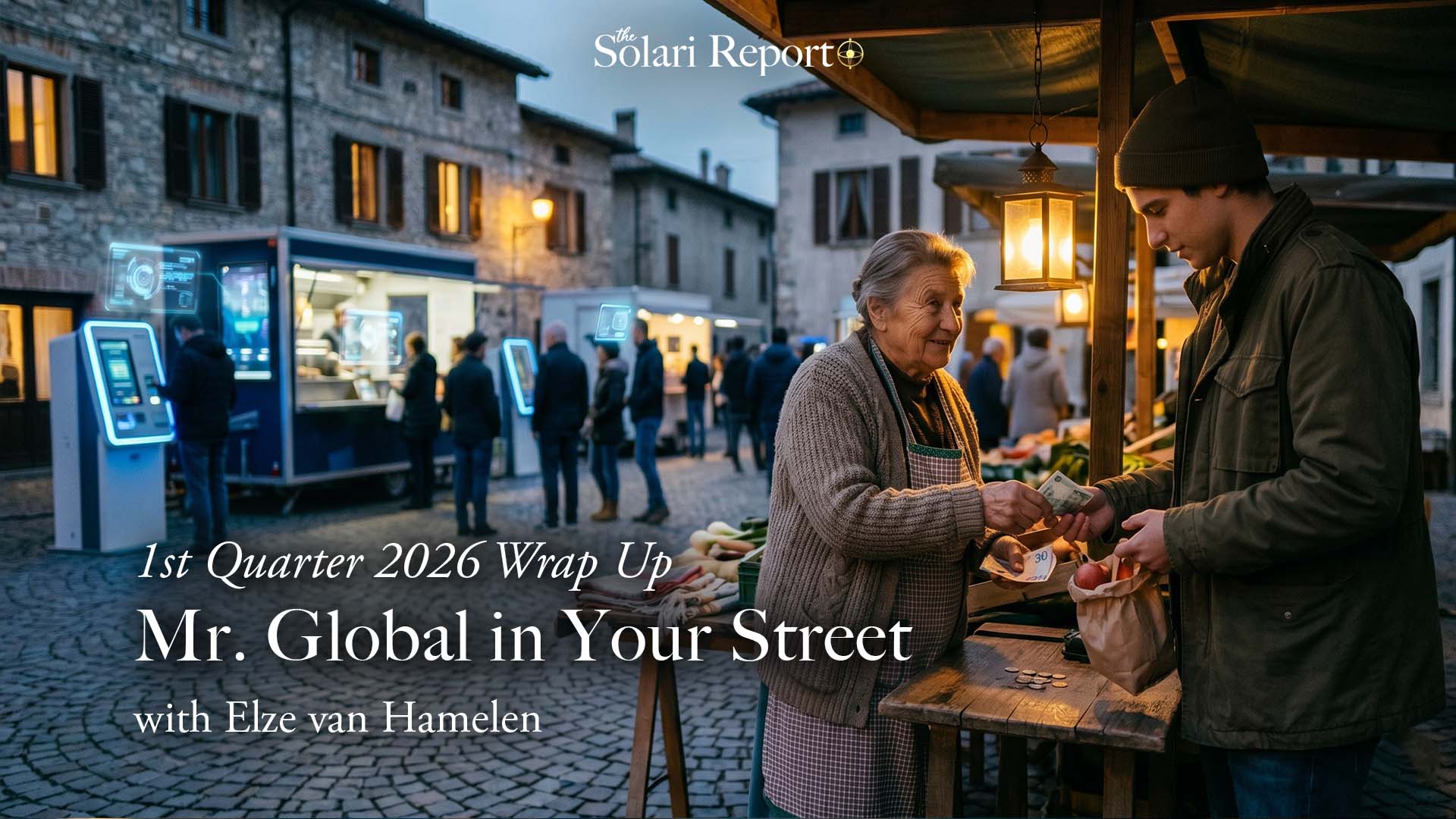
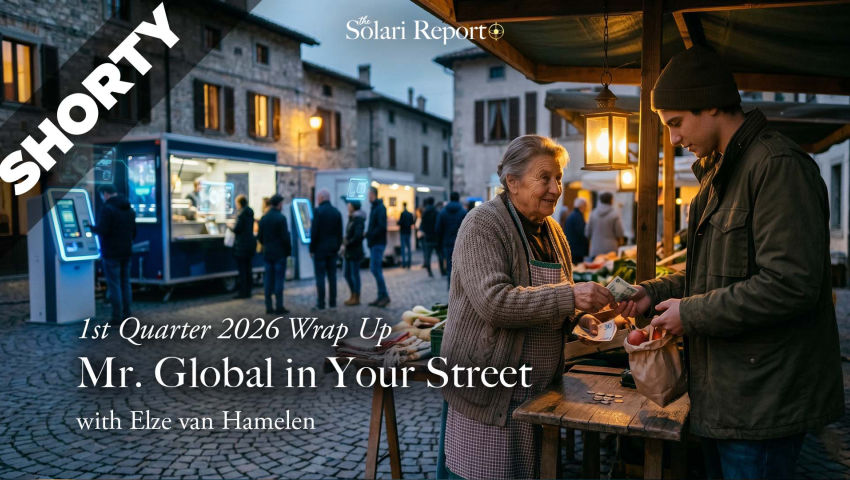
Many of these questions, about the parallel structures, bureaucratic hurdles and how to organize are answered in the report ‘Mr. Global in your street’. The text is now on the Solari website. Hopefully the pdf will be up soon.
To me, the question is not about all the blockages that have been created, but ‘what is possible?’, ‘what can I do’?
The interviews with Reinette Senum, Terri Hall and Margaret Byfield, and the Solari heros all confirm the hurdles that you mention. But more importantly, they show how much is possible with a ‘can-do’ mindset.
Excellent topic and interview. Many cities and towns in the U.S. and in California in particular have very informative websites. This is the place to get information because as Catherine mentioned so many if not all of our local newspapers are gone having been sold to corporate entities which use canned stories available to news organizations and no longer focus on local issues. On my town’s website, I can source City Council Meetings, their corresponding Agendas and also the follow up minutes. City Council meetings can be attended in person or by ZOOM. Also, commentary from the citizens can be made on items on the Agenda electronically and sent in for recordation and consideration for items to be voted on in the meetings. A local Town newsletter can be signed up for which provides monthly news. Most of these civic sites have a .org suffix so for US citizens it’s worth investigating. We had an issue 2 years ago where the State wanted to take over a local building for the use of a shelter which was in a residential area and not far from where children go to school. 300 responses were sent electronically with letters of explanation of why this might be a good idea but the wrong location. Our local City was about to be pre-empted by the State of Calif. Well, the push back worked and the building was not offered for sale to the State and is not operating as a shelter to date.







































































Fantastic interview! A few useful links that required a little research to find:
1. Action of the week about opposing surveillance: https://solari.com/action-of-the-week-september-14-2025-tell-your-local-officials-to-oppose-license-plate-reader-surveillance/
2. “This Flock Camera Lean is Like Netflix for Stalkers” https://youtu.be/vU1-uiUlHTo
This might be a question for a different interview/commentary – but Catherine’s opening before bringing on Elze about “The Most Difficult Topic” inspired a maybe even more difficult topic which is hyperlocal in a different way.
How to speak with colleagues in our different industries, especially for me the software industry?
I find it easier in Montana to connect with people to do local efforts (which is very hard), than I do with people in my industry. And related to that, maybe talking about connecting with what works and doesn’t in different areas of commerce and production, as I’ve found it really easy to connect with people who deal with reality like mechanics and tow services (especially with generational businesses). Wow, so easy and rich!
Thank you, Harold.
That is a very good question. There is no easy answer.
I try to find openings where you can connect. And usually that is on something tangable or close to home.
But it can be a real challenge to find an opening.
Excellent interview. I read Stewart Chase “Rich Land Poor Land” 1936. Wanting to use a scientific technological approach is not at all new. A great read and well worth finding a copy, much of what is in this book is still accurate for agriculture now.
I was thinking about how the discussion fits with my personal anecdote. I own a farm, the level of usda data collection has been growing a lot! The FSA NRCS etc programs, depending on what you enroll in, has more caveats. You might be able to leave the program but with a lot more permanent requirements.
I don’t see the “mechanics” of the land grab from owners today at this exact moment. But I can see the long term, as each generation sells, ownership shifts to bigger and bigger owners. I would not be surprised if who we leave the farm to sells out. It’s tempting indeed.
I do want to mention as this is a big change, I am in a financial budget class offered by employer (DON). I took this class a five years ago. BC Holdings suggested a house might not pay a dividend but is worth owning and a good investor would pay all debt (including a house) off before retirement. Today 5 years later BC Holdings dropped ownership and favors renting. The biggest change is they suggest if you own real property to sell it and put that money into some sort of market where someone else manages the real estate. When I piped up and said it’s a one way trip, sell up and pay capital gains and lose actual ownership. I pointed out that cash returns may be 3-4% a year and 8-9% equity gains for dry land farming. You are now giving away control and would split the return with a manager who probably doesn’t care or even understand the local market gets paid no matter what. Basically I conveyed if I sold up, then I would never be able to rebuy what I sold. The instructors gave me the hairy eyeball.
It makes me think, “you will own nothing and like it.” Like Carol Roth says OWN everything rent nothing.
It is very good that you gave the audience a reality check!
There are many ways they try to bamboozle us out of ownership or undermine property rights.
Dear Elze,
I greatly appreciate your work. I read your reports, have followed your research for years, and I agree with you that many of the most important developments in society ultimately become visible at the local level.
However, I believe there is a fundamental problem with the advice that citizens should organize themselves locally.
Not because local organizing is unimportant, but because, in my opinion, the analysis does not pay sufficient attention to the political and administrative reality that citizens encounter once they actually do so.
When a citizen organizes, they do not enter an empty playing field. They step into an environment that has already been organized for decades through political parties, civil service structures, regional partnerships, umbrella organizations, subsidy flows, administrative networks, and existing power relationships.
One example that immediately comes to mind is the VPPG in the Netherlands (Association of Local Political Groups). The VPPG was founded in 1987 and is an independent organization representing local political parties and elected representatives who are not affiliated with national political parties. Its purpose is to strengthen local democracy, municipal autonomy, and the position of independent local representatives.
I mention the VPPG because it raises a question that, in my opinion, is largely absent from discussions about local organizing.
If local organizing is truly the answer, then organizations such as the VPPG deserve careful analysis. These are not citizens standing on the sidelines complaining. These are people who actually organized themselves, entered the political arena, and attempted to create an independent counterweight within the existing system.
At the same time, it is interesting to examine how such organizations relate to established institutions such as the VNG (Association of Netherlands Municipalities), which plays an important role in representing municipal interests and shaping policy discussions at the national level. The interaction between independent local organizations and influential umbrella organizations raises important questions about influence, representation, and the space available for genuinely independent voices within local governance.
What interests me is not whether someone agrees with every position taken by the VPPG. The more important question is:
What happens when citizens, local representatives, or independent organizations actually succeed in organizing themselves?
How are they received by the existing political and administrative structures?
How much room is there for genuine independence?
And what forms of resistance emerge when an organization attempts to create a counterweight to already established institutions?
The same question applies to local politicians who have attempted to bring greater transparency into local government. Consider, for example, the experiences described by Marlys Roos in her book “Everything Is Secret Here”. Whether one agrees with all of her conclusions or not, her experience raises an important question that deserves serious consideration:
What happens to people who attempt to expose, challenge, or change existing structures?
I hear relatively little about that side of the story.
My own experience is, as you yourself also pointed out, that citizens are often invited to participate only after policy proposals have already been prepared for months or even years by civil servants, advisory bodies, and administrative networks. At that point they are given a few minutes to speak. When frustration or emotion emerges, it is often seen as a problem of the citizen. Yet perhaps those emotions are a signal of something much deeper: the feeling that the essential decisions have already been made before the public conversation even begins.
There is another aspect that I believe deserves more attention.
Many citizens assume that politicians make political decisions and civil servants then implement them. In practice, I have often seen that this distinction is far less clear. Civil servants influence agendas, formulate policy options, prepare proposals, advise administrators, and help determine which information ultimately reaches elected representatives.
As a result, the question may not simply be: “How do citizens organize themselves locally?”
But rather: “What political, administrative, and institutional environment are citizens actually entering once they decide to organize themselves?” This should be made many times more transparent worldwide, especially because Mr. Global already has a significant advantage in understanding these structures, while ordinary citizens do not.
Because even when citizens create something very small — an association, a local platform, or a modest organization — they immediately enter a field in which existing interests, institutions, and power structures are already present.
In my opinion, this is where the real challenge begins. Not when citizens fail to organize.But when they actually succeed. Because once independent citizens become organized, visible, and influential, they inevitably become part of a political landscape in which every new organization, every new initiative, and every new voice acquires political significance. With all the consequences that may entail.
Because from that moment onward they may also be seen as a political actor and therefore as a potential threat to existing interests or established structures. Just look at how, both locally and globally, processes of alignment and standardization around citizens are taking shape at the local level. How often are people told that they should join an existing political party or establish one themselves if they truly want to exert influence?
In theory, that sounds reasonable. In practice, however, it can prove to be a dead end for people who lack financial resources, organizational support, or who are simply too critical of the existing system to fit comfortably within established political frameworks.
This brings me to another point that deserves attention. The Dutch Constitution contains important rights and freedoms, but the Netherlands is also a constitutional monarchy with a prohibition on constitutional review. Article 120 of the Dutch Constitution prohibits judges from reviewing Acts of Parliament and treaties against the Constitution. As a result, citizens may formally possess constitutional rights while having very limited possibilities to invoke those same rights against legislation through the courts. This creates a situation that many citizens find difficult to understand and even more difficult to navigate. For that reason, I believe the central question is not simply how citizens can organize themselves locally.
The deeper question is:
Are citizens still truly able to build independent organizations, or have the legal, administrative, and political barriers become so extensive that most initiatives are absorbed into existing structures, regulated, made dependent, or exhausted before they can become genuinely effective?
Dear Monique,
Thank you for your elaborate comments.
Many of these questions, about the parallel structures, bureaucratic hurdles and how to organize are answered in the report ‘Mr. Global in your street’. The text is now on the Solari website. Hopefully the pdf will be up soon.
To me, the question is not about all the blockages that have been created, but ‘what is possible?’, ‘what can I do’?
The interviews with Reinette Senum, Terri Hall and Margaret Byfield, and the Solari heros all confirm the hurdles that you mention. But more importantly, they show how much is possible with a ‘can-do’ mindset.
Excellent topic and interview. Many cities and towns in the U.S. and in California in particular have very informative websites. This is the place to get information because as Catherine mentioned so many if not all of our local newspapers are gone having been sold to corporate entities which use canned stories available to news organizations and no longer focus on local issues. On my town’s website, I can source City Council Meetings, their corresponding Agendas and also the follow up minutes. City Council meetings can be attended in person or by ZOOM. Also, commentary from the citizens can be made on items on the Agenda electronically and sent in for recordation and consideration for items to be voted on in the meetings. A local Town newsletter can be signed up for which provides monthly news. Most of these civic sites have a .org suffix so for US citizens it’s worth investigating. We had an issue 2 years ago where the State wanted to take over a local building for the use of a shelter which was in a residential area and not far from where children go to school. 300 responses were sent electronically with letters of explanation of why this might be a good idea but the wrong location. Our local City was about to be pre-empted by the State of Calif. Well, the push back worked and the building was not offered for sale to the State and is not operating as a shelter to date.