

Plasma Unexplained Plasma Phenomena
Become a member: Subscribe



























NTS Headlines
Headlines by Category
Headlines by Year
- Money & Markets
- Weekly Solari Reports
- Cognitive Liberty
- Solari Builders
- Ask Catherine
- News Trends & Stories
- Equity Overview
- War For Bankocracy
- Digital Money, Digital Control
- State Leader Briefings
- Food
- Food for the Soul
- Future Science
- Health
- Metanoia
- Solutions
- Spiritual Science
- Wellness
- Building Wealth
- Via Europa



























Solari’s Building Wealth materials are organized to inspire and support your personal strategic and financial planning.




Building Wealth
This 6-pillar curriculum teaches the basic literacy we need to be personally and financially successful and to do so in a manner in which together we evolve a culture that supports the emergence of an advanced human civilization.

















Missing Money
Articles and video discussions of the $21 Trillion dollars missing from the U.S. government

Connect with the wider network of like-minded Solari subscribers using our in-house social media platform, Solari Connect.












No posts
Unexplained Plasma Phenomena
by Ulrike Granögger
There are numerous plasma phenomena that are difficult to describe and even harder to explain based on the common laws of physics. Here, it becomes most obvious that plasma either defines its own new domain of physics as charged matter, or plasma somehow opens and overlaps with a reality that is beyond—and, as yet unknown to—the currently accepted paradigm. That would be a domain of “para-physics,” which may have manifested throughout history in a myriad of unexplained experiences witnessed and documented by human civilization. In light of the possible living—and even conscious and intelligent—nature of plasma, these phenomena take on a new luster and may provide additional insights on what plasma really is. Let us look at selected examples.
The Hessdalen Lights
In a rural mountain valley in central Norway, people have witnessed mysterious light manifestations since at least the 1800s. About 120 km south of Trondheim, Hessdalen is a sparsely populated valley that stretches over 12 km. Due to its remoteness, the luminous events could have been occurring for much longer without being recorded. Sightings were particularly frequent in the early 1980s, with as many as 15-20 reports a week, drawing both curiosity and scientific investigation. A project group was formed in 1983,1 2 and an automatic measurement station was installed in 1998 that is able to record live footage 24/7.
An Italian team of scientists reported in 2002 that the unknown atmospheric light phenomenon was “able to produce a luminous power of up to 100 kW.” The lights appear both day and night—floating above the ground or close to it—and vary widely in color (white, yellow, red, blue), size, shape, and behavior. They can remain still for seconds to over an hour, move with great speed or oscillate slowly, and sometimes hover motionless.
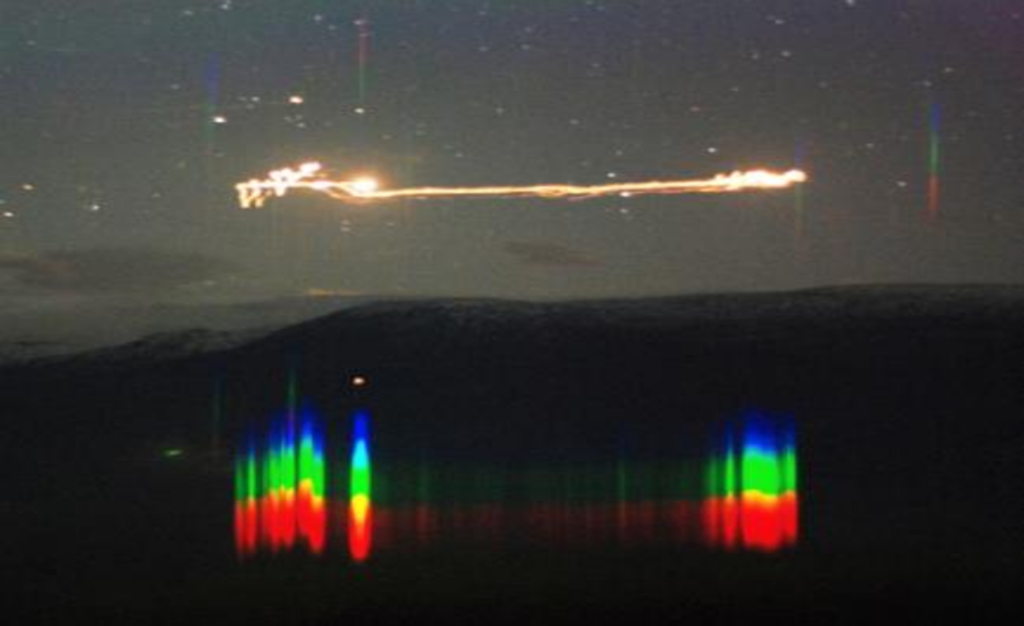
There is no consensus on what these lights are, but their level of energy, luminosity, and coherence indicates a plasma connection. Piezoelectricity from quartz in the ground is not sufficient to explain their internal structure and behavior.3 Instead, the measured spectral lines of some of the lights photographed are consistent with ionized gases (see image).
Research from the University of Oslo shows that the whole valley has unusual magnetic field anomalies that may contribute to plasma formation.4 Areas of extremely strong and extremely weak magnetic field conditions in close vicinity to each other could facilitate interactions with ionized regions in the atmosphere, allowing plasma from the upper atmosphere to funnel down toward Earth’s surface.
One compelling scientific idea is that the lights are a form of dusty plasma5 that can build coherent shapes by ion-acoustic plasma waves and remain over long periods of time (see Dusty Complex Plasmas). Ion-acoustic waves are a form of the newly discovered space-time structured plasma waves,6 which are low-frequency electrostatic solitons traveling through plasmas (see box).
Space-Time Structured Plasma Waves
Space-time structured plasma waves are a new and groundbreaking class of plasma oscillations that are likely to revolutionize the whole area of fusion energy. These new plasma waves have implications way beyond standard plasma physics and can open up a completely new understanding of particles and waves altogether.
In normal waves, wavelength (space dependence) and frequency (time dependence) are described separately. A space-time structured wave, in contrast, is one where the spatial and temporal structures are deliberately coupled and are not separable. That means the wave’s shape in space depends on time, and the wave’s temporal evolution depends on position.
The wave packet is engineered as an object in spacetime. It is almost like sculpting a wave in 4D (3D space + time) rather than just letting it oscillate. This allows the waves to travel rigidly over long distances without spreading out and losing coherence, instead maintaining a constant profile. Through that, the wave packet can, for example, transfer and deposit energy in a controlled spatial-temporal pattern.
What this also means is that these types of plasma waves can travel at arbitrary velocities—including superluminal and negative velocities—completely independent of the local properties of their host plasma. Furthermore, space-time structured waves possess “self-healing” abilities, that is, the wave packets can maintain their structure even when partially blocked, showing a capacity to reconstruct their shape after encountering obstacles (an ability also observed in plasmoids).
The revolutionary nature of this discovery cannot be over-emphasized, especially in our attempts to describe unexplained phenomena. Natural plasmas could, in principle, self-organize into space-time structured states and appear out of a completely different background plasma to stay for any length of time, then disappear or merge back into invisibility.
John Palastro, lead researcher into space-time structured plasma waves at the University of Rochester, says:
“Our findings suggest the possibility of manipulating plasma waves in ways previously thought unattainable, potentially enabling them to travel at speeds surpassing that of light in a vacuum or to halt altogether, irrespective of the plasma’s movement.”9
I believe this discovery is behind the enigmatic remarks by Michael Kratsios, White House Director of Science and Technology, who said at a conference in April 2025 that the United States has technologies that “permit us to manipulate time and space.”10
In the 2025 documentary The Age of Disclosure,11 legacy vacuum physicist and remote viewing researcher Dr. Harold Puthoff indicates that advanced (extraterrestrial) craft would not behave like a conventional vehicle but could instead be surrounded by an energy field or “bubble” that alters spacetime.
Min Min Lights
A similar phenomenon are the Australian Min Min lights, so-called for the settlement in the outback of Queensland around which they happen. The lights were first documented in 1838 but probably existed for much longer. Like the Hessdalen lights, they can grow in size, get brighter or dimmer, and take on different colors (red, orange, blue, or green). They enjoy following cars driving through the region. The spooky light orbs have even been seen to chase travelers and have an apparent intelligence. According to the oral traditions of the indigenous Australians, these lights come from the stars, hence in modern terms could be seen as plasma formations. For the Aborigines, the small balls of light are emissions of stars from the Milky Way that are in search of their offspring. Is the parent plasma coming down to look for its children?
The Hessdalen and Min Min lights are two examples of numerous other plasma light phenomena that are witnessed worldwide. Other similar light manifestations from around the world (called Ignes Erratici in Latin, and Irrlichter in German) include:
- The will-o’-the-wisps12 in Celtic regions of Wales, Scotland, and Ireland
- The brujas (“witches”) and luz mala (“evil light”) in Mexico, Uruguay, and Argentina
- The Abu Fanous13 in the Arabian desert
- The hi no tama (“ball of flame”) or hitodama14and kitsunebi15of Japan
- The Naga fireballs16 or Mekong lights of Thailand
- And many many more


It is very likely that plasma plays a role in most of these manifestations. All of this points to the possibility that plasma entities and perhaps plasma life forms are interacting with or even “scouting” our environment on a rather regular basis. The fact that many of the reports of these encounters over the centuries have ascribed an intentional nature (both benign and, at other times, malicious) to the luminous orbs makes the thought that the vast plasma universe is interacting with us even more intriguing.
Ball Lightning
Ball lightning is a fascinating phenomenon that has been observed for centuries but continues to be regarded as an unsolved scientific mystery. It has several aspects in common with the Hessdalen lights, and similar manifestations. Ball lightning proves that localized luminous plasma structures can occur naturally and persist longer than simple sparks.
The big unsolved question is how these manifestations can store and replenish their energy to persist and stay coherent over extended time frames (sometimes hours). Their lifetimes are much longer than simple discharge events (of piezoelectricity, for example). In addition, some of these objects appear to move intelligently and perceptively. They can navigate, follow airplanes and vehicles, stop in descent, or accelerate away.
Ball lightning is typically described as a glowing, spherical object that appears during thunderstorms. Eyewitness accounts describe it as ranging from about the size of a pea to over a meter in diameter, often colored orange, red, yellow, or blue, and lasting far longer than a typical lightning flash—at a minimum, for several seconds, or more. Observers have reported the balls moving slowly, floating through the air, or even entering buildings before disappearing quietly or with an explosion, sometimes leaving a sulfurous smell.
Ball lightning can be dangerous. In an old account recorded in 1712 by Sir Thomas Atkyns in his The Ancient and Present State of Gloucestershire,17 we are given the following:
“In the year 1556, in less than two months dyed Maurice Walsh, together with seven of his children, occasioned by a fiery sulphureous globe rolling in at the parlour door at Dinner time, which struck one dead at table, and occasioned the death of the rest. It made its passage through a window on the other side of the room.”
The earliest written report on ball lightning was found in a medieval text from the 12th century written by a Benedictine monk in Canterbury, England.18 The chronicler writes of how on June 7, 1195, a dark cloud emitted a white spherical shape out of which a spinning fiery ball fell down that at times also displayed horizontal movements.

In a rare recording of ball lightning that took place in 2012, scientists studying a thunderstorm in northwest China accidentally captured a ball lightning event on video with spectrometer data.19 20 21 It showed that the fireball contained elements like silicon, iron, and calcium that may have come from soil vaporized by a lightning strike.
Despite hundreds of historical reports spanning centuries and cultures, scientists still have no definitive explanation for the ball lightning phenomenon. Many of the leading hypotheses, however, connect it to plasma and its ability to form sheaths and bubbles. Russian physicist and Nobel laureate Peter Kapitza was the first to emphasize that ball lightning is a self-organized plasma entity that acts like a temporary electromagnetic cavity. Plasma can reflect electromagnetic waves (of frequencies below its own plasma frequency), like a mirror. What you get is a region of dense plasma outside and relatively low-density plasma inside. An electromagnetic standing wave will emerge inside the low-density plasma bubble that can maintain the sphere for a given duration. This is essentially how ball lightning is still viewed today.
A study commissioned by the U.S. Air Force in 200322 determined that ball lightning could be viewed as symmetric plasmoids and should be studied in laboratory experiments. Today, plasma balls and ball lightning are produced in a number of laboratories, for example at the Max Planck Institute for Plasma Physics23 24 in Garching, Germany, to study their unique properties.
The famous physicist and inventor Nikola Tesla claimed to have produced small, glowing, free-floating balls of light during the high-voltage, high-frequency experiments in his lab in the 1890s. At that time, the term “plasma” was not yet in use, but Tesla understood that these effects were caused by high-frequency currents ionizing the surrounding air.
Some of the best reports on ball lightning have been put together by meteorologist Alexander G. Keul25 26 of Salzburg University, who compiled 41 published case histories and sightings made by scientists, engineers, astronomers, and military personnel. Another excellent resource on the current understanding of ball lightning is the 1999 monograph Ball Lightning: An Unsolved Problem in Atmospheric Physics by Mark Stenhoff,27 which includes hundreds of firsthand accounts and a wide discussion of theories.
The following is an astounding report28 by a U.S. Air Force navigator on a cargo flight at night, flying at an altitude of 18,000 feet toward Hawaii:
“[A] glowing ball of golden fire about the size of a volley ball appeared just inside the windshield, midway of the windshield and above the central Pilot console. It touched nothing and made no sound … but slowly floated downward into the cockpit between the Pilots, then between the Engineer and me, coming within a foot of me at my waist, now staying about three feet above the floor, then slowly turned left toward the crew lounge doorway, went through the open doorway, turned right 90 degrees and toward where the Loadmaster was sitting…. It floated toward him, came within a foot of him but turned to exit through the open stairway door and down the stairway into the cargo bay—then to float above the cargo down the exact middle of the airplane toward the tail of the airplane—and then just disappeared as it went through the metal tail ramp and door at the rear of the airplane.”
Whether this is actual ball lightning or more akin to the plasma UAPs described in the next section is a matter of definition. The apparent intent and seeming curiosity of the plasma entity are just as remarkable as its navigational skills and unusual longevity.
Plasma UAPs
A series of recent provocative papers29 30 31 by an international group of researchers is seriously proposing a plasma reality underlying many of the Unidentified Anomalous Phenomena (UAPs)—formerly called Unidentified Flying Objects (UFOs)—witnessed worldwide.
Analyzing many hours of film and scores of photographs made during NASA space shuttle flights, by satellites as well as by ISS and MIR cosmonauts, the authors argue that the appearance of hundreds of pulsating, luminous plasmoids flying around and interacting with spacecraft, aircraft, and thunderstorms constitute a fourth domain of life (after bacteria, archaea, and eukarya) that could explain a majority of UAP sightings both in the thermosphere where the space shuttles fly (see Natural Plasmas: A Journey from Earth to the Heavens) as well as in the atmosphere. The plasmoids that are filmed by NASA space shuttle missions at an altitude of over 250 km above Earth display an intelligence, seeming technological capability, and life-like behavior that rules out their definition as mere “space debris.”
It is worth taking the time to watch the compilation of video footage made during 10 different NASA space shuttle missions, put together by one of these authors (Rhawn G. Joseph), to get a sense of the amazing reality implied here.
These plasma entities, the authors summarize,
“engage in complex behaviors in the thermosphere and display multiple forms of communication, mutual awareness, purposeful contact-seeking, and cellular-mitosis and ejection-secretion of interactive plasmoid-clouds and additional plasmoids that contact other plasmas. Plasmas communicate by signaling via oscillations in size and illumination and turn, follow, target and collide, merge or pierce other plasmas, whereas yet others form thick glowing plasma bridges linking multiple plasmoids together.”32
These plasmoids are multi-layered, charged electromagnetic entities that can have a size of up to several kilometers! They were captured on film displaying the most complex maneuvers in defiance of gravity or other barriers of physics. Unfortunately, the videos and photos are grainy, as NASA purposefully puts a layer of obscuring pixels on the films.
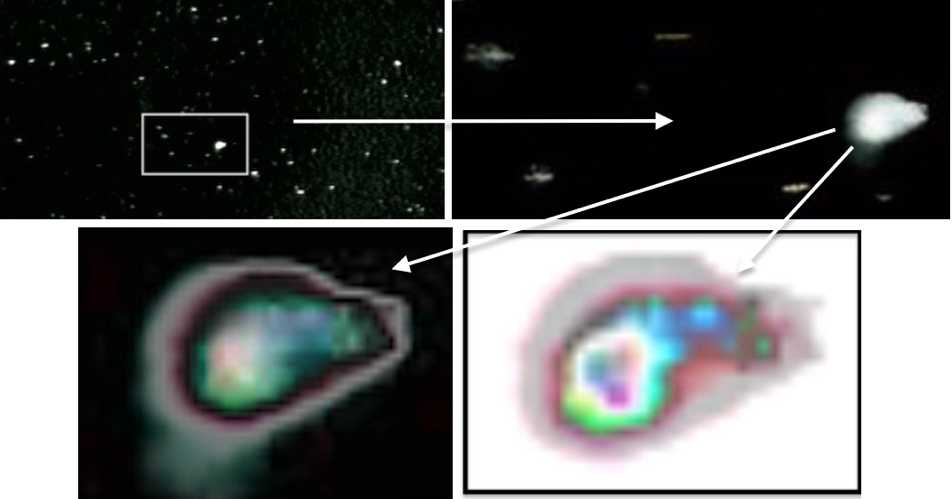
The crews aboard the MIR and ISS space stations reportedly see lights and complex luminous shapes. Among 59 astronauts who were members of space crews, 47 admitted seeing light flashes inside their craft that were moving and had various shapes and colors.
The images also show plasmoids seeking out thunderstorms in what could be an attempt to feed on electricity and charge. The video analysis indicates, furthermore, that some plasmoids change shape and split into additional plasmoids, which suggests a certain ability to replicate.

Plasmoid UAPs over Germany?
Some authors argue that living plasma entities were involved in what has been termed “foo fighters,”34 which were unexplained glowing objects and mysterious lights that pilots of the Allied forces saw in November 1944, during the height of World War II. At the time, the speculation was that Germany may have had a secret weapon. The objects were described as fast-moving, bright spheres that seemed to follow aircraft and perform unusual maneuvers.
Even more interesting are 16th-century reports that tell of sightings of spherical objects over the German city of Nürnberg (in 1561), and five years later, over the city of Basel, Switzerland (in 1566). Numerous people in the cities witnessed both events, which were obviously newsworthy, as pamphlets were printed that told of the strange occurrences (see images). The events involved both luminous and black spherical objects (in Nürnberg, also cross-shaped and cylindrical) that appeared in large number in the open sky, flying at great speed, and that seemed to “fight” against each other. In both cases, the Sun is specifically mentioned, as if the objects were related to the star.


The Carlos Diaz Plasma Ship
A young photographer from Tepoztlàn, Mexico, had one of the most stunning series of encounters with what seemed to be a plasma UAP. Beginning in 1981 and into the early 1990s, Carlos Diaz was able to make numerous photographs (diapositive slides) and video recordings of the vehicle that were even analyzed by Dr. Robert Nathan at NASA’s Jet Propulsion Lab. Dr. Nathan’s analysis and that of several other photo technical experts (such as Jim Dilettoso, Prof. Auguste Meessen, Prof. Corrado Malanga, and others35) lent significant credibility to the case, especially because of Nathan’s background and reputation in the field of image analysis. The authenticity of the photographs, along with the consistency of the UAP’s appearance in different shots, has led many to consider the Carlos Díaz case as one of the more intriguing and credible sightings of the era. German journalist and filmmaker Michael Hesemann produced a two-part documentary about the case (which I obtained at the time) that includes Jaime Maussan and Dr. John Mack.36 37
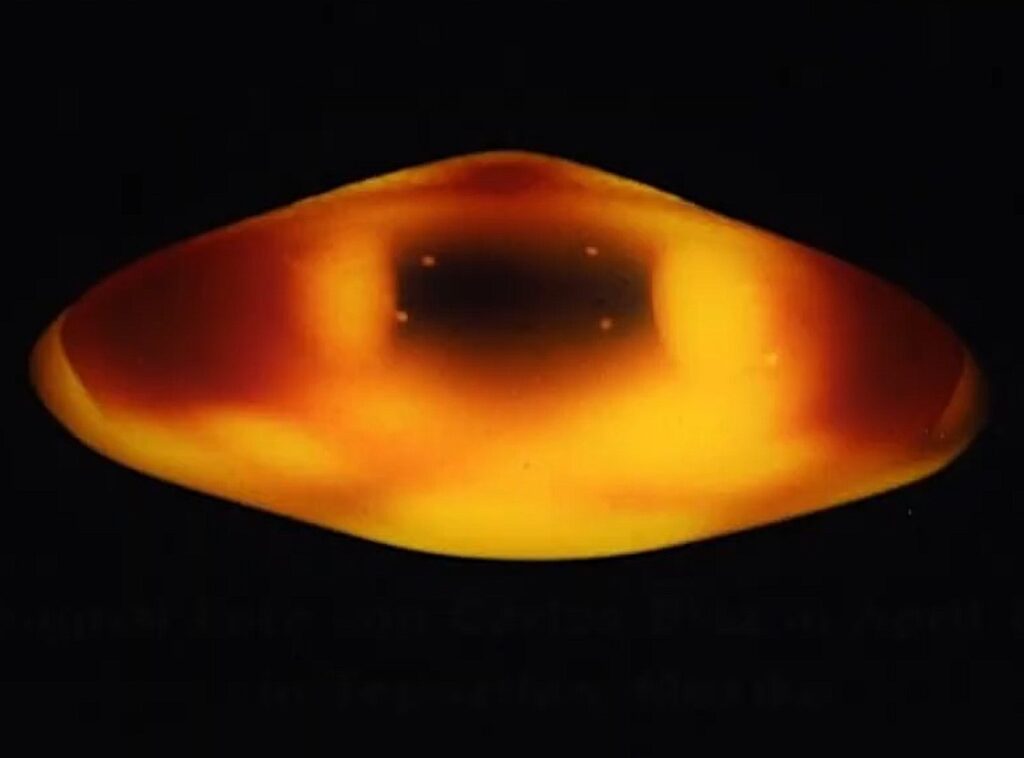
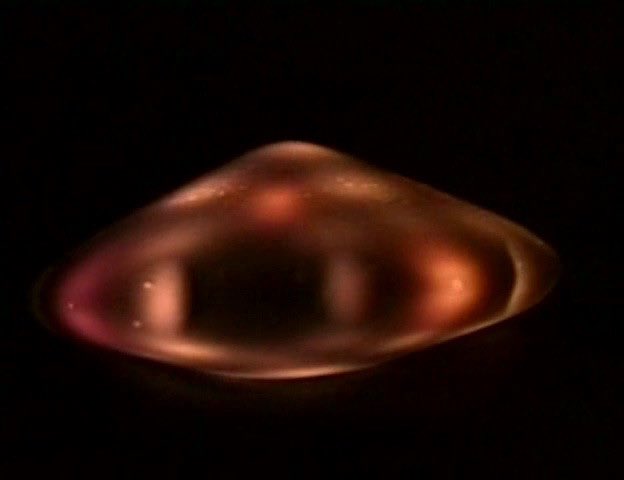
What is striking is the obvious plasma nature of the object, and Diaz reports to even have entered one. His descriptions and images show the vehicle as an intensely bright, self-luminous, amber-orange object with a seemingly structured surface that is reminiscent of a plasmoid. Indeed, according to the aforementioned documentary, light-spectrum tests on some of the images are in keeping with the plasma hypothesis. Carlos Diaz claims to have been taken into one of these vehicles but did not see control boards. Steering and communications, he says, were done by mental commands.
Summary
Some plasma phenomena are difficult to describe and hard to explain based on the common laws of physics, likely requiring a new paradigm:
- There is no consensus on the Hessdalen lights in central Norway, but their level of energy, luminosity, and coherence point to a plasma connection, possibly as a form of dusty plasma.
- The Australian Min Min lights, first documented in the 19th century, have an apparent intelligence, suggesting that plasma entities may be intentionally interacting with our environment.
- The unsolved scientific mystery of ball lightning shows that localized luminous plasma structures can occur naturally, can persist, and display apparent intelligent behavior.
- Some researchers believe that a majority of sightings of unidentified anomalous phenomena (UAPs)—displaying complex maneuvers in defiance of gravity and other laws of conventional physics—could be explained by plasmoids. Such sightings date as far back as the 16th century.
Next chapter: Living Plasma
Footnotes:
- Strand EP. About Project Hessdalen. Oct. 8, 2025. https://www.hessdalen.org/about ↩︎
- Project Hessdalen (YouTube channel). https://www.youtube.com/@ProjectHessdalen2023 ↩︎
- Paiva GS, Taft CA. Hessdalen lights and piezoelectricity from rock strain. J Sci Explor. 2011 Sep 13;25(2):265-272. This and other articles available at https://journalofscientificexploration.org/index.php/jse/article/view/371 ↩︎
- The Hessdalen lights can be explained by local magnetic field anomalies. Science Chronicle, May 23, 2023. https://www.sciencechronicle.org/en/news/hessdalen-lights-local-magnetic-field-anomalies/ ↩︎
- Paiva GS, Taft CA. A hypothetical dusty plasma mechanism of Hessdalen lights. J Atmos Sol Terr Phys. 2010 Oct;72(16):1200-1203. https://doi.org/10.1016/j.jastp.2010.07.022 ↩︎
- Palastro, J. P. et.al: Space-Time Structured Plasma Waves (Phys. Rev. Lett. 132, February 2024) https://doi.org/10.1103/PhysRevLett.132.095101 ↩︎
- Hauge BG. Investigation & analysis of transient luminous phenomena in the low atmosphere of Hessdalen valley, Norway. Acta Astronautica. 2010 Dec;67(11):1443-1450. https://doi.org/10.1016/j.actaastro.2010.01.019 ↩︎
- Hessdalen lights in Norway have been reported since the 1800’s. Geek Slop, Jan. 10, 2013. https://www.geekslop.com/life/strange/odd-places/2013/hessdalen-lights-norway-phenomenon ↩︎
- Oxford C. Unveiling a new class of plasma waves: implications for fusion energy. Space Daily, Mar. 18, 2024. https://www.spacedaily.com/reports/Unveiling_a_new_class_of_plasma_waves_implications_for_fusion_energy_999.html ↩︎
- Remarks by Director Kratsios at the Endless Frontiers Retreat. The White House, Apr. 14, 2025. https://www.whitehouse.gov/articles/2025/04/remarks-by-director-kratsios-at-the-endless-frontiers-retreat/ ↩︎
- “The Age of Disclosure.” Wikipedia, n.d. https://en.wikipedia.org/wiki/The_Age_of_Disclosure ↩︎
- “Will-o’-the-wisp.” Wikipedia, n.d. https://en.wikipedia.org/wiki/Will-o%27-the-wisp ↩︎
- “Abu Fanous.” Wikipedia, n.d. https://en.wikipedia.org/wiki/Abu_Fanous ↩︎
- “Hitodama.” Wikipedia, n.d. https://en.wikipedia.org/wiki/Hitodama ↩︎
- “Kitsunebi” Wikipedia, n.d. https://en.wikipedia.org/wiki/Kitsunebi ↩︎
- “Naga fireball.” Wikipedia, n.d. https://en.wikipedia.org/wiki/Naga_fireball ↩︎
- Atkyns R. The Ancient and Present State of Glostershire. London: W. Bowyer, 1712. https://archive.org/details/bim_eighteenth-century_the-ancient-and-present-_atkyns-robert-sir_1712 ↩︎
- Durham University. Earliest known report of ball lightning phenomenon in England discovered. Phys.org, Jan. 26, 2022. https://phys.org/news/2022-01-earliest-ball-lightning-phenomenon-england.html ↩︎
- Cen J, Yuan P, Zue S. Observation of the optical and spectral characteristics of ball lightning. Phys Rev Lett. 2014 Jan 17;112:035001. https://doi.org/10.1103/PhysRevLett.112.035001 ↩︎
- Ball P. First spectrum of ball lightning. Physics. 2014 Jan 17;7,5. https://physics.aps.org/articles/v7/5 ↩︎
- “First recorded scientific video of ball lightning.” YouTube, uploaded by Duncan Geere, Jan. 18, 2014. https://youtu.be/VXm3zDM_v80 ↩︎
- Davis EW. Ball lightning study. Air Force Research Laboratory, Edwards Air Force Base, May 2003. AFRL-PR-ED-TR-2002-0039. https://documents2.theblackvault.com/documents/usaf/AFRL_2002-0039_Ball_Lightning_Study.pdf ↩︎
- Ball lightning. Max Planck Institute for Plasma Physics, n.d. https://www.ipp.mpg.de/2977926/kugelblitze ↩︎
- “Ball lightning.” YouTube, uploaded by Max-Planck-Institute for Plasmaphysics, Feb. 23, 2011. https://youtu.be/PM5p2UXKCHA ↩︎
- Keul AG. A brief history of ball lightning observations by scientists and trained professionals. Hist Geo Space Sci. 2021;12(1):43-56. https://doi.org/10.5194/hgss-12-43-2021 ↩︎
- www.kugelblitz.at ↩︎
- Stenhoff M. Ball Lightning: An Unsolved Problem in Atmospheric Physics. Springer, 1999 https://link.springer.com/book/10.1007/b115123 ↩︎
- Heil W, Smith D, An initiation of ball lightning in an aircraft. J Atmos Sol Terr Phys. 2021 Nov 15;225:105758. https://doi.org/10.1016/j.jastp.2021.105758 ↩︎
- Joseph RG, Impey CD, Planchon O, et al. Extraterrestrial life in the thermosphere: plasmas, UAP, pre-life, fourth state of matter. Journal of Modern Physics. 2024 Jan;15(3):322-374. https://doi.org/10.4236/jmp.2024.153015 ↩︎
- Joseph RG, Planchon O, Impey C, et al. Unidentified anomalous phenomena, extraterrestrial life, plasmoids, shape shifters, replicons, thunderstorms, lightning, hallucinations, aircraft disasters, ocean sightings. Journal of Modern Physics. 2024 Oct;15(11):1760-1868. https://doi.org/10.4236/jmp.2024.1511079 ↩︎
- Joseph RG, Armstrong RA, Wolowski K, et al. Plasmas: a fourth domain of life? RNA, DNA, consciousness and statistical analysis of “unidentified anomalous phenomena” in the thermosphere. Journal of Modern Physics. 2025 Sep;16(9):4-75. https://www.scirp.org/journal/paperinformation?paperid=145690 ↩︎
- Joseph RG, Armstrong RA, Wolowski K, et al. Plasmas: a fourth domain of life? RNA, DNA, consciousness and statistical analysis of “unidentified anomalous phenomena” in the thermosphere. Journal of Modern Physics. 2025 Sep;16(9):4-75. https://www.scirp.org/journal/paperinformation?paperid=145690 ↩︎
- Joseph RG, Planchon O, Impey C, et al. Unidentified anomalous phenomena, extraterrestrial life, plasmoids, shape shifters, replicons, thunderstorms, lightning, hallucinations, aircraft disasters, ocean sightings. Journal of Modern Physics. 2024 Oct;15(11):1760-1868. https://doi.org/10.4236/jmp.2024.1511079 ↩︎
- “Foo fighter.” Wikipedia, n.d. https://en.wikipedia.org/wiki/Foo_fighter ↩︎
- Hesemann M. Carlos Diaz case is not a hoax! ufoevidence.org, n.d. http://www.ufoevidence.org/Cases/CaseSubarticle.asp?ID=1092 ↩︎
- “Ships of Light The Carlos Diaz UFO Experience Part 1.” YouTube, uploaded by UFO Videos Archive, May 3, 2024. https://youtu.be/S42Opxlaga0 ↩︎
- “Ships of Light The Carlos Diaz UFO Experience Part 2.” YouTube, uploaded by UFO Videos Archive, May 3, 2024. https://youtu.be/EEMAJ794byg ↩︎