
























































































Pushback of the Week
Student Journalists Break Story on University’s AI Cameras
June 21, 2026










No posts
“Technology such as this spits in the face of students’ rights to privacy and freedom, and shows exactly how SDSU values their students—as currency.”
~ Second-year business major at San Diego State University
A decade ago, an architectural firm reviewing student housing trends on college campuses flagged privacy as a “highly sought after amenity” for incoming students reluctant to share bathrooms and bedrooms. Fast-forward to the era of widespread surveillance cameras, and “privacy” takes on another layer of meaning.
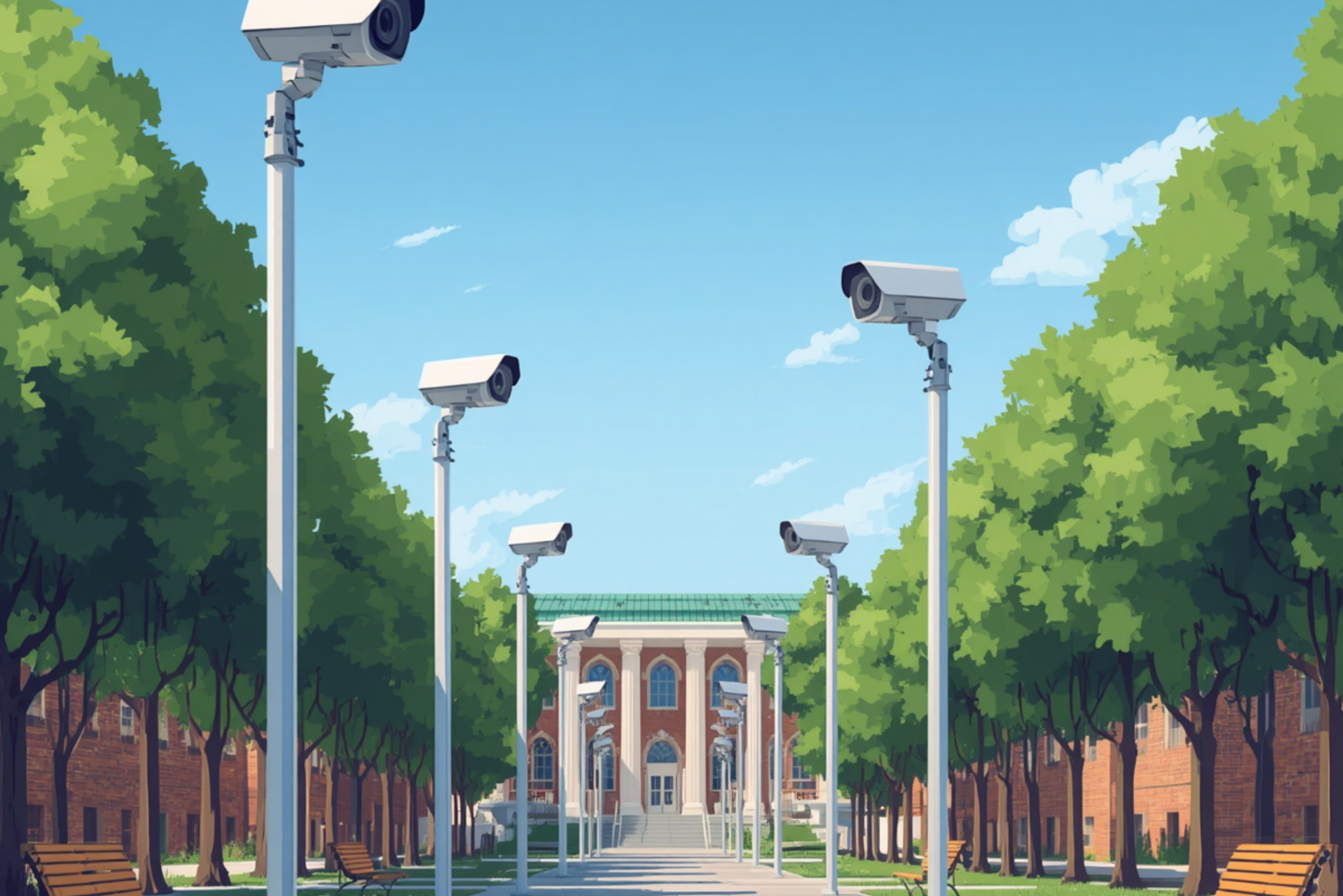
According to determined investigative journalism by students at San Diego State University’s (SDSU’s) independent student newspaper, The Daily Aztec, students who live on-campus live on one of the most “heavily watched” campuses in the California State University system, with SDSU having spent over $1.3 million in 2024 to “upgrade [its] extensive network of surveillance cameras” with hundreds of new AI-enabled cameras. In addition to placing cameras in classrooms, bookstores, dining areas, parking structures, gyms, and other “populated spaces,” the student journalists learned via a public records request that their university had installed 28% of the 1,300-plus new cameras in their residence halls.
According to the investigation, the SDSU actions go against a systemwide policy that specifies that video security cameras are not to be installed in “areas where there is a reasonable expectation of privacy, nor … directed or zoomed into the windows of any private residential building, including residence halls.”
In blowing the whistle on the arrival of cameras capable of “license plate and facial recognition, object detection, intrusion detection, behavior analysis, crowd density analysis, environmental monitoring, audio detection, [and] integration with other systems”—capabilities not disclosed to students in campus housing documents or the license agreements students sign before they move in—the Daily Aztec reporters were savvy enough to recognize and warn that SDSU’s move is part of a nationwide trend toward on-campus, AI-powered surveillance.
Other independent journalists note that the university’s claims that it is not using all of the features offered by AI ring hollow, leaving “students to assume they are always on camera and never sure when the AI is reading them”:
“A camera that can run facial recognition is still a camera that can run facial recognition, whatever a policy says today about leaving the feature switched off.”
However, in the same way that communities across the U.S. are refusing to let local leaders get away with using their tax dollars to finance their own surveillance, students on college campuses can vote no with their feet—and their dollars. Investors are attracted to the student housing market because of its “robust fundamentals” and apparent resistance to recession, but, as of 2024, 78% of students already lived off-campus. As more students learn about the cameras in their bedrooms, will it prompt a wider exodus not just from residence halls but from the institutions that place a higher priority on spying than education?
Already a subscriber?

Our mission is to help you live a free and inspired life. This includes building wealth in ways that build real wealth in the wider economy. We believe that personal and family wealth is a critical ingredient of both individual freedom and community, health and well-being.
Nothing on The Solari Report should be taken as individual investment, legal, or medical advice. Anyone seeking investment, legal, medical, or other professional advice for his or her personal situation is advised to seek out a qualified advisor or advisors and provide as much information as possible to the advisor in order that such advisor can take into account all relevant circumstances, objectives, and risks before rendering an opinion as to the appropriate strategy.
Receive your free copy of Coming Clean
Be the first to know about new articles, series and events
Your shopping cart is empty
Notifications