






















































































II. Time to Get Involved Locally
“You may be looking for a leader. Take a look in the mirror. This is the real face of grassroots. YOU.”
~ Rosa Koire
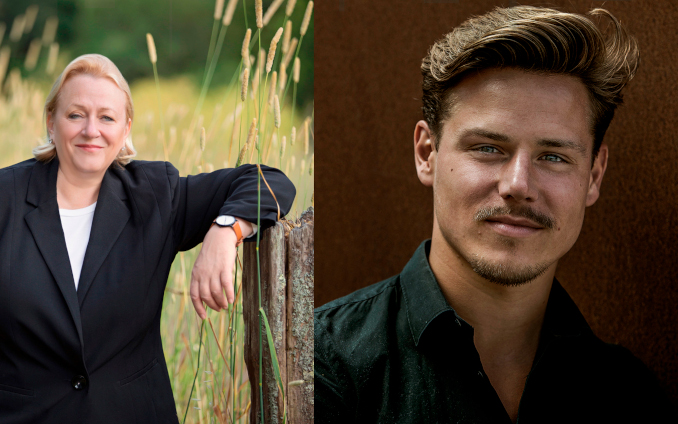
“Why has my city been transformed into a construction site?” asked Amsterdam resident Maartje van den Berg. After she started researching, she noticed similar developments in other cities.
Have you noticed the changes that are being implemented in your own city or county? Here are some of the urban trends you may be observing:
- Rerouting of free thoroughfares
- Street closures (for local entrepreneurs who survived the Covid lockdowns, street closures that make it harder for customers to reach stores often become the death knell that pushes businesses into bankruptcy)
- Slower speed limits
- More bike paths and public transportation but fewer parking spaces (or parking options that are much more expensive)
- Replacement of old-school street lights with “smart” LED lighting
- Pervasive license-plate reader (LPR) cameras that track vehicle movements citywide
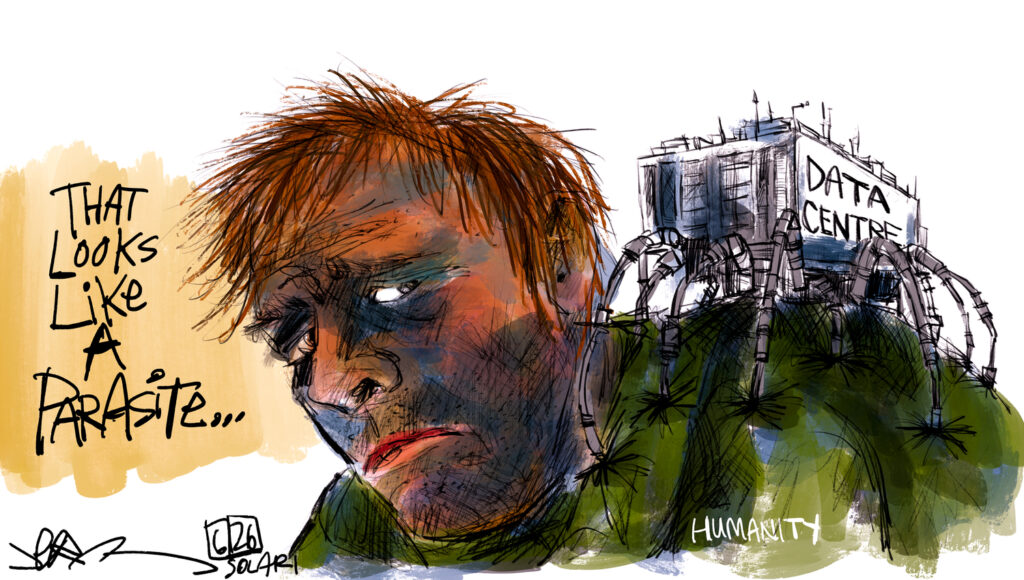
If you live in a rural setting, you may be observing more industrial wind or solar energy projects, or the takeover of land, energy, and water resources by massive data centers. Local farmers, in particular, are under attack as officials sacrifice their land for these industrial projects or conversely for “nature conservation.” In addition, the reintroduction of predators such as bears, lynxes, and wolves is leading to attacks on livestock and predator sightings in places where people live and work.
Across the world, local governments are implementing almost identical policies. This is no coincidence—it is easy to trace many of the policies to various UN conventions. Even when not ratified on the national level or voted upon by the public, the policies are still adopted through administrative measures and by state and local governments.
These globalist policies are having similar local impacts, making the middle class poorer, pushing farmers and fishermen off of the land and sea, endangering the food supply, eroding property rights, and moving people into crowded cities characterized by surveillance and growing restrictions on mobility. Even though the changes are taking place in full view, too few people recognize how radical they are, or that they are being implemented with intent and without the consent of the citizenry.
When people think of war, most associate it with physical violence, bombings, or military occupation. In a conventional war, it is obvious that you are under attack. In contrast, the war being waged at the local level is a very clear example of fifth-generation warfare (5GW), the key characteristics of which, according to security studies expert Dr. Armin Krishnan, are the invisibility of the belligerents and implementation by stealth. Deployed via regulatory assault and changes in land use policies, it is a bureaucratic “death by a thousand cuts” that most people do not see coming. In societies that have, to a great extent, lost their sense of social and cultural connection, people also do not realize that they are being targeted collectively.
5GW is the perfect divide-and-conquer strategy because, although the war hits everyone, it does so at different times for different reasons for different individuals and groups. A first, important step, therefore, is to recognize it. Solari’s Robert Dupper aptly coined the phrase, “See the game, change the game.” However, even when people “see the game,” they may either fight back individually, with less chance of winning, or feel too daunted to fight back at all. Thus, a second step is to understand that the problems we face lend themselves to collective action.
Unfortunately, many freedom fighters have lost confidence in the government to such an extent that they avoid dealing with it. Instead, they pursue freedom by seeking a spiritual path or by creating “parallel” or alternative structures such as growing their own food or starting new schools. Though important and laudable, freedom initiatives of this type remain brittle when they can be undone or made illegal by the stroke of a pen—or annulled in a surveilled, “you own nothing” 15-minute city. Ultimately, it is not possible to be free under a tyrannical government, which is why it is imperative to engage with the governance structure.
Stepping into the Ring
Whereas the ivory towers of national and supranational power structures are effectively out of reach to most citizens, local governments offer real opportunities for citizen influence. This is where the rubber meets the road. Technocrats may concoct their unrealistic, inhuman policies in faraway think tanks, but in the end, implementation always takes place locally and is precisely the place where impediments to the overwhelming wave of ubiquitous control measures, in the form of individual and small-group resistance, can be most effective.
It is evident that the 21st-century governance structure is not operating meaningfully on the people’s behalf; it is at war with the people. However, the constitutional rules of Western societies still stipulate that local governments must operate transparently, disclose their policies and finances, hold open meetings, consult with the public, and have elections where everyday people can run for office. But for these mechanisms of local democracy to work, we need to take responsibility and get involved.
In 2007, Naomi Wolf wrote The End of America: Letter of Warning to a Young Patriot, in which she explored how free societies devolve into oppressive systems. She observed:
Another reason for our vagueness about how liberty lives or dies is that we have tended lately to subcontract out the tasks of the patriot: to let the professionals—lawyers, scholars, activists, politicians—worry about understanding the Constitution and protecting our rights…. But the Founders did not mean for powerful men and women far away from the citizens—for people with their own agendas or for a class of professionals—to perform the patriots’ tasks, or to protect freedom. They meant for us to do it: you, me, the American who delivers your mail, the one who teaches your kid.
Enlisting Cooperation
Increasingly, people are speaking up and making themselves heard at town hall and other public meetings. Often, these speeches “go viral” online. Speaking up is very important and sends a clear signal to those in power; however, it is not sufficient for changing the course of harmful policies. Achieving meaningful policy change requires ongoing effort and teamwork.
Have no illusions: the governance system that has been built out over decades or even centuries is both robust and profoundly corrupt. Yet from my experience reporting on local pushback initiatives, I know that when people come together, they can achieve significant successes. Small groups of dedicated people who pool their skills have stopped wind farms, halted the removal of parking spaces, prevented toll roads operated by public-private partnerships, said no to municipal water fluoridation, and sidelined the building of data centers. At the same time, many initiatives are not as successful as they could be, because the handful of people who take action tends to volunteer their time and resources, usually in addition to day jobs or family responsibilities. After a while, these activists may burn out and quit because they do not receive enough support from fellow citizens.
Professionalizing Pushback
Major improvements to local pushback can be made with some “professionalization.” Pushback is most effective when bad policy proposals are spotted early—when they first appear on the agenda—which is possible if there is a local team committed to consistently monitoring the local policy agenda, attending meetings, connecting with legislators and representatives, and informing and mobilizing others when needed. Other local residents who care about freedom may be willing to help support such efforts financially.
Sometimes, people hire lawyers to fight back against bad policies or enforcement actions, but by then, the chances of winning may be slim. Collectively financing one or more activists (depending on the size of the county or municipality) to stay abreast of local developments is more efficient and effective, as well as cheaper, than hiring lawyers on a case-by-case basis at the end of the line after critical policy decisions have already been made.
In 2024, rural citizens in the Netherlands found out about plans to convert 494 acres (200 hectares) of fertile farmland into swamp by raising the groundwater table. When they started doing some research, they found documents showing that the decision had been more than eight years in the making. At that point, the provincial government made it clear that stopping the project was not an option; at best, the project might perhaps be amended in small ways—but the principal decision was irreversible.
Getting Businesses on Board
A strong middle class is the backbone of a free society, but it cannot exist without entrepreneurs. Unfortunately, policies and incentives increasingly are being structured to steer people into either employment by multinational corporations or dependency on government welfare, undermining middle-class resilience and entrepreneurship.
For these reasons, it is essential that entrepreneurs, family businesses, and other small and medium-sized enterprises (SMEs) recognize themselves as a political force. SMEs have a pivotal role to play in local pushback, not least because the kinds of top-down policies that local governments are implementing—including local land use policy changes—may directly affect their long-term strategy and viability. Entrepreneurs have many strengths that they can bring to the pushback table, including their professionalism and their typically wide and deep networks in the local community.
Corporate Activity Crowds Out SMEs in the Netherlands
In the Netherlands, the contribution of SMEs to GDP fell from 60% to 34% in the decade from 2012 to 2022. Meanwhile, in the two decades from 2001 to 2021, the contribution to the GDP of businesses with more than a billion euros in revenue increased from 34% to 61%. Increasingly, corporations are owned by institutional investors represented by Vanguard, BlackRock, and State Street.
Sources:
https://binformedia.nl/niemandsland/niemandsland-2-0-3/
https://binformedia.nl/economie-en-ondernemen/stop-de-graaicultuur-kies-voor-mkb-en-familiebedrijf/
https://odysee.com/@montysthinkingoutsidethebox:2/MONOPOLY—Who-Owns-the-World:d3
Listening to Grassroots Voices
This manual is based on the following:
- Research: Over the last couple of years, I have conducted extensive research on how UN policies are being implemented domestically in the Netherlands, United States, and elsewhere.
- Reporting: My journalism includes numerous stories describing Dutch residents who have been faced with policy decisions with major impacts on their lives and livelihoods.
- Interviews: I have carried out a number of Solari interviews to understand what is happening in the U.S. and elsewhere and to learn about other research and experiences that shine a light on the importance of local politics.
Throughout the report, I illustrate the topic at hand with ample quotes from the following seven people:
- Margaret Byfield is the Executive Director at American Stewards of Liberty, a non-profit organization that advocates for private property rights and fiercely protects farmers and farming rights. Byfield has been a recurrent guest at Solari and on CHD.TV’s Financial Rebellion. For this report, she joined me to discuss “Fighting the Land Grab at the Local Level.”
- Reinette Senum is an “activist” in the most positive sense of the word, as well as a former mayor and city council member. At her Substack, Reinette Senum’s Foghorn Express,i which has over 28,000 subscribers, she informs people about “problems, solutions, & everything else we’re not supposed to talk about.” She, too, has been a recurrent guest on Financial Rebellion. For this report, she joined me to discuss “Making Local Politics Work for You.”
- Terri Hall is the founder of Texans Uniting for Reform & Freedom (TURF). With TURF, she generated a successful grassroots movement opposing government plans to turn public roads into privatized toll roads. She has over 20 years of grassroots and citizen lobbying experience. For this report, she joined me to discuss “Local Pushback against Privatization of Public Infrastructure.”
- Kate Mason is an Australian citizen-researcher who deconstructs “fourth industrial revolution narratives” and reports on government overreach and corporate malfeasance. Her research has many parallels to my own. In 2025, she joined me to discuss “How UN Policies Are Paving the Way for the Land Grab.”
- Patrick Wood is one of the foremost experts on technocracy. His books and interviews have greatly helped me understand the real agenda behind “sustainable development.”
- Rosa Koire was a forensic commercial real estate appraiser who turned activist when, through her work, she discovered operations being implemented under the umbrella of the UN’s Agenda 21. She passed away in 2021. Many of her warnings—in public appearances and in her 2011 book Behind the Green Mask: U.N. Agenda 21—seem prescient today.
- Lyndee Kemmet used years of experience reporting on local governments to write the incredibly helpful book, Follow the Money: A Citizen’s Guide to Local Government.