




























































































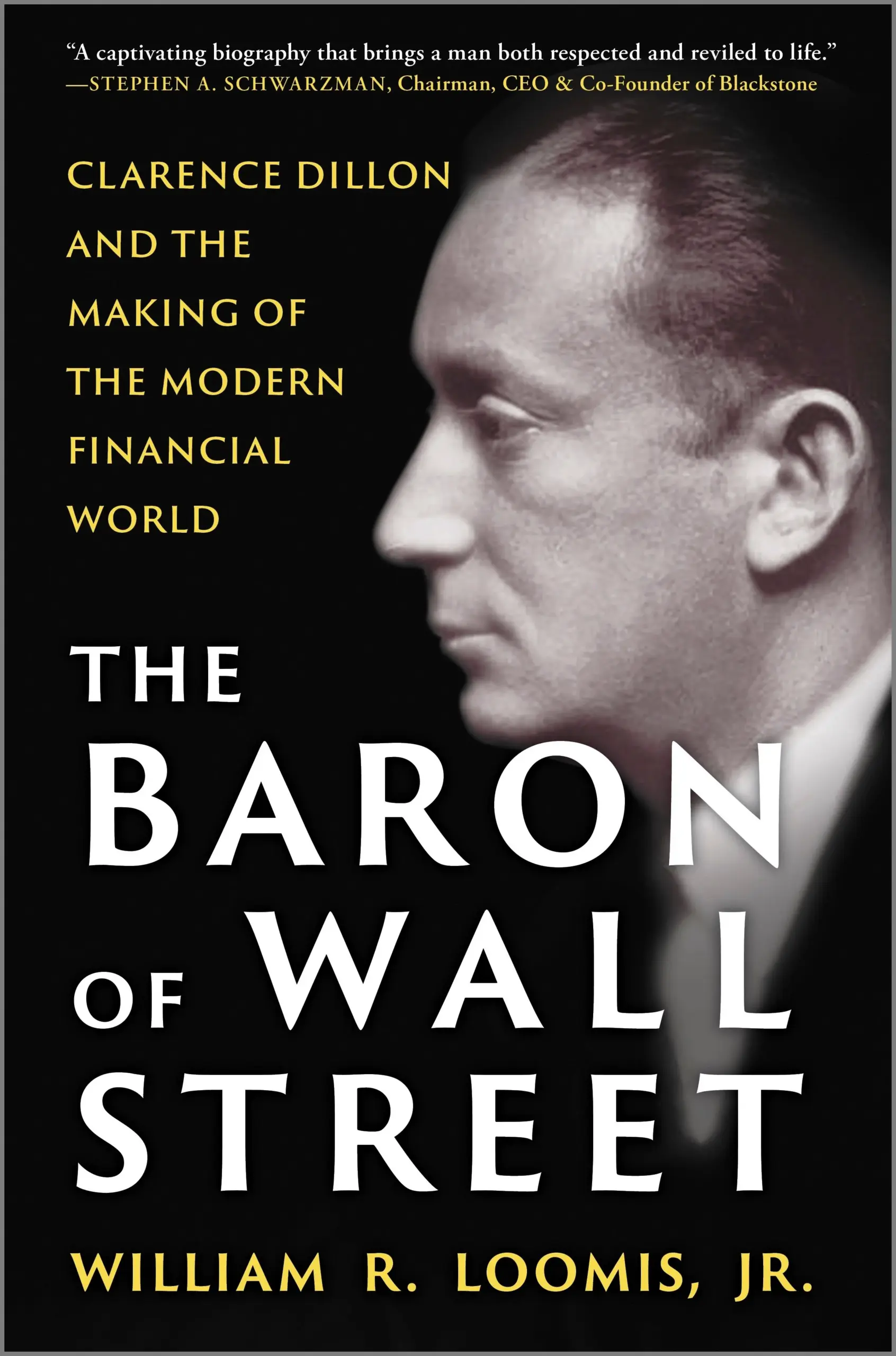
The Baron of Wall Street
Clarence Dillon and the Making of the Modern Financial World
By William R. Loomis, Jr.
Book Review
The Baron of Wall Street
Clarence Dillon and the Making of the Modern Financial World
September 16, 2026










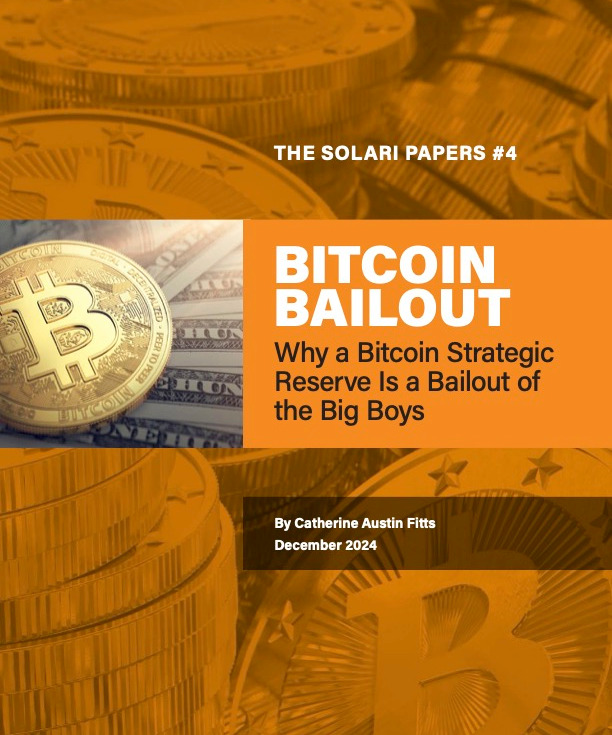
“The answer is never the answer. What’s really interesting is the mystery. If you seek the mystery instead of the answer, you’ll always be seeking.”
~ Ken Kesey
By Catherine Austin Fitts
Dillon Read was a Wall Street investment bank that was subsumed in the late 1990s by a series of acquisitions by Warburg, then Swiss Bank, and finally UBS. I spent more than a decade of my life committed to contributing to its success. I worked there for 11 years, rising to Managing Director, Equity Partner, and Member of the Board of Directors before leaving in 1989 to serve as Assistant Secretary of Housing – Federal Housing Commissioner in the first Bush Administration.
In 2005, after a decade of having my nose rubbed into my mistaken loyalty to my former partners, I wrote Dillon Read & Co. Inc. & the Aristocracy of Stock Profits. This was after Dillon Read’s fall from grace following the firm’s sale to Barings Bank in 1991, before buying itself back after Barings’ collapse in 1995, all while playing an important role financing the creation and growth of the private prison industry.
I have tried to publish the book in hard copy three times. The first two times were halted by sabotage. The third ended with threats to my family. I am patiently waiting for the principals to pass from this earth before finally publishing it. The book and a significant amount of documentation remain accessible on the Internet.
Dillon Read was a firm with many mysteries. The one I would like to solve is the story of Clarence Dillon’s adoption of his son, C. Douglas Dillon, when he and his wife lived in Switzerland for a year. C. Douglas Dillon, former Secretary of the Treasury during the Kennedy Administration, was the head of the Dillon Trust, which owned Dillon Read when I joined the firm. Given the importance of bloodlines and genetics to the people who run the global financial system and the role that C. Douglas Dillon played in the Rockefeller interests, the Kennedy Administration and assassination, and the Rockefeller Commission, this is a mystery worth solving. For those interested in the topic, I highly recommend David Talbot’s book The Devil’s Chessboard and our interview with Talbot.
Additional unanswered questions relate to Douglas’ role, if any, in the Forrestal assassination, and communications between the Rockefeller Commission and the CIA to clean up in the wake of the Church Committee and Pike Committee hearings.
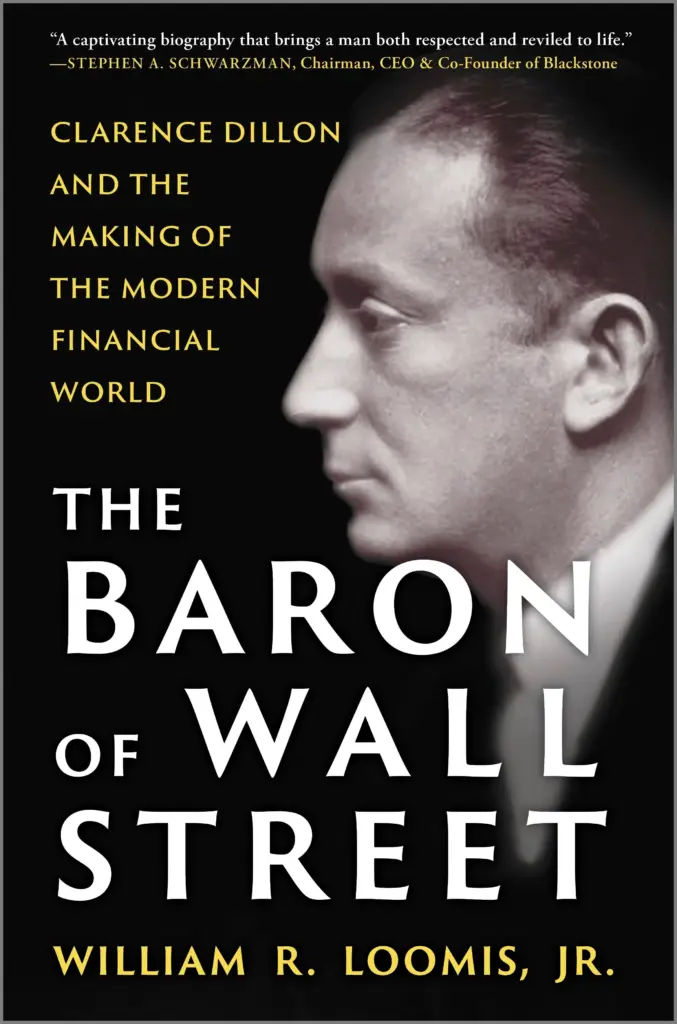
William R. Loomis, Jr., the former head of financial advisory and asset management firm Lazard, has written a biography about Clarence Dillon, The Baron of Wall Street: Clarence Dillon and the Making of the Modern Financial World. He credits Dillon with being an early creator and leader of various forms of financial engineering, including leveraged buyouts (LBOs) and junk bonds. He describes Dillon as a secretive, ambitious financier who changed his name from Clarence Lapowski to Clarence Dillon, before arriving at Harvard from San Antonio looking to make his way in the world. He paints Dillon as a man who enriched himself through “chicanery, subterfuge, and graft”—someone you would not want to know or work for and certainly someone worth watching your wallet closely when around. Loomis’ description of Dillon sounds remarkably like the private equity and LBO leaders of today. There is not a word about the adoption of Douglas; Loomis either respected the family secrets or simply did not know.
This biography may be of interest to people who want to know more about Wall Street before World War II and the history of the plunder tactics now upon us from the private equity and credit industry. This is an old game—one that goes way back before Clarence Dillon. It’s at least as old as the central banking-warfare model itself.
Already a subscriber?

Our mission is to help you live a free and inspired life. This includes building wealth in ways that build real wealth in the wider economy. We believe that personal and family wealth is a critical ingredient of both individual freedom and community, health and well-being.
Nothing on The Solari Report should be taken as individual investment, legal, or medical advice. Anyone seeking investment, legal, medical, or other professional advice for his or her personal situation is advised to seek out a qualified advisor or advisors and provide as much information as possible to the advisor in order that such advisor can take into account all relevant circumstances, objectives, and risks before rendering an opinion as to the appropriate strategy.
Be the first to know about new articles, series and events.
Your cart is currently empty!
Notifications