This 6-pillar curriculum teaches the basic literacy we need to be personally and financially successful and to do so in a manner in which together we evolve a culture that supports the emergence of an advanced human civilization.
“‘Requiring to use’ means offering or accepting payments only in programmable money without accepting or offering a non-digital alternative free of charge.”
~ Consumer Payment Rights and Transparency Act (Solari’s model legislation on programmable money)
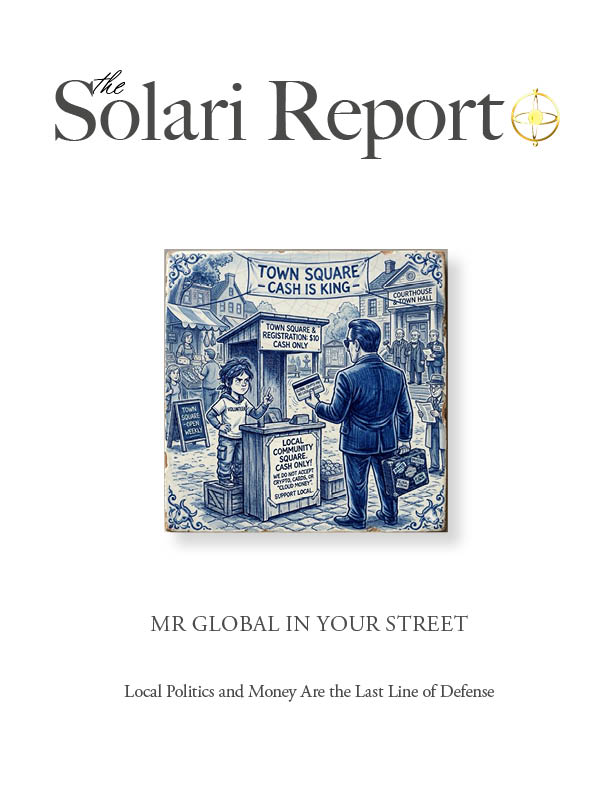
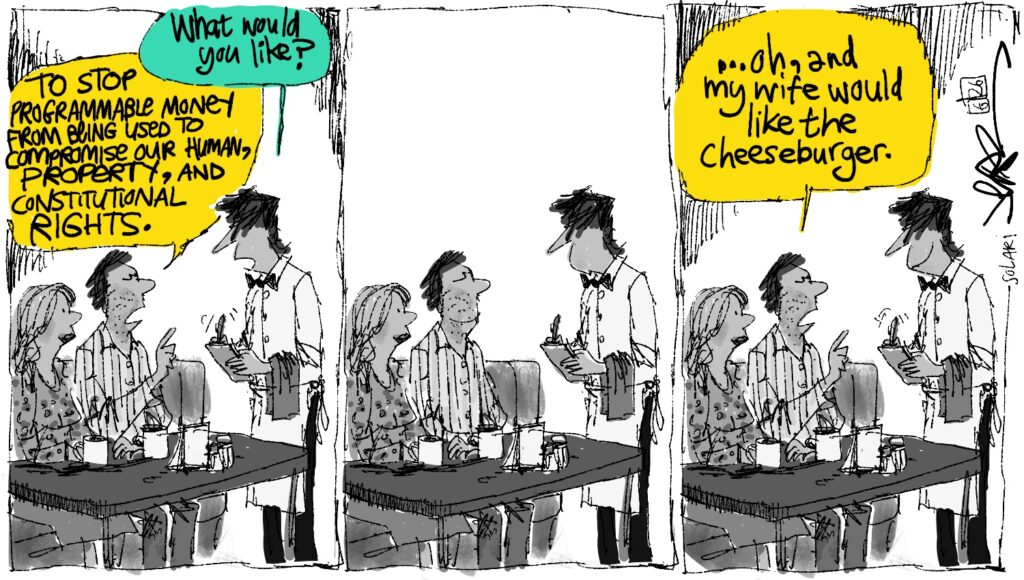
For the past two weeks, Catherine has expended considerable effort to testify before three state legislatures—in Idaho, Utah, and Tennessee—urging lawmakers to support legislation that protects citizens’ right to transact freely without being forced to use programmable money. The bill is based on Solari’s model legislation titled the Consumer Payment Rights and Transparency Act.
We were pleased to learn that a 30-year veteran of the Tennessee General Assembly—Memphis-born Democrat Rep. Joe Towns Jr.—introduced a bill on Jan. 23 of this year that would amend Tennessee Code relative to digital currencies.
Specifically, HB2060 would prohibit banks “from digitizing or otherwise converting money held by the bank on behalf of a consumer into a digital currency, digital medium of exchange, or digital monetary unit of account, including cryptocurrency, without express, written authorization from the consumer for whom the money is held.”
In a bit of historical trivia, Towns grew up one block from the Lorraine Motel where Martin Luther King Jr. was assassinated. A young boy at the time, he heard the fatal shot and remembers his grandmother saying, “I bet that’s Dr. King.” That day, and the strife that followed, prompted Towns’ subsequent civic involvement.
Little information is available to elucidate Towns’ motivation for sponsoring the digital currency legislation, but his record indicates sensitivity to constituents’ bread-and-butter concerns. For example, following last fall’s extended government shutdown, Rep. Towns told local media that the shutdown had led to significant financial stress in his district and commented, “I don’t know if you’ve ever been hungry, but hunger is not a plaything.”
Over the past couple of years, other Tennessee legislators have achieved bipartisan support for the passage of two bills that exclude CBDCs from the definition of “money” and “deposit accounts,” and prohibit social-credit-style de-banking, respectively. We will be interested to follow the progress of Rep. Towns’ HB2060, and we hope that he will also throw his weight behind the programmable money bill (HB2039).