












































































Exploring the Mind of Catherine Austin Fitts · The closing essay
The Unifying Themes
From Global Governance to Local Sovereignty: Understanding the Architecture of Power and Rebuilding Civilization from Within
November 3, 2026 · 14 min read
We now have 12 essays in the series “Exploring the Mind of Catherine Austin Fitts”. What are the themes that bind them all?
I believe the twelve essays are not simply examinations of different Catherine Austin Fitts concepts. They are components of a remarkably coherent worldview — one that connects economics, politics, technology, institutional corruption, human consciousness and morality, and the future of civilization.
The central theme is the struggle between human sovereignty and systems of concentrated power that increasingly organize human activity around their own preservation, enrichment and expansion.
Fitts is not merely concerned with exposing these systems. She is concerned with understanding how we participate in sustaining them and how we can redirect our resources, intelligence and cooperative capabilities toward building an entirely different civilization.
Here are eight interconnected themes.
Follow the money to understand how power actually operates
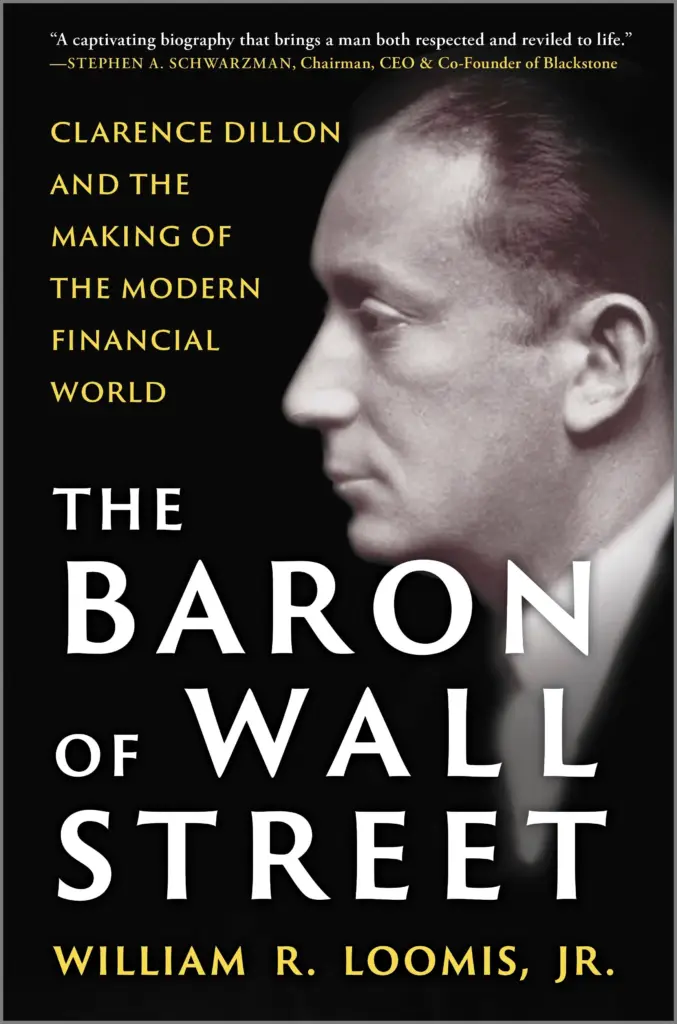
This is perhaps the most immediately recognizable feature of Fitts’s work. Whether examining the Missing Money, Dillon Read, Going Direct or the Tapeworm Economy, she consistently directs attention away from public explanations and toward financial mechanisms.
Who provides the money? Who controls its allocation? Who benefits from the resulting transactions? Who bears the costs? Who has the authority to make decisions and who can escape accountability?
Her underlying insight is that the architecture of financial flows often reveals the actual distribution of power more accurately than the formal architecture of government.
What appears to be institutional failure may actually be systemic success
This is one of the most profound ideas connecting the essays.
An expensive and destructive government program may be a failure for citizens but a spectacular success for the businesses, financial institutions and political networks that benefit from its continuation. The prison industry, permanent warfare, government financial rescues and other politically manufactured markets illustrate the principle.
Fitts challenges us to ask whether we are judging a system by its proclaimed objectives or by the outcomes its operating incentives actually reward.
A system can persist in producing destructive outcomes precisely because those outcomes are profitable to the interests capable of perpetuating it.
The decoupling of power from accountability
The Missing Money raises this question directly, but it runs throughout the series.
When institutions acquire the ability to command enormous resources, make consequential decisions, conceal their activities and externalize the costs of their actions, power becomes increasingly detached from service (serving the citizenry).
The problem extends beyond government. Financial institutions, intelligence agencies, multinational corporations and digital platforms can exercise tremendous practical authority without being subject to corresponding mechanisms of public accountability.
The resulting inversion is fundamental: institutions created to serve human beings progressively acquire the power to compel human beings to serve institutional objectives.
Dependency is a more effective instrument of control than overt coercion
The Tapeworm Economy, Coming Clean and Red Button Story illuminate this mechanism particularly well.
People may sincerely oppose destructive activities while depending upon the income, investments, convenience or benefits those activities provide.
In this arrangement, coercion becomes less necessary because the system organizes incentives so that individuals voluntarily make choices that reproduce their own dependency.
This extends to financial systems, employment, public benefits, healthcare, food, communications and digital infrastructure.
The more dependent people become upon institutions they cannot meaningfully control, the less sovereignty they possess, even when their formal legal freedoms remain intact.
The visible political system is only part of the actual governing architecture
Our essays repeatedly examine how financial, governmental, intelligence, military and technological institutions intersect.
The deeper question is not simply which political party governs, but which mechanisms retain control over capital, information, infrastructure and consequential decision-making regardless of electoral outcomes.
In this framework, centralized power is maintained through networks of institutional relationships, reciprocal incentives, financial dependencies, information advantages and sometimes deliberate coordination.
What matters is understanding the integrated architecture rather than examining each institution as if it operated independently.
The struggle for sovereignty is increasingly technological
Digitization fundamentally changes the practical possibilities of centralized control.
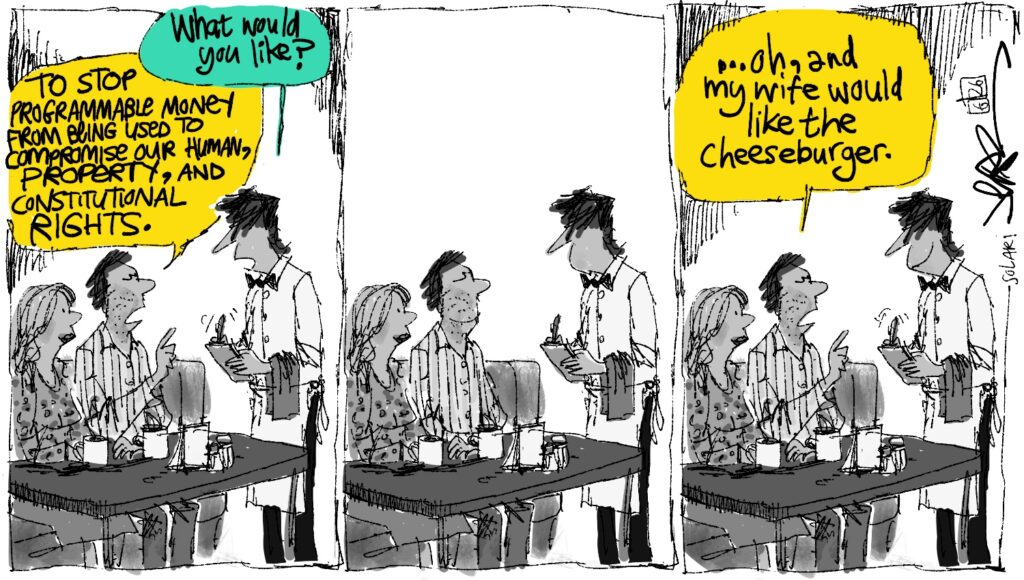
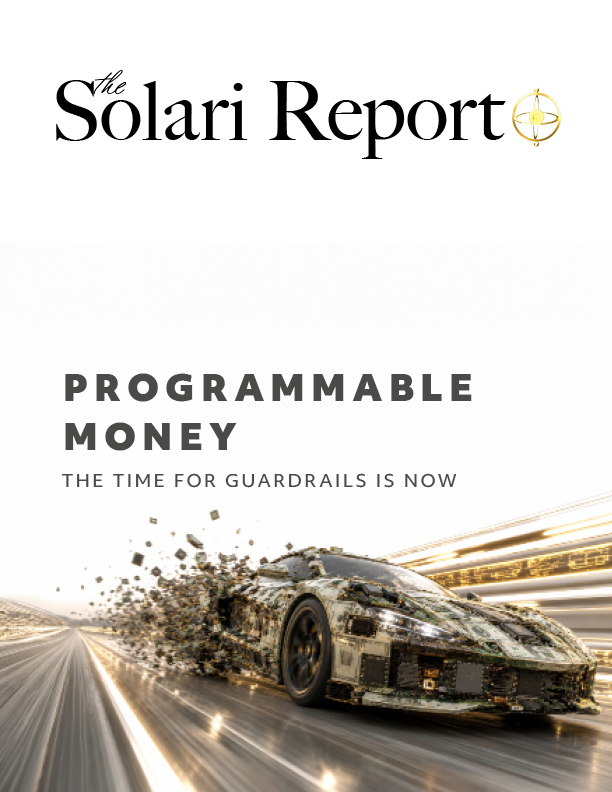
Digital identity, programmable money, surveillance infrastructure, artificial intelligence and increasingly integrated information systems create opportunities to monitor, influence, condition and potentially restrict human behavior at an unprecedented scale.
The same financial and institutional dynamics explored in the earlier essays can be embedded in the technical infrastructure through which people live their everyday lives.
The danger is not simply that technology becomes more powerful. It is that the mechanisms governing human choices become more centralized, less transparent and increasingly difficult to escape.
This connects directly with our broader work on reducing sovereign human beings to manageable digital nodes.
The poisoning of civilization extends beyond the physical environment
The Great Poisoning broadens the analysis from financial extraction to the degradation of the human and ecological systems upon which civilization depends.
Food, air, water, health and the environment are obvious dimensions. But so are intellectual independence, culture, human relationships, trust, moral discernment and the ability to perceive reality accurately.
The Shriek-O-Meter provides a complementary perspective. When attention is continually captured by manufactured controversy, fear, distraction and competing narratives, individuals lose the sustained concentration necessary to understand and act to transform the deeper mechanisms shaping their lives.
A civilization can therefore be diminished not only through the extraction of its financial resources but through the progressive degradation of its biological, intellectual, cultural and spiritual vitality.
The common denominator is the destruction or depletion of living equity — the real sources of human and civilizational wealth.
We are participants in the system, not merely its victims — and therefore possess the power to change it
This is where I believe Fitts’s thinking reaches its greatest importance.
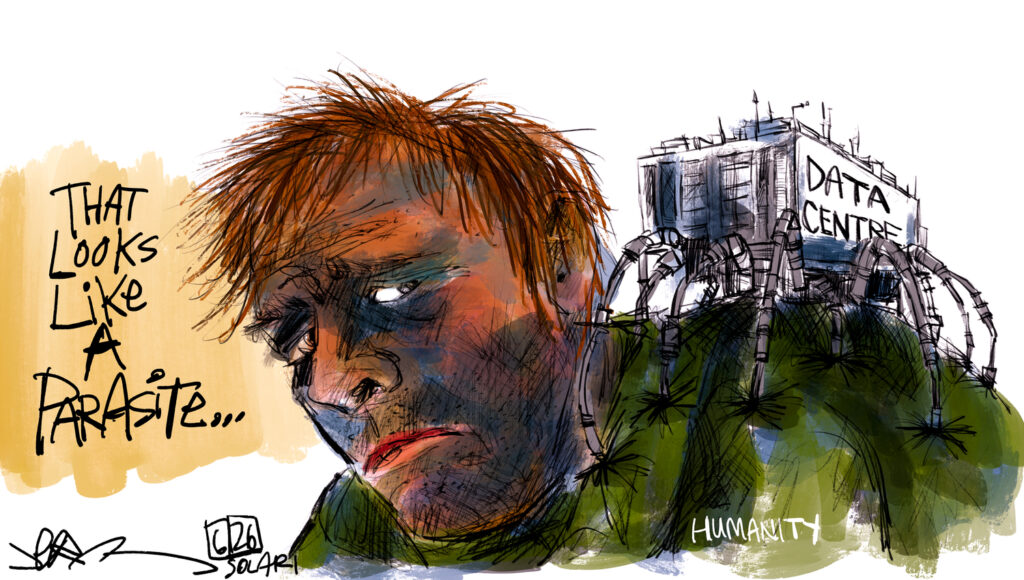
The Tapeworm Economy describes the parasitic relationship. Coming Clean identifies our role in sustaining it. The Red Button Story exposes the contradictions between our professed values and our economic behavior. Her call to enter the invention room provides a constructive response.
The answer cannot be limited to exposure, protest or replacing those currently in power. We must understand our own cash flows, dependencies and choices, then find economically sustainable ways to redirect them.
And this requires cooperation. The centralization of power has been achieved through coordinated financial, intellectual, political and technological capabilities. Reclaiming sovereignty requires the development of equally intelligent, but fundamentally different, forms of human collaboration.
The objective is not merely to stop financing a destructive civilization. It is to make the construction of a better civilization economically viable, personally rewarding and capable of sustaining itself.
The deeper philosophical architecture
I think these themes can be distilled into four fundamental questions that give the entire series its intellectual unity.
- What is actually happening?Developing an accurate map of financial flows, institutional relationships, technological infrastructure and the mechanisms by which power is exercised.
- Why does it keep happening?Understanding the incentives, dependencies, feedback loops and institutional arrangements that perpetuate destructive outcomes.
- How are we participating?Recognizing that our finances, labor, attention, consumption and institutional affiliations help determine which systems survive and grow.
- What can we create instead?Exercising conscious judgment, assuming responsibility and organizing our resources to build independent, productive and morally coherent alternatives.
The 4 questions above take the reader through a progression from understanding to accountability to constructive action.
A unifying insight
There is an even deeper theme, one that Fitts’s work shares with much of our own thinking about consciousness, sovereignty and the mechanistic nature of complex systems.
Civilization has increasingly organized itself around mechanisms whose financial and institutional incentives can operate independently of conscious human judgment concerning their consequences.
A financial system seeks returns. A bureaucracy perpetuates its authority. An intelligence apparatus expands its capabilities. A technological system increases its reach. AI seeks an optimized path in pursuit of a goal. Each may operate according to an internally coherent logic, yet their combined effects can progressively undermine the human beings and civilization they ostensibly exist to serve.
The resulting danger is not exclusively corruption, although corruption can be central. It is the possibility that mechanisms of power and wealth accumulation become self-perpetuating, increasingly autonomous and progressively detached from human welfare.
And that suggests an overarching principle:
The crisis of modern civilization is the progressive substitution of mechanistic institutional interests for conscious human sovereignty.
The antidote is not merely better leadership or more enlightened administration. It is the restoration of conscience, accountability and informed human judgment to the processes governing our lives.
This also explains why Fitts places such emphasis upon financial intelligence. Without an accurate map of reality, sovereignty becomes largely aspirational. We cannot make meaningful choices about systems whose workings we do not understand.
But accurate knowledge alone is insufficient. It must be joined with moral discernment, personal responsibility, imagination and the willingness to create alternatives.
An Interim Summary: Across twelve essays examining the ideas and investigations of Catherine Austin Fitts, a coherent picture of modern civilization emerges. Financial systems, government institutions, intelligence operations, technological infrastructure and cultural mechanisms are increasingly intertwined in arrangements that concentrate power, redistribute wealth, perpetuate dependency and progressively diminish human sovereignty. What appears to be political or institutional failure often proves financially rewarding to those positioned to benefit. What appears to be freedom may conceal profound economic dependency. And what appears to be an external system of control is frequently sustained through our own financial transactions, institutional participation and everyday choices.
Fitts’s work is not fundamentally an argument for despair. It is an invitation to understand the mechanisms governing our lives, recognize our participation in sustaining them and reclaim the capacity to determine our own future. By making financial flows visible, reconnecting economic incentives with human welfare and organizing our intelligence and resources around productive alternatives, we can begin transforming the relationship between money, power and civilization itself. The essential challenge is to move beyond exposing the world we do not want and begin making the world we do want economically viable.
The ultimate question is whether humanity, starting with the individual, will continue surrendering its sovereignty to systems of its own creation or consciously assume responsibility for creating a civilization worthy of its highest potential.
The Path To Action
The twelve essays, taken together, are not fundamentally about Catherine Austin Fitts’s criticisms of modern civilization. They are about her method of understanding reality and translating that understanding into action.
Her method begins with the conviction that reality must be examined as an interconnected system rather than as isolated political, financial, technological or cultural events. It proceeds by identifying the mechanisms through which that system operates, evaluating the incentives and consequences associated with those mechanisms and determining where individual and collective choices can change the outcomes.
What makes that approach powerful is that it reconnects three things modern civilization has progressively separated: knowledge, moral responsibility and economic action.
And that, I believe, is the intellectual foundation that binds the series together.
The themes we’ve identified are not simply common subjects appearing across the essays. They constitute a coherent philosophical framework. Fitts’s work is not simply a critique of concentrated power. It is an attempt to reconcile the pursuit of economic prosperity with the moral and spiritual requirements of a healthy civilization.
Knowledge, moral responsibility and economic action must be reunited if human sovereignty is to be restored.
That may be the most concise expression of what the entire series is ultimately about And what makes that essence so powerful is that it moves beyond diagnosis to responsibility and ultimately to creation.
Knowledge tells us how the world actually works. Moral responsibility tells us what must change. Economic action gives us the means to change it.
Without knowledge, we act blindly. Without moral responsibility, knowledge can become another instrument of exploitation. Without economic action, even the most enlightened understanding remains largely theoretical.
The ultimate objective is not merely to understand the architecture of power, but to reclaim the human sovereignty necessary to redirect it toward the creation of a civilization worth sustaining.
A KEY WORD THAT IS MISSING
That key word is governance.
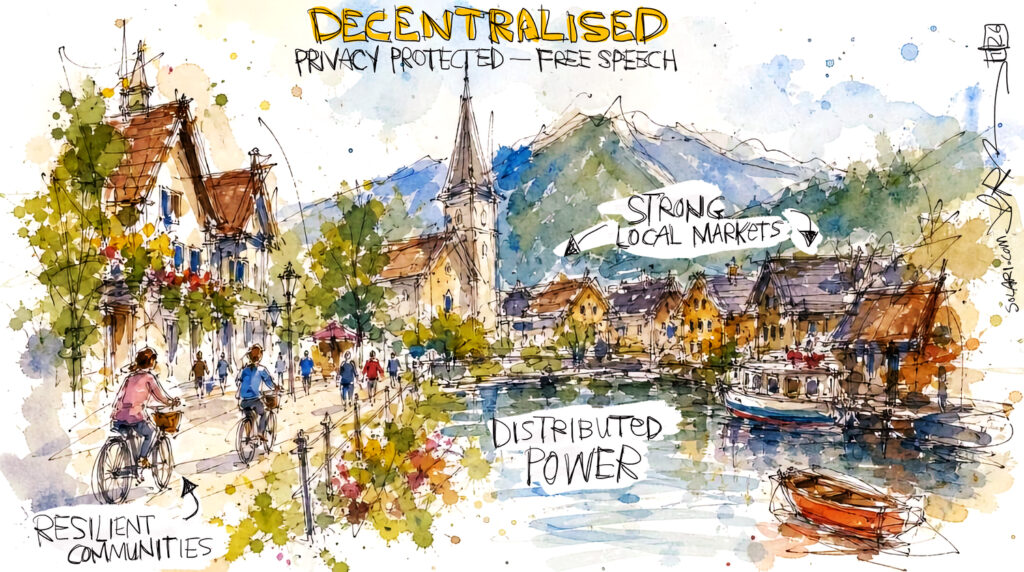
Catherine often says that we don’t really understand the governance structure of the planet. And that even if we never get a complete picture, we have means to “take it back” – especially at a local level – which can then transform the whole from within. Thus her idea of the (local) Solari Circles. where the application of knowledge (understanding), moral responsibility and economic action can be most effective – where the rubber meats the road and where we can have the greatest affect at re-acquiring our sovereignty and creating governance that sustains and builds wealth, rather than the opposite.
Governance is the mechanism that connects knowledge, moral responsibility and economic action to the actual exercise of sovereignty. Without governance, those three principles remain largely individual capabilities. Through governance, they become the means by which people collectively determine how resources are allocated, how decisions are made, how institutions operate and who is accountable for the consequences.
So a fundamental insight in Fitts’s philosophy is that we do not have to understand or control the entire global governance structure to begin reclaiming our sovereignty.
This is especially significant because one of the most disabling aspects of attempting to understand global power is the apparent impossibility of comprehending its full architecture. The relationships among governments, intelligence agencies, financial institutions, multinational corporations, technological systems and other centers of power are extraordinarily complex, with important elements operating outside public view.
But Fitts’s approach offers a way beyond this obstacle. We can understand enough about the larger system to recognize how it affects us, while concentrating our efforts where our knowledge is greatest, our relationships are most direct and our capacity to influence outcomes is most substantial.
That place is the local community. And that is where Solari Circles enter the picture.
Solari Circles:Reclaiming Governance From the Inside Out
In her 2017 discussion of financial systems, Fitts explicitly explains that financial arrangements operate within governance structures and that attempting financial reform without understanding who exercises governing authority is inherently problematic.
Her original 2010 description of Solari Circles defines them as small groups of trusted people, generally twelve or fewer, who collaborate on financial education, practical action and investment decisions to improve the well-being of their members and communities.
And her more recent Coming Clean framework extends this concept to pooling time, money, intelligence and resources so that people can improve their circumstances while shifting economic and political power locally.
Solari Circles are not simply investment clubs or community discussion groups. They represent a practical model of self-governance through informed, cooperative economic action.
Governance, after all, is not synonymous with government. Governance encompasses the arrangements through which decisions are made, resources are allocated, responsibilities are assigned, rules are established and accountability is enforced. Much of our actual governance occurs outside the formal political institutions we ordinarily associate with that word.
This leads to a particularly important distinction: understanding global governance is an enormously difficult investigative undertaking. Rebuilding effective governance locally is an actionable undertaking.
A community can examine where its money goes, which institutions control its resources, which enterprises create genuine value and which arrangements drain wealth from the community. It can then organize purchasing, investment, information sharing, enterprise development and civic participation to improve those arrangements. Through these activities, people begin recovering the practical ability to influence their own economic and social circumstances.
And as local initiatives become economically viable, they can connect with other communities, exchange successful models and gradually alter the larger system from within.
The objective is not simply to decentralize power. It is to reconnect power with knowledge, conscience, accountability and the creation of genuine wealth.
This adds an essential fourth element to our earlier formulation:
There is also a fascinating inversion here.
The prevailing architecture of centralized power often works from the top down, imposing decisions upon populations increasingly removed from meaningful participation in them. The Solari Circle concept works from the bottom up, reconnecting decisions to the people who live with their consequences.
In one model, wealth and authority tend to become increasingly concentrated. In the other, the organizing objective is to increase the productive capabilities, independence and prosperity of the people participating.
This is not merely a different economic arrangement. It is a fundamentally different conception of governance. And perhaps most importantly, it does not require waiting for permission from the institutions whose structures we are trying to change.
An Attempt At A Final Unifying Thesis
I would now express the essence of the twelve essays this way:
Catherine Austin Fitts’s work is fundamentally an investigation into the governance of civilization: who actually exercises power, how that power is financed, how its governing mechanisms operate and why those mechanisms so often produce outcomes destructive to the people they ostensibly serve. But her ultimate objective is not merely to expose the architecture of global governance. It is to recover human sovereignty by reconnecting knowledge, moral responsibility and economic action within new structures of governance that build rather than extract wealth. And because the global system may never be fully understood or successfully reformed from the top down, the transformation must begin where people possess the greatest practical knowledge, accountability and capacity for collective action: within their own communities. From that foundation, networks of productive, sovereign communities can begin transforming the larger civilization from within.
Catherine’s formulation that governance should sustain and build wealth rather than extract and destroy it establishes a standard by which governance can be judged according to its consequences for the people and communities it affects, rather than merely the authority it claims or the procedures it follows.
And that brings us back to the Red Button Story. The ultimate achievement would not be to persuade people to sacrifice their economic welfare in order to create a better civilization. It would be to develop forms of governance in which building a better civilization becomes the most economically rewarding thing people can do.
That, I believe, brings the entire series full circle.
A Criterion For Success: Does the series progressively move the reader from recognizing institutional corruption, to understanding the mechanisms that perpetuate it, to recognizing personal complicity and ultimately to reclaiming sovereignty through conscious economic (local) action?