



















































































Action of the Week
Jump the Curve on Inflation
November 8, 2026










No posts

“Defeat is a state of mind; no one is ever defeated until defeat has been accepted as a reality.”
~ Bruce Lee
By Tom Shaw
For many years, the Solari Report has published a wide range of resources to help subscribers successfully navigate the impacts of inflation. Recently, we shared Corey Lynn’s Tips on Successfully Navigating Inflation—a powerful list of pick-and-choose options that anyone can apply in different areas of life to help soften the impact of cost-of-goods inflation.
With lots of possible actions to choose from, the questions become:
The Hidden Cost of “Cheap Prices”
As Catherine often points out, inflation is not just about money, but about time. How should we invest our time when it suddenly takes a lot more time to either do something directly or earn the money to buy the product or service we need? It can be challenging to know where to start—especially if we feel locked into a lifestyle of high outgoings where “dealing with inflation” seems impossible.
We might be tempted to engage with the companies and services aligned with Mr. Global because their offerings are seemingly “cheaper”—the food at the big-box grocery stores, the cheap drugs from the pharmacy, or the big banks with attractive savings rates—telling ourselves that the “cost savings” are necessary for our survival.
But what are we actually accomplishing in the process? In all, we actually lose time in the “shadow work” we sign up for—in doing things like:
This doesn’t even take into account our own state of health—buying low-quality food, likely containing poison of some kind, that makes us ill enough that we lose the equivalent of two or three days of work per week, on top of the additional unpaid “shadow work” we agree to take on.
Letting Go of Expectations
“Jumping the curve” on inflation often requires letting go of whatever narratives or ideas we have around what a “successful” life looks like—and the sense of social prestige that comes with it. In preparation for this piece, I discussed with Catherine Austin Fitts what a successful plan to out-maneuver inflation might look like—and she spoke directly to this:
“Navigating inflation requires letting go of notions about social prestige. Social prestige is one of the greatest wasters of time and money. It is used to manipulate people in a variety of ways. In 1997, I had a monthly overhead—personal and professional—of $800,000 a month. Suddenly, all income and credit stopped, and I had to take that overhead down to $2,000 a month.
The ride was very educational. In the process, I gained access to numerous communities deemed to be poor and low prestige. They taught me a wealth of ‘old-timey’ information on how to live well on $2,000 a month—thousands of tips from DIY health care to DIY cleaning products. If I had time, I would roam the back roads of Tennessee gathering up hundreds of wildflowers and fill my house with beautiful bouquets. My homes in Manhattan used to have monthly flower budgets in the many hundreds of dollars; the wildflowers were free.
When we won the litigation and my company was finally paid most of what it was owed, I did not go back to expensive living.”
Keeping Faith
Inflation demands ruthless practicality in the face of real risks—but it doesn’t mean having to let go of the things that give value and meaning to life. Tools like prayer, faith, and cultural activities are vital. Many of these things “cost” very little or nothing in terms of money, but build our resolve and our love of life in a way that gives us the power to work through the challenges of the moment. This is exactly what the best art, music, literature, and poetry all do as well, reminding us of the beauty, joy, and happiness that the human spirit can create.
We don’t have to see the entire path or do everything all at once—we can simply begin with what is right in front of us. This is the very essence of “turtling forth.” No matter how insurmountable the odds might appear, there is always a room to tidy, a friend to call, or a nourishing meal to make. These things might not seem like inflation-beating activities on the surface, but the very act of making forward progress nourishes our sense of self-worth and multiplies the chances of success in whatever future progress we intend to make. Divine intelligence takes note of these things.
Building Local Community
Beyond finding harmony in our internal state, we can look to the community around us to help us overcome hurdles and build long-term resilience. The danger of being targeted by Sheriff of Nottingham-style tyranny for refusing to be beaten by inflation (or rejecting any of the plans of the centralizers) is real—but a family and neighborhood whose members trust us are not going to “turn us in” when the going gets tough. Gathering with others who wouldn’t make up lies about us or crumble under the pressure of an external threat is thus an essential survival skill.
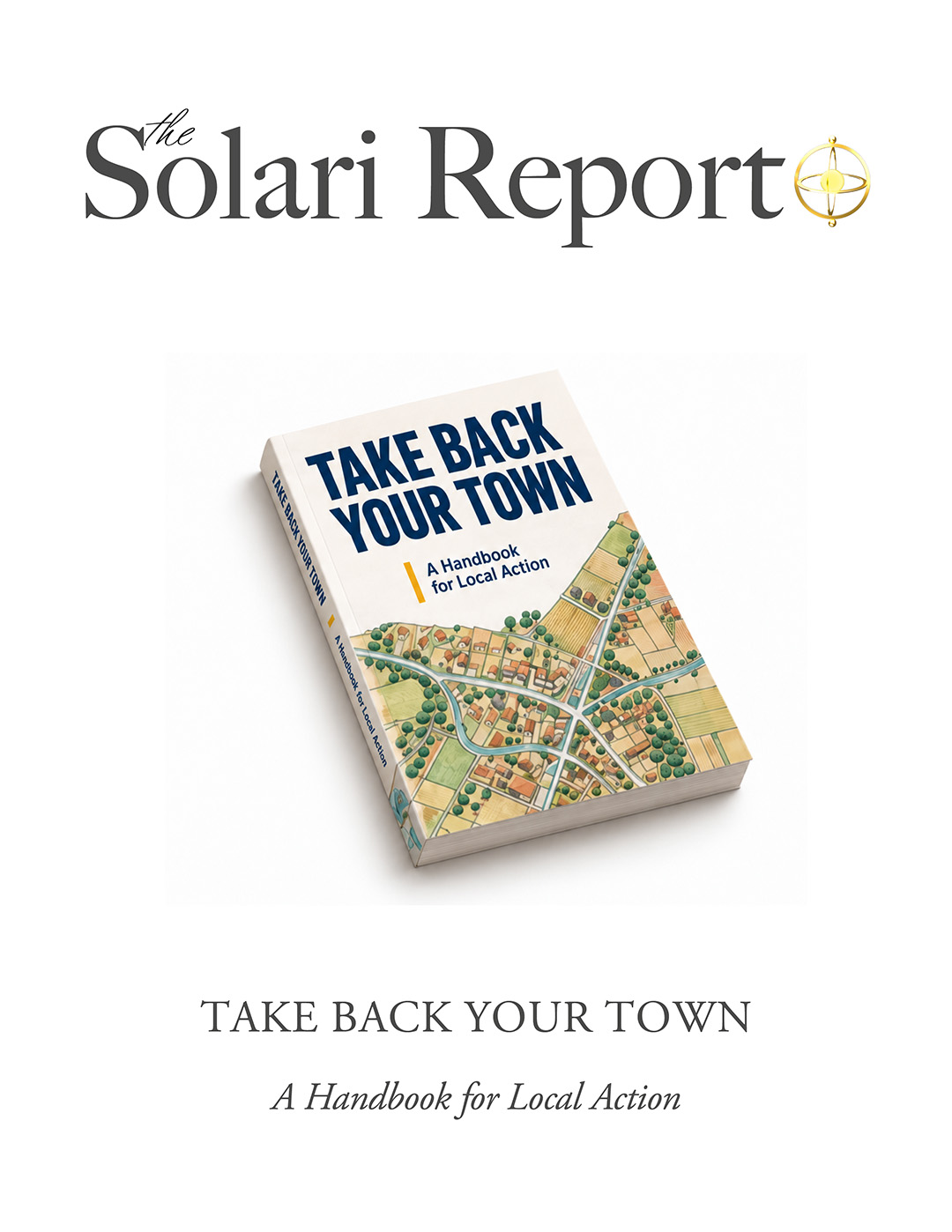
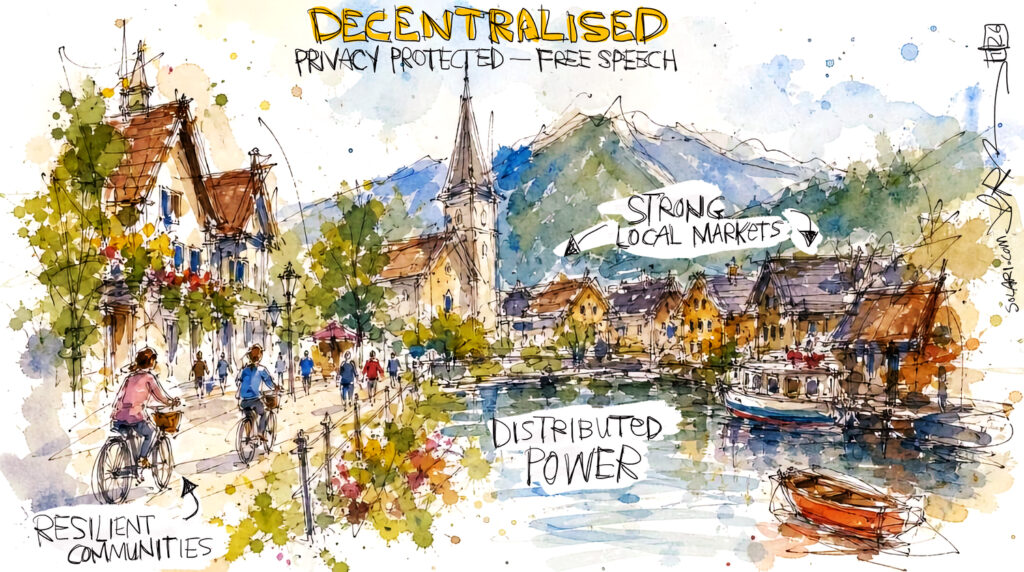
Organizing with those people to accomplish things locally—community gardens, local buying and savings clubs, local arts and cultural celebrations—is among the most powerful tools for creating a life that nurtures us, regardless of the current inflation rate. Our Take Action 2021 and Take Back Your Town Wrap Ups both detail many more ideas for accomplishing community-level pushback. Additionally, Solari Connect and Solari Circles helps subscribers connect with other like-minded individuals in their areas to help with exactly this.
Having this kind of community is always essential, regardless of specific risks and challenges. People have lived in tribes, towns, and cities throughout human existence for a reason; trying to do absolutely everything ourselves is not the best use of our time. The practices of the past that involved conscious isolation, separation from the group, and solo rites of passage were never about cutting ties; they were about strengthening the connection to the divine and trust in ourselves, with the intention to then bring that intuitive wisdom back to the tribe for everyone’s benefit. We are no different from our ancestors in this regard.
Taking Action
This is the time for thinking about how to outlast inflation, whether it means building skills and knowledge, conducting short-term experimentation with long-term thinking, or simply letting go of the things that don’t serve us. The value of our dollars is independent of the value our lives can bring to this world. When we choose to live in accordance with our values and needs, and build genuine relationships of trust, we find that we can always get what we need—regardless of what the price tag says.
Already a subscriber?

Our mission is to help you live a free and inspired life. This includes building wealth in ways that build real wealth in the wider economy. We believe that personal and family wealth is a critical ingredient of both individual freedom and community, health and well-being.
Nothing on The Solari Report should be taken as individual investment, legal, or medical advice. Anyone seeking investment, legal, medical, or other professional advice for his or her personal situation is advised to seek out a qualified advisor or advisors and provide as much information as possible to the advisor in order that such advisor can take into account all relevant circumstances, objectives, and risks before rendering an opinion as to the appropriate strategy.
Receive your free copy of Coming Clean
Be the first to know about new articles, series and events
Your shopping cart is empty
Notifications