







































































































Food for the Soul: Henri Rousseau: A Painter’s Ambition
By Nina Heyn
June 4, 2026










No posts
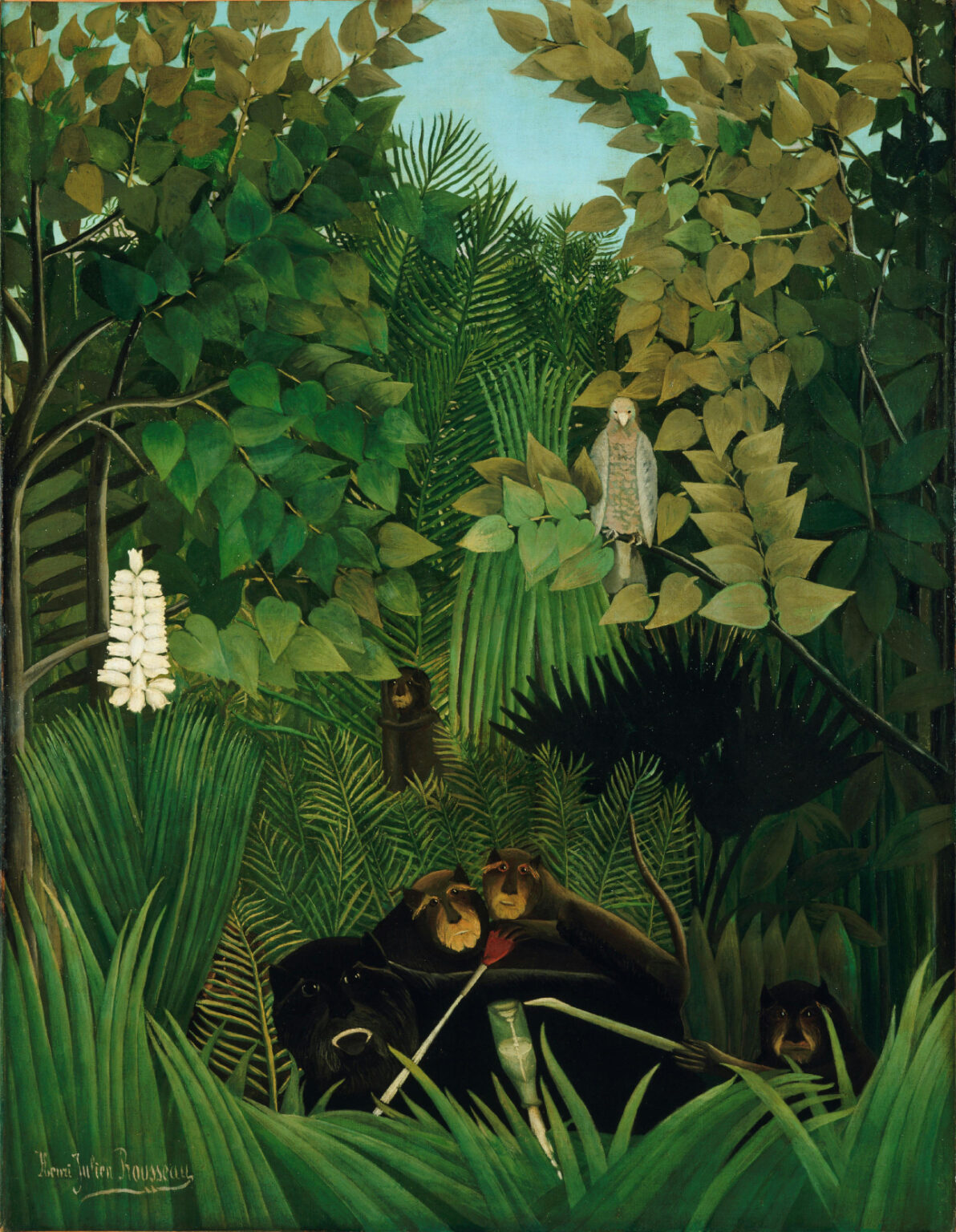
When we think of Henri Rousseau (1844-1910) we evoke his paintings of jungles and monkeys, which are indeed what made him immortal, but this self-taught painter started with something else. He embarked on the path of an artist when he was a middle-aged man holding the mundane job of tax collector at the Seine port (“customs officer” was the erroneous but catchy moniker given to him by the poet Alfred Jarry).
His early works depicted his surroundings (the Paris suburb of Laval), portraits of his family, and his first customers: a grocer to whom he owed money or the parents of a small girl who wanted her portrait. The picture called Père Junier’s Cart is as unsophisticated as it is utterly charming—an entire family is on an outing in a simple two-wheel cart, with one grey terrier who scored seating, and two other dogs, perhaps strays, running next to the cart. The horse sports a jaunty mane, and the trees have every leaf painted in. While this painting helped Rousseau pay his grocery bills, it still remained in the category of “naïf art” and could not compete with the “fine art” that filled the Louvre and Luxembourg museums. However, Rousseau was unshaken in his conviction that his style had its place among French culture. In fact, he was quite obsessed with achieving professional recognition.
Already a subscriber?

Our mission is to help you live a free and inspired life. This includes building wealth in ways that build real wealth in the wider economy. We believe that personal and family wealth is a critical ingredient of both individual freedom and community, health and well-being.
Nothing on The Solari Report should be taken as individual investment, legal, or medical advice. Anyone seeking investment, legal, medical, or other professional advice for his or her personal situation is advised to seek out a qualified advisor or advisors and provide as much information as possible to the advisor in order that such advisor can take into account all relevant circumstances, objectives, and risks before rendering an opinion as to the appropriate strategy.
Receive your free copy of Coming Clean
Be the first to know about new articles, series and events
Your shopping cart is empty
Notifications