

















































Action of the Week
Pushback Poetry
August 2, 2026









No posts
“In the beginning was the Word, and the Word was with God, and the Word was God.”
~ John 1:1 (KJV)
[Note: This is the first in a planned series of monthly posts to highlight “Pushback Poetry.” Tom Shaw is a poet and a Solari Builder in the inaugural Class of ‘26.]
By Tom Shaw
Our ability to use words is uniquely tied to our ability to create. The idea that God, purely through his word, created the universe in which we abide, speaks to the sanctity of our own use of words—and why we should value them. What’s more, we can observe how this power manifests. We can see it in Dr. William Tiller’s work on how prayer can affect material reality. We see it in the works of Veda Austin and Masaru Emoto, showing how thoughts and intention can alter the structure of water. We also see it in the abuse of words’ power: the psychological manipulation by media outlets, corporations, and international organizations.
The value of written information seems easiest to appreciate—and I imagine that’s why many of you are here reading and supporting the work of Solari. We learn something new, improving our model of how the world works, and we begin to use that to enhance our own work and create more value for ourselves and others.
When it comes to storytelling and fictional works, we can praise works like Lord of the Rings and Atlas Shrugged for turning abstract ideas about morality, truth, and goodness into something we can more easily appreciate and take pointers from. It’s easier for our brains to remember narratives than to remember facts, and stories that document the rise of heroes—and the fall of villains and flawed characters—help train our moral imagination and ethical decision-making. These narratives help people evaluate personal and community priorities, in turn shaping their approach to building wealth, securing freedom, and maintaining individual agency.
So where does that leave poetry?
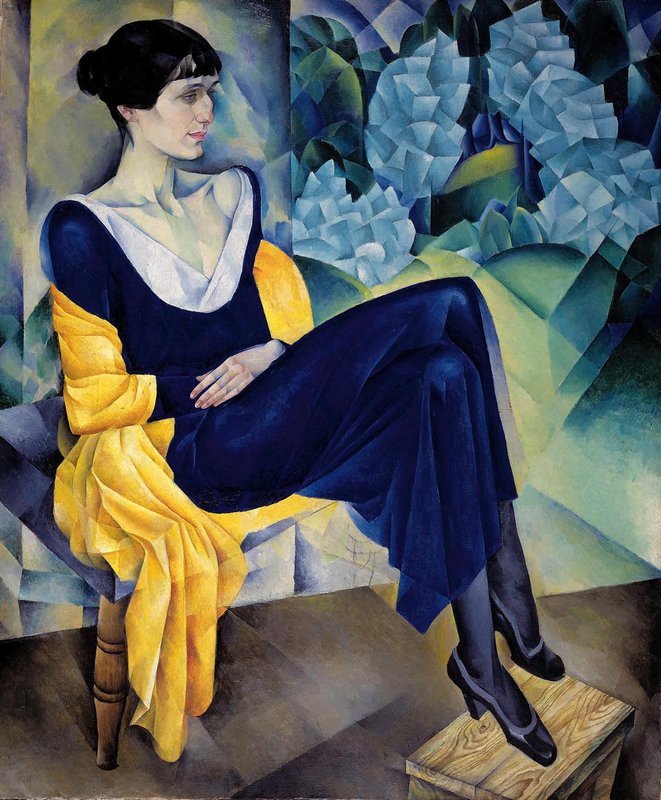
During World War Two’s Siege of Leningrad—which saw 1.5 million people killed over nearly 900 days—Anna Akhmatova witnessed the atrocities unfolding around her and turned them into poetry. From being one of the most celebrated poets during the end of Russia’s “Silver Age” (~1890s–1920s), Anna had had her works unofficially banned in 1925, under the guise that her poetry represented a “bourgeois aesthetic.” It became almost impossible for her to have anything other than translations or academic essays on Russian classics accepted.
Yet, Anna persisted. She began Requiem, a poetic work to document the horrors she personally faced during Russia’s slide into totalitarianism, including the arrests of her family members and the persecution of her literary circle. It would take her nearly three decades to complete it. Due to being under constant surveillance by the Stalin regime, Anna composed much of the work in secret. She would meet with friends secretly and share excerpts of the poetry orally, or she would write out fragments on scrap paper to share with visitors, only to immediately burn them on the stove. (The following excerpts from Requiem are from the translation by Stanley Kunitz and Max Hayward.)
At dawn they came and took you away.
You were my dead: I walked behind.
In the dark room children cried,
the holy candle gasped for air.
Your lips were chill from the ikon’s kiss,
sweat bloomed on your brow—those deathly flowers!
Like the wives of Peter’s troopers in Red Square
I’ll stand and howl under the Kremlin towers.
What drove Anna to continue writing poetry at this time—even with such a strong likelihood of death? In the opening of Requiem, she states the following:
Instead of a Preface
In the terrible years of the Yezhov terror I spent seventeen months waiting in line
outside the prison in Leningrad. One day somebody in the crowd identified me. Standing behind me was a woman, with lips blue from the cold, who had, of course, never heard me called by name before. Now she started out of the torpor common to us all and asked me in a whisper (everyone whispered there):
“Can you describe this?”
And I said: “I can.”
Then something like a smile passed fleetingly over what had once been her face.
Many poets and writers of history speak of being compelled to write by an instinct greater than that which can be put into words. The greatest skill of the poet is one of observation; Anna was able not only to observe such horrors but also give them words to convey the gravity and personal impact of totalitarian rule. She considered this act of observation and communication—and its value toward maintaining morality, the human spirit, and flourishing societies—as far more important than any personal gain or safety she might have maintained through silence and conformity with the regime.
I want to name the names of all that host,
but they snatched up the list, and now it’s lost.
I’ve woven them a garment that’s prepared
out of poor words, those that I overheard,
and will hold fast to every word and glance
all of my days, even in new mischance,
and if a gag should blind my tortured mouth,
through which a hundred million people shout,
then let them pray for me, as I do pray
for them, this eve of my remembrance day.
Anna Akhmatova is just one figure in a long history of artists who have given their gift of creativity—in this case, language—to aid in the survival of the human soul. Just as the soldiers of Britain wrote poetry to move through the horrors of their deployment. Just as the bards and court jesters of medieval England used song with satire to criticize the abuse of authority. Just as Aeschylus and Sophocles shone light on moral failings in Ancient Greece through their poetic tragedies.
Poetry takes the core themes and ideas that people remember narratives for, and amplifies our ability to embody that truth intuitively, leaning into our nature and helping us identify patterns and see their place within the “whole.” While it’s true that we remember narratives better than individual facts, it is also true that we remember poetry better than any other written form. It’s perhaps no wonder, then, that some of the oldest surviving artifacts of ancient civilisations—the Epic of Gilgamesh, the works of Homer, the epics of central Asia, and the prayers and songs of Native American tribes—are all forms of poetry.
Poetry represents an ultimate mastery of the word, using sensory considerations and structural constraints like any artist does to amplify the impact of its contents. The words of poetry are invitations to find possibilities beyond our immediate reality. Poetry illuminates the memories, emotions, and patterns that influence how we show up in the world. Poetry then provides an opportunity to transmute the individual circumstances of its creation—and its creator—into something more profound. Poetry speaks to the broader trend of our life story, and shows us areas where we can choose to change for the better.
This happens on a personal level, then extends to our communities and societies more broadly. Percy Bysshe Shelley, one of the most well-regarded poets of the Romantic era, called poets “the unacknowledged legislators of the world,” inspiring societal change by revealing deeper insights on human nature, envisioning future possibilities, and awakening the imagination. Many statesmen, such as Pablo Neruda, W.B. Yeats, or Václav Havel, are more widely remembered for their poetry than for their achievements in office.
Where other written forms work mostly with the what, poetry is the bridge into the how; how we perceive, experience, and inhabit the spaces we occupy. Renowned poet W.H. Auden reflected on poetry’s enduring power when considering the life of Yeats, shortly after he passed:
For poetry makes nothing happen: it survives
In the valley of its making where executives
Would never want to tamper, flows on south
From ranches of isolation and the busy griefs,
Raw towns that we believe and die in; it survives,
A way of happening, a mouth.
Poetry moves minds—and minds, in turn, move markets. Poetry survives as a vessel for consciousness and the sanctity of the human soul, shaping the ways in which highly developed societies appreciate their development and the human experience that ultimately underpins all interactions. It helps us find our values and morals—and, as a result, points to what we should invest our time and resources in. It is not just sacred for the nurturance of our soul but also becomes materially consequential, just as prayer can be. Poetry is a safeguard of the kind of human discernment that is essential for individual agency, personal freedom, and the pursuit of developing real wealth.
In the words of Wim Hof, “Poetry is the language of the soul. So listen.”
In listening carefully to the words that move us, we better understand the values, truths, and possibilities that shape the lives we create.
Humans have a gift and a way with language that no other creature on the planet possesses. The words we use are where our world begins—so let’s use them in building our free and inspired lives.
Dr. William Tiller – Scientific Support for the Power of Intention
Cold Therapy and Breath: The Wim Hof Interview
More from Pushback Poetry:
Already a subscriber?

Our mission is to help you live a free and inspired life. This includes building wealth in ways that build real wealth in the wider economy. We believe that personal and family wealth is a critical ingredient of both individual freedom and community, health and well-being.
Nothing on The Solari Report should be taken as individual investment, legal, or medical advice. Anyone seeking investment, legal, medical, or other professional advice for his or her personal situation is advised to seek out a qualified advisor or advisors and provide as much information as possible to the advisor in order that such advisor can take into account all relevant circumstances, objectives, and risks before rendering an opinion as to the appropriate strategy.
Receive your free copy of Coming Clean
Be the first to know about new articles, series and events
Your shopping cart is empty
Notifications