


















































































































Technical and Industry Plasmas
by Ulrike Granögger
Plasma is a versatile tool. Today, there exist a host of technical and manufacturing applications that make use of plasma—artificially generated ionized gases—ranging from (attempted) energy generation to materials processing. Different operations use non-thermal (cold) plasmas or thermal (hot) plasmas.
Non-Thermal (Cold) Plasmas
If a gas is only ionized in a small fraction of its particles (for example, in only every billionth particle), you get cold atmospheric plasma. Non-thermal plasmas are partly ionized gases where electrons reach high energies, while the bulk gas and ions stay near room temperature. This creates reactive molecules, such as ozone, and ions for precise chemistry without heating sensitive materials.
Surface Treatment
One versatile usage of plasma in numerous industries (e.g., automobile, semiconductor, cosmetics, textile, and medical) are surface and materials treatments. The plasmas are cold and, therefore, non-destructive to the material, whether metal, glass, or plastic. For example:
- Cold atmospheric plasmas allow for ultrafine cleaning of surfaces and the removal of organic and microbial as well as inorganic surface contaminants and dust particles.
- Plasmas can be used for coating to give surfaces new properties and functionality, such as plasma nanocoating for corrosion protection.
- Plasma is used to support adhesive bonds and sealing.
- Plasma can bleach as well as sterilize textiles and fabrics without the use of chemicals.
- Plasmas are applied on foods1 for sterilization and extended shelf life. For instance, treating strawberries with argon plasma for a few minutes reduces pathogens like Salmonella and can extend shelf life by four to seven days. This non-thermal plasma method outperforms chlorine washes.
- Plasmas are also applied on surgical and other medical devices.
Water and Air Treatment
Cold plasma is an innovative method for water purification—better than many other methods—destroying 99.9% of bacteria, fungi, viruses, and other microbes. Plasma also eliminates toxins and other harmful small particles.2 In addition, when water is treated with plasma, for about 15 minutes the water itself becomes a disinfecting agent. Eindhoven University in the Netherlands is experimenting with plasma-activated water sprayed on plants as an alternative to chemical pesticides as well as a non-chemical fertilizer.3 4 Thunderstorms create plasma-activated water naturally, and rain is much more than just water for the plants. It comes with all the fertilizing and disinfecting properties of plasma-activated water.
Non-thermal plasma also purifies air effectively, destroying pollutants at the molecular level. High-voltage electrical discharges create a plasma field where air flows through or past electrodes. This produces various radicals, ozone, and UV light that attack pathogens, particulates, and odors.5
Plasma Agriculture
Recently, scientists have begun to consider “artificial lightning” and the use of cold plasma to create less environmentally damaging plant fertilizers with low energy consumption.6 The U.S. Department of Agriculture (USDA) Research Center in Wyndmoor, Pennsylvania, is experimenting with plasma in agriculture to replace chemical fertilizers, insecticides, and fungicides.7
An electric current is sent through air to generate plasma (from the air), which then can be used to enrich water with abilities that reduce pathogens and boost plant growth. The plasma-enriched water carries biologically available nitrogen—when used to water the plants, no further fertilizer is needed. Cold plasma has also been used in experiments to treat and stimulate seeds to greater and faster growth. The seeds were balanced on a plasma ball for one minute and then incubated. In the plasma-treated seeds, the measured radicle of the seedling was one centimeter longer compared with the untreated seeds.8
Already in the 1880s, Finnish (plasma) physicist Karl Selim Lemström (1838–1904) (see Biographies) had the idea of using electricity to enhance plant growth after he observed in trees near the Arctic Circle that tree rings were wider in years when the aurora borealis was strongest. To enhance plant growth, he artificially created an electrical environment by placing a metal wire net over growing plants and running a current through it. He published his findings in his 1904 book, Electricity in Agriculture and Horticulture.9
Medical Plasmas
An important application of cold plasmas lies in the area of medicine. Many things can be done with non-thermal medical plasmas. Non-thermal plasma is used to treat chronic wounds,10 for example, and is widely favored for the disinfection of instruments, surfaces, and tissue. Dermatologists use it to treat acne, warts, and even hair loss. Increasingly, oncology is making use of cold plasmas for skin cancers and leukemia. Plasma-activated water has shown anti-cancer effects in melanoma.11
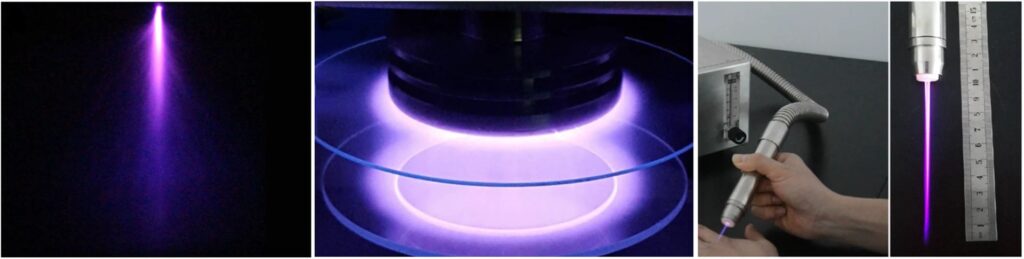
Surface treatment with plasma can be combined with 3D printing for another advanced plasma application in medicine—the manufacture of bone tissue implants. Here, a plasma jet is used to treat the surfaces of the implant with a “cell growth-promoting coating,”13 helping to more quickly integrate the implant into surrounding tissue.
The body naturally produces nitric oxide (from nose breathing, for example) for all stages of wound healing. Studies carried out in Russia indicate that nitric oxide generated by plasma is extremely effective in enhancing wound healing and tissue regeneration. In 1998, Russian medical scientists developed a device that generates an air-plasma flow (from ambient air) rich in nitric oxide, which can be applied to affected areas. The nitric oxide can penetrate intact skin, wounds, mucous membranes, and even a cornea for numerous applications.14
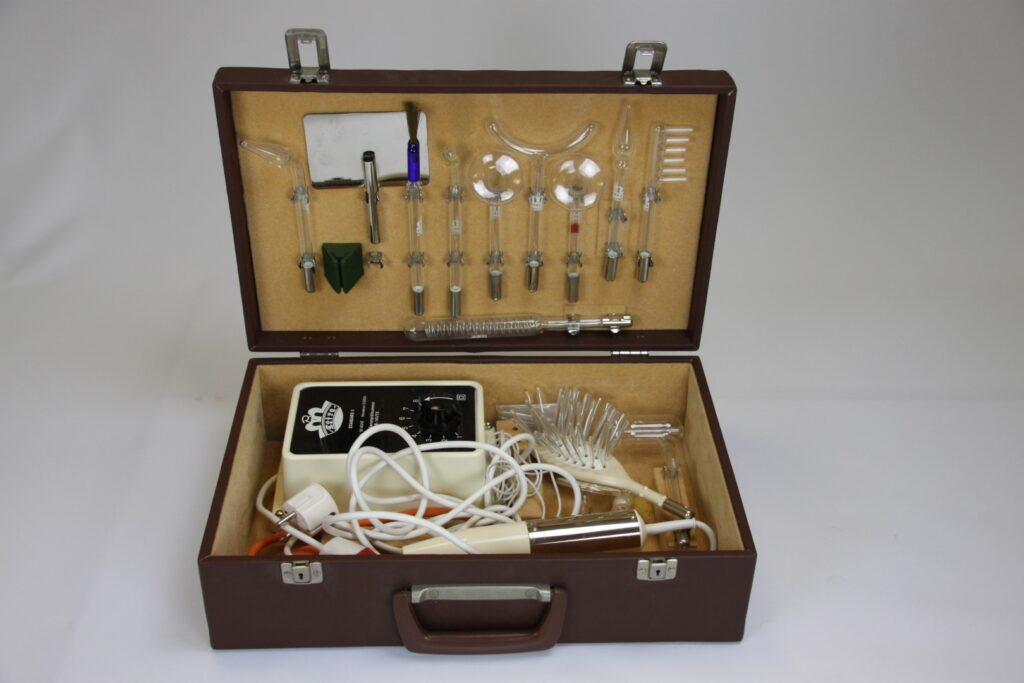
One of the legacies of Nikola Tesla’s inventions are the so-called “violet wands” or high-frequency therapy devices. Seventy to 100 years ago, these devices were in use in every household. I own and use one such historical machine. These devices are essentially plasma generators that use high-frequency, high-voltage electricity through a miniature Tesla coil to excite gas inside of glass electrodes. When brought near the skin, a discharge of plasma will occur, creating tiny bits of ozone. These ancient second-hand devices work just as well as modern apparatuses.15
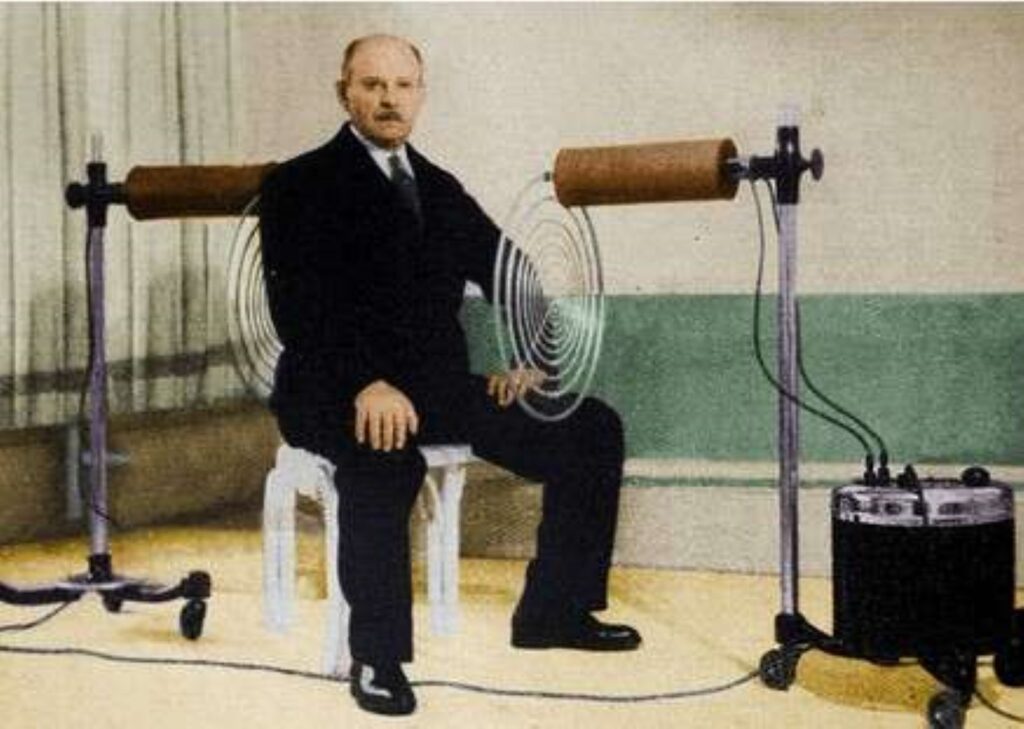
George Lakhovsky’s famous Multi-Wave Oscillator uses a similar technique of high-voltage electrical discharges, which, in addition to the designed broad spectrum of oscillations for improved cell communication, can generate localized physical plasma in the air.
Semiconductor Chip Etching
Without plasma, modern 3- to 2-nanometer chips with billions of transistors would be impossible. Semiconductor chips are etched with high precision and directionality using plasma to selectively remove material from a silicon carrier. High-energy gases are bombarded onto the surface and made to react with the material. This breaks down the molecules, which are vacuumed off. Plasma can also be used to grow an integrated circuit on a wafer.
Nanotechnology
Plasma etching is widely used in nanotechnology to fabricate nanoscale structures and devices, such as nanowires, quantum dots, and nano-electromechanical systems. These nanoscale devices have unique properties and capabilities due to their small size and the quantum effects that come into play at the nanometer scale. For instance, plasma etching is used to create a tiny semiconductor particle (a quantum dot) to confine electrons in a small enough space to exhibit quantum-mechanical properties.
Plasma Displays
In plasma TVs and plasma display panels, each pixel contains tiny gas-filled cells to make bright images. Voltage across electrodes ionizes the gas into plasma, producing ultraviolet light, which in turn excites the RGB phosphor coatings inside each cell. The technology was the first flat panel display that people could buy, nowadays replaced by liquid crystal displays (LCD) and organic light-emitting diodes (OLED).
Neon Lights
Neon lights and other gas-discharge lamps use plasma glow discharge for lighting. Depending on the gas inside the tube, a different color will be produced. A sealed glass tube with a metal electrode at each end is filled with a gas at low pressure. When a high potential of several thousand volts is applied to the electrodes, the gas is ionized and emits light.
Kirlian Photography
Kirlian photography is a technique invented by Semyon and Valentina Kirlian in the 1930s that captures glowing, colorful halos or “auras” around objects using high-voltage electricity. To create a Kirlian image, an object like a leaf, coin, or finger is placed directly on photographic film or paper that rests on a conductive metal plate. A high-voltage (10-50 kV), high-frequency power source pulses electricity through the plate, creating a corona discharge—a type of non-thermal plasma—around the object’s edges. The plasma ionizes air molecules near moisture, sharp points, or conductive surfaces, producing visible streamers and glows that expose the film.
This plasma glow appears brighter around living things because they contain more moisture, which enhances electrical conductivity and discharge intensity. When developed, the film shows the object with a luminous outline in various colors. It is believed that these plasma patterns reveal information about the subject’s or object’s “energy field” or aura.16
Ultracold Plasmas
A new regime of plasma physics may be opening through ultracold plasmas that are purely created in the laboratory (and maybe in the cores of white dwarfs).17 Clouds of atoms are cooled by lasers to temperatures as low as 1°K and then ionized. These are strongly coupled plasmas (crystals) whose electrical behavior will be fully coherent. As a conducting solid plasma, they may have superconducting characteristics. Because of their low temperature and correlated particle behavior, ultracold plasmas overlap with the quantum world, making them candidates for hypothetical “quantum plasmas.” Quantum plasmas are a major research topic in high energy-density physics (fusion), with potential applications in quantum information technologies such as computing and sensing.
Thermal (Hot) Plasmas
Plasma Torches (Plasmatrons)
Plasma torches or plasma guns or “plasmatrons” are devices that generate and direct a high-temperature ionized gas jet for precision applications.
- Plasma welding: Plasma welding uses a plasma torch for an advanced arc welding process by means of a high-velocity plasma arc on a very narrow space to join metals with exceptional precision.18 In this technique, a super-hot plasma jet (28’000°C) exits a nozzle at near-sonic speeds and melts the base metal in a precisely focused point area. Because the arc is stiff and columnar-shaped, the weld will be spatter-free. The aerospace industry uses this, for example, for welding turbine blades.
- Plasma cutting: Another use of the plasmatron or plasma torch (hot plasma jet) lies in cutting through electrically conductive materials such as steel, aluminum, and other metals. This low-cost precision cutting device is in use in many industries.
Plasma Scalpels
Unlike other medical uses of plasma that apply a non-thermal ionized gas jet, a plasma scalpel is a surgical instrument that generates a high-temperature plasma jet to precisely cut tissue and simultaneously seal blood vessels.19 The jet creates a focused stream of plasma at a temperature of up to 30’000°C that vaporizes cells along a narrow path while it also coagulates the bleeding. The scalpel can cut up to 3mm deep. (There are also non-thermal plasma scalpels.)
Waste Incineration
Plasma gasification is used to incinerate waste and hazardous materials by a mechanism like that of a plasma torch. The waste material is vaporized into a reusable gas. The process, also called a plasma arc waste destruction system20 or plasma arc recycling system,21 has been employed on U.S. Navy aircraft carriers.
Fusion Reactors
One of the most significant technological applications of hot plasma lies in fusion research. Scientists have been striving to replicate the fusion reactions that occur in the sun for abundant energy production, viewing fusion reactors as the most promising long-term energy source of the future. AI data centers, quantum computing (assuming it is even possible), and digital currency and control systems will continue to place enormous energy demands on the grid. That is why there are high hopes for fusion, which promises unlimited “clean” power using mainly seawater (deuterium) and lithium, with minimal radioactive waste compared to fission. No other currently known source matches the energy flux density of nuclear fusion. (After all, it’s what is going on inside of stars, right?)
Unfortunately, so far, in most fusion reactors the “fusion energy gain factor”—the ratio between the energy required to maintain the plasma and the energy gained from the fusion—has not even reached the value of 1 (where 1 means equal energy input and output), let alone the multiples thereof needed to reach plasma self-heating and a self-sustaining reaction. However, one lab—the National Ignition Facility (NIF) at Lawrence Livermore National Laboratory—was able to achieve something like a “net energy gain”—which means the fusion reaction released more energy than the laser energy delivered to the fuel capsule. In December 2022 (and subsequently several more times),22 the NIF produced some 3.15 megajoules (MJ) of fusion energy from about 2.05 MJ of laser energy. The world could be at the cusp of a new energy revolution.
Nuclear Fusion Reactors
In a fusion reactor, the deuterium D2 gas needs to be brought into a plasma state for nuclear fusion to occur. Remember that plasma is a state of separation of electrons from the atomic nuclei, freeing electrons and ions. For nuclear fusion, these light atomic nuclei must collide and merge, but because they are each positively charged, they repel one another. To overcome this repulsion and enable collisions and fusion to occur, the heat has to be in the tens of millions of degrees. The colliding D+ and T+ (deuterium and tritium) ions can fuse to form helium (He), a process which releases energy as heat.
The plasma needs to stay highly ionized under high temperature and pressure for long enough so that fusion reactions can occur faster than energy is lost. Therefore, powerful confinement magnets, which act like invisible walls, are used to keep the reaction going and prevent energy losses. For the fusion processes inside stars, it is said that pressure from gravity accomplishes this fusion and heat radiation, creating a chain reaction. A self-sustaining reaction like this has not been reached in any experimental fusion reactor, which is why, until now, fusion research mainly has sought to better understand and control plasma behavior, given the many instabilities encountered in high-energy plasma.
Different reactor designs use different methods to meet the necessary conditions. Tokamak and stellarator reactors apply magnetic confinement via extremely strong magnetic fields generated by external magnets to hold the hot plasma in place, while inertial confinement systems use intense laser beams or particle beams to compress and heat tiny fuel pellets at great speeds.
The first tokamak was built in Russia, based on concepts by Andrei Sakharov. It is still the leading candidate among fusion reactor designs. The name “tokamak” is derived from a Russian acronym for “toroidal chamber with magnetic coils.”
The International Thermonuclear Experimental Reactor (ITER) is the largest international tokamak experiment and involves all major regions, including the EU, Japan, China, Russia, South Korea, India, and the United States. It is physically located in France, where construction started in 2013. A first plasma ignition was planned for 2025, but the timeline has now been extended to 2034. ITER is not a power plant but a research device seeking to prove that a sustained fusion reaction with net energy gain is possible.

Aside from ITER, there are quite a number of other tokamak fusion centers worldwide, such as the JT-60SA in Japan, the Experimental Advanced Superconducting Tokamak (EAST) and HH70 in China, the MAST Upgrade in the UK, and the National Ignition Facility (NIF) in the United States. Also of interest in the U.S. is the Z Pulsed Power Facility (“Z machine”) at Sandia National Laboratories in New Mexico, which is used as a broad research facility for fusion reactions.

What does it actually cost to run a tokamak fusion reactor today, and how does that compare with the energy one gets out? Estimated construction costs for ITER (exact numbers are not known due to the involvement of so many countries) range between $25-$45 billion so far. Once the machine is running, annual operating costs are projected to be around $350-$380 million per year. If any of the reactors ever achieve sustained fusion and commercial energy production, the electricity for the consumer will not be cheap either. According to some studies, the estimated cost of electricity will be $140-$550 per MWh,23 compared to average global wholesale electricity prices today of around $40-$90 per MWh.
Private industry is also involved in the fusion race and could get to the finish line first. For example:
- One of the first groups to explore table-top plasma fusion was the SAFIRE Project beginning in 2013 based on the ideas of Montgomery Childs about the “Electric Sun”. The aim is to reverse-engineer the atmosphere of the sun in a laboratory on Earth. One of the main presentations of the 2019 Global Breakthrough Energy Movement Conference was delivered by Montgomery Childs and Dr. Michael Clarage.24 The project has now evolved into the Aureon Energy mission.
- Since 2018, Massachusetts-based Commonwealth Fusion Systems in collaboration with MIT is working to build a much smaller tokamak fusion system called SPARC (an abbreviation of “Smallest Possible ARC”) using a new class of high-temperature superconducting magnets.
- The German MarvelFusion startup in Munich uses high-power, ultra-short pulse lasers to initiate fusion reactions and strives to be the first commercial fusion power plant by the mid-2030s. Their experiments used the world’s most powerful laser at the ELI-NP facility in Bucharest, Romania.
- The private startup Avalanche Energy is pursuing a completely different way of doing fusion. Instead of magnetic confinement or laser inertial confinement schemes to keep the particles in place for fusion to happen, the inventors propose an inertial electrostatic approach25 using high voltage to manipulate the ions and fuse them.26 This would allow for very small (tabletop-size) fusion reactors, at least for experimentation.
Plasma Propulsion
Plasma propulsion work has focused both on plasma thrusters and plasma rockets.

- Plasma Thrusters: Plasma engines for interplanetary space missions have been built and tested by various space agencies worldwide, including the Iranian Space Agency. The first plasma jet engines were used on the 1964 Zond 2 Soviet space probe.27 The first ion thrusters demonstrated feasibility already in the 1960s, while another milestone was the 1998 NASA Deep Space 1 probe that housed an ion engine.28 In 2003, Dr. Christine Charles in Australia prototyped the Helicon Double Layer Thruster (HDLT),29 verified by the European Space Agency in 2005; the HDLT employs the unique features of plasmas to create double layers (see “Double Layers” in What Is Plasma?). Plasma thrusters are not used for propulsion on Earth because they are ineffective against gravity and air resistance, but they can be utilized effectively in vacuum environments like space. Still, researchers are working on possible plasma engines for future air travel even in Earth’s atmosphere.30 31
- Plasma Rockets: NASA is currently working on a Pulsed Plasma Rocket (PPR) aiming at bringing humans to Mars.32 That kind of mission requires crossing the Van Allen radiation belts, and the shuttles must be shielded against high-energy cosmic particles. Such shielding is part of the PPR design. Russia seems to be ahead of other nations in this endeavor and was able to present a prototype of a plasma rocket engine early in 2025.33 The magnetic plasma accelerator will be able to accelerate particles to a speed of 100 km/s, which will allow spacecraft to go beyond the solar system.
Plasma Weapons
Even more interesting was a very different recent “rocket” launch by Russia, that of the new medium-range ballistic missile “Oreshnik,” which has caused a stir among military and political observers. Russia first used it in the Ukraine war in November 2024 and then again in January 2026 in retaliation for a purported Ukrainian drone attack.
Although the missile does not employ plasma technology for the launch or engine, it accelerates to at least Mach 11 as it reaches orbital altitude, a speed that naturally generates a plasma envelope34 around the warhead at reentry into the atmosphere, making it invisible to radar interception.35 Russian President Vladimir Putin declared, “there are no means in the world today to intercept such a missile,” and it seems to be due to the plasma sheath generated during hypersonic re-entry that disrupts radar acquisition, degrades interceptor cueing, and neutralizes engagement against slower ballistic missiles.36
Already in 2017, a press release by the Russian defense ministry announced work on laser, electromagnetic, and plasma weapons that can be fired at hypersonic speeds.37 Following that announcement, Russian Deputy Defense Minister Yuri Borisov said, “Coming next are hypersonic weapons, which require the use of principally new materials and control systems that operate in a completely different medium, in plasma.”
The U.S. military has been developing its own plasma-based weaponry for a long time, including the so-called MARAUDER (Magnetically Accelerated Ring to Achieve Ultra-high Directed Energy and Radiation), which is based on the nature and behavior of plasmoids as discovered by Winston Bostick, who used a plasma gun to shoot small plasmoids across magnetic fields in the laboratory. The weapons research was an attempt at “forming, compressing, and accelerating milligram‐range compact toroids using a meter diameter, two‐stage, puffed gas, magnetic field embedded coaxial plasma gun.”38
Specific high-tech laser weapons employ features of plasma.39 Among them is the electrolaser, a weapon that first ionizes the path to the target, making the path conductive, and then sends electric current down that channel to strike in a way similar to a lightning bolt. As the laser beam travels through the air, it heats and ionizes the gas molecules of air along its way and makes a plasma channel. This channel of plasma is electrically conductive for an electric current to be sent down the pathway to hit.40
Nuclear Weapons
All nuclear weapons, when they detonate, turn into a ball of plasma, so in a literal sense, all nuclear bombs are “plasma bombs.” There are atomic bombs (nuclear fission) and thermonuclear bombs (nuclear fusion).
In a nuclear fission explosion, temperatures reach tens to hundreds of millions of degrees, so all nearby matter (bomb materials, air, soil) is turned into plasma under enormous pressure.
In modern fusion weapons, also called hydrogen bombs, plasma plays a role in several stages. First, a small atomic (fission) bomb is ignited that turns surrounding material into a superheated plasma and emits a powerful flash of X-rays. The X-rays are crucial for the next step in which, based on the design of the bomb, plasma and radiation from the first stage create an implosion of fuel to generate plasma for nuclear fusion.
These multi-stages of plasma inflict several corresponding stages of damage:
- Damage from the initial fireball: A high-pressure plasma bubble expands at supersonic speeds and drives a blast wave into the surrounding air.
- Damage from heat of the thermal plasma flash: This produces intense radiation in the visible, ultraviolet, and infrared spectrum and will ignite fires at great distances.
- Radiation damage by high-energy X-rays and gamma rays from fusion.
Additionally, the plasma strongly affects electromagnetic fields and will interact with Earth’s magnetic field. For this reason, all nuclear detonations can cause electromagnetic pulse (EMP) effects and disruption of radios, power grids, and electronics.
Summary
A host of technical and manufacturing applications make use of either non-thermal (cold) plasmas or thermal (hot) plasmas:
- Non-thermal plasma applications, both established and experimental, include surface treatments for cleaning, coating, adhesion, and sterilization; water and air purification; plant fertilization; wound healing and other medical applications; semiconductor chip etching; fabrication of nanoscale devices; display panels; neon lights; and Kirlian photography to capture “auras.”
- Thermal plasmas include plasma torches for plasma welding and precision cutting, plasma scalpels to promote coagulation, and waste incineration.
- Fusion research is one of the most significant technological applications of hot plasma, with the potential to usher in a new energy revolution. Experimental fusion reactors include tokamak and stellarator reactions that magnetically hold the hot plasma in place.
- Work on plasma propulsion focuses on plasma thrusters and plasma rockets, with the goal being to allow spacecraft to go beyond the solar system.
- A new generation of hypersonic weapons operating in a plasma medium is on the horizon. Already, Russia’s Oreshnik missile travels at a speed that generates a plasma envelope around the warhead, making it invisible to radar interception.
- Plasma also plays a role in atomic and thermonuclear bombs.
Next chapter: Unexplained Plasma Phenomena
Footnotes:
- Sasikumar R, Kumar S, Mangang IB, et al. A comprehensive review on cold plasma applications in the food industry. Sustain Food Technol. 2025;3:1251-1274. https://doi.org/10.1039/D5FB00148J ↩︎
- Cold plasma technology for water purification. Plasmax, n.d. https://www.plasmax.dk/applications/water-plasma-purification/ ↩︎
- What if growers could harness the power of lightning? Vital Fluid, n.d. https://www.vitalfluid.com ↩︎
- Plasma ions – Make indoor air as fresh as nature’s! EddaAir, n.d. https://www.eddaion.com ↩︎
- Li J, Gao H, Lan C, et al. Plasma air filtration system for intercepting and inactivation of pathogenic microbial aerosols. J Environ Chem Eng. 2023 Oct;11(5):110728. https://doi.org/10.1016/j.jece.2023.110728 ↩︎
- Ornes S. Cold plasma could transform the sustainable farms of the future. Science News, Sep. 8, 2021. https://www.sciencenews.org/article/cold-plasma-agriculture-sustainable-farms-fertilizer ↩︎
- Research Project: Validation and Commercialization of Innovative Processing Technologies. USDA, Feb. 10, 2021 – Feb. 9, 2026. https://www.ars.usda.gov/research/project/?accnNo=439577 ↩︎
- Volkov AG, Bookal A, Hairston JS, Patel D. Radio frequency plasma capacitor can increase rates of seeds imbibition, germination, and radicle growth. Funct Plant Biol. 2021;48(3):312–320. https://doi.org/10.1071/FP20293 ↩︎
- Lemström S. Electricity in Agriculture and Horticulture. London: “The Electrician” Printing & Publishing Company, 1904. https://archive.org/details/cu31924003336116 ↩︎
- Rached NA, Kley S, Storck M, et al. Cold plasma therapy in chronic wounds – a multicenter, randomized controlled clinical trial (Plasma on Chronic Wounds for Epidermal Regeneration Study): preliminary results. J Clin Med. 2023 Aug 4;12(15):5121. https://doi.org/10.3390/jcm12155121 ↩︎
- Mahdikia H, Shokri B, Majidzadeh-A K. The feasibility study of plasma-activated water as a physical therapy to induce apoptosis in melanoma cancer cells in-vitro. Iran J Pharm Res. 2021;20(3):e124491. https://doi.org/10.22037/ijpr.2021.114493.14882 ↩︎
- Yan, X., Ouyang, J., Zhang, C. et al. Plasma medicine for neuroscience—an introduction. Chin Neurosurg Jl 5, 25 (2019). https://doi.org/10.1186/s41016-019-0172-9 ↩︎
- Liu D, Szili EJ, Ostrikov KK. Plasma medicine: opportunities for nanotechnology in a digital age. Plasma Process Polym. 2020 Oct;17(10):2000097. https://doi.org/10.1002/ppap.202000097 ↩︎
- Butenko A, Shekhter A, Pekshev AV, et al. Review of clinical applications of nitric oxide-containing air-plasma gas flow generated by Plason device. Clin Plasma Med. 2020;19-20:100112. https://doi.org/10.1016/j.cpme.2020.100112 ↩︎
- Napp J, Daeschlein G, Napp M, et al. On the history of plasma treatment and comparison of microbiostatic efficacy of a historical high-frequency plasma device with two modern devices. GMS Hyg Infect Control. 2015 Jun 2;10:Doc08. https://doi.org/10.3205/dgkh000251 ↩︎
- Wehrstein KM. Kirlian photography. PSI Encyclopedia, Nov. 6 2023, updated Nov. 8, 2026. https://psi-encyclopedia.spr.ac.uk/articles/kirlian-photography/ ↩︎
- Killian T, Rolston S. Ultracold neutral plasmas. Physics Today, Mar. 1, 2010. https://doi.org/10.1063/1.3366240 ↩︎
- The plasma arc welding process. Pro-Fusion, n.d. https://www.pro-fusiononline.com/welding/plasma.htm ↩︎
- Xiao A, Liu D, He D, et al. Plasma scalpels: devices, diagnostics, and applications. Biomedicines. 2022 Nov 17;10(11):2967. https://doi.org/10.3390/biomedicines10112967 ↩︎
- Plasma gasification and disposal units for standard and hazardous waste. PLAZARIUM MGS, n.d. https://www.plazarium.com/en/products/plasma-gasification-units/plazarium-mgs/ ↩︎
- Plasma arc recycling process: How it works, benefits, and future of waste management. Okon Recycling, Sep. 30, 2025. https://www.okonrecycling.com/consumer-recycling-initiatives/learn-about-recycling/plasma-arc-recycling-process/ ↩︎
- Longenecker S. New laser fusion experiment doubles energy output of prior breakthrough. MarketWise, May 20, 2025. https://marketwise.com/investing/new-laser-fusion-experiment-doubles-energy-output-of-prior-breakthrough/ ↩︎
- Araiinejad L, Shirvan K. Techno-economic analysis of deuterium-tritium magnetic confinement fusion power plants. Appl Energy. 2025 Dec 15;401(part B):126567. https://doi.org/10.1016/j.apenergy.2025.126567 ↩︎
- The SAFIRE Project: Transformative Technology | Montgomery Childs & Michael Clarage https://youtu.be/t1aNqa0PZPI ↩︎
- “Fusor.” Wikipedia, n.d. https://en.wikipedia.org/wiki/Fusor ↩︎
- How to build table-top fusion reactors. The Economist, Sep. 10, 2025. https://www.economist.com/science-and-technology/2025/09/10/how-to-build-table-top-fusion-reactors ↩︎
- “Zond 2.” Wikipedia, n.d. https://en.wikipedia.org/wiki/Zond_2 ↩︎
- Deep Space 1. NASA, n.d. https://science.nasa.gov/mission/deep-space-1/ ↩︎
- Plasma thruster tested for Mars mission. Phys.org, Jan. 3, 2006. https://phys.org/news/2006-01-plasma-thruster-mars-mission.html ↩︎
- Göksel B, Mashek I. First breakthrough for future air-breathing magneto-plasma propulsion systems. J Phys: Conf Ser. 2017;825:012005. https://doi.org/10.1088/1742-6596/825/1/012005 ↩︎
- Electric plasma jet engines: the future of air travel, or impossible dream? Intergalactic, n.d. https://ig.space/commslink/electric-plasma-jet-engines-the-future-of-air-travel ↩︎
- Hall L. Pulsed Plasma Rocket (PPR): shielded, fast transits for humans to Mars. NASA, May 1, 2024. https://www.nasa.gov/directorates/stmd/niac/niac-studies/pulsed-plasma-rocket-ppr-shielded-fast-transits-for-humans-to-mars/ ↩︎
- Mars in 30 days? Russia unveils prototype of plasma rocket engine. World Nuclear News, Feb. 7, 2025. https://www.world-nuclear-news.org/articles/mars-in-30-days-russia-unveils-prototype-of-plasma-rocket-engine ↩︎
- Hot plasma cocoon: the working principle of the Russian “Oreshnik” missile revealed. Www1.ru, Jan. 26, 2025. https://www1.ru/en/articles/2025/01/26/kokon-goriacei-plazmy-raskryt-princip-raboty-rossiiskoi-rakety-oresnik.html ↩︎
- The Oreshnik, analysis of a missile like no other. Meta-Defense, Jan. 6, 2025. https://meta-defense.fr/en/2025/01/06/oreshnik-missile-what-do-we-know-2025/ ↩︎
- Russia’s Oreshnik hypersonic strike near NATO border signals dangerous new phase in Ukraine war. Defence Security Asia, Jan. 9, 2026. https://defencesecurityasia.com/en/russia-oreshnik-hypersonic-missile-strike-lviv-nato-warning-ukraine-war/ ↩︎
- Batchelor T. Russia developing laser, electromagnetic and plasma weapons, Kremlin says. Independent, Jan. 22, 2017. https://www.independent.co.uk/news/world/europe/russia-laser-electromagnetic-plasma-weapons-military-kremlin-a7540716.html ↩︎
- Degnan JH, Peterkin Jr. RE, Baca GP, et al. Compact toroid formation, compression, and acceleration. Phys Fluids B. 1993 Aug 1;5(8):2938-2958. https://doi.org/10.1063/1.860681 ↩︎
- Lightning laser weapon developed by US Army. BBC News, Jun. 28, 2012. https://www.bbc.com/news/technology-18630622 ↩︎
- Defense applications. Applied Energetics, n.d. https://appliedenergetics.com/defense-applications/ ↩︎