









































































































Pushback of the Week
Mexican Citizens Say No to Biometrics
August 16, 2026











“[T]he Mexican government and telecom companies are hoping extra time is all that will be necessary to convince more than 50 million people to comply with the mandate. This may prove more challenging than they anticipated in a country well known for mistrust of official institutions.”
~ Derrick Broze
From the standpoint of those seeking to put a digital control grid in place, a highly precise digital ID system and biometrics are essential.
In the U.S., government agencies like the Transportation Security Administration (TSA) and Department of Homeland Security (DHS), government contractors like Palantir, and federal legislation like the One Big Beautiful Bill are some of the vehicles helping move biometrics forward. The cover stories range from border security to prevention of election fraud to traveler “convenience.”
In Mexico, as Derrick Broze has described at The Last American Vagabond, the cover stories (e.g., fighting organized crime and drug trafficking) may be different, but the government’s march toward a digital surveillance state is the same. New laws that took effect in July 2025 require the population to register for a biometric program called CURP (involving fingerprint and eye scans) if they want to access various services.
Where phone service is concerned, citizens and foreign residents were supposed to link their mobile phone lines to their digital identity by June 30, 2026, or face near-immediate cancellation of service—but by late June, less than half of all lines were registered. The resounding noncompliance forced the government to extend the deadline. The revised timetable gives users of pre-pay cell phones (lines with no monthly contract) from August 15 to December 31 to register, depending on the last digit of the phone number.
Last March, when compliance was at a mere 10%, a Mexican journalist quoted by Broze commented, “It’s completely unfeasible for companies to cancel numbers not associated with CURP. They would be left without customers!” The journalist praised his fellow Mexicans for not registering, stating, “We’re beating the government.”
Private companies (the telcos) are in charge of storing the data, but the Mexican government “can request access to a user’s details at any time through a ‘due legal process,’” notes the Mexperience newsletter. Those refusing to register understand the chilling implications, pointing to “the possibility of civil and military authorities accessing sensitive data, including the places where people are, who they meet or talk with, and all their daily activities.”
The take-home message emphasized by Broze is that “non-compliance and foot-dragging can have an impact.” He adds:
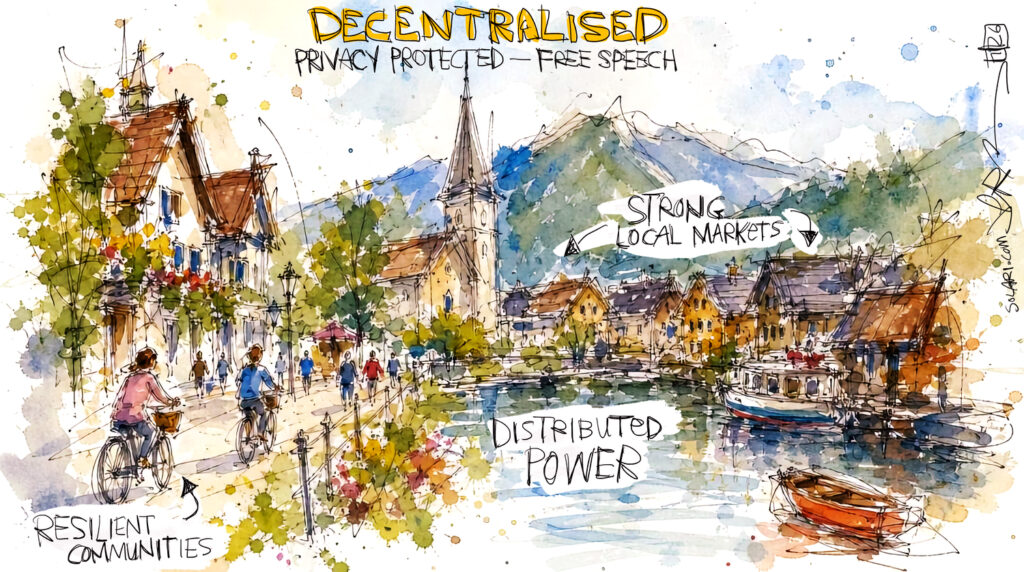
“The lesson here is that whenever the state or corporations try to force biometric registration, or face scanning, or digital IDs, we DO NOT HAVE TO COMPLY. We can resist. We can opt out. We can find alternative paths to avoid their systems.”
Already a subscriber?

Our mission is to help you live a free and inspired life. This includes building wealth in ways that build real wealth in the wider economy. We believe that personal and family wealth is a critical ingredient of both individual freedom and community, health and well-being.
Nothing on The Solari Report should be taken as individual investment, legal, or medical advice. Anyone seeking investment, legal, medical, or other professional advice for his or her personal situation is advised to seek out a qualified advisor or advisors and provide as much information as possible to the advisor in order that such advisor can take into account all relevant circumstances, objectives, and risks before rendering an opinion as to the appropriate strategy.
Be the first to know about new articles, series and events.
Your cart is currently empty!
Notifications