

























































Action of the Week
Keep It Cash—in 17 Syllables
October 4, 2026








No posts

“Cultivate courage / This will compound capital / Risks must be taken”
~ Haiku by Gary Carnell
By Tom Shaw
The haiku is a popular poetry form originating in Japan, known for its short form and strict structure. One of the most famous examples is Matsuo Basho’s The Old Pond, from 1686. In its traditional calligraphy, the poem looks like this:
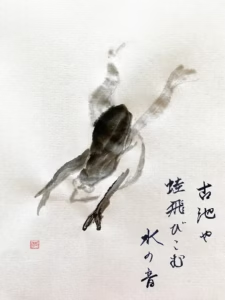
Individual kanji (characters) in Japanese convey meaning as well as sound, which often doesn’t translate perfectly into other languages. Turning the script into sound—and thinking about the literal translation—we get the following from Basho’s poem:
Fu-ru (old) i-ke (pond) ya,
ka-wa-zu (frog) to-bi-ko-mu (jumping into)
mi-zu (water) no o-to (sound)
Traditionally, English interpretations of the haiku have often comprised three lines:
Often, they also focus on observing a moment in time and a contrast between two images or objects. In Basho’s haiku, this could be the stillness of the pond being interrupted by the leap of the frog. With that in mind, here’s how I would translate Basho’s poem into English with a 5-7-5 syllable structure:
The old pond lies there…
A frog jumps up, leaps into
The water and – splash!
This “economy” of syllables is a great creative constraint when communicating ideas—even complex ones—in a concise but effective manner. Many people have found value in using haikus to think and communicate in targeted ways about money. An Internet search will reveal haikus around all aspects of finance and wealth-building, from different perspectives on money to right the way to engage in financial planning and investing.
In a 2011 article for the Poetry Foundation, college professor Stephen T. Ziliak had this to say on the value of haikus in teaching economics to his students:
“I needed to connect with 225 economics, science, and engineering majors—college kids who were being trained to believe that poetry and feelings are not important to, say, the World Bank. At the same time I was reading The Essential Etheridge Knight and falling in love with haiku. I thought about the inability of standard economic models to explain bubbles, crashes, and global inequality—and how market fundamentalists refuse to discuss them. I saw the bridge I needed in this poem:
Invisible hand;
Mother of inflated hope,
Mistress of despair!
Adam Smith, indeed.
‘[…] Generally speaking, a people’s metaphors and figures of speech will come out of their basic economy,’ Knight [explains]:
‘If somebody lives near the ocean and they fish, their language will be full of those metaphors. If people are farmers, they will use that kind of figure of speech. Metaphors are alive. When they come into being, they are informed by the politics and the sociology and the economy of now. That’s how language is.’
That’s how economic language is, too, but with a surprising difference. And this is where poets can help to fix the economy. It turns out that economic theory is overly dependent on fictional devices, whereas poetry, as Knight shows, trucks in the real.”
Ziliak speaks to how analogy and metaphor, if carefully constructed, are effective in communicating the truth of money, wealth, and of life more broadly—and where he finds value in haikus to communicate that. Richard Werner’s Alice-in-Wonderland analogy in his recent Solari Builders presentation is a great non-poetry example of this idea, too.
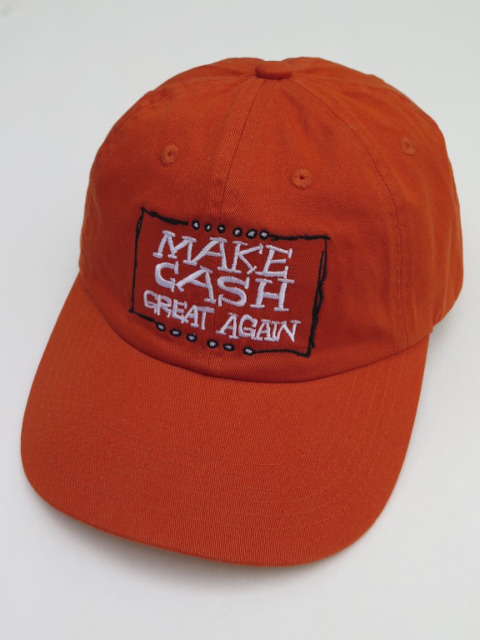
Sometimes, a haiku is valuable because it creates an emotional effect in relation to an idea or issue, allowing people to resonate with an idea in a way they might not otherwise do. Catherine Austin Fitts suggested to me the idea of “cash haikus”—a series of haikus that promote the importance of keeping cash alive in a society—and I thought it was a great idea worthy of highlighting for this installment of Pushback Poetry.
I could only find a handful of existing haikus online that partly tap into this sentiment:
Keep a lot of cash
Always remain on the field
This creates options
– Haiku, by Gary Carnell
Plastic makes us spend
Card company knows it’s true
Points, perks can be trap
– Cards, by Winged Wealth
So, I challenged the first cohort of Solari Builders to submit haikus on the theme of Keep it Cash. Here’s what they came up with:
Cash is for us all
As sovereign as it can be
Cash for you and me
– Taylor
Cashless world for me?
Now, why would I have that dream?
Privacy for me!
– Emma
Cash makes paper kings.
Monarch power bleeds the plebs
Halt this haemorrhage!
– Gunner
When I pay in cash
The devil furrows his brow
And that makes my day
– Loise
A cash in the hand
Is worth two in the ether
Of the central banks
– Ian
Centuries-old trust, coined
By palm and paper turning
To trade private hours.
– Anika
Cash is king, signs say.
Breaking chains of ones and noughts
The free way to pay.
– Olav
Tracking expenses:
Easy with daily cash use.
Privacy for all.
– Sophie
Have a go at writing your own “keep it cash” haiku, and share your 17-syllable messages with us in the comments—and with your friends and family. If you need some extra inspiration, check out Solari’s Cash Freedom 2026 feature and Keeping Cash in Circulation briefing.
And remember:
Cashless is control
For freedom, you can use cash
Each and every time.
Already a subscriber?

Our mission is to help you live a free and inspired life. This includes building wealth in ways that build real wealth in the wider economy. We believe that personal and family wealth is a critical ingredient of both individual freedom and community, health and well-being.
Nothing on The Solari Report should be taken as individual investment, legal, or medical advice. Anyone seeking investment, legal, medical, or other professional advice for his or her personal situation is advised to seek out a qualified advisor or advisors and provide as much information as possible to the advisor in order that such advisor can take into account all relevant circumstances, objectives, and risks before rendering an opinion as to the appropriate strategy.
Receive your free copy of Coming Clean
Be the first to know about new articles, series and events
Your shopping cart is empty
Notifications