



































































































VIII. Water in the Solar System

We know that on Earth, water is probably the most important substance and chemical molecule for existence, and its properties are fine-tuned to support life. But it is not just on the surface of our planet that water is a shaping factor in all processes. As we just learned (see “Mantle Water” in Section VII), new studies have given rise to the understanding that water inside the planet is crucial in seismic, tectonic, and magmatic activity. Above the Earth in our atmosphere, water co-determines weather and climate and may have protected the young Earth from cosmic rays so that other molecules necessary for life could emerge.
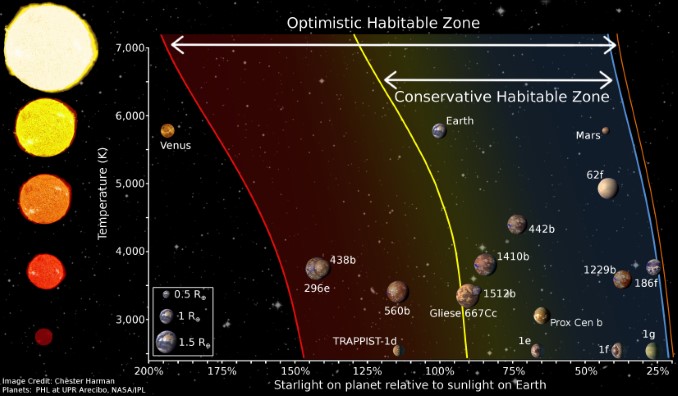
Astronomers Ted Bergin and Thomas Bethell of the University of Michigan discovered that water vapor can form spontaneously in the early phases of development of a solar system.1 The water vapor accretes in the habitable zone of a solar system (not too close and not too far from the parent star) and becomes a protective layer that shields other H2O and organic molecules from fierce cosmic and solar radiation. Only when organic molecules such as amino acids and sugars can form does DNA-based life become possible. This water would have to be present before or with the nascent star and solar system.
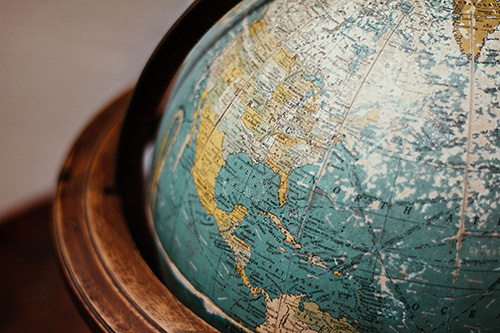
Source: Wikipedia
After molecular hydrogen (H2), water (H2O) is the second most common molecule in the universe. (Two of water’s chemistry names are “hydrogen oxide” or “oxidane.”) Water is found throughout the cosmos and can be discovered in interstellar space and in other planetary systems through spectroscopy from space telescopes. Its hydrogen component was the first element to be produced in what is (still) regarded as the “Big Bang” beginning of the universe, while oxygen, according to theory, required early stars to be synthesized from fusion reactions. The synthesis of H2O is then initiated by high-energy cosmic rays ionizing H2 molecules, which react with oxygen atoms to produce water. Thus, water in the universe could be as much as 13 billion years old, when the first supernova (death) of a star allowed for the combination of H2 and O.
Data from satellite missions in our solar system give indications for the presence of hydrogen, oxygen, and possibly water, on Mercury, Venus, Mars, as well as Earth’s moon. Jupiter and Saturn have water in their atmospheres, and both have moons that actually carry water. Recent data from NASA’s Juno spacecraft have shown that Jupiter carries much more water than expected.2 Uranus’ largest moon Titania carries water ice on its surface, and the largest moon of Neptune, Triton, has a water ice crust. Both Uranus and Neptune themselves are “ice giant” planets, with an icy mantle under their atmospheres; Pluto, too, is thought to carry an ice surface.3
The Moon
The moon has a profound effect on water. Terrestrial water clearly reacts to the moon in the daily tidal rhythms exerting its power on the oceans, lakes, and life therein, and most likely also on our own watery bodies and brains.
Source: Wikipedia
The question of whether water exists on the moon has had many ups and downs during scientific history.4 Early astronomers of the late Renaissance period believed that the moon held large bodies of water, and whole oceans were thought to be in the dark patches observable by the naked eye. Later, science was convinced that the moon was completely dry, having no atmosphere and no clouds. Then it was theorized that the moon could at least have water ice, particularly in its dark regions that never get touched by sunlight. With the Apollo moon landings—and the apparently dusty surface that the first boot on the moon encountered—the idea of water even in the form of ice was laid to rest again. Since the late 1990s, with new measurements from lunar probes, the thought that the moon might have ice at its poles (and most likely had water in the past) returned. Suddenly, even the old Apollo moon rock samples indicated that possibility.
In 2009, two space projectiles were dropped on the lunar surface and ejected grains of water ice from the surface.5 A map of areas on the moon that contain water ice was published by 2018.6 In 2020, water was confirmed to also exist in the zones touched by sunlight7; in 2023, China’s Chang’e 5 probe verified the existence of lunar water through Chinese scientists’ analysis of the first soil samples successfully brought back from the moon since the 1970s.8
Mars
Source: Wikipedia
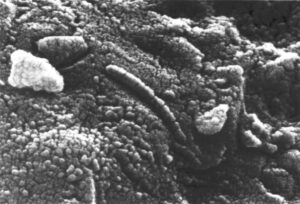
There has been a long-standing question as to whether there is life on Mars, both in the “extraterrestrial encounters” camp as well as in the more conservative scientific league looking at possible fossilized microbes from Martian meteorites. However, the conditions on Mars were more favorable to harbor life several billion years ago, before Mars lost its magnetic field and hence much of its atmosphere.
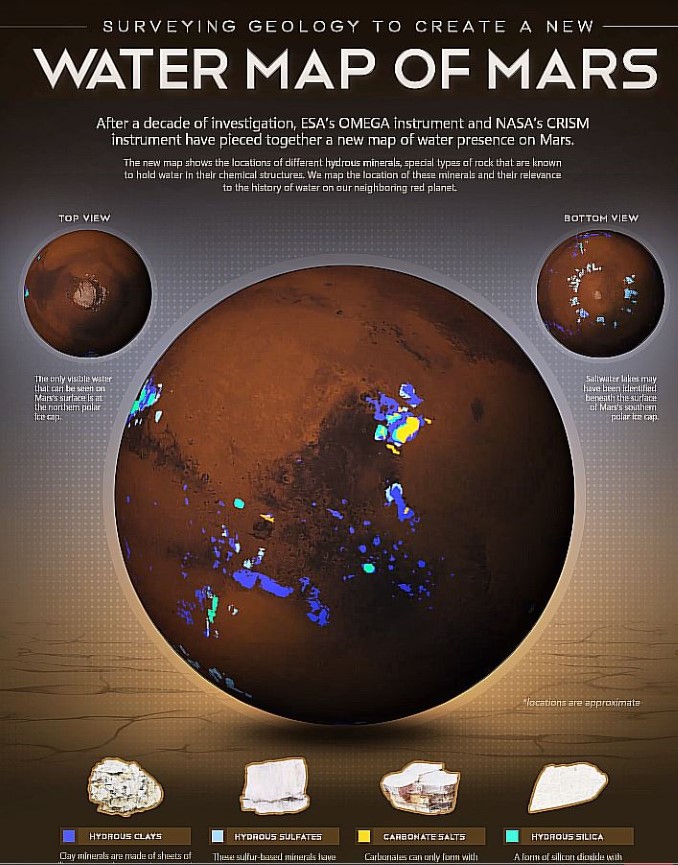
Almost all of the water on Mars today is believed to be bound as ice, but in 2018, radar signals discovered a vast subglacial liquid saltwater lake near the south pole—very similar to Lake Vostok, a freshwater lake deep under the ice on the Earth’s south pole.
There are observations of “flows” along the slopes near the Martian equator, which have different proposed explanations, one of them being liquid flowing saltwater.9 Chinese data suggest that flowing water may have existed on Mars as recently as 400,000 years ago.10
Source: Visual Capitalist
Water in the Universe
Thinking about the presence and role of water in the universe, I will quote from a 2015 paper by Dr. Michael A. Persinger and colleagues, published in the Journal of Consciousness Exploration & Research and titled “Quantitative Support for Water as the Conduit of Interaction for Universal Entanglement”:
“…[W]ith a mass of ~1052 kg, a distance (width) of ~1026 m and the squared frequency of the vacuum oscillations (1086 s-2), the functional force of the universe is 10164 N. If the universe exhibits a net volume of 1078 m3 and the smallest volume is a Planck’s voxel (10-105 m3), there are 10183 Planck’s voxels within the universal volume. This means there is 10-19 N per Planck’s voxel and when distributed over the 10 cm hydrogen wavelength, the energy is 10-20 J. Thus the intrinsic energy within the universe at vacuum fluctuation level is congruent with the energy that is produced by the physical nature of the elements that compose the water molecule.”11
What the authors of this fascinating paper are indicating both mathematically and theoretically is that water is the ultimate mediator or communicator throughout the entire universe, from the Planck scale (the smallest unit or minimum limit of the laws of physics) to the complete expanse of the cosmos. Considering the significant dependence on and definition of life by the properties and presence of water, the Universe can be said to exist in order to bring forth Life.
Footnotes
- Bethell T, Bergin E. Formation and survival of water vapor in the terrestrial planet-forming region. Science. 2009;326(5960):1675-1677. doi: 10.1126/science.1176879 ↩︎
- Howell E. Surprise! There’s more water on Jupiter than anyone thought. Space.com, Feb. 22, 2020. ↩︎
- References from USGS website. ↩︎
- Gasparini A, Wasser M. Earth’s moon: water & ices. NASA Science, n.d. https://moon.nasa.gov/inside-and-out/composition/water-and-ices/ ↩︎
- Lunar Crater Observation and Sensing Satellite (LCROSS). NASA, Jun. 18, 2009. https://science.nasa.gov/mission/lcross/ ↩︎
- Ice confirmed at the moon’s poles. NASA Jet Propulsion Laboratory, Aug. 20, 2018. https://www.jpl.nasa.gov/news/ice-confirmed-at-the-moons-poles ↩︎
- NASA’s SOFIA discovers water on sunlit surface of moon. NASA, Oct. 26, 2020. https://www.nasa.gov/news-release/nasas-sofia-discovers-water-on-sunlit-surface-of-moon/ ↩︎
- China’s Chang’e-5 retrieves 1,731 grams of moon samples. China National Space Administration, Dec. 19, 2020. https://www.cnsa.gov.cn/english/n6465652/n6465653/c6810963/content.html ↩︎
- Lea R. New evidence for liquid water on Mars suggests the planet is geothermally active. Space.com. Sep. 30, 2022. https://www.space.com/mars-liquid-water-south-pole-subglacial ↩︎
- Gasparini A. Salty water may have flowed near Mars’ equator as recently as 400,000 years ago. Science News, May 7, 2023. https://www.sciencenews.org/article/salty-water-ice-mars-equator ↩︎
- Carniello T, Vares DAE, Persinger M. Quantitative support for water as the conduit of interaction for universal entanglement. Journal of Consciousness Exploration & Research. 2015;6(9):738-749. Available at researchgate.net. ↩︎