































































































Exploring the Mind of Catherine Austin Fitts · IX of XII
The Missing Money
Fitts’ Examination of Financial Secrecy, Institutional Power and the Erosion of Human Sovereignty
October 21, 2026 · 26 min read
Synopsis
Catherine Austin Fitts has spent decades exposing what she calls The Missing Money: an immense accumulation of unsupported financial adjustments within the United States government, particularly at the Department of Defense and the Department of Housing and Urban Development. Working with economist Mark Skidmore, she documented approximately $21 trillion in such adjustments in government records covering the late 1990s through the mid-2010s. The figure does not, by itself, establish that $21 trillion in cash was stolen or disappeared. It establishes something independently alarming: financial records containing enormous adjustments that auditors could not adequately substantiate. The deeper issue is not simply where the money went, but what happens to constitutional government when public financial activity becomes impossible for the public to verify, while the institutions responsible for that activity continue exercising extraordinary power. The Missing Money may ultimately be less a story about accounting than a revelation about sovereignty: Who actually controls the resources of a nation when its citizens cannot obtain a trustworthy accounting of what their government has done with them?
The Missing Money:The Perfect Crime Without a Crime Scene
Imagine operating a business in which your accountant informs you that trillions of dollars in adjustments have appeared in the books, but the documentation required to explain them is missing or inadequate. You ask where the money went. Your accountant explains that the records are unreliable, the accounting systems are incompatible and the documentation cannot be produced. Nevertheless, the business continues operating, its managers continue receiving compensation and its financial institutions continue processing transactions. Nobody has demonstrated that all the money was stolen, but nobody can provide the complete accounting necessary to establish what happened.
Now imagine that the business is the United States government, the money ultimately belongs to the American people and the managers possess the authority to investigate, prosecute and punish the very citizens whose resources they are supposed to be safeguarding.
Welcome to Catherine Austin Fitts’s Missing Money.
Fitts is not an outsider who wandered into government finance armed only with suspicions. She served as Assistant Secretary of Housing and Federal Housing Commissioner during the George H. W. Bush administration, previously worked as a managing director at the investment bank Dillon, Read & Co. and subsequently developed an extensive body of research concerning financial flows, government contracting and institutional accountability. Her experience led her to ask a deceptively simple question: how can citizens exercise meaningful control over their government if they cannot determine what that government is doing with their money?
Her investigations, particularly those undertaken with Michigan State University economist Mark Skidmore, brought public attention to approximately $21 trillion in unsupported accounting adjustments reported across the Department of Defense and HUD. The researchers traced these figures through government inspector-general reports and other financial records. Their work raised questions that remain consequential even when the strongest interpretations of what the adjustments represent are left unresolved.
The $21 Trillion Question
The distinction between money that has demonstrably disappeared and transactions that cannot be substantiated is important. An unsupported journal voucher is an accounting adjustment for which the required documentary justification is missing or insufficient. Such adjustments can reflect unresolved system errors, incomplete accounting records, reconciliation problems, duplicate entries or potentially improper activity. It is basically a fudge factor to make things balance. Their face values do not necessarily correspond to cash transferred, assets stolen or even independent transactions. But as with bank tellers, if things don’t balance, it could hide much larger discrepancies as well.
In July 2016, the Department of Defense Inspector General reported that the Army and Defense Finance and Accounting Service had inadequately supported $2.8 trillion in third-quarter journal voucher adjustments and $6.5 trillion in year-end adjustments associated with fiscal year 2015. The inspector general explicitly warned that those two figures were not cumulative and should not simply be added together. The underlying finding, however, was extraordinary: the accounting systems and documentation were insufficient to substantiate financial adjustments of enormous magnitude. Here is the central point: an accounting discrepancy is not necessarily proof of theft, but an accounting system incapable of establishing where resources went cannot reliably exclude theft, diversion, waste or unauthorized transfers. The inability to distinguish an innocent error from a deliberate diversion is itself a serious failure of financial control.
And when such failures continue for decades, the question changes. We are no longer asking only whether particular transactions were improper. We must also ask why a system with such fundamental deficiencies has been permitted to persist and who benefits from its continued opacity.
But perhaps, first, one must ask, how can you have adjustments that are many times greater than the military budget itself?
The Arithmetic of Absurdity
Perhaps the most extraordinary feature of the Missing Money controversy is the sheer magnitude of the accounting adjustments relative to the budgets of the institutions generating them. In fiscal year 2015, the Army’s General Fund budget was approximately $122 billion. Yet a Department of Defense Inspector General investigation identified $6.5 trillion in inadequately supported year-end accounting adjustments associated with that same fund. That is more than 53 times the Army’s annual budget. The investigation also identified $2.8 trillion in inadequately supported third-quarter adjustments, although the inspector general cautioned that the two figures were not cumulative and should not simply be added together.
DoD Inspector General, July 2016. A further $2.8T in third-quarter adjustments is not cumulative with these
How does an organization operating on a budget of approximately $122 billion generate $6.5 trillion in accounting adjustments it cannot adequately substantiate? And how can a financial system produce adjustments many times greater than the financial resources appropriated to the institution it serves?
The conventional explanation is that journal vouchers are accounting entries rather than necessarily representing money changing hands. Transactions may be recorded, reversed, reclassified and corrected repeatedly. Financial statements also incorporate assets, liabilities and balances accumulated across multiple years. Consequently, the gross value of accounting adjustments can greatly exceed an institution’s annual expenditures without implying that an equivalent amount of money has been spent, transferred or stolen. These are legitimate accounting considerations. But they explain how numbers of this magnitude could arise, not necessarily how the particular adjustments under investigation did arise.
And therein lies the problem. The Department of Defense’s own inspectors reported that the underlying documentation was inadequate to substantiate the adjustments. In other words, the accounting records did not reliably establish why many entries were made or whether they were appropriate. The inspectors also identified serious deficiencies in the systems used to compile the financial statements, including the unexplained removal of thousands of records during data processing. Their conclusion was that the resulting financial data were unreliable and lacked an adequate audit trail.
The distinction is fundamental: a hypothetical explanation of how an accounting discrepancy could occur is not evidence establishing how that discrepancy actually occurred. Without the underlying records, one cannot reliably distinguish bookkeeping corrections from erroneous entries, repeated adjustments, misclassified transactions or potentially unauthorized activity. Nor can the face value of the adjustments be treated as an established measure of missing cash. The problem is precisely that the evidence necessary to determine what happened is insufficient.
This raises a question that goes beyond the possibility of financial misconduct. How can those responsible for managing public resources make informed decisions when the accounting information upon which they depend cannot be reliably reconciled? And how can elected representatives exercise meaningful oversight when the institutions receiving appropriations cannot adequately explain adjustments that dwarf those appropriations many times over?
The significance becomes even greater when we recognize that the Army is only one component of the Department of Defense, which is itself only one department within the federal government. Fitts and Skidmore’s investigations focused on particular agencies, accounting records and reporting periods. Their findings do not establish that comparable discrepancies exist in every federal institution, but neither do they establish that the documented adjustments represent the full extent of the government’s accounting deficiencies. The question of what remains unidentified is therefore inseparable from the question of what has already been discovered.
And consider the implications for financial accountability. In private enterprise, an auditor confronted with transactions or adjustments of extraordinary magnitude would demand supporting documentation sufficient to establish their validity. If such documentation could not be produced, the resulting audit findings would undermine confidence in the financial statements and could have serious consequences for management, financing and regulatory compliance. In the federal government, comparable deficiencies have persisted through successive administrations, congressional sessions and reform initiatives, while the underlying institutions continue exercising authority over immense public resources.
There is something profoundly revealing about a financial system whose unexplained accounting activity can exceed its annual budget by more than fiftyfold. The magnitude does not prove that an equivalent amount of money was stolen. But neither does the ability to describe a theoretical bookkeeping mechanism constitute an accounting of the transactions themselves. The burden of providing that accounting remains with the institutions entrusted with public resources.
The arithmetic may be explainable. The failure to substantiate it remains the scandal. And given my investigations over time, creating an irreconcilable mess is the perfect way to hide criminal behavior and the illega activities of both the Overt and the Black (Covert) World.
The Law Was Passed. The Accounting Never Came.
One of the most revealing aspects of Catherine Austin Fitts’s Missing Money investigation is that the United States government has already enacted laws intended to prevent precisely the financial opacity she has spent decades exposing. The Chief Financial Officers Act of 1990, the Government Management Reform Act of 1994 and the Federal Financial Management Improvement Act of 1996 established increasingly comprehensive requirements for financial reporting, independent auditing and financial management systems. Fitts herself participated in the earlier movement to establish these requirements while serving in the administration of George H. W. Bush. This was not an oversight that Congress simply neglected to address. The problem was recognized, legislation was enacted and the government was directed to provide an accounting.
Yet nearly three decades after the requirement for audited government-wide financial statements took effect, the federal government still cannot obtain a clean audit opinion on its consolidated financial statements. Although many individual departments have achieved clean opinions, the government as a whole has never done so. And The Department of Defense, the largest component of federal discretionary spending, has never received a clean department-wide audit opinion. Other federal agencies continue to report material deficiencies, while problems reconciling transactions among agencies further undermine the integrity of the government’s consolidated accounts.
This brings us to a distinction that is fundamental to understanding the Missing Money. The financial irregularities identified by Fitts and Skidmore are not necessarily the outer boundary of the problem. They are the portion that their investigations were able to identify within particular agencies, reporting periods and categories of accounting adjustments. The entire federal government encompasses numerous departments, independent agencies, government corporations, trust funds, financing arrangements and transactions among those entities. It would be unjustified to multiply the Defense Department’s unsupported adjustments across every other agency and call the result missing money. But it would be equally unjustified to assume that the amounts already identified exhaust the government’s financial accountability problems.
The situation raises an extraordinary constitutional question. Congress has established financial accountability requirements. Auditors have documented major deficiencies. The government has repeatedly failed to produce financial statements sufficiently reliable to support an overall audit opinion. Yet the institutions responsible continue to receive funding, exercise authority and administer trillions of dollars in public resources. What, then, is the practical meaning of a statutory financial accountability requirement when persistent failure to achieve its objective does not prevent the continued expansion of the institution it is intended to constrain?
The issue is no longer simply whether trillions of dollars have disappeared. It is whether the mechanisms intended to distinguish lawful expenditure from unlawful diversion are sufficiently reliable to perform that function. And if they are not, then the American people are being asked to accept an extraordinary arrangement: they must account to their government for their financial activities while their government remains incapable of providing a fully auditable accounting of its own.
The original constitutional relationship was straightforward. Government was delegated authority by the people and was obligated to account for the resources entrusted to it. The Missing Money reveals how that relationship can become inverted, not necessarily through the repeal of constitutional protections but through the persistent failure to make them operational.
A right to financial accountability that cannot be effectively enforced is hardly a right at all – nor is it respected by those we elect to govern.
What the Government Itself Admits
This is not a controversy sustained solely by Catherine Austin Fitts, independent researchers or people predisposed to distrust government. The government’s own auditors have repeatedly documented serious deficiencies in federal financial reporting.
In March 2026, the Government Accountability Office reported that it could not express an audit opinion on the federal government’s consolidated financial statements for fiscal years 2025 and 2024. Among the principal reasons were persistent financial management problems at the Department of Defense, failures in accounting for transactions between federal agencies and weaknesses in preparing the consolidated financial statements. In May 2026, GAO confirmed that the Department of Defense had still never obtained a clean department-wide audit opinion.
Think about the implications. The federal government possesses enormous taxation and borrowing powers, controls extensive public assets, finances military and intelligence operations and imposes exacting record keeping obligations on the population. Yet its consolidated financial statements remain beyond the ability of its own auditors to certify.
This does not mean the auditors have established that the government is bankrupt, that every expenditure is untraceable or that trillions have been stolen. It means the government cannot supply sufficient reliable evidence to support an overall audit opinion. That is a remarkable condition for an institution empowered to demand accounting from nearly everyone else. The government that demands accountability from its citizens has not achieved accountability for itself.
- Chief Financial Officers Act
- Government Management Reform Act
- Federal Financial Management Improvement Act
- DoD Inspector General: trillions in Army adjustments inadequately supported
- GAO cannot express an audit opinion on the government’s consolidated statements for fiscal 2025 and 2024
- GAO confirms the Department of Defense has still never obtained a clean department-wide audit opinion
And unlike a private enterprise, whose owners can replace management, withhold investment or force liquidation or have legal recourse, the federal government possesses the power to compel continued financial support even when its own reporting mechanisms are demonstrably inadequate.
This is where the Missing Money becomes something larger than a financial mystery. It becomes a question about the relationship between authority and responsibility.
The Constitutional Problem:Government Without an Accounting
The framers of the Constitution understood that control over public money was inseparable from control over government itself. Article I, Section 9, Clause 7 states:
“No Money shall be drawn from the Treasury, but in Consequence of Appropriations made by Law; and a regular Statement and Account of the Receipts and Expenditures of all public Money shall be published from time to time.”
This is not an incidental bookkeeping provision. It is a foundational constraint on sovereign authority. The government is empowered to raise and expend resources, but that power is conditioned upon legislative authorization and public accountability. Citizens cannot meaningfully supervise a government whose financial activities cannot be reconstructed and independently verified.
The Missing Money challenges this constitutional architecture at its foundation. Even assuming every unsupported adjustment ultimately has an innocent explanation, the inability to produce the evidence necessary to establish that explanation prevents the public from verifying compliance. Constitutional accountability does not consist merely of officials promising that everything is in order. It requires mechanisms through which their representations can be tested.
And here we encounter a fundamental inversion. The original constitutional design placed sovereignty with the people and delegated limited authority to government. But when government can compel financial transparency from citizens while withholding or failing to produce equivalent transparency concerning its own operations, the relationship reverses. The principal becomes subordinate to the agent. The servant acquires powers that its master cannot effectively supervise.
A society cannot exercise sovereignty over resources it cannot account for.
From Missing Money to Invisible Government
Fitts’s broader interpretation extends beyond deficient bookkeeping. She argues that the missing-money phenomenon is evidence of a parallel financial architecture in which enormous resources can be mobilized outside effective democratic scrutiny. In her work, particularly Reversing the Financial Coup d’État, she connects financial opacity with the growing concentration of power in central banking, federal contracting, intelligence and financial institutions.
The existence and operation of classified military and intelligence activities are established facts. The proposition that all or a significant portion of the unsupported accounting adjustments financed an unlawful parallel government is a further hypothesis, not something demonstrated by the accounting totals alone. Nevertheless, there is a structural relationship that deserves investigation. Where financial systems lack transparency, concentrations of power can develop without meaningful external supervision, regardless of whether the original opacity resulted from incompetence, intentional concealment or some combination of the two.
The capacity to direct resources is the capacity to direct outcomes. Money funds research, builds infrastructure, finances political influence, supports military operations, acquires property, develops technologies and shapes the institutions through which society operates. Whoever exercises discretionary command over substantial resources can influence the direction of civilization, even without holding publicly recognized political office.
Now consider an arrangement in which the public can observe the formal government through elections, legislation, budgets and public debates, while significant decisions concerning the deployment of resources occur through networks of agencies, contractors, financial intermediaries and classified programs. The elected structure remains visible, but the operational structure becomes increasingly difficult to penetrate.
The question then becomes whether the government recognized by the population is also the government exercising decisive control over national resources.
That is the larger issue Fitts compels us to examine.
The Legalization of Secret Books:When Even the Accounting Rules Become Classified
In 2018, the Federal Accounting Standards Advisory Board (FASAB) adopted Statement of Federal Financial Accounting Standards 56, governing classified activities. Ostensibly intended to protect national security information from public disclosure, the standard established something far more consequential: a legal accounting framework under which federal agencies could modify financial information presented to the public without revealing whether they had done so. What had previously been understood as a problem of missing or inadequately documented financial information now acquired another dimension. The government had established a formal mechanism through which financial information could be deliberately withheld or altered in public reporting while remaining compliant with federal accounting standards.
The implications became even more profound in March 2019, when FASAB issued Interpretation 8, an additional set of accounting rules whose contents were themselves classified. According to FASAB’s publicly available description, Interpretation 8 permits modifications that may change reported net results of operations or net position. The interpretation is available only to authorized individuals with the necessary security clearances and a demonstrated need to know. Thus, the government not only possesses the authority to modify financial representations but has classified some of the rules governing how those modifications may be undertaken.
- 2018 · SFFAS 56
- Agencies may modify financial information presented to the public without revealing whether they have done so.
- 2019 · Interpretation 8
- Further rules, themselves classified, permitting modifications that may change reported net results of operations or net position.
- Who may read them
- Only authorized individuals with the necessary security clearances and a demonstrated need to know.
Perhaps the most extraordinary provision appears in paragraph 12 of SFFAS 56, which requires federal agencies to include a general disclosure that accounting standards permit modifications to protect classified information. But the provision then explicitly states: “Component reporting entities must not disclose application of this Statement, including any Interpretations of this Statement.” In other words, agencies must acknowledge that financial figures may be modified, but they are prohibited from revealing whether they have actually employed the mechanism. The public is permitted to know that the possibility exists but is denied the information necessary to determine whether it has occurred.
The significance should not be underestimated. This is not simply a provision allowing a secret military installation to remain unidentified or an intelligence operation to be omitted from a public description. The framework permits certain changes affecting reported financial results, including the reassignment of component reporting entities between consolidated reporting entities. And the 2019 interpretation authorizes additional modifications whose specific provisions are unavailable for public examination. In September 2024, the Department of Defense issued implementation guidance incorporating this framework into its financial reporting procedures, demonstrating that these were not merely theoretical permissions but established elements of federal accounting administration.
Catherine Austin Fitts was the first person I know of to have brought the legalization of opacity to the public’s attention – while pointing out that these developments undermine the reliability of government financial reporting itself. Her concern is not merely that particular transactions might be concealed, but that the public can no longer independently establish whether the financial statements being presented correspond to the underlying economic reality. That conclusion does not require proving that every reported figure is false. It follows from a more fundamental problem: when the rules expressly permit undisclosed modifications, the public loses the means of distinguishing unmodified information from information altered under classified authority. So essentially, you can’t trust that whatever figures are published are connected to reality.
The government’s justification is national security. Certain activities, it argues, cannot be disclosed without compromising intelligence capabilities, military operations or other legitimate security interests. But this justification presupposes that secrecy and republican government can be reconciled through restricted oversight by Congress, inspectors general and authorized auditors. That assumption deserves far more scrutiny than it ordinarily receives. American history contains repeated examples of classified activities that exceeded lawful authority, concealed misconduct or remained beyond effective congressional supervision until exposed through whistleblowers, investigative reporting or subsequent disclosures. The existence of an oversight mechanism does not establish that the mechanism is effective, particularly when the overseers themselves depend upon information controlled by the institutions they are supposed to supervise.
There is a fundamental difference between protecting genuinely sensitive operational details and establishing a permanent legal architecture under which the sovereign public cannot determine whether its government’s financial statements have been modified. The former may be defended as a practical security measure. The latter challenges the very premise of republican self-government. If the people are sovereign, they must possess the means to establish whether their delegated agents have lawfully exercised the authority entrusted to them. When the evidence necessary to make that determination is classified, and the effectiveness of the institutions charged with examining that evidence cannot be independently verified, accountability becomes dependent upon trust rather than demonstrable compliance.
SFFAS 56 does not eliminate the obligation to maintain proper records within the classified environment, nor does it authorize unrestricted fabrication or theft. Authorized auditors may still examine the underlying information under applicable security procedures. But the existence of internal accounting and restricted oversight cannot substitute for public accountability unless citizens possess a reliable means of establishing that those arrangements actually function as intended. Otherwise, the public is simply being asked to trust that the secrecy system is adequately policing itself. Opacity of the workings of government is incompatible with our constitution – period.
And consider the timing. For decades, government auditors had documented extraordinary accounting deficiencies, including trillions of dollars in unsupported adjustments. Rather than first achieving a demonstrably reliable system of financial accountability, the government adopted additional rules permitting classified modifications of financial reporting, including modifications that can affect reported financial results. Thus, the public’s ability to independently evaluate federal financial information became more restricted within an already troubled accounting environment.
The result is an extraordinary inversion of constitutional authority. The federal government demands meticulous financial disclosure from citizens and businesses, backed by substantial civil and criminal penalties for noncompliance. Yet the same government maintains an accounting framework under which its own public financial representations may be modified without disclosure of the application of those modifications. The citizen must demonstrate the accuracy of his accounting to the government, while the government can prevent the citizen from determining whether its accounting reflects the underlying records.
This is the deeper issue raised by the Missing Money. Financial accountability is not merely an administrative convenience. It is one of the mechanisms through which sovereign citizens exercise authority over the institutions they create. When that mechanism is subordinated to secrecy, the relationship between government and governed changes. Citizens may still vote, petition, protest and participate in public debate, but they cannot independently establish the financial reality underlying the exercise of governmental power. They are left evaluating public representations that may have been modified according to rules they are not permitted to examine.
Can a free republic survive such an arrangement indefinitely? Perhaps limited secrecy can coexist with self-government when it remains genuinely exceptional, narrowly constrained and subject to effective independent accountability. But when secrecy becomes institutionalized, when the rules governing secrecy are themselves secret and when the public cannot verify whether its government’s financial representations have been altered, the distinction between delegated authority and unaccountable power begins to dissolve.
The ultimate danger is not simply that government may conceal what it has done. It is that government may acquire the lawful authority to conceal whether the accounting of what it has done represents the underlying financial reality.
At that point, the Missing Money becomes something even more consequential than an unresolved financial mystery. It becomes a manifestation of a system in which the people are asked to remain sovereign while surrendering the information necessary to exercise that sovereignty. The challenge is therefore not simply missing information. It is the institutionalization of a distinction between what government knows and what the governed are permitted to know.
And that distinction lays the foundation for unaccountable authority.
The Sepsis Principle:When the Financial System Becomes Sovereign
There is a deeper systems-theory dimension to the Missing Money, one that extends beyond the intentions of any particular participant.
Financial administration begins as a subsystem designed to serve a larger organism: society. Its legitimate functions include collecting resources, preserving records, allocating capital, processing expenditures and providing accountability. As financial systems grow in complexity, they develop specialized institutions, technical procedures, proprietary information systems and internal operating requirements. Each component pursues objectives that may appear rational within its own domain.
A defense contractor seeks contract continuity and profitability. A financial intermediary seeks transaction volume and revenue. An agency seeks budgetary stability and operational discretion. An intelligence organization seeks secrecy. A political official seeks sufficient financial and institutional support to maintain authority. None of these localized objectives necessarily requires a conscious plan to subvert constitutional sovereignty. Yet their interaction can produce precisely that outcome when the system increasingly rewards financial flows, institutional preservation and secrecy, while treating public accountability as a constraint to be managed.
This is the phenomenon I have elsewhere described as Civilizational Sepsis: a subsystem developed to sustain the larger organism begins operating according to feedback mechanisms that no longer reliably serve that organism’s welfare. Its internal logic becomes dominant, its mechanisms become self-reinforcing and its capacity to resist external correction grows.
The financial system can become especially dangerous in this regard because it controls the resources upon which other systems depend. A medical system requires funding. A military system requires funding. A political campaign requires funding. A university, scientific laboratory or communications infrastructure requires funding. When the machinery responsible for allocating resources acquires substantial autonomy from the people it ostensibly serves, it destroys the citizenry’s and society’s sovereignty. Money ceases to function merely as an instrument of human purposes and becomes a mechanism through which human purposes are selected, rewarded or suppressed.
The Missing Money illustrates the danger of this inversion. A financial system that cannot account adequately for its own operations has already weakened one of the principal feedback mechanisms through which society can evaluate and correct its behavior. Whether that weakness is exploited deliberately or merely tolerated, the result is a reduction in public control.
The cure is not simply better software, more auditors or improved accounting standards, although all may be necessary. The essential requirement is restoration of conscious, morally accountable human authority over systems that otherwise execute their internal logic without regard to constitutional purpose.
Why the Missing Money Matters in the Age of AI
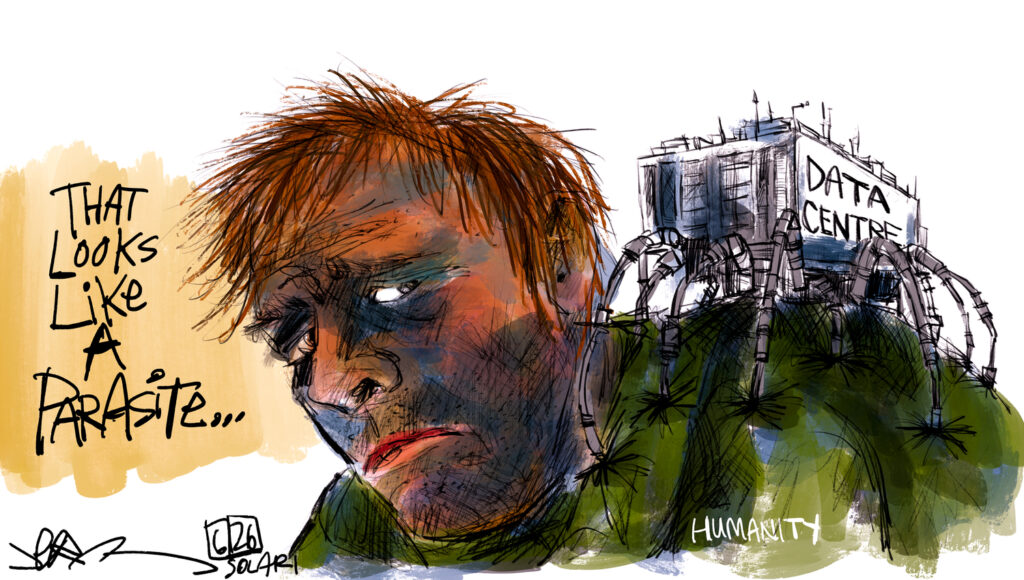
This brings us to an especially consequential development. The same civilization that has failed to establish reliable accountability over enormous portions of its financial administration is rapidly constructing increasingly automated systems for financial surveillance, resource allocation, behavioral prediction and institutional decision-making.
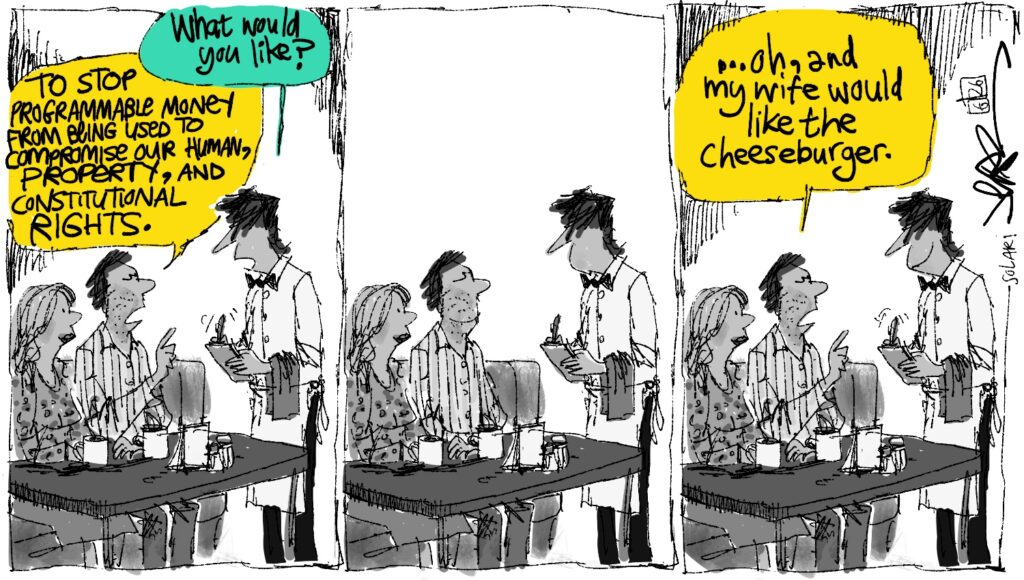
Consider the asymmetry. On one side, governments and financial institutions are acquiring unprecedented capabilities to observe, classify and evaluate individual economic activity. Digital payments, identity systems, data aggregation, artificial intelligence and potentially programmable financial instruments can provide increasingly detailed information about what individuals own, purchase, earn and transfer. On the other side, the public continues confronting documented failures of transparency in the institutions exercising these powers.
The technological trajectory creates the possibility of an extraordinary inversion: a society in which the individual becomes completely legible to the system while the system becomes increasingly illegible to the individual.
This is the ultimate expression of asymmetric accountability. The citizen becomes a fully documented economic Node, while the institutions governing the network remain protected by complexity, proprietary systems, bureaucratic insulation, deficient accounting and national security secrecy.
AI intensifies the problem because it makes possible the automated execution of financial and administrative decisions at speeds and scales that human oversight may struggle to match. It can improve fraud detection, reconcile transactions and expose anomalies. But it can also strengthen centralized control when its objectives, training data, decision rules and operational authority are controlled by institutions that citizens cannot effectively supervise.
The Missing Money thus provides an important historical warning. Before granting unprecedented digital powers to institutions, we ought to establish that those institutions can account for the powers and resources they already possess.
Otherwise, we risk using technologies of extraordinary precision to reinforce a governing architecture whose foundational accountability remains unresolved.
The Missing Money as a Measure of Sovereignty
Fitts’s concept also challenges the way we ordinarily evaluate political power. We tend to regard elections, legislation and public debate as the primary mechanisms through which societies determine their collective direction. But political authority depends upon command of resources. An elected representative who lacks meaningful knowledge of financial commitments, contractual obligations or classified expenditures may possess formal authority without possessing effective control.
This suggests a different way of measuring sovereignty. Rather than asking merely who holds office, we should ask who can authorize transactions, who can prevent them, who can inspect the underlying records and who possesses the authority to impose consequences when the transactions violate law or public purpose.
A government’s financial architecture reveals its real distribution of power more reliably than its rhetoric about democratic accountability. If an institution can expend resources without producing reliable records, and if that failure persists without effective correction, then some measure of operational autonomy has already become detached from the formal structures intended to constrain it.
This does not establish that a single group secretly controls the entire system. It establishes the possibility of a structural form of power that can operate through interdependent institutions without requiring accountability. Shared incentives, institutional dependencies, restricted information and mutual financial interests can produce patterns of behavior that are remarkably resistant to democratic intervention.
That resistance is precisely why transparency matters. Without adequate information, citizens cannot distinguish coordination from coincidence, corruption from incompetence or legitimate secrecy from the concealment of misconduct. They are forced to navigate a political environment in which the evidence required to evaluate the system is often controlled by the system itself.
The Missing Money is therefore also an epistemological problem. A population denied reliable access to the facts governing public resources cannot construct an adequate map of the political and economic reality in which it lives.
And without an adequate map of reality, sovereignty becomes increasingly theoretical.
Coming Clean:The Antidote to Missing Money
Fitts’s response to these conditions is not limited to identifying financial irregularities. Her larger body of work emphasizes the recovery of financial integrity, local economic vitality, informed investment decisions and independent institutional accountability. Her concept of Coming Clean recognizes that systemic corruption and opacity are sustained not only by those exercising concentrated power but also by the network of institutions and individuals who continue accommodating the system.
The implications are substantial. An honest reckoning would require comprehensive financial reconciliation, preservation and examination of underlying transaction records, identification of accountable decision-makers, credible independent oversight and enforceable consequences for unlawful activity. Legitimate national security protections would have to coexist with auditing mechanisms capable of determining whether classified spending was properly authorized and administered.
More fundamentally, society would need to reestablish the principle that public resources exist to serve the public, not to sustain institutions merely because those institutions have acquired the ability to perpetuate themselves.
This is ultimately a moral requirement rather than merely an administrative one. Financial transparency is necessary because human beings possess the right and responsibility to determine how their collective resources are used. Accounting is the mechanism through which that right can be exercised. When accounting becomes optional, unverifiable or subordinate to institutional convenience, the moral relationship between government and governed begins to dissolve.
The issue is not simply the possibility of stolen money. It is the possibility of stolen authority.
Conclusion:What Is Really Missing?
Catherine Austin Fitts’s Missing Money raises a question far more important than the precise amount represented by unsupported financial adjustments. The question is whether constitutional government can survive when the financial mechanisms through which it operates are no longer subject to sufficiently reliable public accounting.
The documented record establishes serious deficiencies, extraordinary accounting adjustments and persistent failures to obtain clean audit opinions. A government that cannot adequately account for its resources has already compromised a fundamental obligation to the people from whom its authority derives.
Perhaps the most revealing aspect of the Missing Money is that the controversy has endured for decades while the machinery of government continues expanding. New technologies are deployed, budgets grow, financial surveillance increases and institutional authority becomes more deeply embedded in daily life. Yet the foundational requirement that public money be reliably accounted for remains unresolved.
This is how sovereignty can be lost without a formal transfer of power. The institutions entrusted with administering society gradually acquire the practical ability to operate beyond effective supervision. Their mechanisms persist, their authority expands and their accountability becomes increasingly difficult to enforce. The people retain the vocabulary of self-government while losing the means through which self-government can be exercised.
Fitts has helped illuminate one of the most consequential manifestations of that process. The Missing Money is not simply an unresolved accounting problem. It is a warning about what happens when financial mechanisms become detached from conscious, responsible human authority.
What is missing is not just possibly $21 trillion in cash. It could in fact be more! What is demonstrably missing is an adequate accounting – adequate disclosure – and the will by those we have elected to provide it. Therefore, what ultimately hangs in the balance is the sovereignty of the people to whom that accounting is owed.
From my perspective, what we are witnessing is the largest government sponsored accounting scam in the world, designed to hide extraordinary theft and corruption by both the overt and covert mechanisms that govern our country and beyond.
Principal Sources and Further Reading
- Catherine Austin Fitts — The Missing Money Project. Original research, supporting documents and commentary.
- Why Official Explanations for the Missing Money Are Not Credible. Catherine Austin Fitts, March 6, 2026. Her current argument concerning the significance of unsupported accounting adjustments.
- Army General Fund Adjustments Not Adequately Documented or Supported. Department of Defense Inspector General, July 26, 2016.
- FY 2025 and FY 2024 Consolidated Financial Statements of the U.S. Government. Government Accountability Office, March 19, 2026.
- SFFAS 56 — Classified Activities. Federal Accounting Standards Advisory Board, 2018.
- Reversing the Financial Coup d’État. Catherine Austin Fitts, August 2023.