













































































- Food Series: Food Emancipation Now with Joel Salatin

- Hero of the Week: October 26, 2026: Dan Astin-Gregory

- Action of the Week: October 25, 2026: Treat Them with Cash This Halloween—No Tricks Required

- Movie of the Week: October 24, 2026: Pitching Man: Satchel Paige – Defying Time

- Money & Markets Report: November 5, 2026

- 3rd Quarter 2026 Wrap Up: Equity Overview & Rambus Chartology with Tim Caban
 With the AI and data center bubble, we are at a critical inflection point. Investors need to understand what they are investing in and take responsibility to determine how they want to manage the risks involved.
 - Ask Catherine & the Solari Team, October 23, 2026

- Music of the Week: October 23, 2026: Sabrina and Rubén Véliz (Tango) – Milonga para as Missões

- Overbuilt Infrastructure, Underexamined Risk: Financing the Data Center Boom

- Money & Markets Report: October 22, 2026

- 3rd Quarter 2026 Wrap Up: News Trends & Stories – Unanswered Questions with Dr. Joseph P. Farrell and the Solari Builders

- Data Centers Rambus Blockbuster Chartology
 Rambus Blockbuster Chartology By Catherine Austin Fitts My “go to” website for technical analysis of precious metals, the U.S. dollar, and the U.S. stock market is Rambus Chartolog…
 - Hero of the Week: October 19, 2026: Jacques Baud

- Pushback of the Week: October 18, 2026: Tallying Up the MAHA Failures

- Movie of the Week: October 17, 2026: The Palestine Laboratory, Episode 1

- Ask Catherine & the Solari Team, October 16, 2026
- Music of the Week: October 16, 2026: Prewn – System

- Money & Markets Report: October 15, 2026

- Palantir and “Food Safety”: Ask Catherine Excerpt (Health Corner)

- 3rd Quarter 2026 Wrap Up: News Trends & Stories – Top Stories with Dr. Joseph P. Farrell
 Dr. Joseph P. Farrell returns to the Solari Report to discuss the 3rd Quarter’s top News Trends & Stories.
 - State Leaders Briefing: Taking Action for Financial Freedom
 Individuals, families, investors, grassroots organizations, media, and elected officials can take many actions to protect financial transaction freedom. Immense power comes from “financing your friends, not your enemies.”
 - Hero of the Week: October 12, 2026: Galen Koeckeritz

- Pushback of the Week: October 11, 2026: Restoring Integrity in Teaching

- Movie of the Week: October 10, 2026: The Balloonists

- Ask Catherine & the Solari Team, October 9, 2026 — Health Corner

- Music of the Week: October 9, 2026: Sabine Devieilhe and Marianne Crebassa – Flower Duet

- Money & Markets Report: October 8, 2026
 John and Catherine discuss “hard choices” facing governments and households, arguing leadership repeatedly chooses control over public welfare.
 - Vectors of Grift

- Food for the Soul: Women Artists – Mela Muter

- Cognitive Liberty Series: The Performance Layer with Brett Carollo and Thomas Millary
 Entertainment, sports, music, and celebrity have become the delivery system for a formulated consciousness. We don’t resist it because we don’t experience it as instruction. The question is what that system has been instructing us to do.
 - Hero of the Week: October 5, 2026: Anita Scheuring

- Action of the Week: October 4, 2026: Keep It Cash—in 17 Syllables

- Movie of the Week: October 3, 2026: The Sludge War
- Ask Catherine & the Solari Team, October 1, 2026
- data-centers-story-5
 3rd Quarter 2026 Wrap Up · Story #5 A Tsunami of 401(k), IRA, and U.S. Retirement Investments Are Financing the Digital Control Grid Why are we using our savings to blow bubbles and to bu…
 - Music of the Week: October 2, 2026: The Hawkstone Farmers Choir – This Is Home

- Money & Markets Report: October 1, 2026
 John Titus and Catherine Austin Fitts record at the end of September and frame the week’s theme as “Buckle up,” citing choppy conditions driven by inflation, a two-tier rule system, and escalating war theater.
 - data-centers-story-3
 3rd Quarter 2026 Wrap Up · Story #3 Financial Market Wars The Bankers Get Ready to Attract Four Billion People into the Digital Control Grid through the U.S. Treasury and Stock Market: Stabl…
 - State Leaders Briefing: The Right to Digital Integrity and a Non-Digital Life with Rep. Bud Hulsey and Tim Caban
 States should put protections in place to preserve access to essential services, transactions, and participation in society without requiring a smartphone, digital ID, digital payment system, or other digital technology.
 - Tips on Successfully Navigating Inflation

- Future Science Series: The Nuts and Bolts of Surveillance and Electronic Targeting with Jesse Beltran and Ralph Hassall
 In this Future Science Series episode of the Solari Report, Ulrike Granögger and Catherine Austin Fitts speak with TSCM (technical surveillance countermeasures) investigator Jesse Beltran and Ralph Hassall about the hardware behind surveillance and electronic targeting.
 - Hero of the Week: September 28, 2026: Wendell Berry (1934-2026)

- Action of the Week: September 27, 2026: Take Back Your Library!

- Movie of the Week: September 26, 2026: The Last Repair Shop

- Ask Catherine & the Solari Team, September 25, 2026 — Tech Corner
- Music of the Week: September 25, 2026: Joe Cocker & Jennifer Warnes – Up Where We Belong

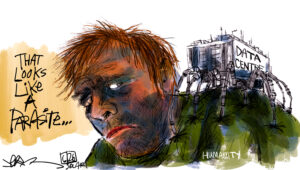
- Powerful New White Paper on Data Centers Points to Control as the Goal
- Data Centers Story 1
 3rd Quarter 2026 Wrap Up · Story #1 The Going Direct Reset – Covid 2.0 The Reengineering of the Petrodollar to Control Energy and Trade The Going Direct Reset has many facets designed t…
 - Book Review: Never Enough: The Neuroscience and Experience of Addiction by Judith Grisel

- Taking Control of Your Investments: A Primer for U.S. Investors Who Do Not Want to Finance the Digital Control Grid

Become a member: Subscribe

NTS Headlines
Headlines by Category
Headlines by Year
- Money & Markets
- Weekly Solari Reports
- Cognitive Liberty
- Solari Builders
- Ask Catherine
- News Trends & Stories
- Equity Overview
- War For Bankocracy
- Digital Money, Digital Control
- State Leader Briefings
- Food
- Food for the Soul
- Future Science
- Health
- Metanoia
- Solutions
- Spiritual Science
- Wellness
- Building Wealth
- Via Europa






Solari’s Building Wealth materials are organized to inspire and support your personal strategic and financial planning.

Building Wealth
This 6-pillar curriculum teaches the basic literacy we need to be personally and financially successful and to do so in a manner in which together we evolve a culture that supports the emergence of an advanced human civilization.

Missing Money
Articles and video discussions of the $21 Trillion dollars missing from the U.S. government
Connect with the wider network of like-minded Solari subscribers using our in-house social media platform, Solari Connect.
No posts