







































































How to Identify the Independent, Pro-Decentralization Team and Keep Conflicts of Interest at Arm’s Length
By Catherine Austin Fitts
July 21, 2026










No posts

“Investigate what is, and not what pleases.”
~ Goethe
One of our hallmarks at the Solari Report is the care we take to identify guests, experts, and allies of high integrity. Out of the relatively large pool of potential contributors, one of our principal filters is to try to ascertain whether someone is aligned with what I call, as a shorthand, the “Decentralizing Universe” (DU) versus the “Centralizing Universe” (CU).
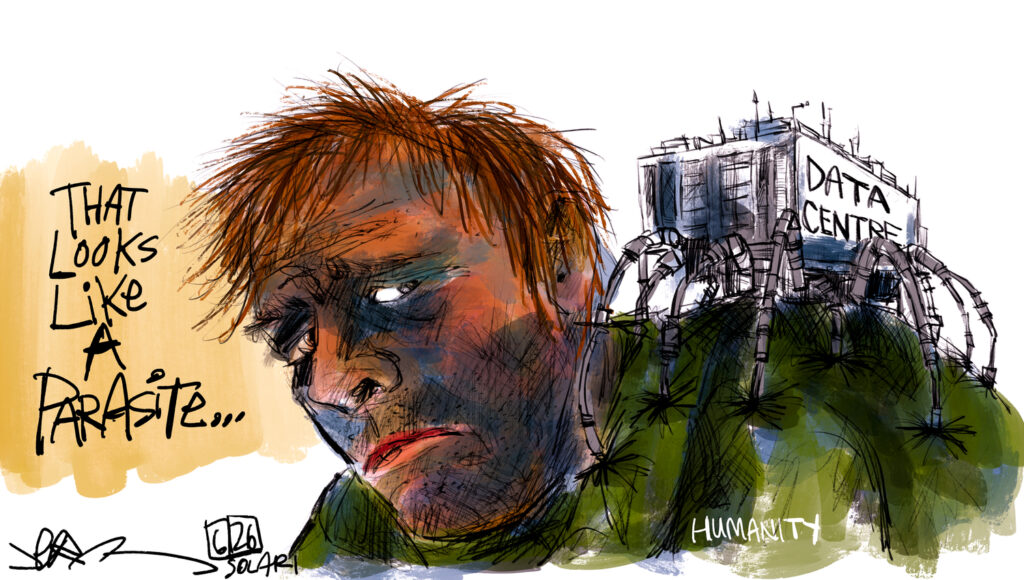
People in the DU are loyal to an independent vision that typically is decentralizing—embracing individual freedom and economic activities that are fundamentally productive. Ideally, they have found a way to support themselves independent of large corporations, governments, and foundations. People in the CU, in contrast, are loyal to a leadership that is centralizing power and money at the expense of individual, local, and national sovereignty, and which perpetuates a negative-return-on-investment (“tapeworm”) economy. Typically, their financial incentives create conflicts of interest.
At the root, this is about the divine versus the demonic.
The CU represents a complex ecosystem. Grossly simplified, it comprises three categories of people:
As the descriptions of the second and third groups indicate, there are plenty of good people in the CU. Some just do not see the power lines clearly—in fact, one of CU leadership’s goals is to attract help from people who do not see or embrace the core centralizing vision. This results in countless instances of “multiple personality disorder” in behavior and allocation of time and resources. If people do not understand the ultimate goals of their funders, investors, and employers, they can easily end up being “not agreement-capable” when you make a deal with them, or they may unexpectedly promote ideas that baffle those who know them.
There are numerous cross-cutting issues that influence the behavior of people in the CU. For example:
Whether members of the CU cannot imagine another way, or cannot afford to pick a fight with “city hall,” or are in legal or financial straits (including personal debt traps), almost all will continue to align with the CU professionally, no matter what their personal values are.
This is one reason why it is important to map out a person’s financial incentives—doing so will help you understand where, when, and whether you can align with them. If a person is on the payroll of Harvard (one of the most important private investment syndicates in the world), there are numerous areas they are likely to consider “off-limits.” If you choose to be in partnership with them, an invisible “leash” may rein them back in at the worst possible moment for you. They may not even realize that the leash is there—only learning about it themselves when it gets pulled. I have witnessed this situation scores of times.
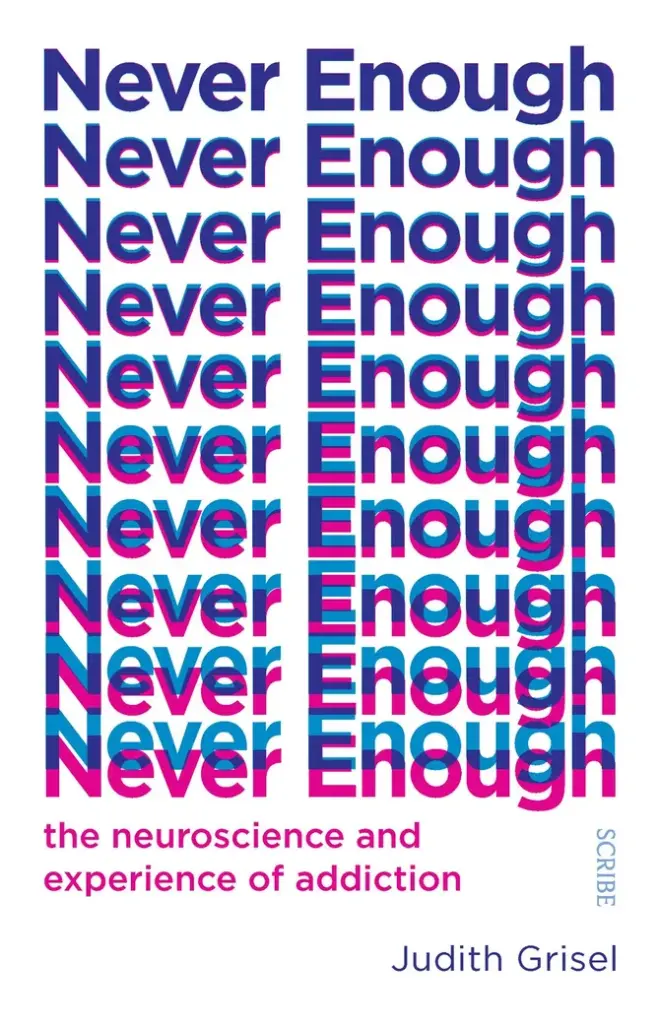
Within the CU, there are certain professions where the insistence on loyalty to the CU is particularly strong. Medicine and health care, for example, are significant vectors for implementing two top CU goals: control and depopulation. One rationale for the creation and growth of the psychiatry profession was to shift people’s dissatisfaction with the governance system and its management of society to a narrow focus on individual problems. This is one of many ways that people have been encouraged to become more narcissistic and self-absorbed—narcissists are often easier to manage and control. This also explains the CU’s promotion of an infinite variety of addictions. Whether the addiction is to legal or illegal drugs, alcohol, gambling, video games, sex, porn, or sugar, it typically leads to more self-absorption and an inability to organize effective community-level or political action or to productively engage in independent wealth-building enterprise.
A defining characteristic of many people in the CU is that they are happy to invest their financial resources and make money by following the CU leadership. They do not want to be centrally controlled, but they generally do not connect the dots between where their time and money are going and what is happening in the world. Their attitude is that they are not responsible for the whole if they are only doing their little piece. Most practice profound disassociation.
Ironically, having emotional resistance to centralization can even result in people working harder to please the centralizers, guided by the belief that if they make enough money, they will be able to survive whatever the leadership does in the future—or that if they earn enough “points,” they will have the protection of insiders for themselves and their family. In this negative cycle, the greater the fear, the greater the loyalty to the insiders.
It is worth mentioning that there are some exceptions to the rule. For example, some CU authors, writing on topics that are useful and not controversial, deservedly earn an independent retail audience—and their lack of understanding of the hidden side of the world does not distract from the quality of their offering. Examples might include writers like James Clear (author of Atomic Habits), Edward Tufte (author of Envisioning Information), and Gary Keller (author of The ONE Thing). (If M. Scott Peck were still alive, he would be another good example.) We are also beginning to see successful CU business people, such as Jeffrey Gundlach, who have started to open up and be more honest about what is wrong.
The people who make up the DU also constitute a complex ecosystem. Often, they are people who were in the CU for some period of time and leave after acquiring skills and personal resources, bringing those resources with them. They include:
One of the most important groups in the DU are people whose economic independence is supported by a wide base of people who derive value from their work. These people have found a way to be economically successful with a small business, farm, practice, product, or other enterprise that is supported by customers, members, or a wide base of retail supporters, donors, or investors. They maintain a virtuous value circle between themselves and the people who fund them. Small farmer Joel Salatin is a remarkable example of one such entrepreneur.
People who are firmly in the DU share some recognizable qualities:
In short, successful members of the DU don’t talk a good game—if you study how their money and time work, they live a good game.
Sometimes, there are people in the DU who, because they are fearful of people in the CU, are willing to serve the CU on a project basis—often in exchange for immediate financial rewards. These are not always low-integrity people; they can be someone in local government who has generally high integrity but understands the limits of their power and authority and is not willing to take risks for what they perceive as a likely Pyrrhic victory.
On the low-integrity side, this category could include:
The people who arrive at high view counts on YouTube or get the chance to give a TED Talk are often people who have enjoyed years of CU funding and promotion, whereas people in the DU regularly get throttled on these platforms. For example, it is my understanding that when Greg Hunter was thrown off YouTube, it was an interview with me that constituted his last strike. From 2000 to 2020, my own view counts were regularly cut or videos taken down, while my ability to generate income was aggressively sabotaged. Clients’ checks often disappeared in the mail. During that 20-year period, Solari’s strategy became one of helping people—often one person at a time—and building a base of support so wide and grounded that we could survive the periods of targeting and intense sabotage. I often quote this line from the movie Gladiator: “Before they can kill you, they must kill your name.” The CU invests extraordinary amounts to try to destroy the names of truth tellers such as Unlimited Hangout’s Whitney Webb and eat up their time and resources. At Solari, I anticipate that we will pay professional cybersecurity firms a significant amount of money to try to protect our audience from cybercrime and imposters.
Scholar David A. Hughes has described the phenomenon of “sudden darlings”—people who the CU promotes in order to suck oxygen out of a group in the DU that is gathering steam. After current Solari team members Jeroen van Straaten and Robert Dupper built extraordinary momentum some years ago with groundbreaking Breakthrough Energy and Secret Space Program conferences, someone funded and created two “sudden darlings”—David Wilcock and Corey Goode—and concocted what I nicknamed the “Blue Chicken Op” to promote entertaining stories about secret programs regarding space and the black budget. The op worked, halting the progress and momentum of a group of legitimate researchers and journalists. After the op was no longer needed, the “sudden darlings” fell off the radar. Unfortunately, Wilcox was recently reported to have committed suicide.
John Perkins, author of Confessions of an Economic Hit Man, is another example. He was a “sudden darling” brought on the scene to provide a modified hangout after the plunder game started being exposed. I had numerous battles with people who wanted me to promote Perkins on the Solari Report or get paired with him on interviews. And this kind of thing happened on numerous other occasions. For a long time, running quality control at the Solari Report was exceptionally difficult, especially when entrainment technology was likely being used to create great enthusiasm around a given “sudden darling” or intelligence op. Looking back, the Solari team has done a remarkably good job of maintaining strong quality control.
Admittedly, one can find many capable and talented people from the CU on YouTube or TED Talks, addressing a wide range of topics that include those of interest to us at Solari. Some of their content can be quite good. The challenge of bringing people like this into the Solari fold, however, is that our network will then assume that because of their association with Solari they are, by definition, people of integrity; they will accept the person’s opinion—or certainly listen to it—not just in the highlighted area of expertise but for a much wider range of topics. This is where conflicts appear—including serious conflicts that inspire the audience to make grave mistakes that can harm family health or finances.
If I do an interview on an alternative media show that is very strong and capable on a particular topic, but that show promotes gold IRA scams—because it makes them money—some of our subscribers and people in our wider audience will assume that they can trust that IRA provider. This dynamic was a major issue during the p(l)andemic, when people who had been pre-pandemic guests on the Solari Report started promoting the Covid shots and we had to put distance between us.
Distance is invariably required when an ally or guest starts recommending actions or strategies that could harm subscribers’ health or lose them money, often because the ally or guest is operating with a false map of the world, such as where they believe the financial markets are and what they believe will happen next. What are their motivations? Some people promote future scenarios to intentionally fool people. Some do it because the audience hungers for certainty. Some do it because they are misinformed or have poor judgment. And some do it as true believers. There are numerous fact patterns, and it can take time to sort out failures of integrity from failures of competence.
Though many in the DU are entirely invisible, some can be well known—but they get far less promotion than people of comparable talent in the CU. On the other hand, Thomas Massie, Tucker Carlson, and Marjorie Taylor Greene are examples of people who, when forced out of the CU, have been able to build an even larger audience in the DU. This is a sign that the models are changing, and it signals an opening that is an opportunity for all of us.
With that said, members of the DU who are fearless, get significant things done, and have found a way to maintain economic independence are not as large a group as we would like. It is this group we are trying to nurture with many of the things we do at Solari. Our actions aimed at supporting and strengthening the DU network include:
In addition, the Solari Builders initiative is a way to grow this group going forward. We want to take what we and our network have learned about how to succeed in the DU ecosystem and teach it to people who are starting to build families, careers, and businesses. We want them to be able to go faster and avoid many of the pitfalls we have experienced—while recognizing that it is those very pitfalls that helped us build a better map of reality and better risk management tools.
In 2019, I published an interview with Thomas Meyer about the Old Testament story of Gideon—my favorite Bible story. The story highlights the importance of people who integrate the qualities of integrity, faith, and competence. There are a wealth of smart and capable people in the CU who look competent, and perhaps even exceptional, on a particular topic, but if you scratch the surface, you find someone who is financially dependent on the plunder and Great Poisoning agendas and will not buck the people who hold their leash.
Some recently recommended a historian to us as a teacher for the Solari Builders curriculum. Though a fascinating historian, the scholar in question aggressively defended the implementation of genocide and plunder in Gaza and heavily promoted the Covid shots, making it clear that he lacks integrity. From reading his statements on these topics, one can only assume that he is full on in support to the CU leadership. How many people died or were disabled or bankrupted because of his promotion of the shots?
It is much easier to find talented people in the CU than the DU. However, there is a potential litmus test that can be used to flush out a potential lack of integrity. If you learn to investigate and recognize the products, cash flows, businesses, assets, and people who come with a CU “leash,” you can take steps to avoid situations where you might get hiccuped, switch-hit, or bankrupted. It has taken me a lifetime to sort this out, and I am still learning, but my hope is that you can benefit from these observations.
Already a subscriber?

Our mission is to help you live a free and inspired life. This includes building wealth in ways that build real wealth in the wider economy. We believe that personal and family wealth is a critical ingredient of both individual freedom and community, health and well-being.
Nothing on The Solari Report should be taken as individual investment, legal, or medical advice. Anyone seeking investment, legal, medical, or other professional advice for his or her personal situation is advised to seek out a qualified advisor or advisors and provide as much information as possible to the advisor in order that such advisor can take into account all relevant circumstances, objectives, and risks before rendering an opinion as to the appropriate strategy.
Be the first to know about new articles, series and events.
Your shopping cart is empty
Notifications