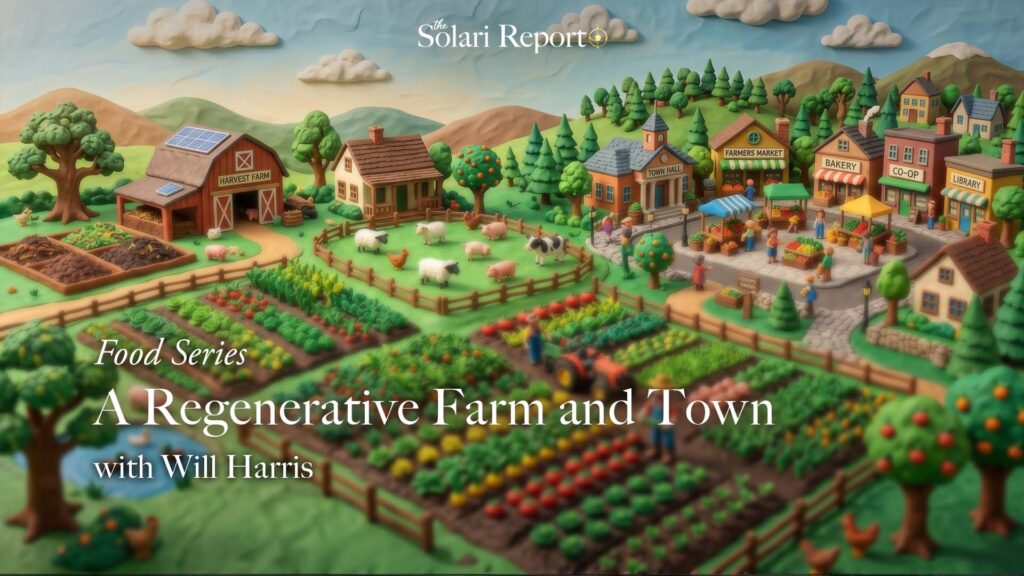
This 6-pillar curriculum teaches the basic literacy we need to be personally and financially successful and to do so in a manner in which together we evolve a culture that supports the emergence of an advanced human civilization.
“The subject of the argument is the fact, and ultimately the faith, that things connect—that we are wholly dependent on a pattern, an all-inclusive form, that we partly understand. The argument, therefore, is an effort to describe responsibility.”
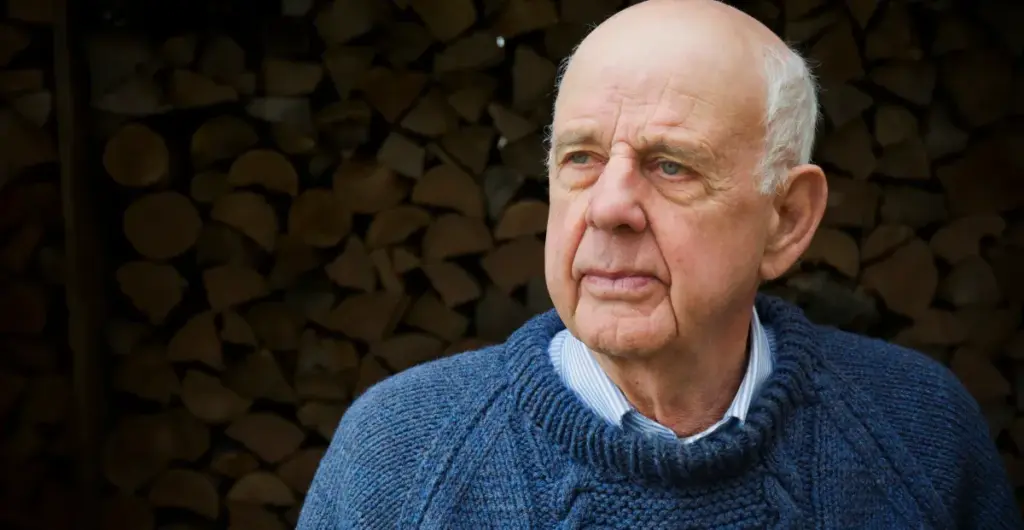
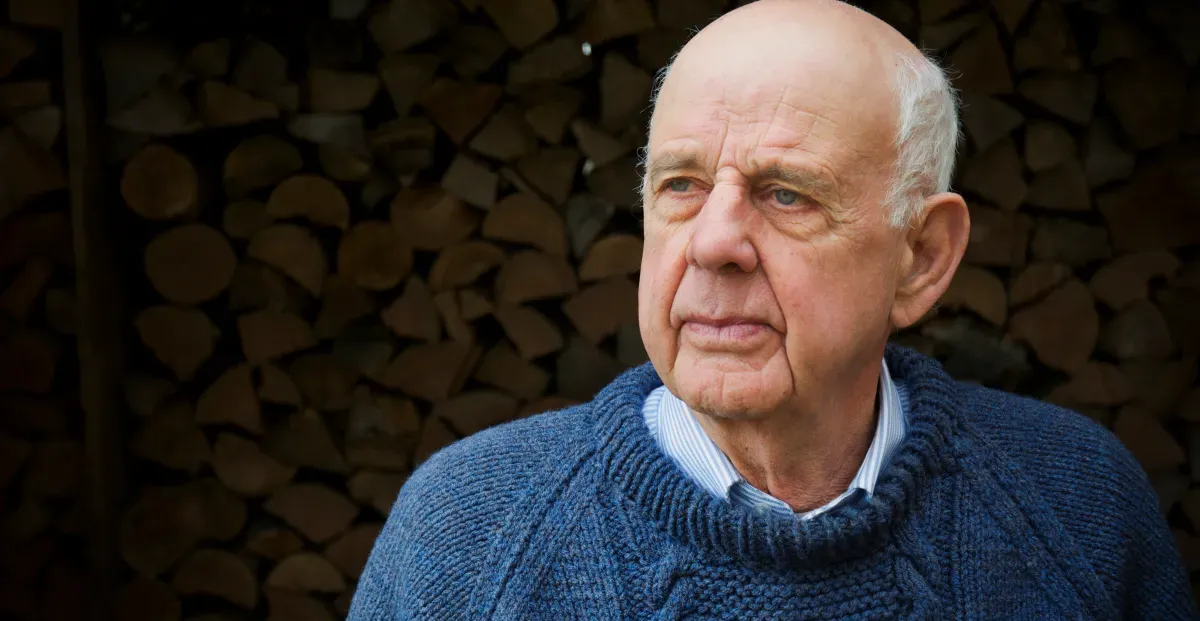
Tributes are flowing for Kentuckian Wendell Berry, who passed away in late August at the age of 92. A Renaissance “man of many lanes,” Berry’s contributions as farmer, cultural critic, activist, and prolific author of over 50 books of poetry, essays, and fiction were far-reaching and touched many.
A beautiful reflection by British writer Paul Kingsnorth quotes Berry’s wife Tanya as saying that her husband’s “principal literary talent … was ‘to repeat himself for seventy years.’” As Kingsnorth suggests, “This observation was intended as a compliment rather than a criticism, and understanding why that might be is perhaps the key to understanding Berry.” Kingsnorth adds that Berry’s activism, like his writing, was grounded in moral certainty and the “eternal things” that he stood for: “the land, his local community, his faith, his family.” Concerned by runaway technology, Berry “practiced what he preached” and had no computer or smartphone.
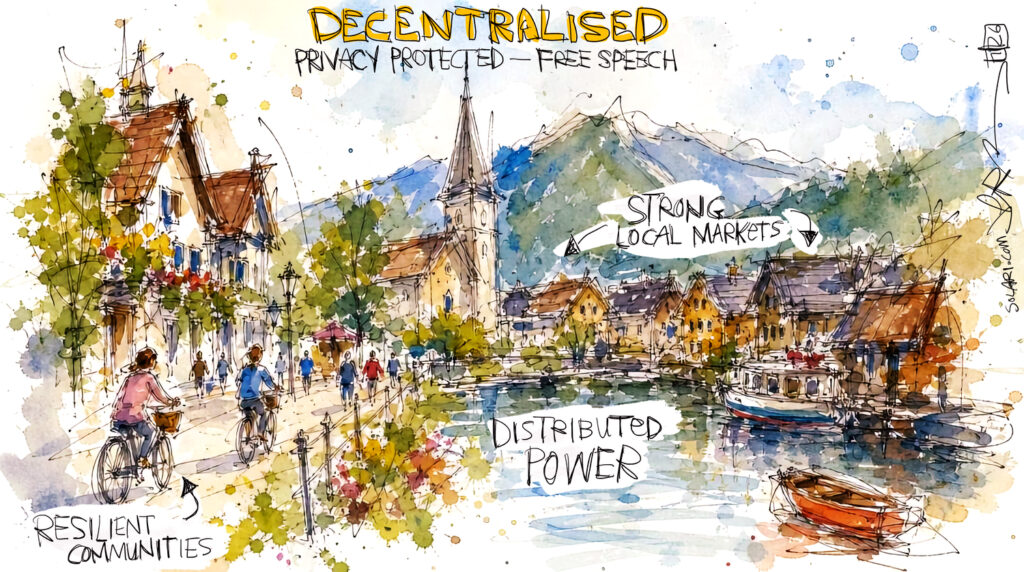
A tribute by French journalist Renaud Beauchard, published by the Brownstone Institute and republished by Children’s Health Defense, suggests that Berry offers many lessons for the health freedom movement, including highlighting the relevance of love of place and “parallel institutions” such as “home gardens, CSAs, raw milk producers, human-scale farming and neighborhood mutual aid.”
At the same time, Berry emphasized the importance of the wider relationship between what he abbreviated as the “Great Economy”—an economy “that does not leave anything out” (his friend Wes Jackson’s term for it was the “Kingdom of God”)—and the human economy. Berry’s notion of the Great Economy hinged on acknowledging that its drivers are “both known and unknown, visible and invisible, comprehensible and mysterious.” His interpretation of Catherine’s favorite Bible story, the story of Gideon, was a warning against hubris and “too great a human confidence in the power of ‘mine own hand.’”
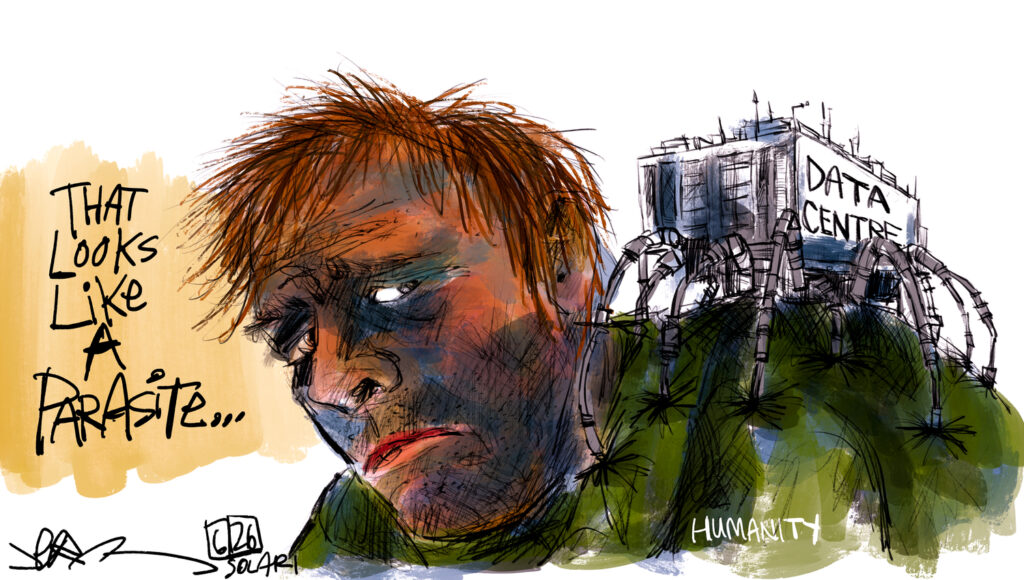
In his essay titled “Two Economies” (in 1987’s Home Economics), Berry addressed (pp. 60-61) several themes that are recurrent at Solari, namely that the unfortunately dominant and parasitic negative-return-on-investment human economy is “killing the goose that laid the golden egg” (Catherine); that no economy can be healthy without human virtues and a connection to culture and the divine (Dr. Joseph Farrell); and that imagination is both powerful and important (Jon Rappoport). Berry wrote:
“The difference between the Great Economy and any human economy is pretty much the difference between the goose that laid the golden egg and the golden egg. For the goose to have value as a layer of golden eggs, she must be a live goose and therefore joined to the life cycle, which means that she is joined to all manner of things, patterns, and processes that sooner or later surpass human comprehension…. [I]f we wish to value the egg in such a way as to preserve the goose that laid it, we find that we must behave, not scientifically, but humanely; we must understand ourselves as humans as fully as our traditional knowledge of ourselves permits. We participate in our little human economy to a considerable extent … by factual knowledge, calculation, and manipulation; our participation in the Great Economy also requires those things, but requires as well humility, sympathy, forbearance, generosity, imagination.”
At Solari, we also particularly appreciate Berry’s splendid poem, “Do Not Be Ashamed”—described by someone on social media as “a poem from 1960 that feels so 2025.” The poem communicates the importance of “inward clarity” and of not bowing to authority’s pressure to conform. Solari’s “Pushback Poetry” article by Solari Builder Tom Shaw, “The Power to Say No,” echoes similar sentiments.
Do Not Be Ashamed
You will be walking some night
in the comfortable dark of your yard
and suddenly a great light will shine
round about you, and behind you
will be a wall you never saw before.
It will be clear to you suddenly
that you were about to escape,
and that you are guilty: you misread
the complex instructions, you are not
a member, you lost your card
or never had one. And you will know
that they have been there all along,
their eyes on your letters and books,
their hands in your pockets,
their ears wired to your bed.
Though you have done nothing shameful,
they will want you to be ashamed.
They will want you to kneel and weep
and say you should have been like them.
And once you say you are ashamed,
reading the page they hold out to you,
then such light as you have made
in your history will leave you.
They will no longer need to pursue you.
You will pursue them, begging forgiveness.
They will not forgive you.
There is no power against them.
It is only candor that is aloof from them,
only an inward clarity, unashamed,
that they cannot reach. Be ready.
When their light has picked you out
and their questions are asked, say to them:
“I am not ashamed.” A sure horizon
will come around you. The heron will begin
his evening flight from the hilltop.
To honor Berry’s memory, we could do far worse than to read (or re-read) his work and find our own inspired pathways to resist central control and build a human-scale, win-win economy.