






























































Pushback of the Week
How Wars Can End with Words
November 1, 2026










No posts
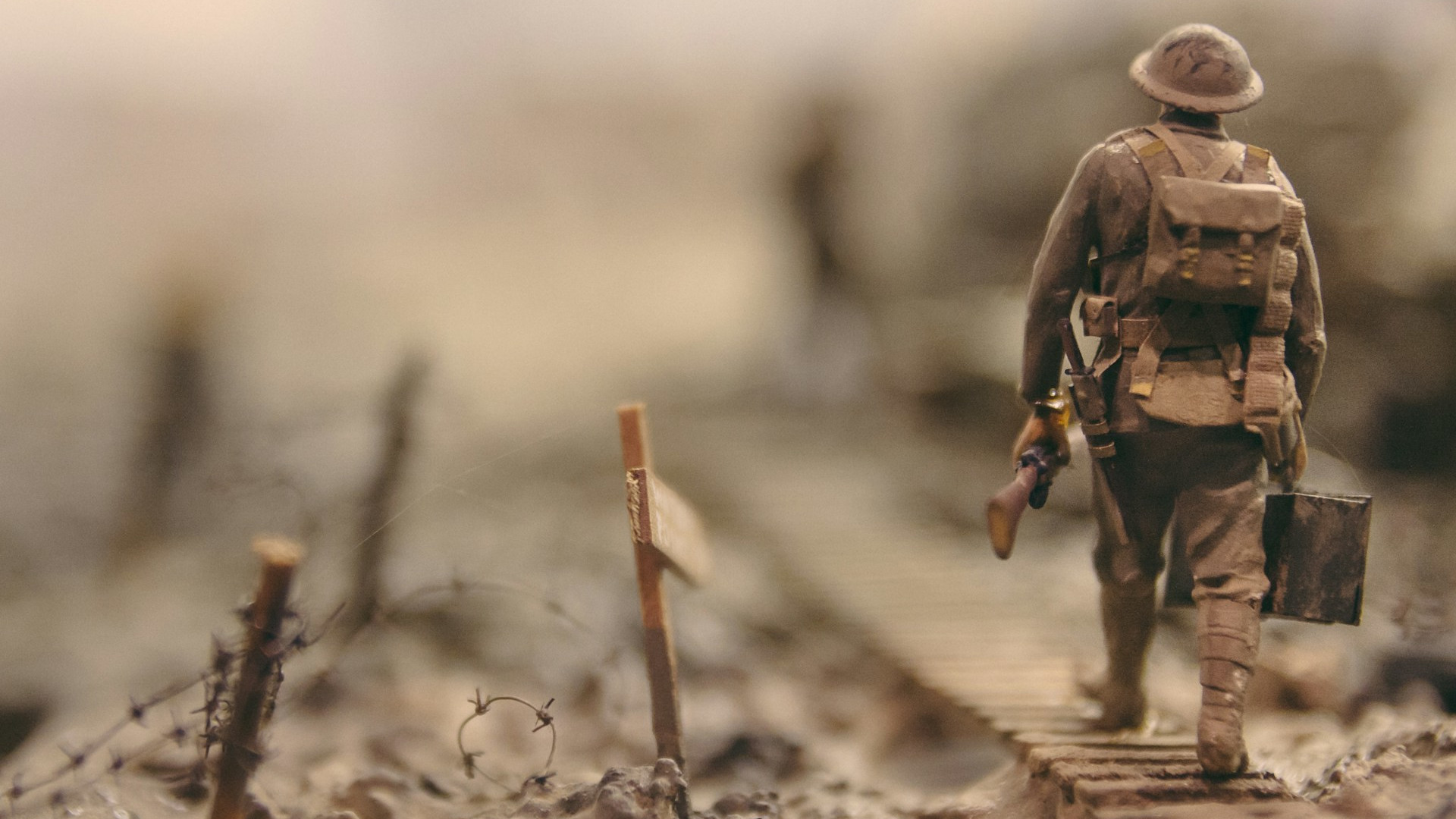
“Beautiful ideals were painted for our boys who were sent out to die. This was the ‘war to end wars.’ This was the ‘war to make the world safe for democracy.’ No one told them that dollars and cents were the real reason.”
~ Smedley Butler
By Tom Shaw
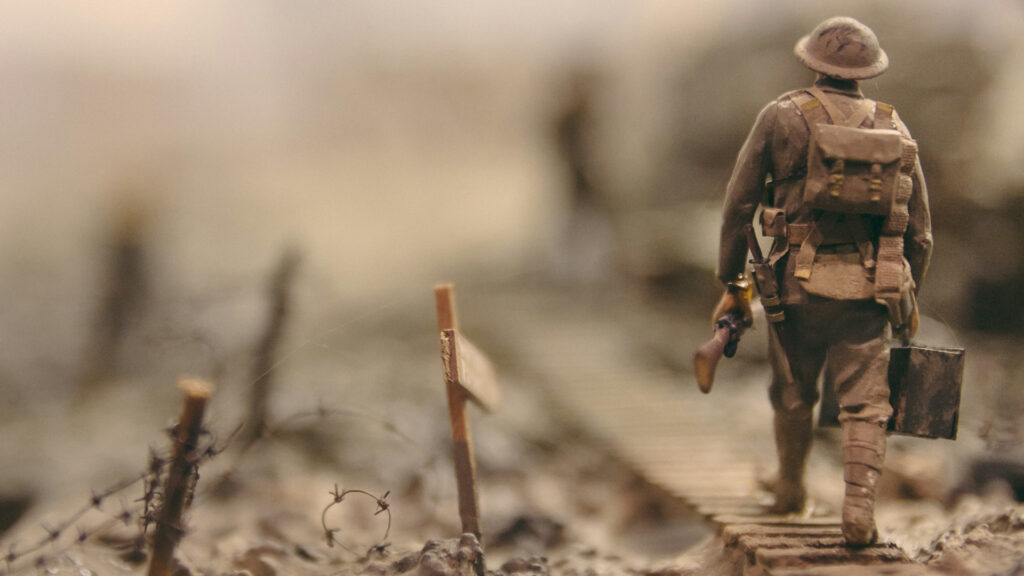
With the ongoing escalation of conflicts in the Middle East and Ukraine, and the concurrent reorientation of Western countries toward “war economies,” I felt called to examine the relationship between poetry and conflict—and the glimpse it provides on how poets have both pushed for and against the conflicts of the past.
War is a topic long glorified—and long vilified—by poetry. Understanding that words have the power to rally people’s spirits in support of a cause, pre-television governments often employed poets to glorify their war efforts, sway public opinion in their favor, and create propaganda for enlisting new troops—all in ways that modern cinema, including war movies, are now continuing to do.
In Britain, Rupert Brooke is an example of this. After being president of the Fabian Society at King’s College Cambridge, and having his poetry elevated into popular culture through the Westminster Gazette, Brooke was directly enlisted by Winston Churchill to join the Royal Naval Volunteer Reserve during World War One (WWI). Over the course of his service, he wrote numerous patriotic and idealistic sonnets praising England as a bastion of morality.
If I should die, think only this of me:
That there’s some corner of a foreign field
That is for ever England. There shall be
In that rich earth a richer dust concealed;
A dust whom England bore, shaped, made aware,
Gave, once, her flowers to love, her ways to roam;
A body of England’s, breathing English air,
Washed by the rivers, blest by suns of home.
~ Excerpt from “The Soldier,” by Rupert Brooke
In the context of WWI being a banker’s war, and Britain’s role in deliberately provoking war in Europe, I suspect that the promotion of such poets’ work was not purely out of naivety and patriotism. It’s likely that the British Government felt the need to put extraordinary effort into encouraging the populace to support a war they would have otherwise been unwilling to endorse, especially should they have known the full story behind what was happening.
Further evidence of the use of poets to capture a nation’s sentiment in support of war can be seen in the creation of Wellington House, a secretive government unit created specifically to gather writers who would produce patriotic pieces in mainstream publications in support of Britain’s war effort (Thomas Hardy, John Masefield, and G.K. Chesterton being among the poetry writers). On top of this, there were also poets specifically brought into Britain’s War Propaganda Bureau—most notably, Rudyard Kipling.
Yet, this poetic propaganda did not stop a selection of poets, who spoke to the tragedy of war during both WWI and WWII, from getting their work to the public. Britain is famed for its war poets, and their view is far bleaker—and far more telling—than the “approved” wartime verse:
If I were fierce, and bald, and short of breath
I’d live with scarlet Majors at the Base,
And speed glum heroes up the line to death.
You’d see me with my puffy petulant face,
Guzzling and gulping in the best hotel,
Reading the Roll of Honour. “Poor young chap,”
I’d say — “I used to know his father well;
Yes, we’ve lost heavily in this last scrap.”
And when the war is done and youth stone dead,
I’d toddle safely home and die — in bed.
~ “Base Details,” by Siegfried Sassoon
Siegfried Sassoon entered combat with a patriotic view of what he was there to do, evidenced by his early poetry and accounts of extreme bravery by his commanders and fellow combatants in securing victories over German forces. By the end of the war, however, his writings detail a very different experience. “Base Details” is one among many of his more satirical but direct poems challenging war and discarding the sentiment that going out to kill the enemy for the sake of “the fight” is desirable.
Notably, Sassoon was one of the only WWI war poets who declined to return to service following a period in hospital for medical treatment. He objected to being a part of what he saw as the forever war of his day. A sympathetic legislator forwarded Sassoon’s letter, “Finished with the War: A Soldier’s Declaration,” to the press and read it aloud in Parliament:
I am making this statement as an act of wilful defiance of military authority because I believe that the war is being deliberately prolonged by those who have the power to end it. I am a soldier, convinced that I am acting on behalf of soldiers. I believe that the war upon which I entered as a war of defence and liberation has now become a war of aggression and conquest. I believe that the purposes for which I and my fellow soldiers entered upon this war should have been so clearly stated as to have made it impossible to change them and that had this been done the objects which actuated us would now be attainable by negotiation.
I have seen and endured the sufferings of the troops and I can no longer be a party to prolong these sufferings for ends which I believe to be evil and unjust. I am not protesting against the conduct of the war, but against the political errors and insincerities for which the fighting men are being sacrificed.
On behalf of those who are suffering now, I make this protest against the deception which is being practised upon them; also I believe it may help to destroy the callous complacency with which the majority of those at home regard the continuance of agonies which they do not share and which they have not enough imagination to realise.
Shortly after the publication of this letter, Sassoon was discharged directly by the Under-Secretary of State for War due to “shell shock.”
Europe continued to be embroiled with war and conflict in the 20th century, with Britain making a second declaration of war against Germany in 1939. With it, a new generation of war poets emerged to speak to—and suffer—similar fates to the soldiers of WWI. This includes Keith Douglas:
Three weeks gone and the combatants gone
returning over the nightmare ground
we found the place again, and found
the soldier sprawling in the sun.
The frowning barrel of his gun
overshadowing. As we came on
that day, he hit my tank with one
like the entry of a demon.
Look. Here in the gunpit spoil
the dishonoured picture of his girl
who has put: Steffi. Vergissmeinnicht.
in a copybook gothic script.
We see him almost with content,
abased, and seeming to have paid
and mocked at by his own equipment
that’s hard and good when he’s decayed.
But she would weep to see today
how on his skin the swart flies move;
the dust upon the paper eye
and the burst stomach like a cave.
For here the lover and killer are mingled
who had one body and one heart.
And death who had the soldier singled
has done the lover mortal hurt.
~ “Vergissmeinnicht” [“forget me not”], by Keith Douglas
Just like Sassoon, Douglas went into the war full of idealism. In 1941, he was posted to Cairo and Palestine, and would ultimately take part in the fighting at El Alamein. Through his writings at this time, we see a change in his perspective. Not only does he speak to the carnage and destruction of the human spirit that the war has brought (as evidenced by “Vergissmeinnicht” as an encounter with a once-human German soldier), but also a realization of how his beloved Britain was not the great warrior in the political battlefield that he’d once perceived. Douglas would never see the end of the war: he was shot and killed by German forces during the Normandy invasion of 1945.
For me, the fact that many of these poets continued to fight right up until their death is a testament to the power of the British war propaganda in creating romantic sentiments about the need to “win” the fight. Perhaps, too, it is evidence of the fear of the consequences of dissent—even when the realities of fighting were so obviously grim. But, as the case of Sassoon shows, the truth cannot be suppressed.
The two generations of British war poets are fascinating case studies, showing how those initially in agreement with the premise of war can convert to a more critical position once they see war’s true horrors—and how poetry was the form they felt best suited to communicate that truth. Moreover, these weren’t just amateur poets; Douglas’ verse is thoughtfully constructed, with “Vergissmeinnicht’s” deliberately irregular rhymes and near-rhymes mirroring Douglas’ need to find some sense and order in the sight in front of him—to no avail. Sassoon’s use of satire, paired with regular meter and rhyme schemes, is again a showcase of using poetic craft to deliberately highlight the disconnect between what the commanders of the war saw and the realities of those fighting in it. The structural and rhythmic elements are deliberate, helping readers to feel the tension of the soldiers’ circumstance, giving us the emotional and intuitive knowledge to comprehend why such conflicts should not be repeated.
Both before and after these conflicts, history has been awash with artistic endeavors that attempt to push back against the destructive policies and activities of their time. Anna Akhmatova, who I covered in the first Pushback Poetry piece, is another clear example. Wars may start through a declaration with words—but the declarations of poets give more than enough reasons to end them. Let us use those words to remain firm in our convictions—and then, most importantly, take action accordingly.
Pushback Poetry:
Additional Material:
Money & Markets: October 1, 2026: Buckle Up
Cognitive Liberty Series: The Performance Layer with Brett Carollo and Thomas Millary
Already a subscriber?

Our mission is to help you live a free and inspired life. This includes building wealth in ways that build real wealth in the wider economy. We believe that personal and family wealth is a critical ingredient of both individual freedom and community, health and well-being.
Nothing on The Solari Report should be taken as individual investment, legal, or medical advice. Anyone seeking investment, legal, medical, or other professional advice for his or her personal situation is advised to seek out a qualified advisor or advisors and provide as much information as possible to the advisor in order that such advisor can take into account all relevant circumstances, objectives, and risks before rendering an opinion as to the appropriate strategy.
Receive your free copy of Coming Clean
Be the first to know about new articles, series and events
Your shopping cart is empty
Notifications