This 6-pillar curriculum teaches the basic literacy we need to be personally and financially successful and to do so in a manner in which together we evolve a culture that supports the emergence of an advanced human civilization.
The Trade Groups Commenting on Proposed GENIUS Act Regulations
“The yield loophole would … entice consumers to move their money out of local financial institutions and into stablecoins instead, leaving banks and credit unions with hardly any resources to lend.”
The Trade Groups Commenting on Proposed GENIUS Act Regulations
May 4, 2026
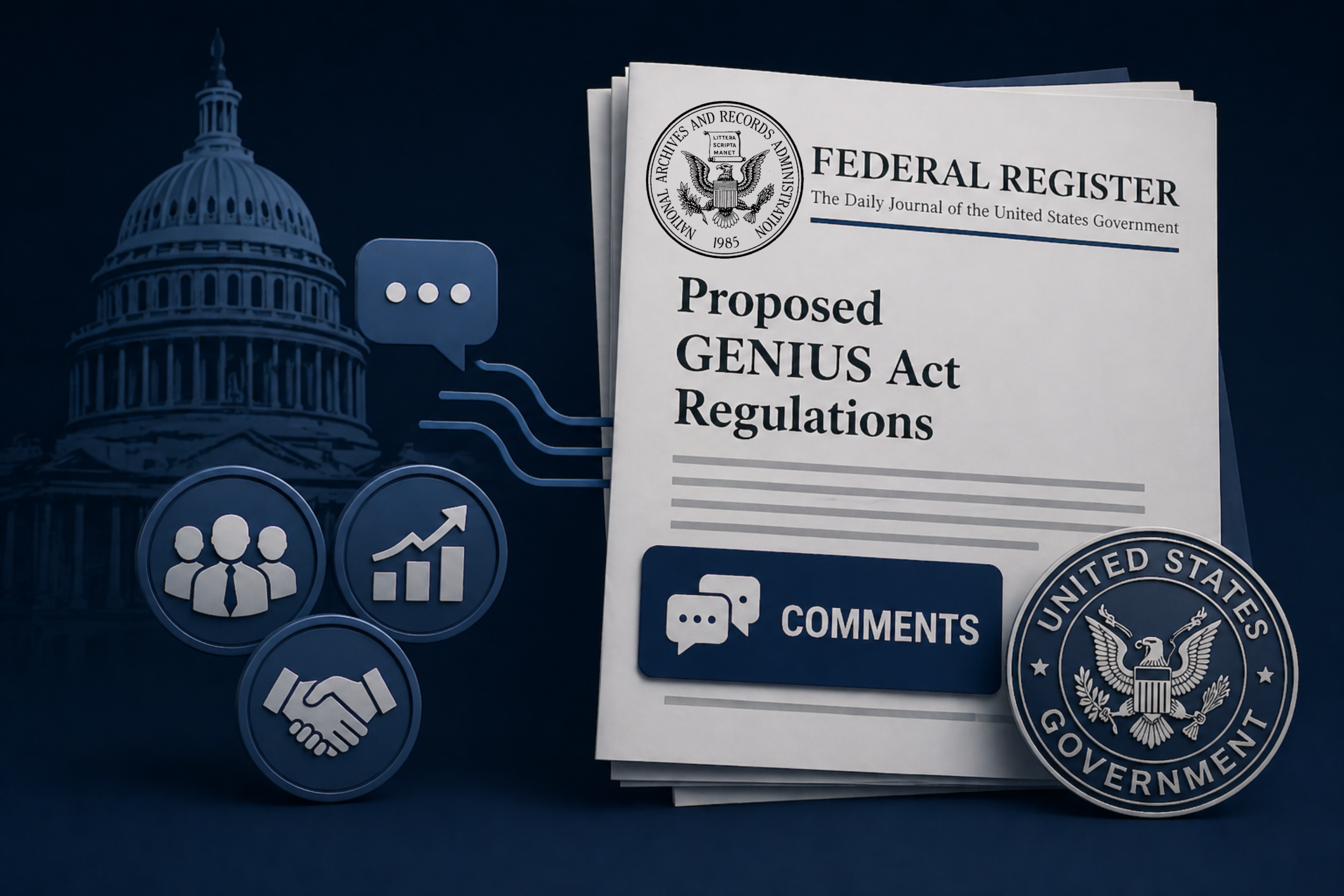
The U.S. Treasury Department’s Office of the Comptroller of the Currency’s (OCC’s) proposed rule related to the GENIUS Act (“Implementing the Guiding and Establishing National Innovation for U.S. Stablecoins Act for the Issuance of Stablecoins by Entities Subject to the Jurisdiction of the Office of the Comptroller of the Currency”) opened for public comment at the Federal Register on March 2, 2026, with the comment period ending on May 1.
As of April 30, the Federal Register had received just 155 comments—for proposed regulations that are relevant to millions of people.
Among those who took the time to review the OCC’s proposed rule and submit comments, we applaud trade groups in states like South Dakota, Arkansas, and Texas for drawing attention to a dangerous loophole that could jeopardize local banks and credit unions—and the small businesses that depend on them.
The objectionable loophole pertains to the potential payment of interest or yield by stablecoin issuers to stablecoin holders, despite the GENIUS Act defining stablecoins “as a form of currency and not an interest-generating investment.” Such payments would constitute a potent incentive for consumers to ditch local banks and credit unions in favor of stablecoins. The OCC weakly acknowledges (but thus far, has not taken strenuous measures to close) the loophole, stating (in “Prohibited Activities”) that it “understands that issuers could attempt to make prohibited payments of interest or yield to payment stablecoins holders through arrangement with third parties.”
In its comments, the South Dakota Home Builders Association elaborates on the third-party risk:
“The GENIUS Act contains a loophole that threatens the ability of local banks and credit unions to provide credit for home builders and their customers. Although the Act explicitly prohibits stablecoin issuers from paying interest or rewards to holders of their stablecoins, it does not include provisions to prevent stablecoin holders from receiving interest or rewards through platforms where their stablecoins are stored. Allowing stablecoin issuers to continue to offer these financial incentives through third-party affiliates will cause more consumers to withdraw their money from banks and credit unions and convert it to stablecoins. The reduction in deposits impairs the ability of these institutions to provide competitive loans to home builders and home buyers.”
The Arkansas Chamber of Commerce agrees that turning a blind eye to the loophole could have “far-reaching” consequences (and its comments are relevant far beyond Arkansas):
“Should consumers be influenced to move their deposits into stablecoins, the lending power of community banks, the financial backbone of small businesses across our state, would be significantly weakened. Fewer deposits mean fewer small business loans, leaving them without the financial resources to pay their workers, order more inventory, and keep their options going.”
Although the OCC may be closing its comment period, it is still a good time for informed consumers to educate their local bank or credit union about the risk that unfettered GENIUS Act regs could pose to their and their customers’ future.