































































































Living Plasma
“Plasma seems to have the kinds of properties one would like for life. It’s somewhat like liquid water—unpredictable and thus able to behave in an enormously complex fashion. It could probably carry as much information as DNA does. It has at least the potential for organizing itself in interesting ways.” ~ Freeman Dyson1
by Ulrike Granögger
As I declared in the outset of this treatise, one of my intentions is to provide a broader education about the fourth state of matter, showing that plasma is not just “overheated gas,” hostile to and remote from our day-to-day experience, but a remarkable and pervasive medium of free charge carriers that manifests unique electromagnetic behavior across its entire system. Plasma exists on all scales—it is not only “out there” in the cosmos but, on a nanoscale, also in our own bodies. If that is the case, it behooves us to take a closer look at how plasma interacts with life!
Bioplasma
The controversial idea of the existence of a bioplasma was developed in the late 1960s by two researchers working independently—the Polish scientist Włodzimierz Sedlak (1911–1993),2 considered the father of Polish bioelectricity research, and the Kazakh (then Soviet) biophysicist Victor Inyushin (born 1941).3 Living organisms, they postulated, might contain a form of physical plasma as a fundamental component of their biology. Even though the two researchers came to their conclusions separately, their names became jointly associated with the bioplasma hypothesis.
Victor M. Inyushin founded the department of biophysics at the Al-Farabi Kazakh National University in Almaty and has authored hundreds of inventions and patents on bioelectricity and laser action on biology.4 In the 1970s, he argued that the body harbors an organized field of ionized particles and piezoelectric organic compounds (such as collagen in bone and skin, or elastin in connective tissue) that he called the “plasma body”—a coherent, low-entropy system that carries energy, facilitates communication between cells, and even plays a role in consciousness.5 In his experiments, Inyushin explored Kirlian photography as well as how low-intensity laser light could interact with and stimulate this bioplasmic layer. As my own research into the Wave Genome and biophotons indicates, we already know of the highly ordered photon and phonon oscillations along macromolecules such as DNA and ATP, as well as along myelin sheaths, cellular membranes, and microtubules.6
Bioplasma Body Mapped by Fascia
According to Inyushin and Sedlak, the bioplasma sits in the structural fabric of the organism—that is, its protein networks and connective tissue—which are semiconducting materials that can sustain charges. Today these are known as the fascia,7 and it has become a well-established fact that the myofascial system is one anatomical home of biological ionic states (plasma).8 Fascia is the body’s continuous connective tissue web: it wraps every muscle, organ, nerve, and bone; interpenetrates every structure; and runs uninterrupted from head to toe. If there is a body-wide bioelectric field, fascia is its anatomical highway. There are several distinct mechanisms that explain why: piezoelectricity, semiconductor conductivity, and exclusion zone (EZ) water.
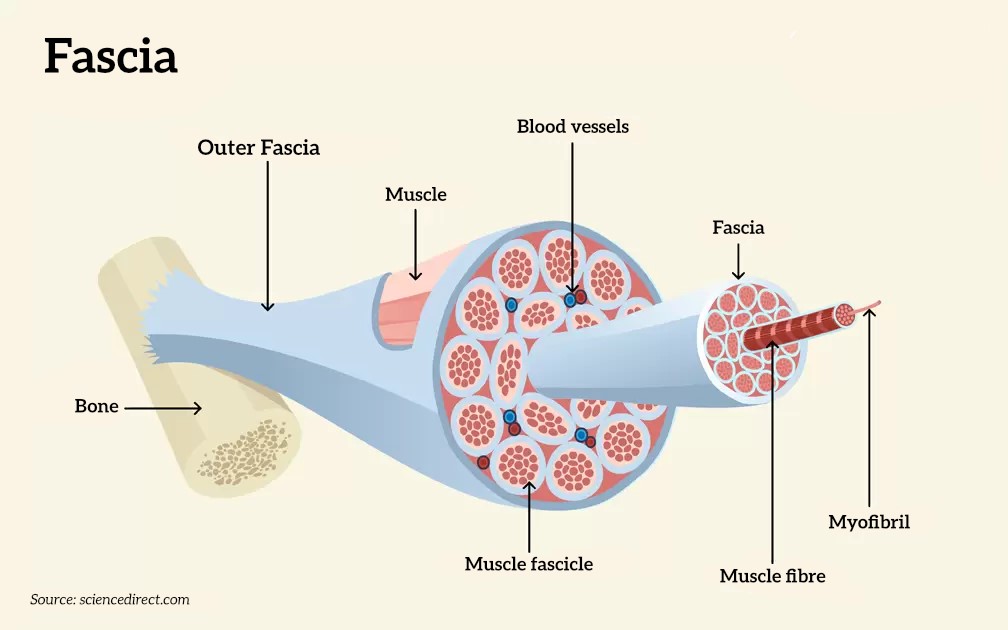
Many layers of fascia (sciencedirect.com)
- Piezoelectricity: The myofascial system and biological collagen tissue9 are arranged in a crystalline lattice formation, which confers the property of piezoelectricity—the ability of a material to generate an electric charge when subjected to mechanical stress or pressure. What this means practically is that every movement we make—every step, breath, or postural shift—mechanically compresses and stretches fascial tissue, and that deformation generates electrical signals right there in the connective tissue matrix. The resulting local electrical fields will contribute to fibroblast and osteoblast behavior for bone and tissue repair. The fascia is, therefore, not a passive scaffold but an active electrical generator, continuously transducing mechanical forces into bioelectric signals as we move through life.
- Semiconductor Conductivity: Nobel laureate Albert Szent-Györgyi discovered the ability of collagen fibers to act as liquid crystalline semiconductors, thereby allowing electrical signals to pass through the web of the fascial system. This means the fascial network can propagate bioelectric information across the entire body, using its own continuous architecture as the wiring. He said in a lecture10 in Budapest in 1941: “If a great number of atoms is arranged with regularity in close proximity, as for instance, in a crystal lattice, the … electrons … cease to belong to one or two atoms only, and belong to the whole system…. A great number of molecules may join to form energy continua, along which energy, viz., excited electrons, may travel a certain distance.”11 Another leading scientist who seriously investigated the living body as a semiconducting system was Soviet plasma physicist and chemist David A. Frank-Kamenetskii (1910–1970), author of a foundational monograph about plasma physics. He theorized that biological molecules are not just chemistry but may possess the electronic band structure of semiconductors, and that plasma exists in living organisms.12
- EZ Water: In addition to piezoelectricity and semiconductor properties, EZ water—as identified by the University of Washington’s Gerald Pollack,13 described in my 2023 Water report for Solari14—plays a role in electrical communication within and along the hydrophilic surfaces of collagen fibers.
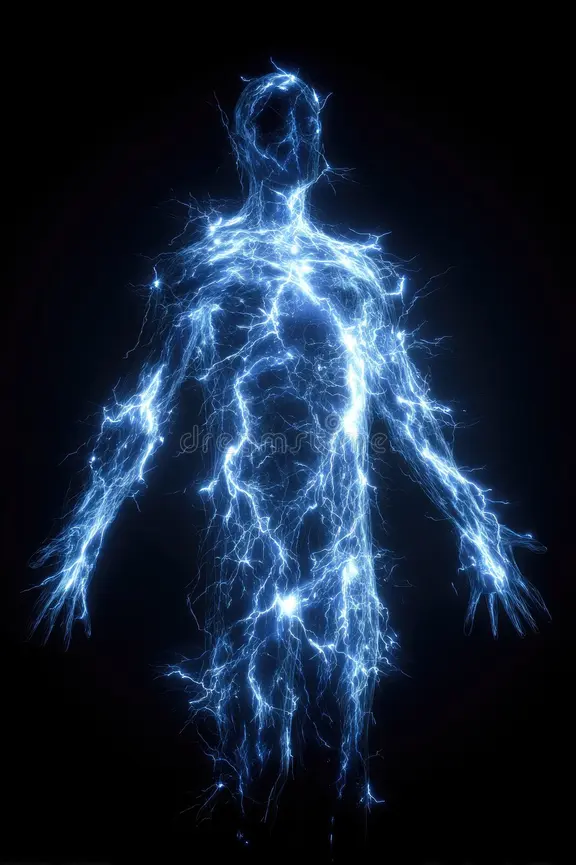
The picture that emerges when we combine these mechanisms is one where movement contorts collagen, generating piezoelectric charges. Those charges propagate through the fascial semiconductor network, and the EZ water at every hydrophilic surface maintains a standing charge separation—a body-wide electrical field. Ions dissolved in the interstitial fluid (the classic sodium, potassium, and chloride) move within this structured water environment, creating exactly the kind of charge-carrying, collectively responsive, self-shielding medium that plasma physics describes.
This “plasma” is not a hot gas. It is a body-temperature ionic medium, ordered by structured water, carried along a continuous piezoelectric semiconductor network whose anatomy follows the myofascial system.
Bioelectricity: Bioplasma Research Today
Although modern researchers are no longer pursuing the bioplasma hypothesis, its core idea is still valid and has found a more rigorous new terminology. The language has changed from “plasma body” to “developmental bioelectricity,” but the underlying question remains the same: How does a living system coordinate itself at a scale that no single gene or molecule could possibly explain?
Bioelectricity in the body is a result of the constant movement of charged ions—sodium, potassium, chloride—across cell membranes through so-called voltage-gated ion channels. This creates a system that physicists can legitimately model using plasma physics equations. Concepts like Debye shielding (how charges shield each other over distance) and double-layers (the organized charge arrangement at surfaces; see What is Plasma? in this volume) turn out to describe cellular membranes with remarkable accuracy.
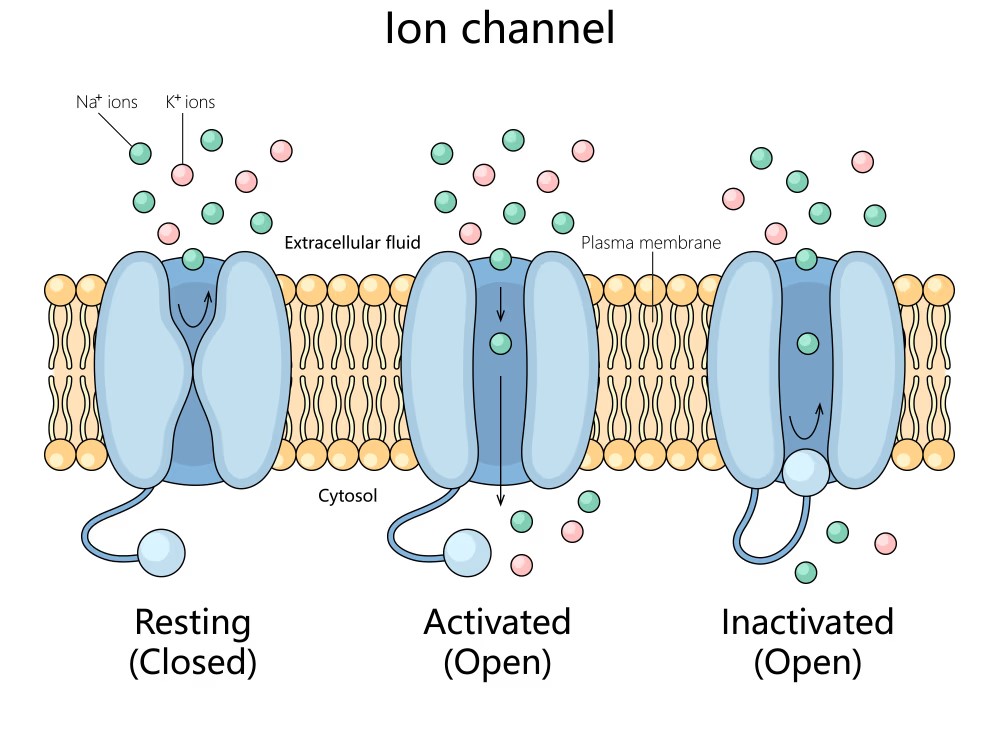
In this sense, every cell membrane is a kind of plasma-like interface—a region where separated charges, electric fields, and ion flows interact in ways that carry information and drive behavior.
The most prominent living scientist working in this territory is Prof. Michael Levin of Tufts University (see my June 2021 Future Science Series report, “Medical Nanobots – Part 2” at Solari15 ). Levin does not use the word “bioplasma,” but his work is arguably the most sophisticated modern version of what Sedlak and Inyushin were approaching.
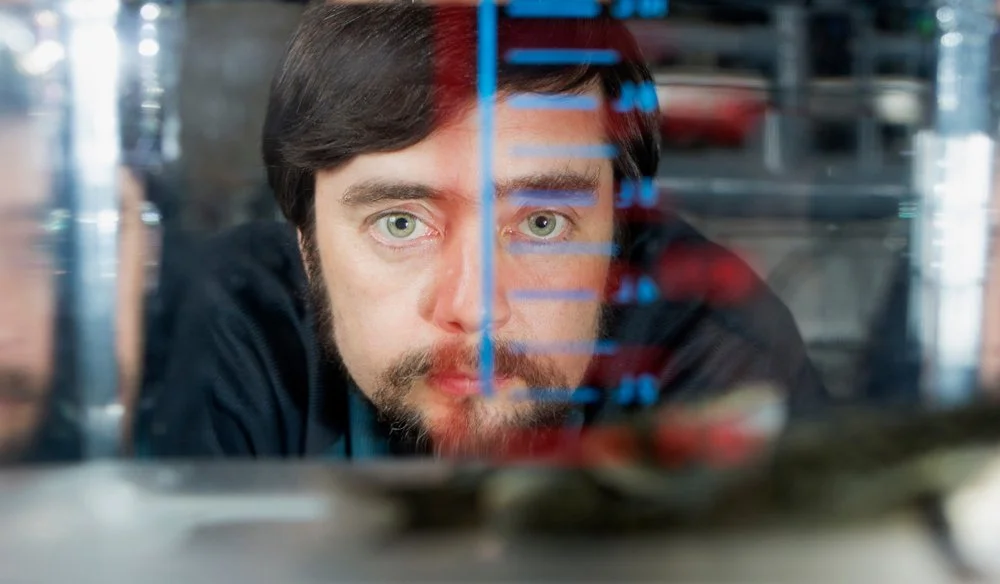
Levin’s central discovery is that all cells, not just neurons, generate and respond to electrical signals. These signals form body-wide networks that carry what he calls the “bioelectric code”: patterned information about what an organism should look like, encoded in the voltage states of cells and communicated through ion channels and gap junctions. This is not hypothetical—Levin’s lab has demonstrated it experimentally.
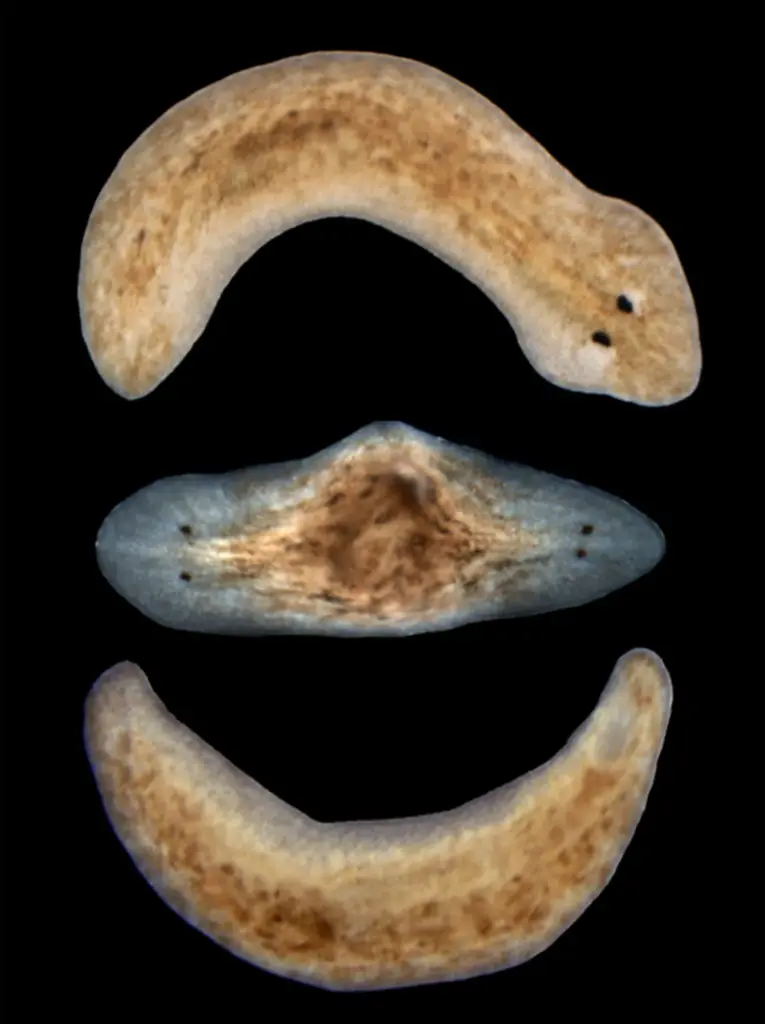
The results are striking. By manipulating the bioelectric state of tissues, his team has:
- Caused flatworms to regenerate with two heads instead of one, with the pattern persisting across subsequent generations
- Suppressed tumor formation by normalizing the bioelectric environment around cancerous cells
- Induced limb and eye growth in places where this would not normally occur
In every case, the trigger was electrical, not genetic!
According to Levin, this bioelectric layer is not just a control mechanism but a form of proto-cognition. In his framework, cells are not passive building blocks awaiting genetic instructions. They are active agents, collectively navigating the “anatomical space” using bioelectric and ionic signals for distributed memory and decision-making. Bioplasma could be the fundamental basis of consciousness.
The Case for Plasma Life-Forms
We have seen that there are valid grounds for assuming activity of plasma in the body. In the words of Inyushin, such bioplasma could even be termed a “fifth state of matter,” a biotic plasma beyond the fourth state of physical plasmas. But there is another question in the arena of living plasma, namely, the existence of plasma life-forms. Could there be living entities that are entirely made of plasma?
To explore this question, we first need to know: What is life? Scientifically, this is a surprisingly difficult question to answer. There’s no single, universally accepted definition of life that satisfies biology, philosophy, and astrobiology at the same time. Life includes many different forms—from extremophiles to humans, and possibly inorganic forms of life as well. Therefore, scientists are looking for definitions that are based on shared characteristics among life-forms. Some key characteristics of life would be the following common properties:
- Organization: Living things are made of ordered structures (usually cells).
- Metabolism: They use and exchange energy with their environment to maintain themselves.
- Reproduction: They can reproduce across time from information about themselves.
- Response to stimuli: They react to environmental changes.
Crucially, none of these characteristics specify chemistry. They specify dynamics—the behavior of a system, not the material it is made from.
Feasibility of Plasma Life-Forms
As described in earlier chapters, plasma is per se a highly dynamic medium:
- It self-organizes into filaments, vortices, and layered structures.
- It stores and transfers energy through electromagnetic fields.
- It can encode information in complex field geometries.
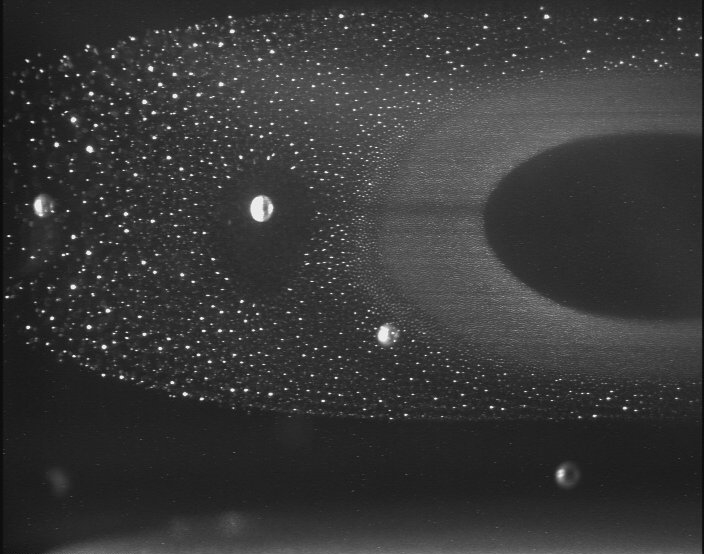
In 2007, physicist Vadim Tsytovich and colleagues demonstrated that plasma can spontaneously form helical, replicating structures that respond to their environment (see Dusty Complex Plasmas), and we also know that plasmas are highly responsive to external stimuli. Tsytovich and colleagues did not regard the helical structures as alive, but they satisfied several of the abstract criteria above, such as self-organization, energy metabolism, and replication-like behavior.
One might object that plasma would be much too hot for any life-form with organic molecules to survive, but this conflates plasma with hot plasma. Plasma simply means a medium containing free charge carriers—ionized atoms and electrons in sufficient proportion to exhibit collective electromagnetic behavior. It does not specify a temperature. Many cold plasmas exist at or near room temperature.
Cell-Like Plasma Dynamics
Let us also remember that plasmas are quasi-neutral (see What Is Plasma?). What this means is that a plasma is not uniformly charged throughout. Internally, it contains many distinct charge regions—local areas of positive and negative charge that interact dynamically. Yet, viewed from the outside, or averaged across the whole, the plasma appears electrically neutral. The violent charge dynamics are contained within.
This is, in principle, not so different from what biological cells do. A mitochondrial membrane sustains an electric field strength of roughly 30 million volts per meter across its thickness—comparable to a lightning bolt in miniature—yet the cell as a whole is not electrostatically hazardous to its neighbors. A plasma organism under quasi-neutrality could do the same, that is, maintain intense internal electromagnetic activity while presenting an organic boundary to the world outside. The quasi-neutral plasma structure dissolves the apparent contradiction between plasma dynamics and organic chemistry.
Plasma Anatomy
But how can a plasma life-form maintain shape? Enter the dust! A dusty plasma is a plasma containing suspended solid particles—dust grains ranging from nanometers to micrometers in size. Each grain, immersed in the plasma, collects charge from the surrounding medium and thus becomes an active electromagnetic participant inside the plasma entity. As Tsytovich showed, the dust grains self-organize spontaneously into crystal-like lattices, rotating vortices, or filamentary networks. The scaffold assembles itself. Much of the interstellar dust in complex dusty plasmas consists of polycyclic aromatic hydrocarbons—complex organic carbon structures—and the rest consists of silicate grains coated with organic ices (water, methanol, ammonia) that are precursors to amino acids.
The picture that emerges is of a two-tier architecture. First are the dust grains themselves, with organic surface chemistry working slowly and stably, able to store structural information and catalyze reactions—analogous in function to DNA. At the upper tier is the plasma between and around the grains, with fast electromagnetic dynamics, energy transduction, signaling across the structure, and collective behavior coordinated by field interactions—analogous to the Wave Genome.
What about the outside boundaries of a plasma life-form? Laboratory plasmas are difficult to confine (often requiring immense magnetic fields). How would a living plasma organism confine itself to a “body”?
With complex dusty plasma life-forms, this problem largely dissolves. There is no single boundary to maintain. The geometry of the dust lattice itself structures and guides the plasma—each charged grain acts as a local boundary condition, and the collective arrangement of thousands or millions of grains creates a distributed confinement that is self-consistent. Damage to one region does not catastrophically unchain the whole system; the remaining grains continue to shape the plasma around the disruption. This self-healing emerges naturally from the physics of the plasma system.
Plasma Reproduction
Heredity—the reliable transmission of life-building information across generations—is arguably one of the deepest requirements for life. How would plasma life make copies of itself and create offspring to continue over generations? I suggest that reproduction in dusty plasma life-forms does not necessarily take place by “spawning off” new separate bodies. Plasma is naturally nested—charge domains within charge domains, sub-lattices within larger lattices. Spatial nesting of the system happens by default, similar to a mitochondrion with the invaginations of its inner membrane.
Reproduction in plasma life could happen by inward complexification and autopoiesis. Each new generation is not expelled from the parent but organized within it—a new layer of semi-autonomous structure arising inside the existing one. Think of a Russian nesting doll. The child generation has full access to the parent’s accumulated structure and knowledge from the moment of its formation.
The parent does not die in the act of reproduction—it becomes more complex. Over deep time, this produces an entity of extraordinary character: a single organism whose earliest generation persists at its core, with outer layers of its own recent self-organization. All of its generations are linked through space and time. The body becomes a living record of its own evolutionary history, each stage preserved and still functional within the whole. Natural selection may still operate, but it does so internally. A new inner generation that destabilizes the parent might be suppressed or reabsorbed, while one that enhances the parent’s stability and efficiency is incorporated and elaborated.
Occasional fragmentation could also happen and lead to a portion of the outer layers breaking away, beginning its own nesting lineage elsewhere. This would not be the faithful copying of a blueprint, but the exiting of a fragment of lived complexity, seeded with history, but free to diverge. A plasma organism would then reproduce by two strategies: deep internal heredity and complexification, with occasional dispersal for exploration into the environment.
Living Cosmic Clouds
Where would we find such life-forms, if they exist? Considering the fact that dusty complex plasmas are often invisible to the naked eye, and even to telescopes, these living entities may be closer than we think! The natural habitats of cold dusty plasmas are in very common environments of the universe. Interstellar molecular clouds are cool, dusty, weakly ionized regions that harbor all of the prerequisites for this kind of life. Protoplanetary disks combine dust, organics, and plasma over millions of years, with energy input from a local star. Comets and their comas are active chemical and plasma environments. Even planetary upper atmospheres, such as Earth’s own ionosphere and noctilucent clouds, involve charged dust particles in plasma conditions.
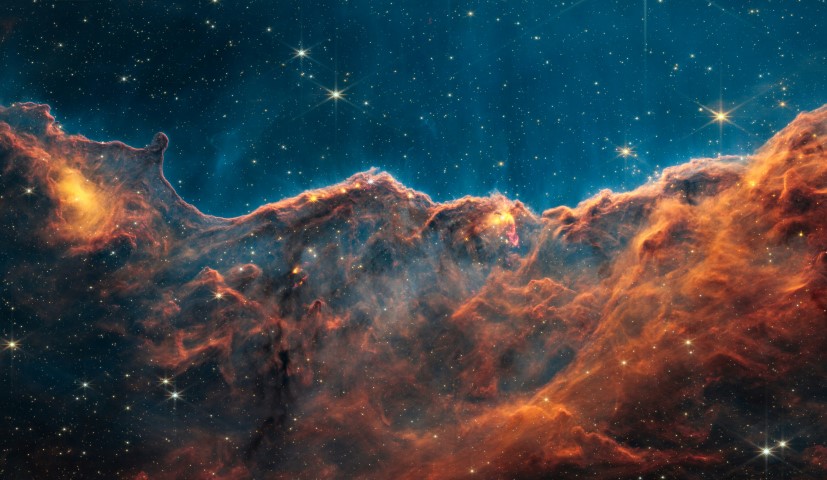
Life of this kind would not require a planet. It would not require liquid water. It would be, in the most literal sense, a creature of the cosmos itself—organized from the matter and energy that fill interstellar space, structured by the physics that operates everywhere the universe has dust, charge, and time.
As we gaze upon the newly rediscovered Kordylewski Clouds between Earth and the Moon, we may in fact be looking into a very ancient life-form that has a lot to tell us.
Hot Plasma Life-Forms
Yes, but. . . isn’t most of the plasma in the universe hot? In fact, cold and dusty plasmas, as large as they are, make up but a small fraction of the cosmic plasma content. Most of the plasma in the universe is in the cosmic web, which is composed of vast hot filaments connecting galaxy clusters across hundreds of millions of light-years. Cold plasma is a much rarer and local phenomenon by comparison. This makes the question about hot plasma life-forms even more cosmically relevant.
In hot plasma, there are no molecules. No dust grains. No chemistry of any kind. Everything that works in the cold dusty plasma model—organic scaffolding, surface chemistry, molecular information storage—is not there. Temperatures of millions of degrees strip every electron from every atom. What remains is a soup of bare nuclei and free electrons, governed entirely by electromagnetic and gravitational forces.
The question regarding any recognizable life-form made from hot plasma would be, therefore, can pattern, organization, and self-replication exist in a medium with no material structure whatsoever—only fields, charges, and energy?
If the organism is the field, the answer might be yes.
The Organism as a Self-Sustaining Field Configuration
In hot plasma, the candidate for biological structure is magnetohydrodynamic (MHD) organization—stable configurations of plasma flow and magnetic fields that persist and resist disruption. We already know that such configurations exist:
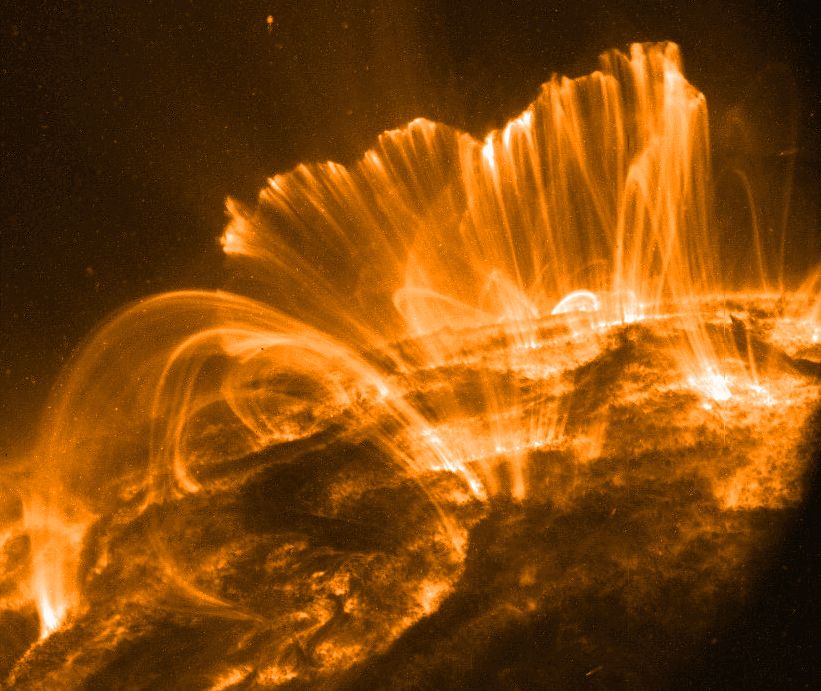
- Plasmoids are self-contained magnetic structures that form spontaneously in plasma and can persist, move, and interact. They can form, for example, in magnetic reconnection events of the magnetosphere.16
- Flux tubes and coronal loops are stable cylindrical bundles of magnetic fields threading through plasma, for example in the solar corona.
- Plasma vortices and current sheets (Birkeland currents) are organized flow patterns that maintain themselves against diffusion.
In plasma structures of this kind, magnetic field lines are effectively “frozen in” to the plasma—they move with it, and it moves with them. The magnetic topology can trap and organize plasma into a persistent structure even without any material boundary.
A hot plasma organism would, therefore, not have a body in any conventional sense. It would be a self-sustaining magnetic topology—a knot of organized magnetic field lines and plasma flows that maintains its configuration by continuously processing energy from its environment.
Stars, with their extremely powerful magnetic fields, might themselves be hot plasma life-forms and, from this perspective, our own Sun is probably alive!17 18 19
A Possible Example of a Hot Plasma Organism
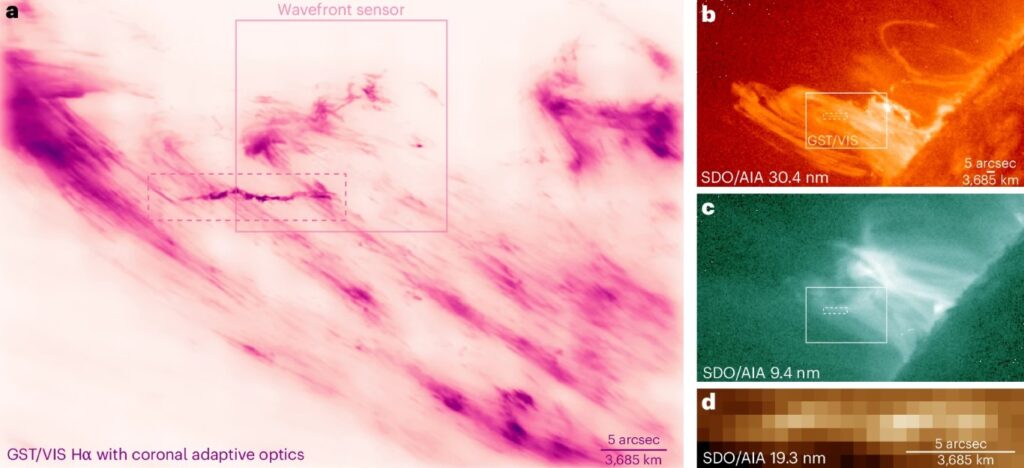
In 2023, a possible hot plasma life-form was observed in the Sun’s corona. Using a completely new optics system called “Cona,” a team of American plasma physicists witnessed a twisted plasmoid that emerged from a solar coronal loop.20 Uniquely, the plasma feature was recorded as it contracted and stretched to change size from 1500 to 9000 kilometers in length and performed movements very much resembling an amoeba or similar microorganism. The plasmoid formed after a solar flare from an unstructured plasma cloud and then organized itself into a narrow plasma stream that seemed to “wriggle” forward. While the scientists did not suggest that this could be a living plasma entity, citizen researchers and hobby astronomers raised speculations on the Internet.21 The feature would not have been detected were it not for the increased resolution of the new instrument, and it may well lead to paradigm-shifting future observations.
Next chapter: Intelligent Plasma
Footnotes:
- Quoted in Heppenheimer TA. After the Sun dies. Omni. 1986:8(11):36. https://archive.org/details/omni-archive/OMNI_1986_08/page/n18/mode/1up ↩︎
- “Włodzimierz Sedlak.” Wikipedia, last edited Jul. 28, 2025. https://pl.wikipedia.org/wiki/Włodzimierz_Sedlak ↩︎
- Madurasinghe L. The bioplasma field: a paradigm shift in understanding human life energy. OIUCM E-Journal, Oct. 25, 2025. https://ejournal.oiucm.net/the-bioplasma-field-a-paradigm-shift-in-understanding-human-life-energy/ ↩︎
- https://farabi.university/news/83880?lang=en ↩︎
- Inyushin VM. Bioplasma: the fifth state of matter? In White J & Krippner S (Eds.), Future Science, 1977. ↩︎
- Solari in the News – Future Science: New Interview on the Wave Genome. The Solari Report, Oct. 20, 2025. (Ricci Flow Nutrition) https://solari.com/solari-in-the-news-future-science-new-interview-on-the-wave-genome/ ↩︎
- “Fascia.” Wikipedia, last edited Apr. 6, 2026. https://en.wikipedia.org/wiki/Fascia ↩︎
- Uehara M, Sakane KK, Maciel HS, Urruchi W. Physics and biology: bio-plasma physics. Am J Phys. 2000 May 1;68(5):450-455. https://www.researchgate.net/publication/243492329_Physics_and_Biology_Bio-plasma_physics ↩︎
- Kamel NA. Bio-piezoelectricity: fundamentals and applications in tissue engineering and regenerative medicine. Biophys Rev. 2022 Jun 28;14(3):717-733. https://doi.org/10.1007/s12551-022-00969-z ↩︎
- Szent-Györgyi A. Towards a new biochemistry? Science. 1941 Jun 27;93(2426):609-611. https://doi.org/10.1126/science.93.2426.609 ↩︎
- Quoted in Oschman JL. Charge transfer in the living matrix. J Bodyw Mov Ther. 2009 Jul;13(3):215-228. https://doi.org/10.1016/j.jbmt.2008.06.005 ↩︎
- Aleksandrov AP, Zavoiskii EK, Zeldovich YB, et al. David Albertovich Frank-Kamenetskii (1910-1970). Sov Phys Usp. 1971;13(6):834-836. https://ufn.ru/en/articles/1971/6/n/ ↩︎
- Granögger U. Future Science Series: Liquid Crystal Water with Prof. Gerald H. Pollack. The Solari Report, Jan. 2, 2024. https://solari.com/future-science-series-liquid-crystal-water-with-prof-gerald-h-pollack/ ↩︎
- Fitts CA, Granögger U. Water. The Solari Report, 2023. https://solari.com/water-pdf-now-available/ ↩︎
- Granögger U. Future Science Series: Medical Nanobots—Implications of the Wave Genome, Part II. The Solari Report, Jun. 10, 2021. https://solari.com/future-science-series-medical-nanobots-implications-of-the-wave-genome-part-ii/ ↩︎
- Kumar P, Cho KS. Simultaneous EUV and radio observations of bidirectional plasmoids ejection during magnetic reconnection. Astron Astrophys. 2013;557:A115. https://doi.org/10.1051/0004-6361/201220999 ↩︎
- Sheldrake R. “Is the Sun Conscious”, Journal of Consciousness Studies, 28, No. 3–4, 2021. https://www.sheldrake.org/files/pdfs/papers/Is_the_Sun_Conscious.pdf ↩︎
- Eisenstein C. The sun is alive. Charles Eisenstein, Feb. 5, 2023. https://charleseisenstein.substack.com/p/the-sun-is-alive-and-why-that-matters ↩︎
- Schperling S. Is the Sun alive? ResearchGate, January 2022. https://www.researchgate.net/publication/357811784_Is_the_Sun_Alive ↩︎
- Schmidt D, Schad TA, Yurchyshyn V, et al. Observations of fine coronal structures with high-order solar adaptive optics. Nat Astron. 2025;9(8):1148-1157. https://doi.org/10.1038/s41550-025-02564-0 ↩︎
- Do Earth-Sized Plasma Organisms Live On the Sun? Strange Coronal Plasmoid Observed (Stefan Burns) https://youtu.be/fa0hOLvN0-g ↩︎