Movie of the Week: June 27, 2026: Python: The Documentary
Become a member: Subscribe














NTS Headlines
Headlines by Category
Headlines by Year
- Money & Markets
- Weekly Solari Reports
- Cognitive Liberty
- Solari Builders
- Ask Catherine
- News Trends & Stories
- Equity Overview
- War For Bankocracy
- Digital Money, Digital Control
- State Leader Briefings
- Food
- Food for the Soul
- Future Science
- Health
- Metanoia
- Solutions
- Spiritual Science
- Wellness
- Building Wealth
- Via Europa









Solari’s Building Wealth materials are organized to inspire and support your personal strategic and financial planning.


Building Wealth
This 6-pillar curriculum teaches the basic literacy we need to be personally and financially successful and to do so in a manner in which together we evolve a culture that supports the emergence of an advanced human civilization.





Missing Money
Articles and video discussions of the $21 Trillion dollars missing from the U.S. government
Connect with the wider network of like-minded Solari subscribers using our in-house social media platform, Solari Connect.

Movie of the Week
Python: The Documentary
June 27, 2026
“What began as a side project in Amsterdam during the 1990s became the software powering artificial intelligence, data science and some of the world’s biggest companies.”
~ Python: The Documentary
In 1989, Dutch programmer Guido van Rossum, propelled by a wish to make programming “more intuitive and enjoyable,” dedicated a couple of weeks of his Christmas holiday to the development of a new programming language. A fan of the BBC show, Monty Python’s Flying Circus, he “coded a sense of fun” into the new language by naming it Python. Over time, Python became one of the most widely used programming languages in the world.
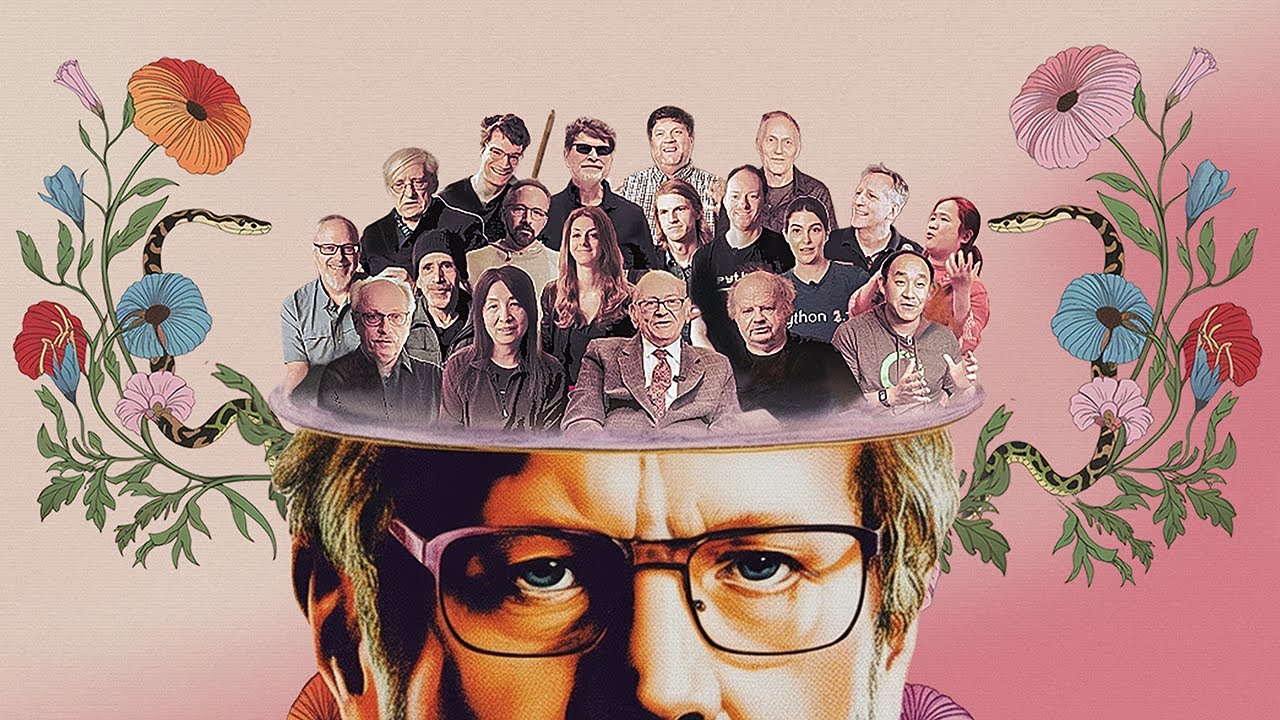
The 2025 film Python: The Documentary interviews some of the key contributors to Python’s development, including Travis Oliphant, whose conversation with Catherine about open-source AI Solari has just published. The contributors offer a broad-strokes and often humorous look not just at Python’s origin story and some of the bumps along the road but also the reasons for its popularity, endurance, and ubiquity.
One of the key explanations for Python’s success, other than its trademark user-friendliness and ability to meet the needs of non-programmers, is that it is open source. The documentary does a good job of conveying the open-source ethos and mindset. Van Rossum is currently a Distinguished Engineer at Microsoft, but he states in the film that he was “early on convinced by community members that Python being open source—and the particular way it was open source—was very important so that people would feel comfortable using Python to make great things that they would then be able to sell.” As contributor Brett Cannon put it at a “PyCon” conference, “I came for the language, but I stayed for the community.”
Oliphant discovered Python “not as a programmer but as a scientist.” Open-source Python eliminated the constraints he once faced when he wanted to share code with others:
“I really didn’t like the fact that when I wrote code and I wanted to share that code with others, I was essentially telling people they had to go buy a license for a software package before they could even look at or use my code.”
The non-profit Python Institute asserts that Python “opens doors across nearly every industry,” including “finance, healthcare, education, science, and even the arts.” As Cannon concludes in the film, “It’s hard to think of anything that hasn’t been touched by some Python code.” Significantly, Python has also become the “backbone” of AI development.
In one of the film’s most entertaining passages, top “Pythoneers” take turns reading (and commenting on) lines from “The Zen of Python,” a poem crafted in 1999 by software engineer and Python contributor Tim Peters to capture Python’s guiding philosophy. Peters described it at the time as “a sort of balm for those of us who come here to try to learn to work with, rather than against, the grain of Python.”
The Zen of Python
Beautiful is better than ugly.
Explicit is better than implicit.
Simple is better than complex.
Complex is better than complicated.
Flat is better than nested.
Sparse is better than dense.
Readability counts.
Special cases aren’t special enough to break the rules.
Although practicality beats purity.
Errors should never pass silently.
Unless explicitly silenced.
In the face of ambiguity, refuse the temptation to guess.
There should be one—and preferably only one—obvious way to do it.
Although that way may not be obvious at first unless you’re Dutch.
Now is better than never.
Although never is often better than “right” now.
If the implementation is hard to explain, it’s a bad idea.
If the implementation is easy to explain, it may be a good idea.
Namespaces are one honking great idea—let’s do more of those!
You can watch Python: The Documentary HERE.
Links
The Story of Python and how it took over the world | Python: The Documentary
About Python (Python Institute)
Guido van Rossum – Personal Home Page
Why Python Became the Language of AI
Travis Oliphant: SciPy, NumPy, and Fostering Scientific Python (The Real Python Podcast, Episode 262)
Related at Solari
Log in or subscribe to the Solari Report to enjoy full access to exclusive articles and features.
Already a subscriber?

One of the amusing things conveyed in the documentary was about how the programmers left CNRI (who was clearly funded in a way to subsidize them) to go work for BeOpen, but then they were not getting paychecks anymore to develop this free thing. And then they were concerned when BeOpen was getting involved in the licensing of Python.
Integrating the importance of enduring economic models is often harder than it needs to be. In many fields, a virtuous circle between customer and member and provider or producer is more than possible. But not well understood – if that understanding could go viral, the power on the pro-decentralization team would skyrocket. Which may be why young people who see a need are encouraged to seek government grants or not for profit activities. Heaven forbid we should be independent!