This 6-pillar curriculum teaches the basic literacy we need to be personally and financially successful and to do so in a manner in which together we evolve a culture that supports the emergence of an advanced human civilization.
“Dennis Muilenburg, Boeing’s former CEO, left the company with $80.7 million in pay and benefits, after being fired over two aircraft crashes that killed 346 people in total. His compensation dwarfs the $50 million set aside for families of the crash victims.”
Last week, I reviewed a community bank and their holding company for inclusion in the Solari World Screen. Since 1999, I have driven by just about every bank between California and the East Coast, but I was not familiar with this bank, which was new to me despite its location in the American heartland.
I was taken aback by the extraordinary quality of the board of directors. They had no doubt been recruited over a long period by the founder—he was still the chair and ran the bank. I dug into his history and experience and discovered a remarkable man who held a healthy stock ownership position. This is a good sign: it indicates leadership that acts on and values something beyond the latest quarter. It was one of those moments when I am struck by a good company as something that is alive and intelligent—a living organism created and grown through decades (and sometimes even centuries) of hard work and commitment. When I come upon such a company, I experience a moment of admiration for the vision and work it took—it is one of the reasons I do what I do. Beyond the grift and corruption in the headlines, the world is still full of great people building and operating great companies.
When you appreciate the blood, sweat, and tears it takes to build a great company, you also grieve when one is harmed or destroyed. I will never forget what happened to the Solari World Screen during the pandemic. We removed over 80 companies from the approved list as a result of their conduct and deterioration in leadership during that period.
The most painful removal was Qantas. Founded in Australia in 1920, the name Qantas stands for the original name, Queensland And Northern Territory Aerial Services. Before Covid, I considered Qantas one of the best-managed companies in the world, with one of the best safety records in the airline industry. And yet, here they were mandating that their pilots take an injection known to cause heart attacks, blood clots, and strokes—forcing some of their most experienced pilots out of their jobs. The sickness and death from the injections and Covid protocols were frightening. For me, the destruction of the quality of a living system decades in the making was particularly shocking. If you kill the builders and managers of our infrastructure and the engines of our economic success, many of us ultimately will not survive. If you are indifferent to pilot health and airline safety, the chances increase that planes will fall out of the sky, killing hundreds of people.
One of the common terms we use when underwriting companies for the Solari World Screen is “the Paul O’Neill problem.” I described it in an interview that Ricardo Oskam, our investment analyst, and I did with Steve Smith of Parvin Asset Management on business leadership. “Leadership: Seeking Excellence in an Omniwar World” is a discussion I recommend.
O’Neill was the Alcoa CEO who turned the company around by making worker safety his number-one priority. He understood Alcoa as a living system of real people and knew that its success required that the employees care and be cared about. At his first shareholder meeting in 1987, he opened not with earnings forecasts but with this statement: “I want to talk to you about worker safety…. I intend to make Alcoa the safest company in America. I intend to go for zero injuries.” Charles Duhigg reports in The Power of Habit how investors panicked and sold—and were wrong.
When we find a company with a spotty record of messes that should not have happened, and a board full of MBAs and investors with no engineers who understand the fundamental product and services, Ricardo and I typically say, “It looks like they have a Paul O’Neill problem.” Their business is a financial machine, instead of a living system. They have run down the living equity to juice the financial results and the stock. Now that the living equity has been extracted and often exhausted, the financial play may well be over.
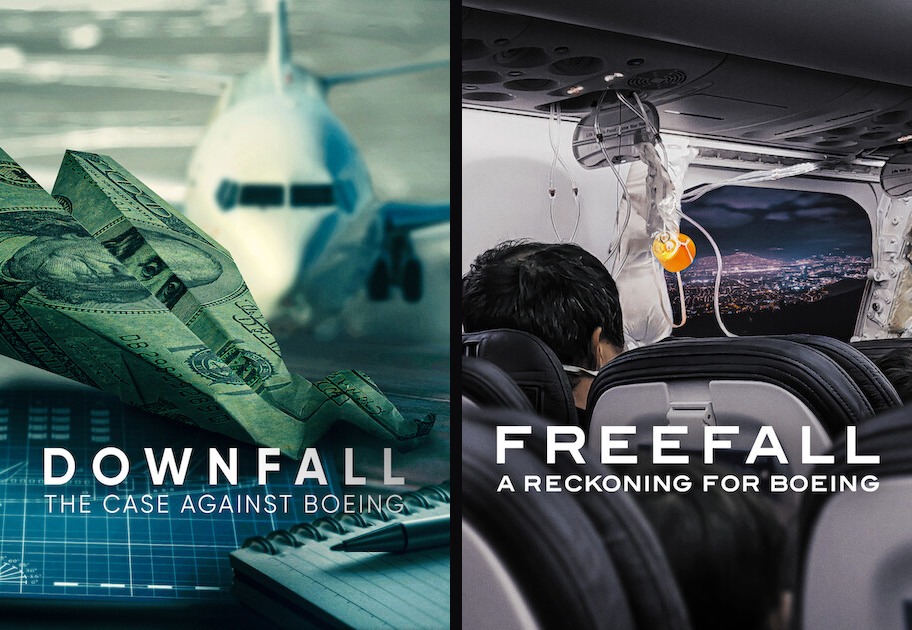
For decades, Boeing was considered one of the most remarkable companies in the world. The 2022 documentary Downfall: The Case Against Boeing, and its just-released 2026 sequel, Freefall: A Reckoning for Boeing, tell the story of how Boeing stopped being a remarkable company by creating rising stock prices with the 737 MAX. Two new planes fell from the sky and killed their passengers, while Boeing used cheap public-relations tricks to try to shift the blame.
We have covered the criminal prosecution of and settlement with Boeing on Money & Markets, so many Solari Report subscribers are familiar with what has happened. It is thanks to investigation, legal proceedings, and the testimony of Boeing whistleblowers (and the resulting documentation available for in-depth reporting) that the story has been told.
Freefall focuses on John Barnett, a Boeing quality engineer who understood the dangers of what Boeing was doing. It tells the story of his efforts over many years and his death during legal depositions. Freefall describes his “suicide”—including the reasons used to persuade his family that Barnett had indeed killed himself. Having spent a lifetime learning how “suicides” are engineered, including for personal reasons, I don’t believe the official story for a second. Barnett died from a gunshot to the head from his own gun. There are ways that it could have been a professional hit staged to look like a suicide. There are also ways that a highly responsible man such as Barnett can be blackmailed into doing so to protect his family and colleagues. Watch Godfather III; there is a great example of how it is done.
Barnett’s leadership and subsequent death helped to inspire other Boeing quality engineers to come forward. Their interviews in Freefall are riveting—another reminder of the greatness that is all around us if we take our eyes off of the media theater and focus instead on who and what is real.
There are also interviews with the family members who, having lost spouses and children in the crashes, persisted in demanding accountability to ensure that more people are not killed. It is remarkable to watch a situation where the families of the customers a company kills appear to be doing more—on a volunteer basis—to implement quality control at an airline than the board of directors and corporate leadership who are richly paid to do so.
This brings us to Jack Welch, the most heralded former CEO of General Electric (GE). I have had more than a few subscribers—who either worked at GE themselves or had family who worked at GE—tell me with real anger how Jack Welch destroyed GE. I have an image of a financially driven narcissist who converted a great company built by innovators, engineers, and manufacturers into a financial machine that generated lots of stock profits. It extracted stock profits from that which was remarkable until it was no longer remarkable.
What I did not realize until I watched Freefall is that several of Jack Welch’s protégés from GE became the CEOS who led the demise of Boeing. Like Jack Welch—and like the long line of private equity leaders who have played a similar game, as we have covered extensively at the Solari Report—they got very rich.
These documentaries are both well done and fascinating to watch. Watching them is a reminder that we know what is wrong with America, and we know how to fix it.
Here are my questions to you: Who and what is in your stock portfolio? Who and what are you financing? Are you financing great companies, or companies that make CEOs rich while quality engineers and customers are killed and PR departments spin cheap blame games? Responsibility does not just extend to boards and CEOs. It extends to all of the investors and shareholders who incentivize and profit from bad behavior.
I am heading out on the road in a month. Although I try to book flights with Airbus planes, I will no doubt also fly on planes manufactured by Boeing. It is not a pleasant thought. One thing I can say is that I don’t own the stock. Until a Paul O’Neill takes over the company, I never will.