This 6-pillar curriculum teaches the basic literacy we need to be personally and financially successful and to do so in a manner in which together we evolve a culture that supports the emergence of an advanced human civilization.
“For the growing good of the world is partly dependent on unhistoric acts; and that things are not so ill with you and me as they might have been, is half owing to the number who lived faithfully a hidden life, and rest in unvisited tombs.”
As Catherine and John Titus have discussed on Money & Markets this year, there are ominous rumblings suggesting a potential return to a military draft in the U.S. (President Trump says he plans to “keep his options on the table”). Similar developments are unfolding in Europe, where military conscription, according to Statista, “is making a comeback.”
As a result, some young Americans and Europeans will likely be contemplating conscientious objection, a concept that dates back to antiquity, when Saint Maximilian refused to serve in the Roman legions in 295 AD. The U.S. Selective Service currently defines a conscientious objector as “one who is opposed to serving in the armed forces and/or bearing arms on the grounds of moral or religious principles.”
During WWI, men who were “absolute” conscientious objectors (that is, they refused to play any military role, even as noncombatants) were imprisoned and often subjected to severe abuse such as solitary confinement, beatings, and short rations. And in Austria during WWII, farmer and devout Catholic Franz Jägerstätter was executed by guillotine for conscientiously objecting to Nazi conscription.
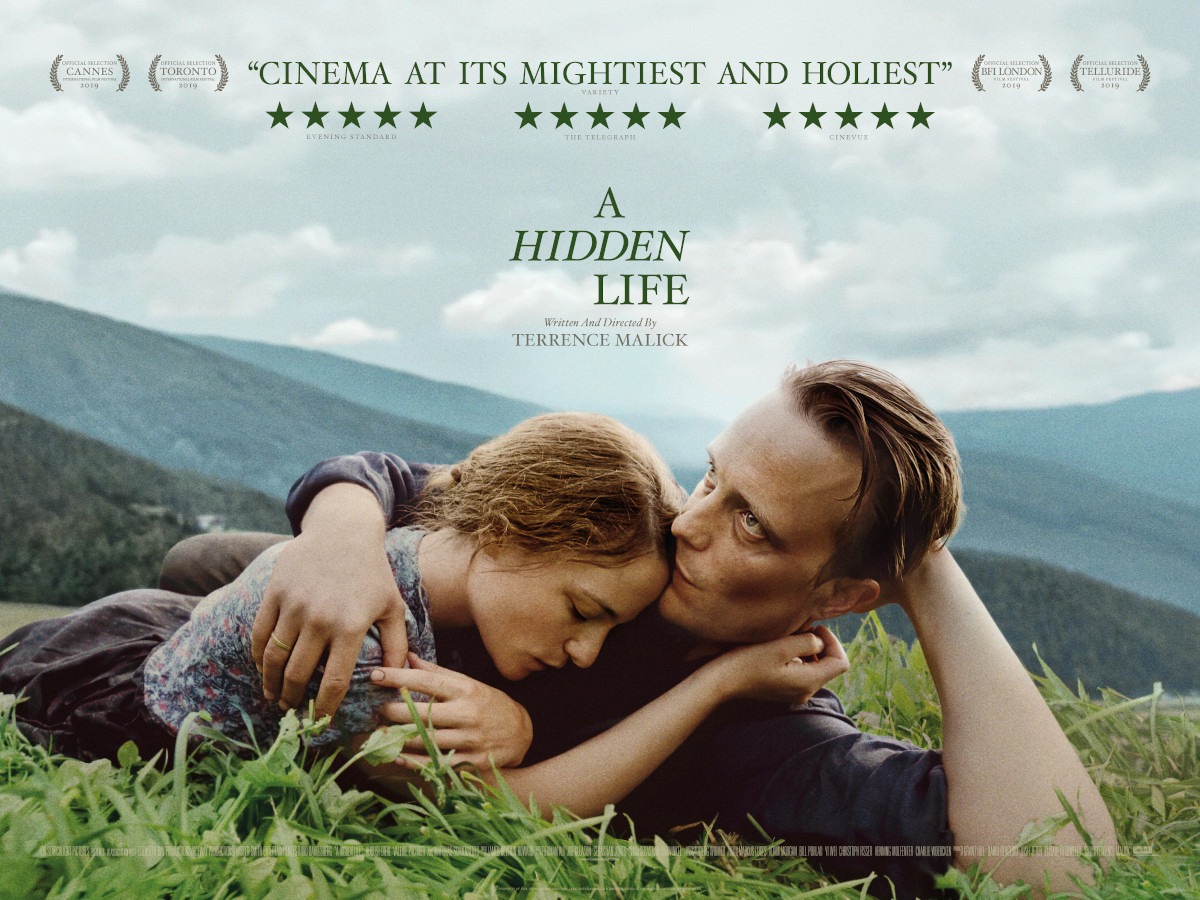
Elegiac director Terrence Malick recounts some of Jägerstätter’s story in his 2019 film A Hidden Life (a title derived from George Eliot’s Middlemarch). Malick is known, says one thoughtful review, for making “dream-like, impressionistic, cinematic poems that, at their peak moments, gesture towards a kind of prayerfulness and invite audiences to contemplate transcendence and ponder life’s mysteries.” The reviewer suggests, however, that Malick’s directorial choices prioritize the profound love between “Blessed Franz” and his wife Franziska (“Fani”) but neglect the second, central love story—“about the passion and ardor [they] had for the God revealed in Jesus Christ and the love God has for them”—making it difficult for viewers to fully appreciate the “steadfast trust and conviction” that guided them through their trials.
The 24-minute documentary Franz Jägerstätter: A Man of Conscience (2009), narrated by Martin Sheen, provides more insights on the man’s spiritual journey. It traces Jägerstätter’s evolution from a youthful “wild one” to a deeply devoted Catholic and family man, and provides details such as Jägerstätter being the only person in his small village to vote against the Nazi annexation of Austria in 1938.
In 1940, after Jägerstätter was called up for military training, he reassured Fani that his faith had “not become weaker in the military.” After the training, he wrote:
“My training made me see more clearly that I could not support Nazism in any way. If called up again for military service, I would refuse.”
In a recent essay riffing on war and the civil and military obedience that sustains it, sociologist and writer Edward Curtin recommends A Hidden Life, acknowledging that while Jägerstätter knew his refusal would not stop what was happening, he “also knew his conscience came from God and not the state.” Curtin suggests that as viewers, we must ask ourselves “how guilty or innocent are we for supporting or resisting the immoral killing machine of our own country now.”
Jägerstätter is not well known by modern Austrians—except when propagandists appropriate him as a role model to inveigh against the “far right.” However, Pope Benedict XVI (born in Germany not far from Jägerstätter’s village of St. Radegund) declared the Austrian farmer a martyr in 2007, and the Catholic church followed with beatification (the second-to-last step before canonization as a saint). His date of commemoration is May 21.